

Adapting in the Certified Seed World
Agricultural adaptation is critical in a changing certified seed world. As commodity prices continue to stay depressed and inputs increase, the exodus of seed growers and seed mill plant operators will continue to occur. In the last few years, our customer base for sales have dropped by 50% but most customer orders have increased their bushel amounts.
Finding niche crops with strong agronomic traits can provide seed sales in other markets such as organic and food grade trades. These crops would include winter rye, buckwheat, conventional soybeans, and yellow flax.
Increasing breeding pipeline connections are crucial to success. The RECs work with NDSU, the ND Crop Improvement and Seed Association, and private companies. Having access to new experimental lines or newly released varieties from North Dakota, other states, Canada, or overseas with improved genetics are critical. Early plot testing throughout the state provides the plant breeders with results on a potential release to the foundation seed program.
Diversification is essential. We typically work with eight or nine different crops and with 20-25 varieties to broaden our market base. Crops include hard red spring wheat, durum, barley, winter rye, buckwheat, field peas, flax, soybeans, hay barley and silage corn. The hay barley and silage corn are supplements for the CREC livestock unit.
Adding justification and precision to our Foundation Seed price predictions are paramount. Our seed prices are set by gathering commodity information from NDSU crops economist Frayne Olson in November. This meeting also includes Foundation Seedstocks director Brian Otteson, foundation seedstock managers at seed production RECs, and REC directors. With current market pricing for all crops, along with a prediction for the next spring’s market prices, our foundation seed price for the next spring is set by using a formula built upon the market price.
We have been increasing of our storage capacity as we replace flat bins with hopper bins. The Carrington REC now has capacity for about 100,000 bushels of grain between carryover and new crop seed. Around 40 grain bins are needed to accommodate our multiple crops and varieties, and hopper bottoms make bin cleaning easier with a quick turnaround for the next variety. Most of our bins are equipped with fans for drying and ventilation.
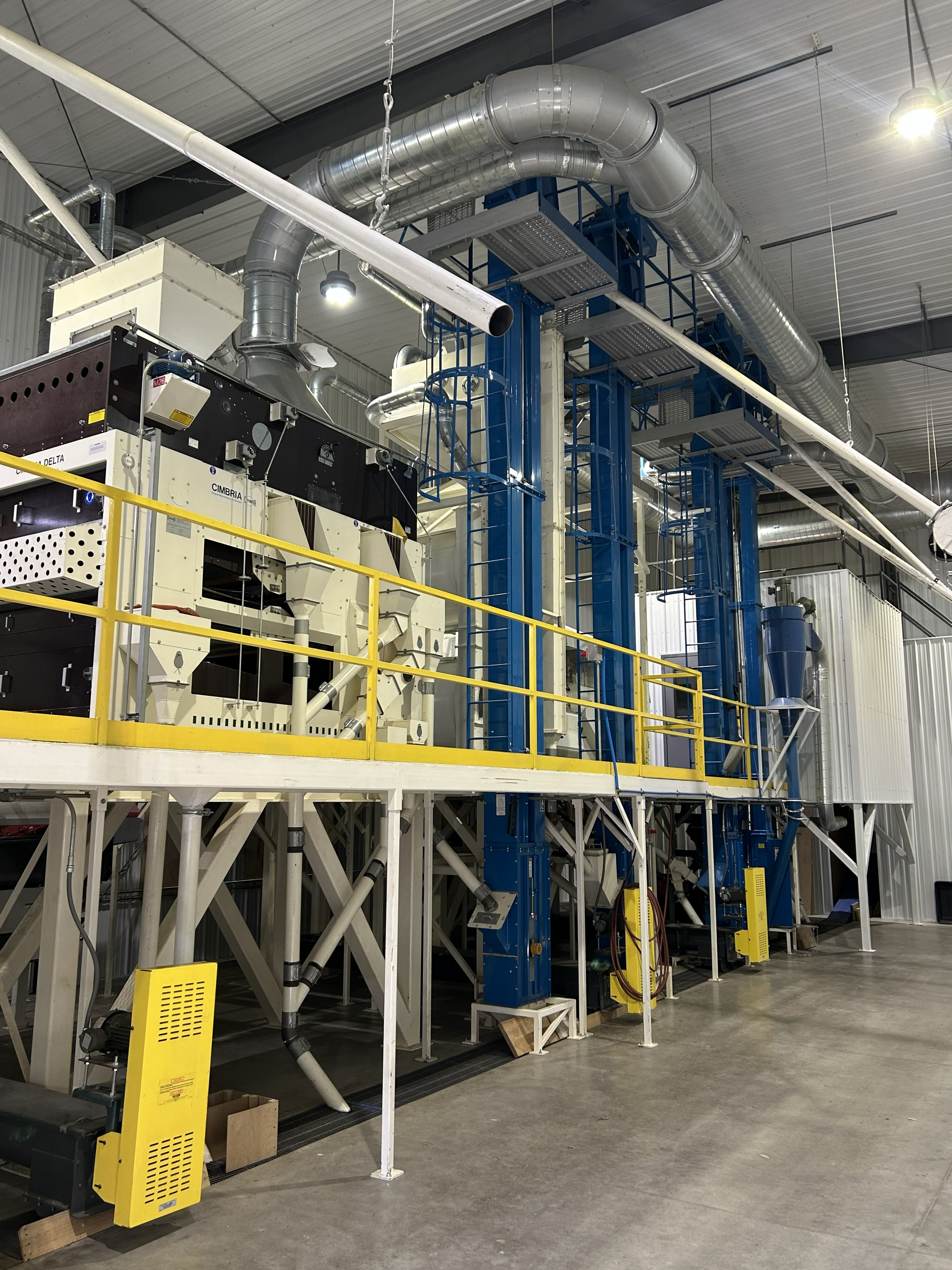
Our new mill became operational in 2019 and we added a color sorter in 2020. This 40’ x 75’ insulated building, with larger mill machines, has increased our cleaning capacity to around 200 bushels/hour and includes a dust removal/return air bag system. The new machines enhance our seed cleaning ability and provide a clean and safer environment.
Consistent conversations with the North Dakota State Seed Department (SSD) are imperative. The SSD’s goal is to help us maintain each variety’s seed purity and breeding characteristics. Field inspections and seed testing ensure high quality seed lots, and SSD staff strive to anticipate and eliminate potential seed or field issues.
We are very fortunate to work with partners who adapt with us to produce high quality foundation seed.
David Copenhaver
David.Copenhaver@ndsu.edu
Foundation Seedstock Manager
