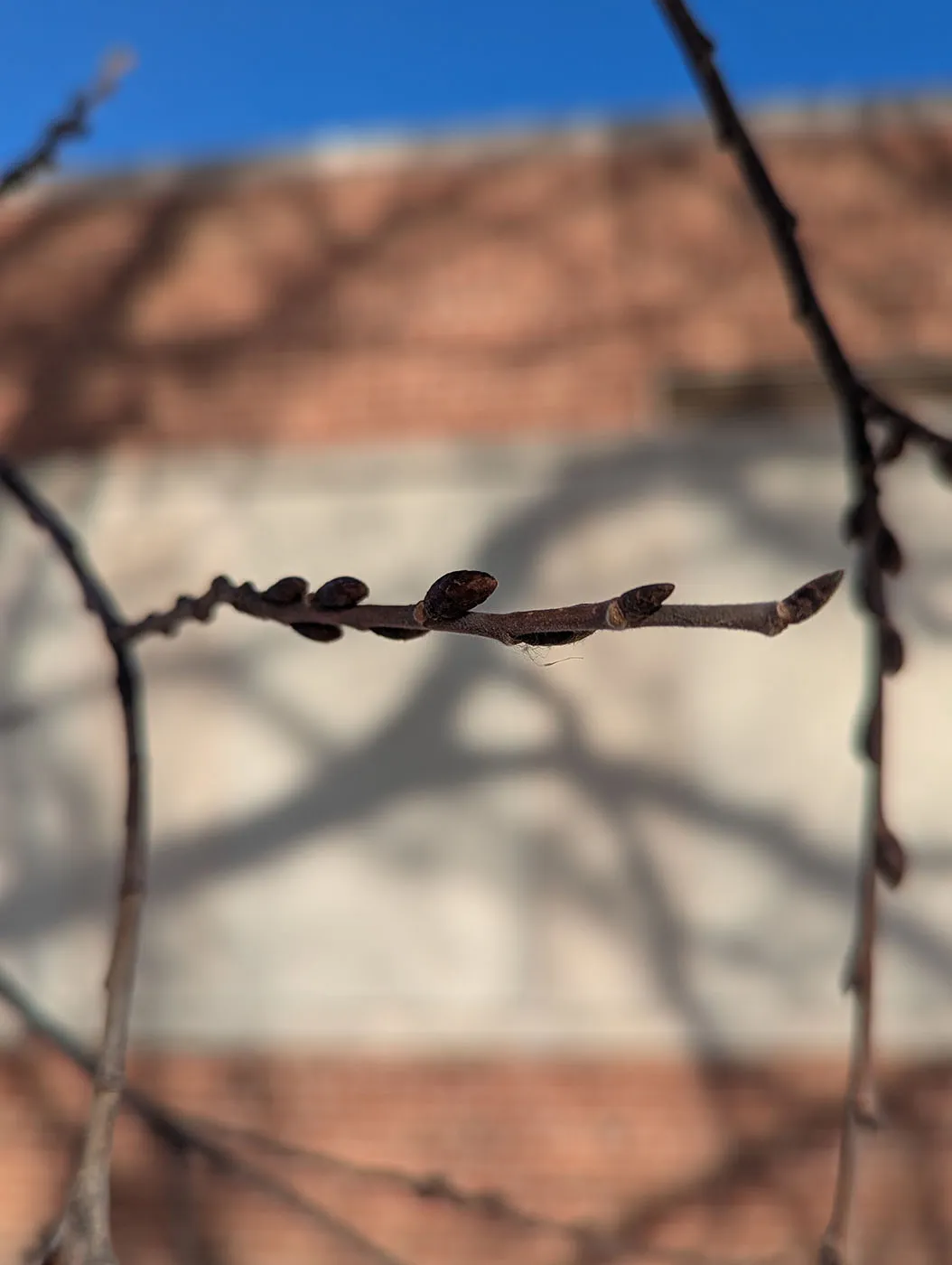
American Elm
Scientific Name: Ulmus americana
Family: Ulmaceae
Location on Campus: 46.894437, -96.803194
Description: This species is a very large specimen that is not recommended for small areas. Its texture and form have caused it to be one of the most popular species for large yards or street plantings. However, due to the emergence of Dutch Elm Disease, it is no longer
recommended unless a resistant cultivar is planted.
Hardiness: USDA hardiness zones 3-9
Natural Habitat:
Mature Size: Height: 60-80', Spread: 30-50'
Form (Shape): Arching branches in a vase shape
Growth Rate: Medium to fast
Foliage: Lustrous green summer foliage turns a yellow-red in the fall.
Texture: Medium
Flowers: Non-ornamental, greenish-red flowers bloom in spring.
Fruit: Disc-shaped papery samara.
Light: Full sun
Soil: Prefers rich, moist soils. Will grow well under a variety of conditions; pH tolerant. Good salt tolerance.
Propagation: Stratified seeds or rooted cuttings.
Failure Patterns: Tree failure due to Dutch Elm Disease (DED).
Disease and Insects: Dutch Elm Disease is a common concern, which can kill susceptible trees unless it is treated with a preventative fungicide injection.
Landscape Use: Use of straight species is not recommended. Cultivars that are resistant to Dutch Elm Disease may be used as boulevard or large shade trees as their “cathedral effect” arching is highly desireable.
Availability: Cultivars may be available in commercial nurseries.