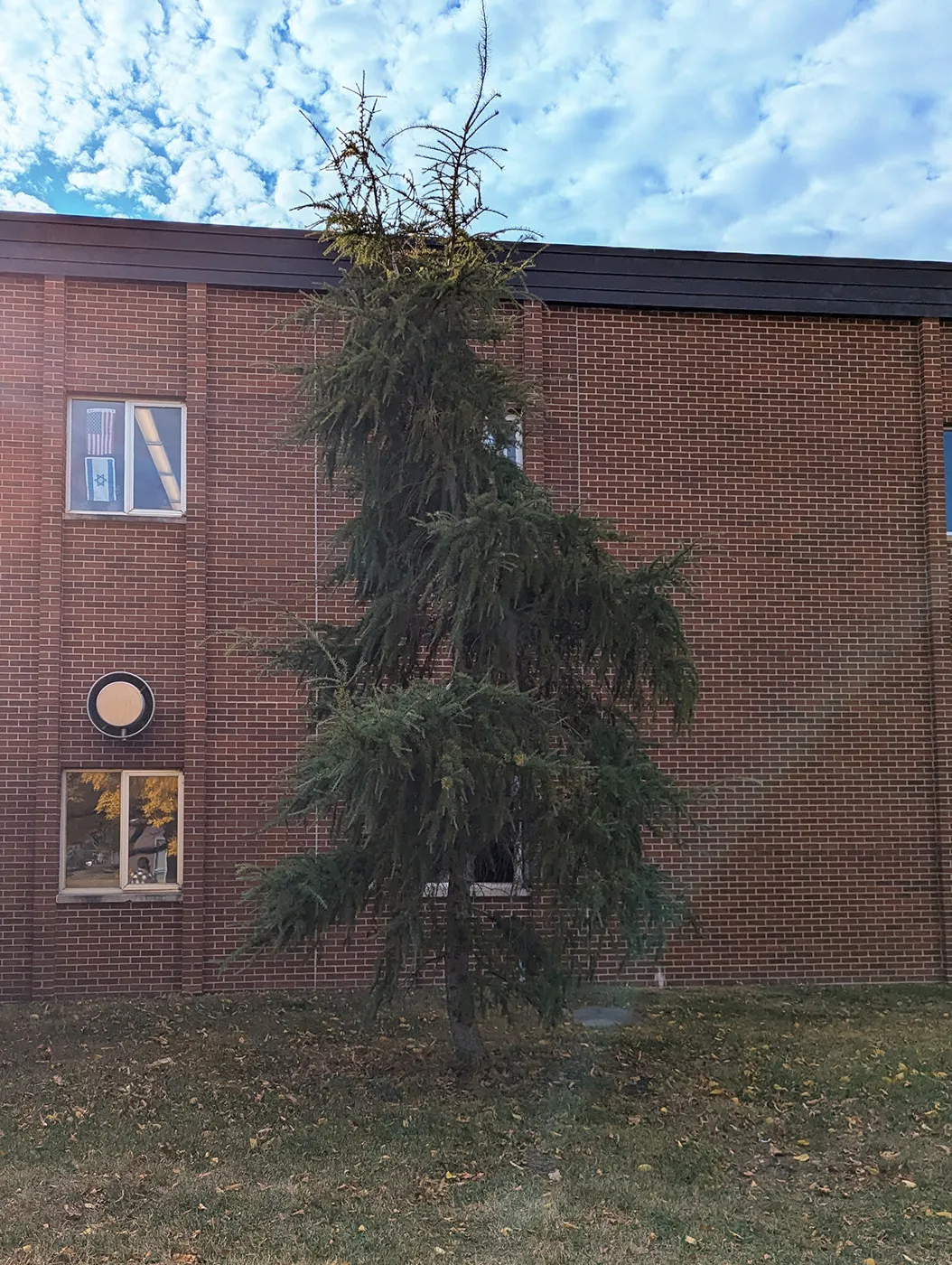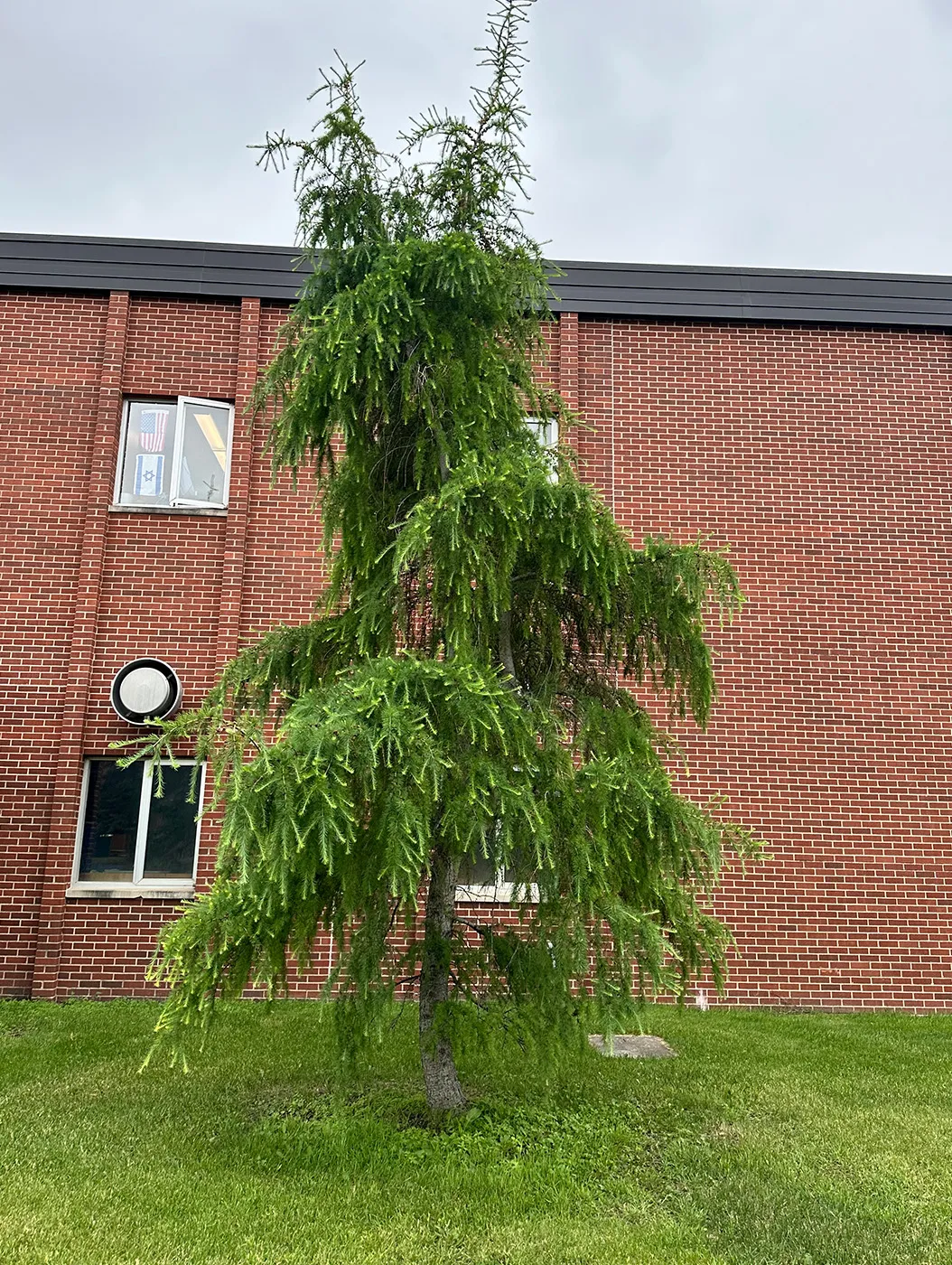
American Larch
Scientific Name: Larix laricina
Family: Pinaceae
Location on Campus: 46.895611, -96.805083
Description: Larix laricina is a large deciduous tree, native to Alaska, Canada and the Northeastern region of the United States. It is known for its yellow fall color and soft needles.
Hardiness: USDA hardiness zones (1) 2 to 4 or 5.
Natural Habitat: Northern North America, from the Arctic Circle in Alaska and Canada southwards to northern Pennsylvania, Minnesota, and Illinois.
Mature Size: Height: 40’ to 80’, Spread: 15’ to 30’
Form (Shape): Pyramidal. Branches spread horizontally, while branchlets droop. Open habit with a slender trunk.
Growth Rate: Slow to medium.
Foliage: Needles are .75-1.25” long, and 3 sided. Grown on short spurs, carrying 12-30 needles in one bundle. Needles have 2 stomatal bands underneath. Foliage is a bright blue-green in the summer, then turns yellow in the fall.
Texture: Medium fine with foliage, coarse in winter.
Flowers: Monoecious and sessile. The staminate is yellow, and the pistillate is rosy in color.
Fruit: Produces small cones that are oval, .5-1” long and .25-.5” wide. Cones are glabrous and green or violet when young, maturing to brown.
Light: Full sun, intolerant of shade.
Soil: Moist, well-drained, acidic soils.
Propagation: Seeds will germinate with no pretreatment, though can benefit from a stratification of 30-60 days at 30-41°F. Cuttings are difficult to root. Cultivars can be grafted.
Failure Patterns: Susceptible to Eastern Larch Beetle.
Disease and Insects: Prone to larch case bearer, larch sawfly, wood rot, and rust fungi.
Landscape Use: Best in groves and areas of high moisture.
Availability: Available in retail nurseries.