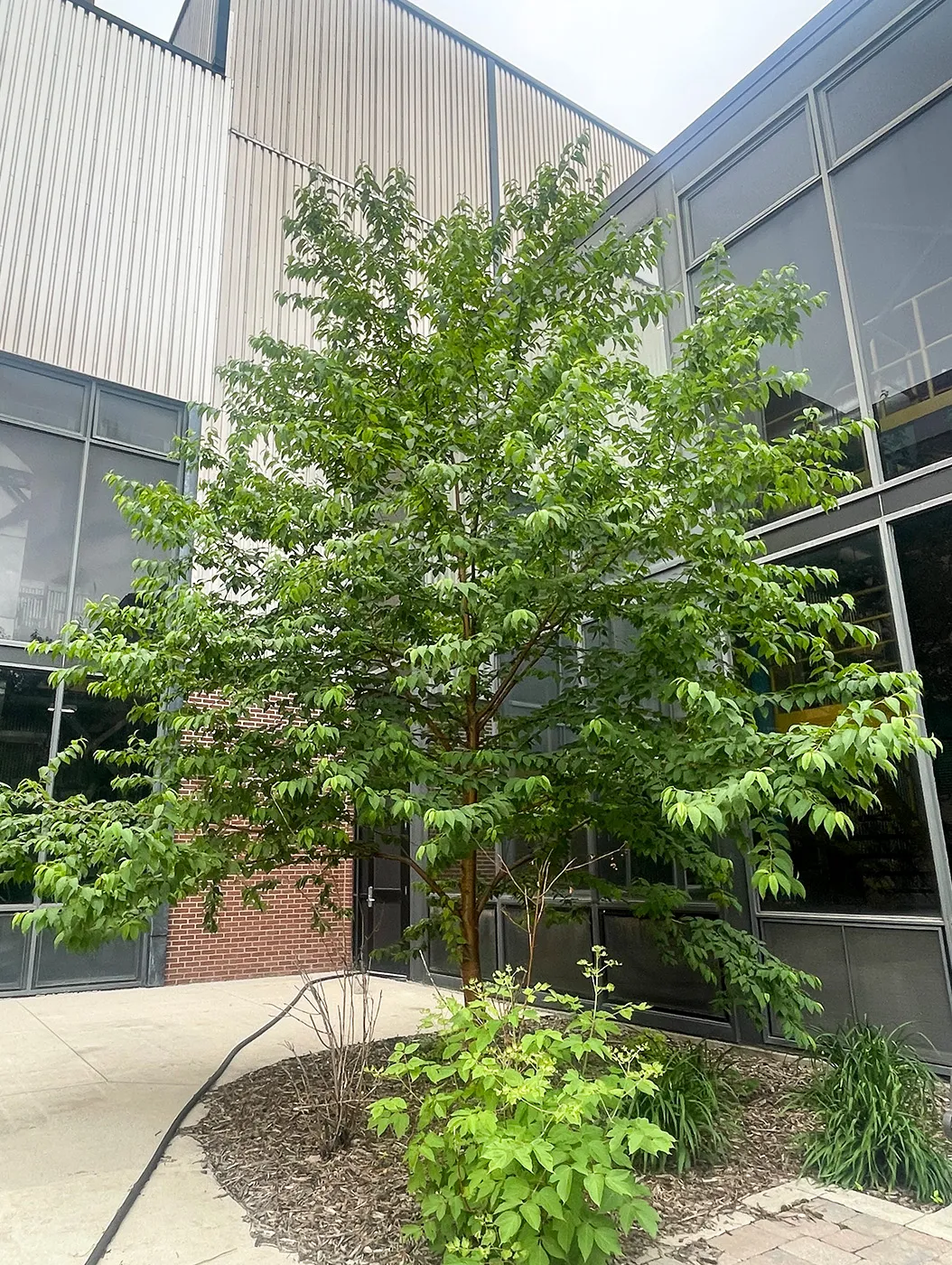
Amur Chokecherrry
Scientific Name: Prunus maackii
Family: Rosaceae
Location on Campus: 46.892013, -96.803036
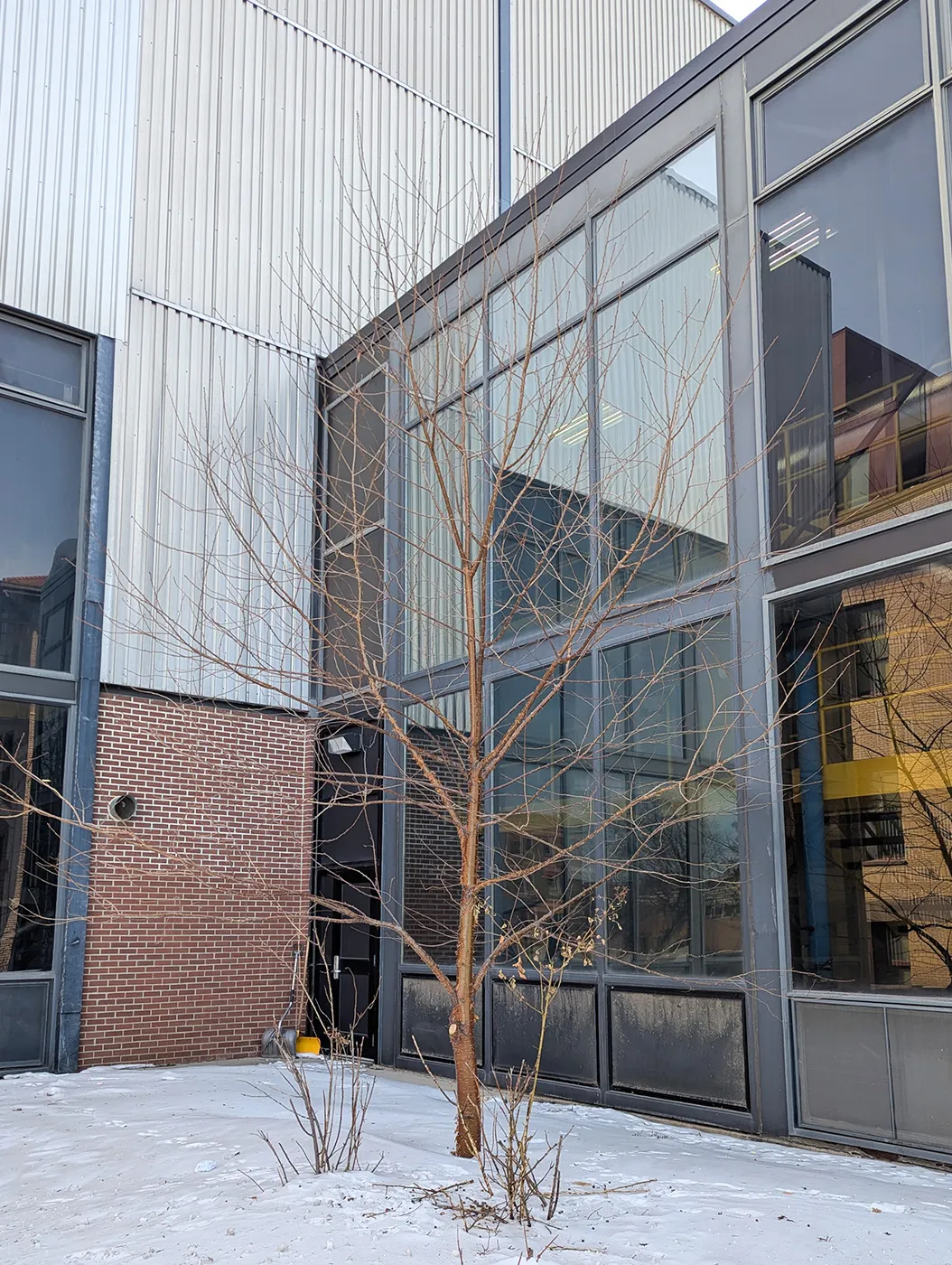
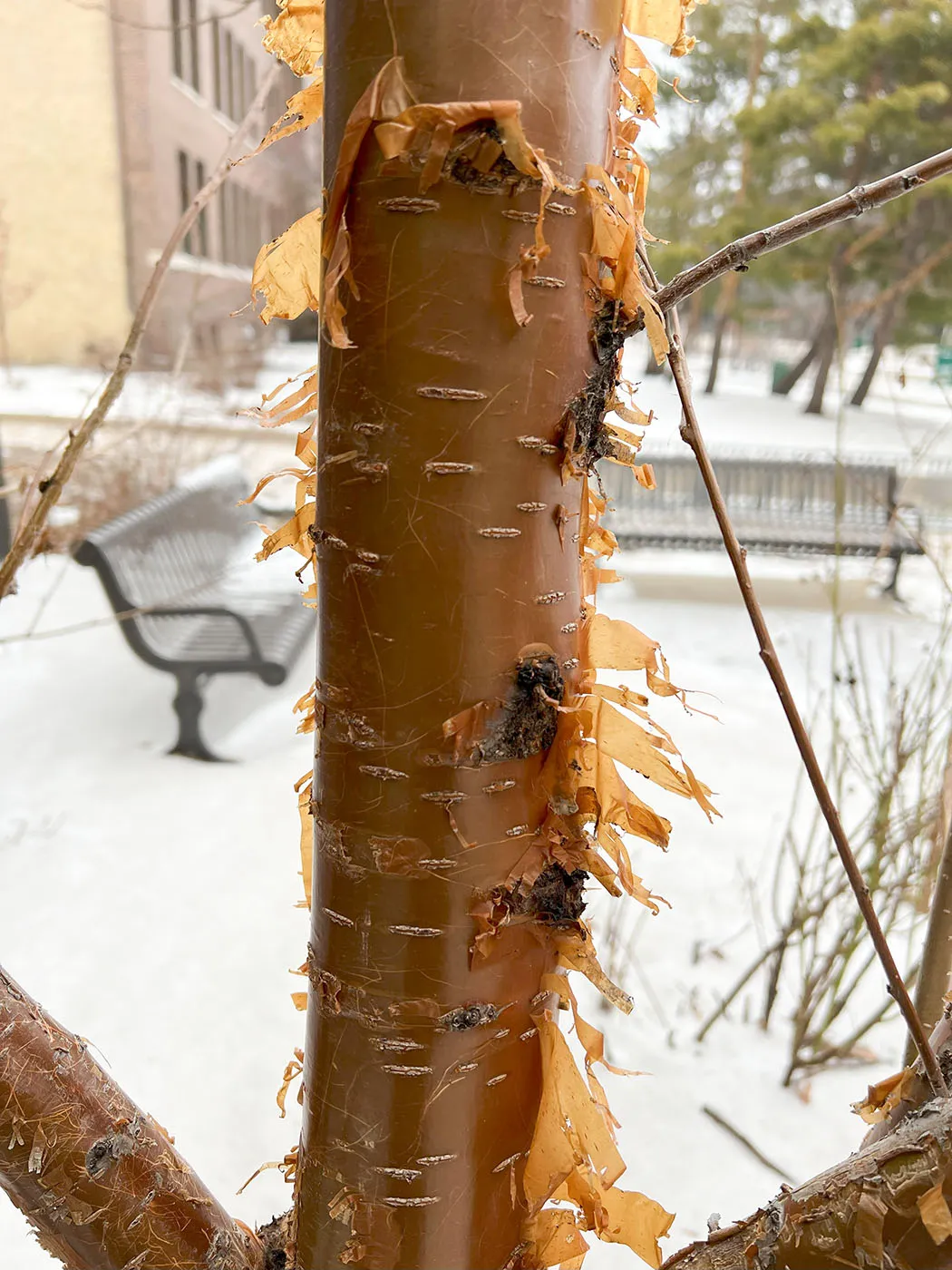
Description: This hardy Asiatic species is sometimes called Manchurian Cherry. It does not sucker like the native chokecherry. Has showy coppery to cinnamon brown bark which variably peels.
Hardiness: USDA hardiness zones 3 to 6.
Natural Habitat: Native to Manchuria, Siberia, and Korea.
Mature Size: Height: 20-30', Spread: 20-30'
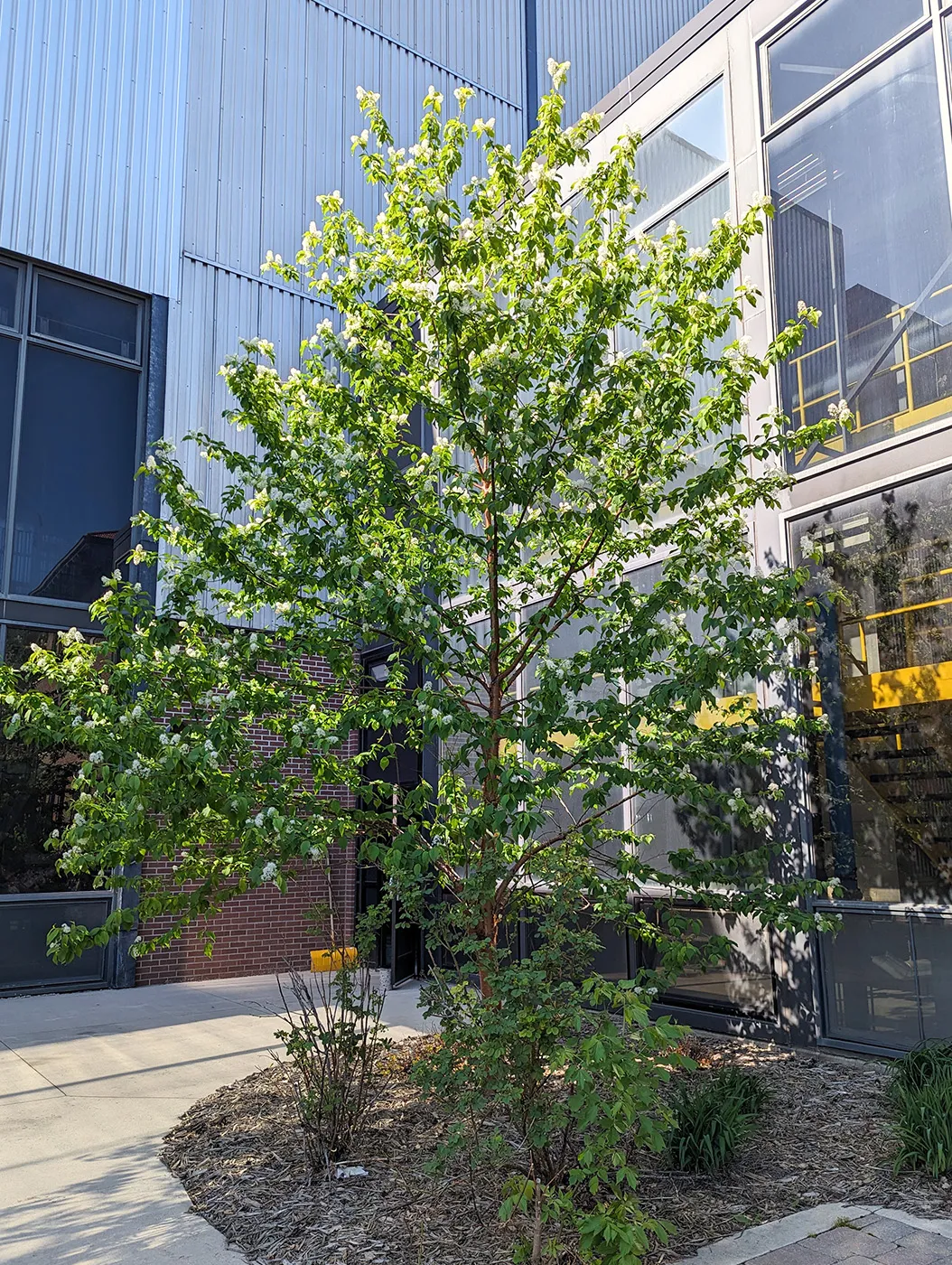
Form (Shape): Pyramidal when young, becomes rounded as matures, can be grown in multi- stem form.
Growth Rate: Medium.
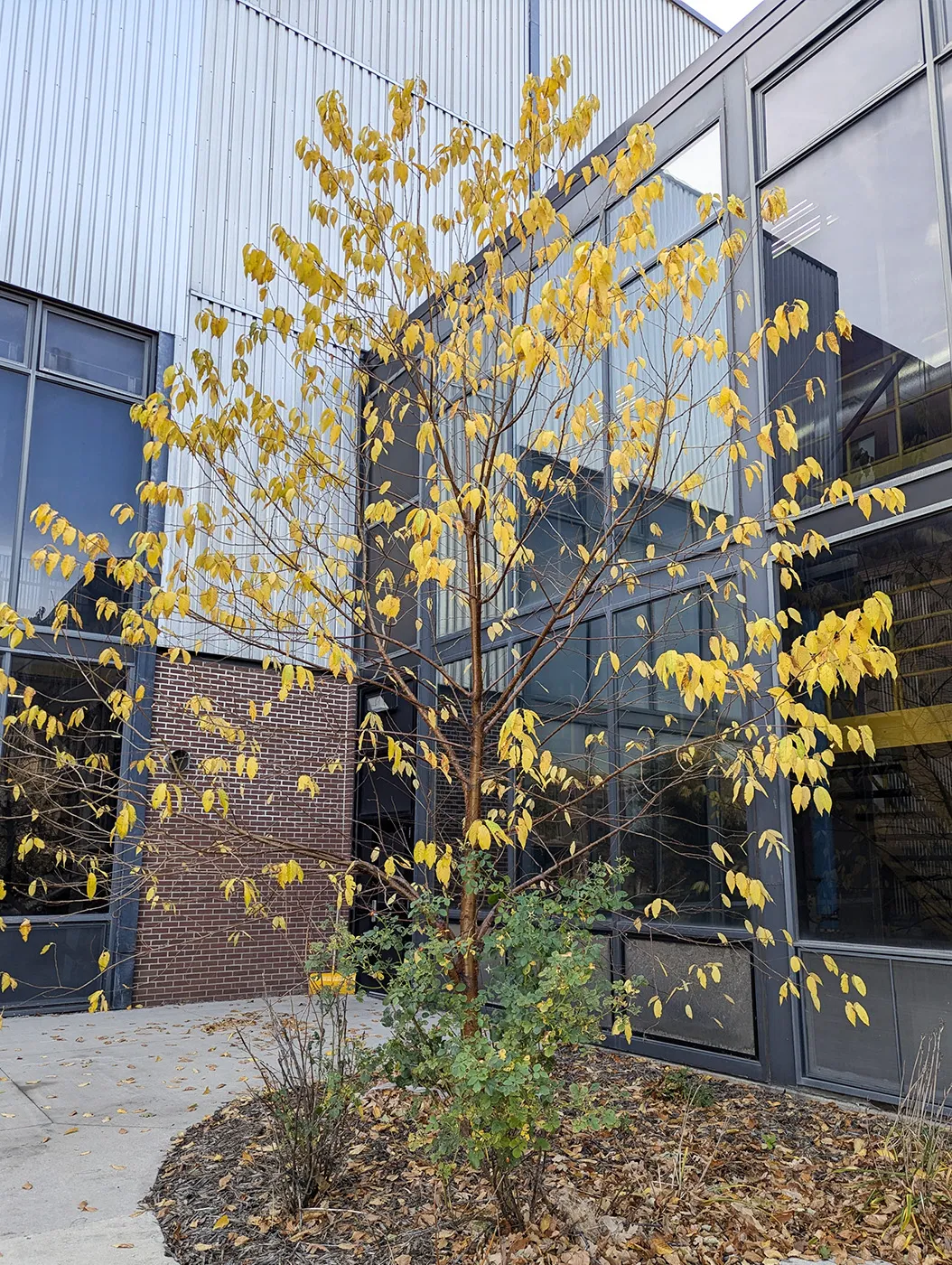
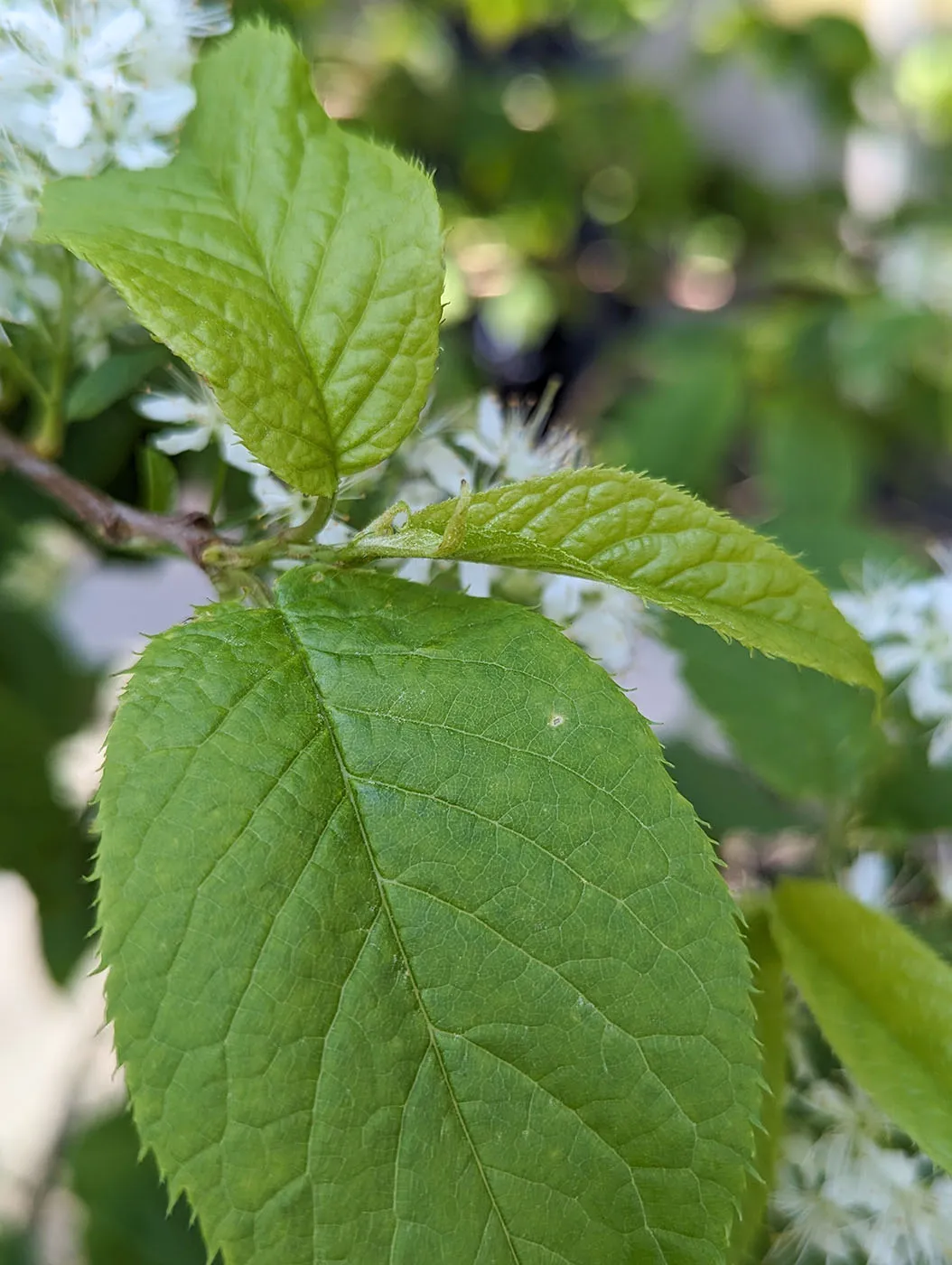
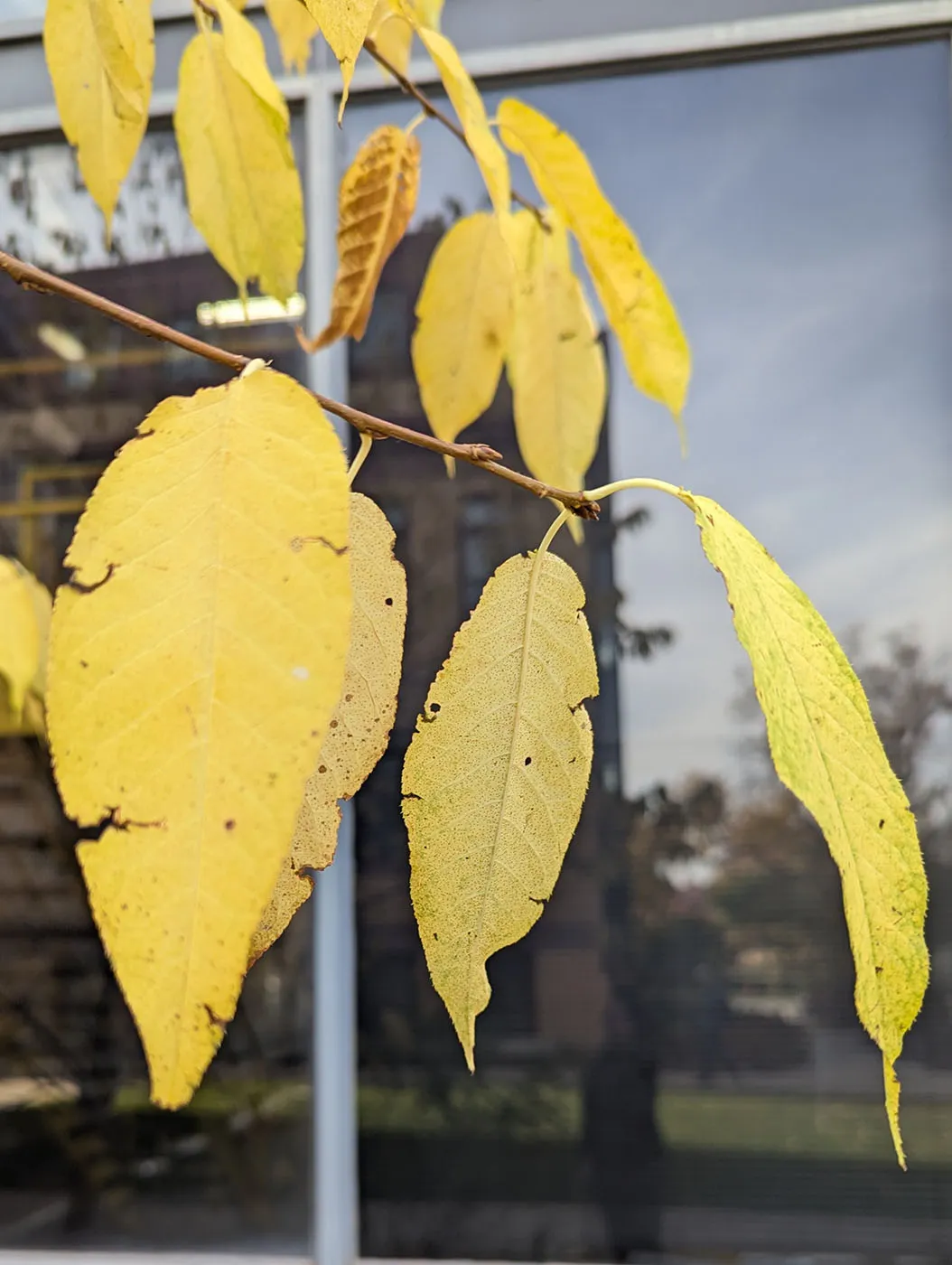
Foliage: Alternate and simple leaves that are elliptic to oblong-ovate in shape, 2 to 4” long, acuminate, rounded, and finely serrate. Slightly hairy on lower veins. Summer foliage is medium green that turns to yellow in the fall.
Texture: Medium.
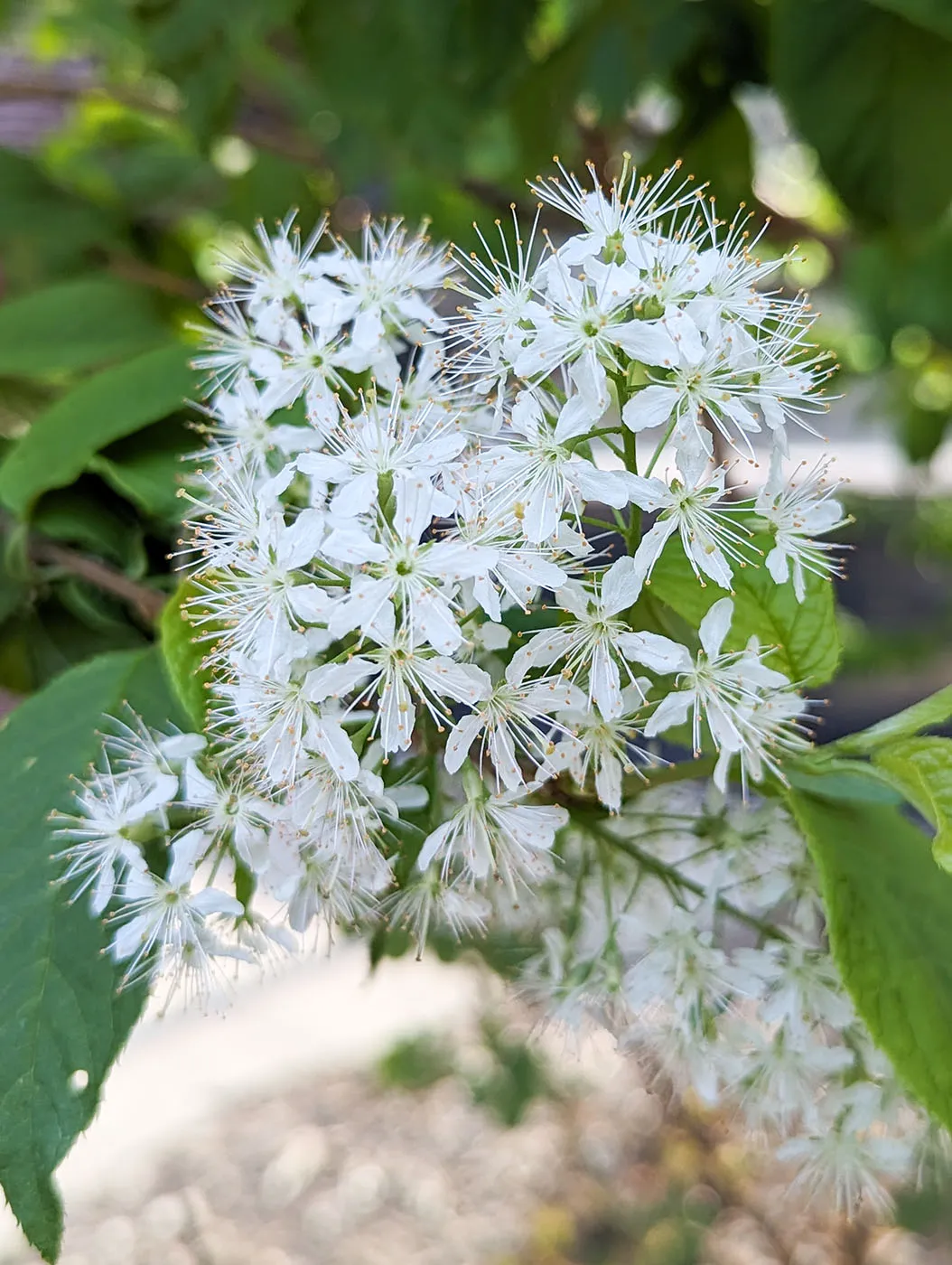
Flowers: White flowers in long racemes.
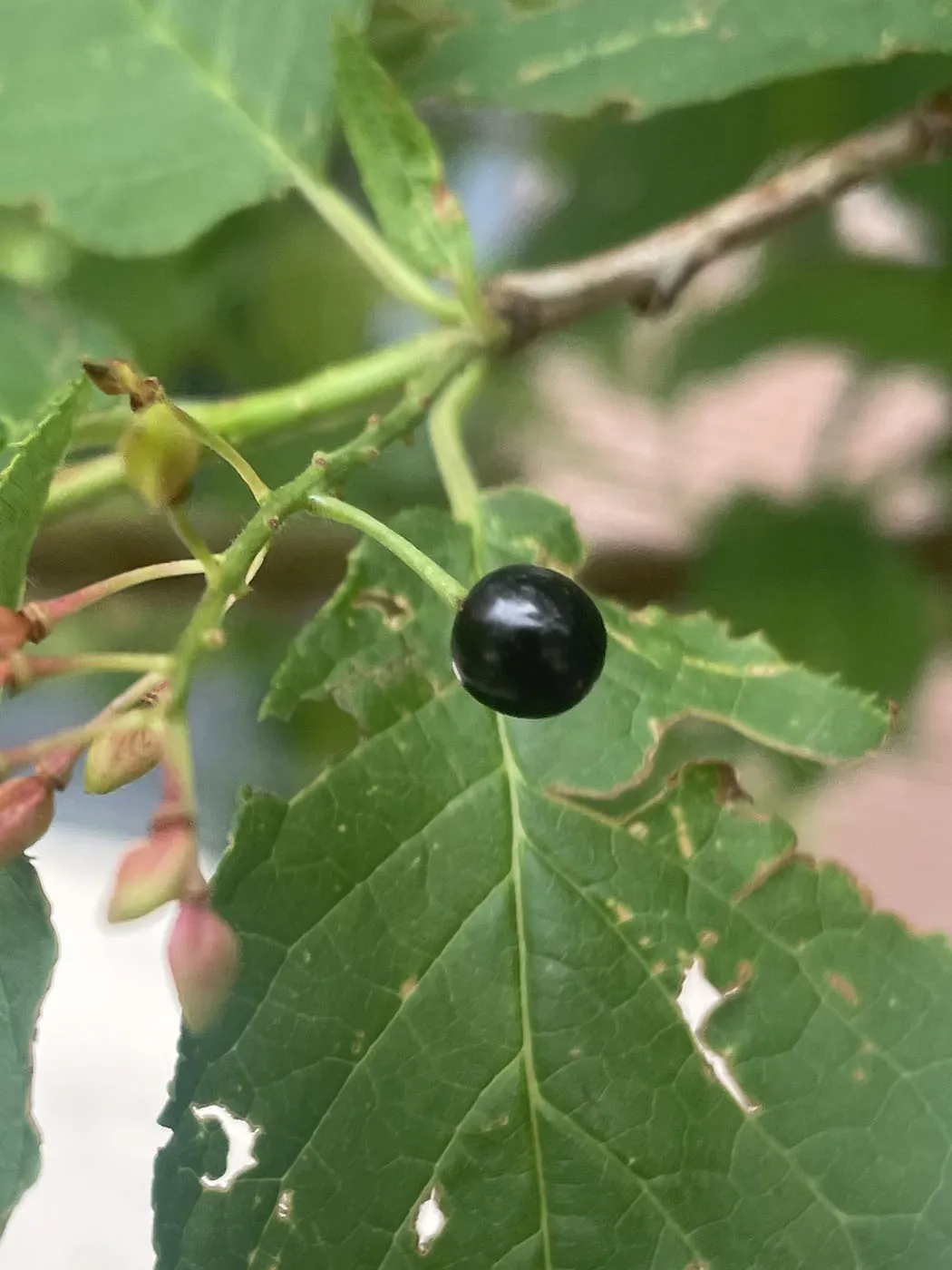
Fruit: Red drupes that mature to black.
Light: Prefers full sun.
Soil: Well-drained soil with high organic matter.
Propagation: Stratified seed or softwood cuttings.
Failure Patterns: Failure is generally uncommon.
Disease and Insects: Diseases include leaf spot, dieback, leaf curl, powdery mildew, root rot, and fire blight. Pests can include aphids, scale, borers, leafhoppers, catepillars, and Japanese beetles.
Landscape Use: Used as specimen planting or for smaller yards.
Availability: Readily available in trade.