Crabapple
Scientific Name: Malus spp.
Family: Rosaceae
Location on Campus: 46.895528, -96.802972
Description: Crabapples are grown around the world, from North America to Europe and Asia. There are around 100-200 varieties of crabapples grown in nurseries in North America. They are popular for their spring flowers, summer fruit, and fall color.
Hardiness: USDA hardiness zones 4 to 7.
Natural Habitat: North America, Europe, and Asia.
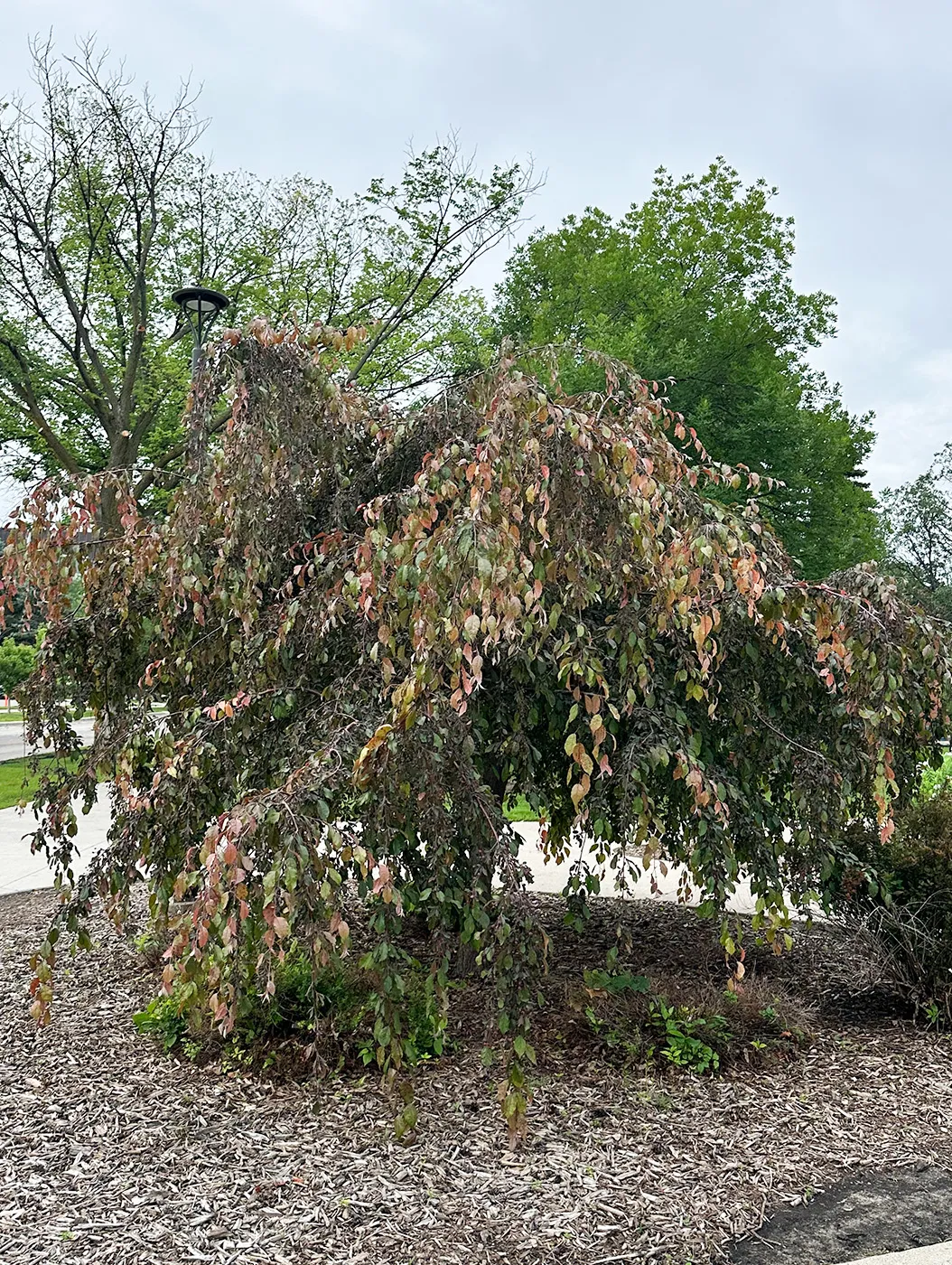
Mature Size: Height: 15-20', Spread: 12-20'
Form (Shape): Ranges between a low mound, an upright tree, and a pendulous tree.
Growth Rate: Medium.
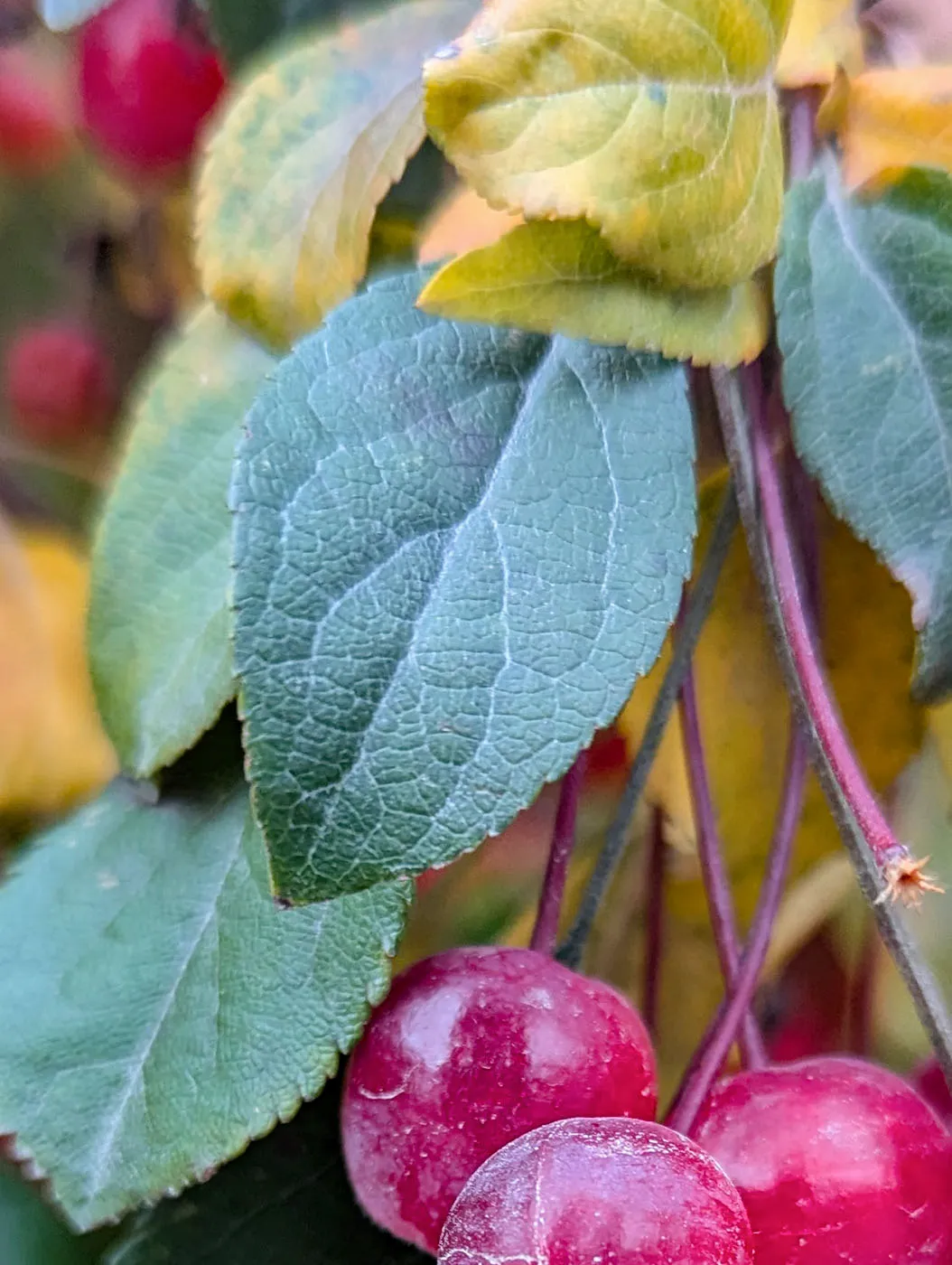
Foliage: Alternate leaves that range between oval, ovate, and elliptical shapes. Leaves are usually slightly serrated.
Summer: Ranges from light green to dark green.
Autumn: Ranges between yellow, red, and purple.
Texture: Medium.
Flowers: Flower color ranges between white, pink, and red. All flowers are single, perfect and have 5 petals which are suborbicular to obovate. Flowers form in umbels or corymb-like racemes. Flowers have around 15-20 stamens and an inferior 3-5 celled ovary.
Fruit: Produces a pome that has a persistent or deciduous calyx. Comes in a range of colors between red, yellow, and green. Either 2” or less in diameter.
Light: Full sun.
Soil: Well-drained, moist, acidic (pH 5-6.5), heavy loam soils.
Propagation: Can be propagated through budding, grafting, softwood cuttings, and tissue culture. Seeds should be stratified for 2-3 months.
Failure Patterns: Failure is moderately common.
Disease and Insects: Prone to scab, fire blight, rust, leaf spot, and powdery mildew.
Landscape Use: Accent, specimen, or in groups.
Availability: Many cultivars available in retail nurseries.