European Larch
Scientific Name: Larix decidua
Family: Pinaceae
Location on Campus: 46.895611, -96.805389
Description: Larix decidua is a large deciduous tree known for its yellow fall color and soft needles. It is native to central Europe.
Hardiness: USDA hardiness zones 3 to 6.
Natural Habitat: Northern and Central Europe.
Mature Size: Height: 70’ to 75’, Spread: 25’ to 30’
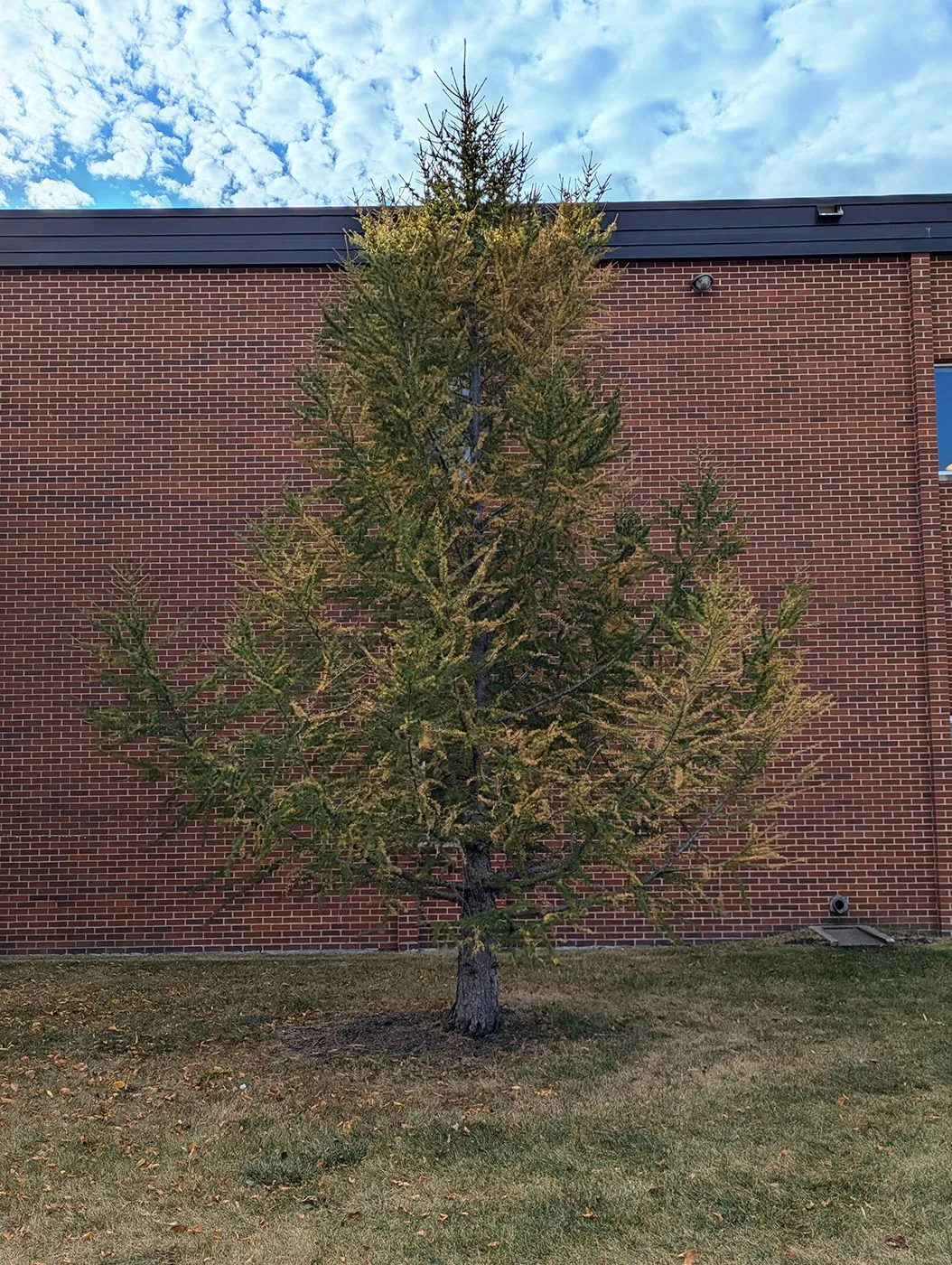
Form (Shape): Pyramidal. The branches spread horizontally, while the branchlets droop.
Growth Rate: Medium to fast rate, growing 2.5’ every year.
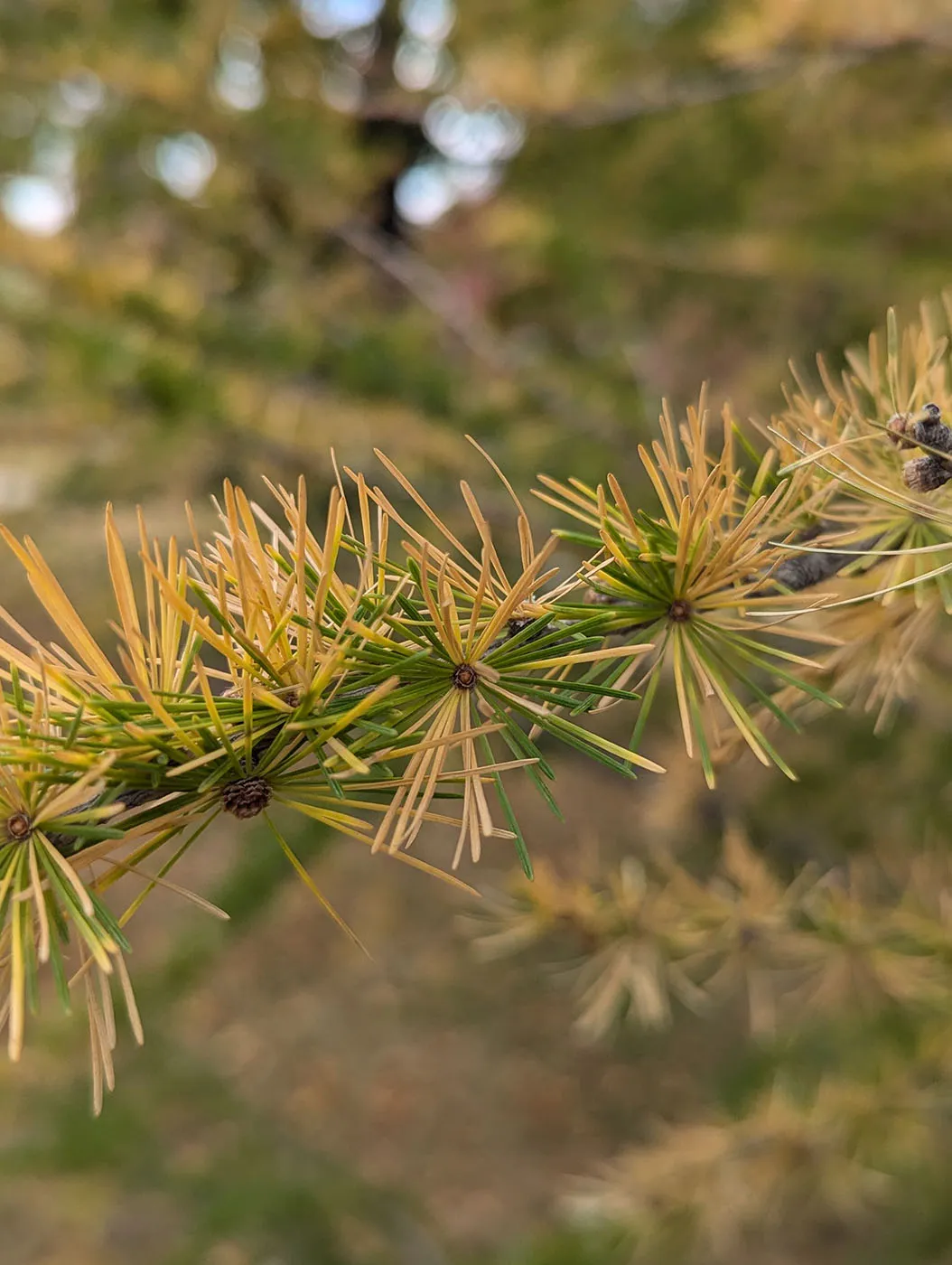
Foliage: Needles are found on either long shoots or short shoots (spurs). Those on long shoots are 1.24” long, narrow, and pointed or blunt. Those on spurs are grouped together, 30-40 per spur, .5-1.5” long, narrow, and more blunt than those on long shoots. Needles are bright green when young. Deep green foliage in the summer that turns yellow in autumn.
Texture: Medium fine with foliage, medium coarse in winter.
Flowers: Monoecious. Female flowers or strobili are red, pink, yellow, or green; egg shaped, and .5” long. The male strobili are smaller, and yellow. In early spring, both strobili cover the branchlets.
Fruit: Produces a cone. The cone scales are overlapping, not reflexive, and pubescent on the backside. Cones are 1-1.5” long, red when young, and mature to yellow brown at first, then to brown.
Light: Full sun, not tolerant of shade.
Soil: Moist and well-drained soils, though often thrives in wet or boggy conditions. Not tolerant of dry, shallow, or chalky soils.
Propagation: Seeds will germinate with no pretreatment, though can benefit from a stratification of 30-60 days at 30-41°F. Cuttings are difficult to root. Cultivars can be grafted.
Failure Patterns: Failure due to drought can occur. Prone to top dieback.
Disease and Insects: A serious pest is the larch case-bearer.
Landscape Use: Can be used in parks and other large landscapes.
Availability: Available, along with a few cultivars in retail nurseries.