Ginkgo
Scientific Name: Ginkgo biloba
Family: Ginkgoaceae
Location on Campus: 46.892056, -96.802139
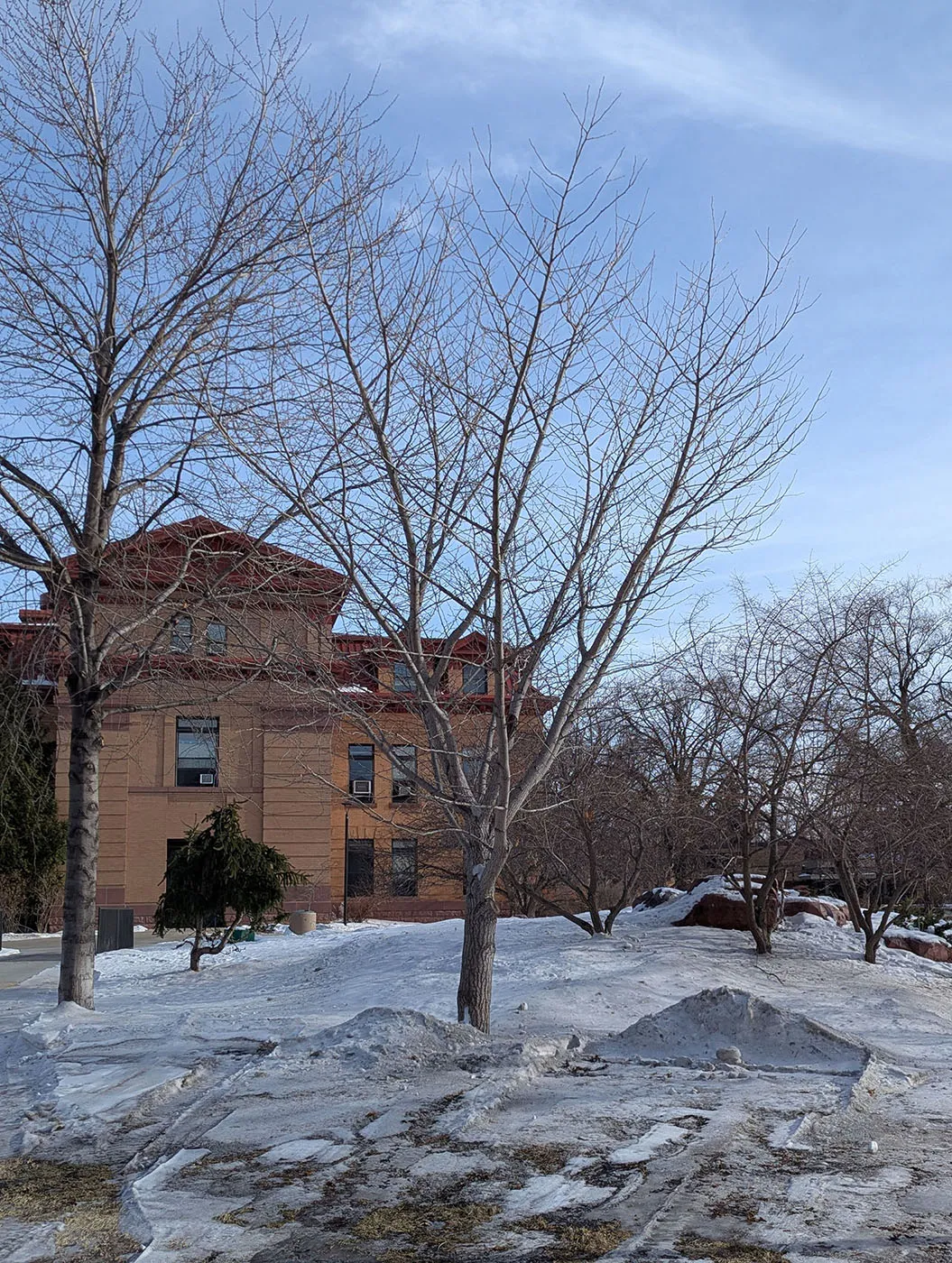
Description: Very historic species native to China. Thought to be extinct until a small planting was discovered in China. In western North Dakota fossils can still be found of ancient ginkgos. Male trees are more desirable in the landscape and more readily available in nurseries, and female trees produce foul-smelling fruit that can be messy.
Hardiness: USDA hardiness zones 4-8
Natural Habitat: China. Fossilized leaves have been collected in North Dakota, indicating that their native range was once very large.
Mature Size: Height: 50-80', Spread: 30-40', up to 100’ in very old trees
Form (Shape): Variable, usually pyramidal in youth, leading into a globular shape, to a wide spread.
Growth Rate: Slow
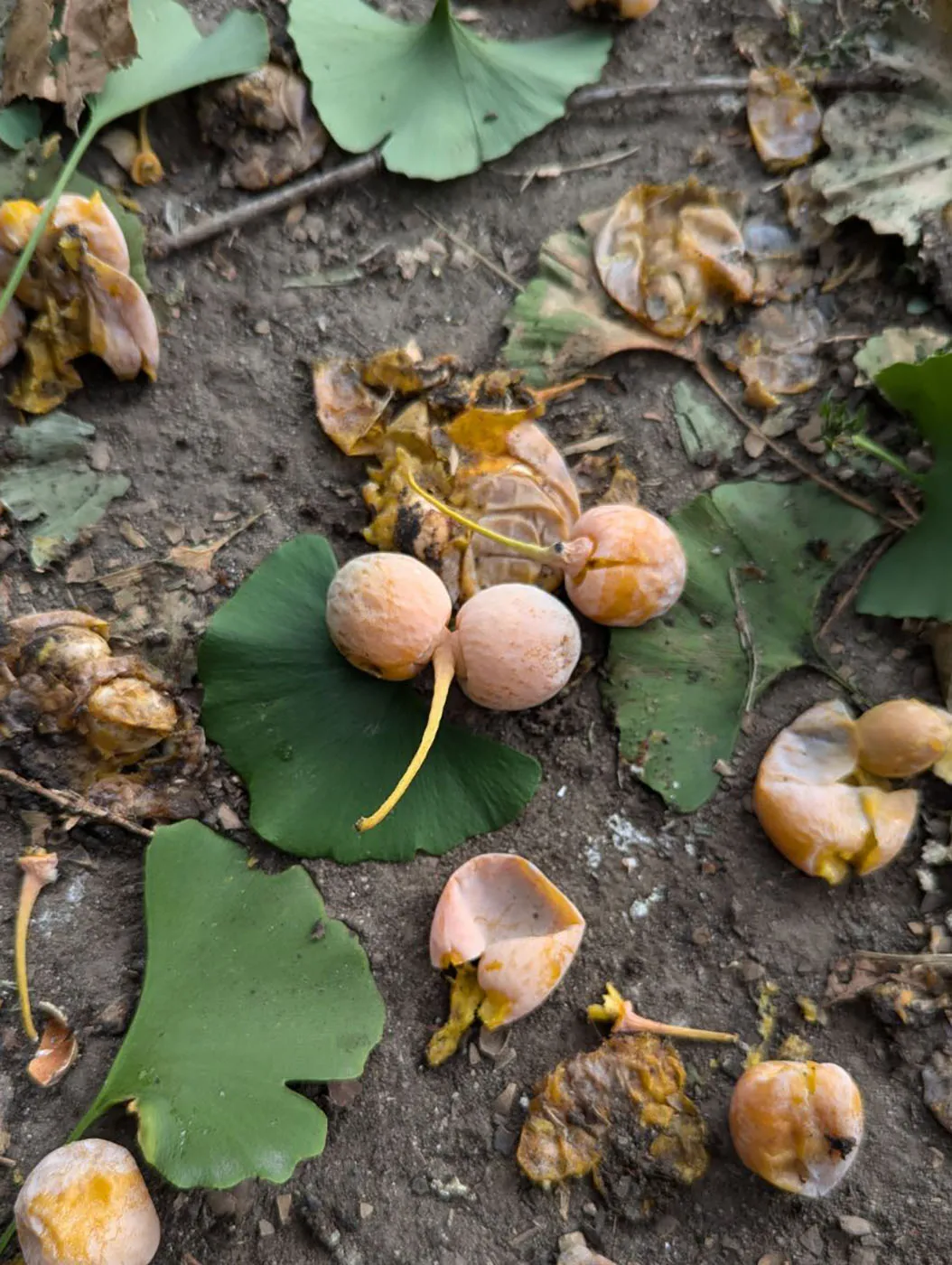
Foliage: Leaves are in clusters of 3-5 on spurs, fan-shaped, and dichotomously veined. Summer foliage is a bright green changing to yellow, unless a hard frost causes leaves to fall early.
Texture: Medium
Flowers: Female trees bear flowers, not ornamentally significant
Fruit: Female trees produce fruit that is tan to orange in color, plum like in shape. The fruit is malodorous, often described as smelling like rotten meat, old garbage or spoiled dairy.
Light: Full sun
Soil: prefers moist soil but will grow in almost any condition
Propagation: By seed or cuttings
Failure Patterns: Tree failure is uncommon
Disease and Insects: No significant diseases or insects
Landscape Use: Excellent city tree for parks and streets as they are very tolerant of urban conditions.
Availability: Readily available in retail nurseries