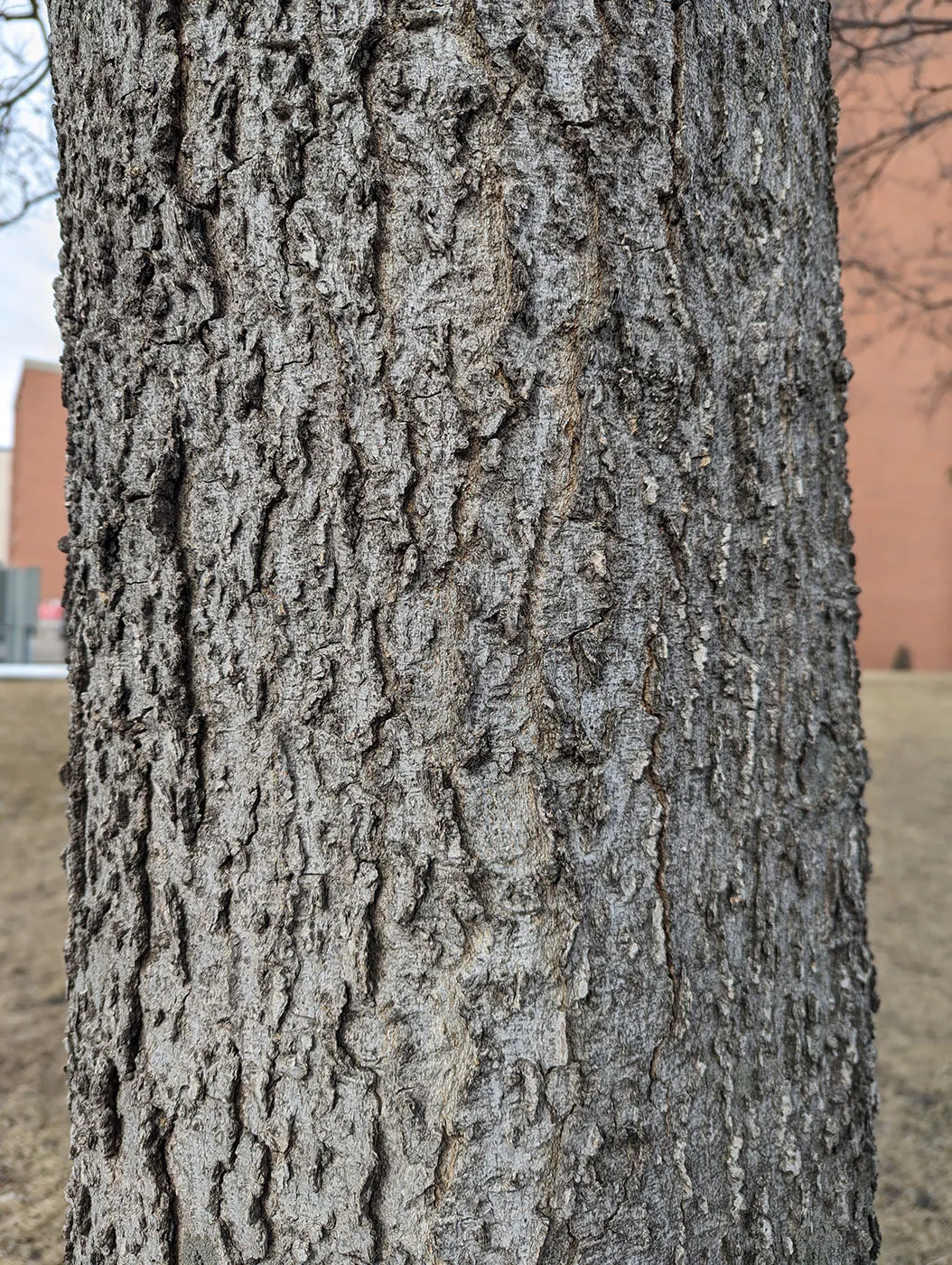
Hackberry
Scientific Name: Celtis occidentalis
Family: Cannabaceae
Location on Campus: 46.895944, -96.803028
Description: U.S. native tree. As a cousin of the elm, hackberry can replace elms that have died due to Dutch Elm Disease. Hackberry is completely immune to the disease. The corky bark and rough leaves make this what some call “a touchy-feely tree”.
Hardiness: USDA Hardiness zones 3 to 9.
Native Habitat: Midwest and Eastern United States.
Mature Size: Height: 40’ to 60’, Spread: 40’ to 60’.
Form (Shape): Weakly pyramidal in youth. As it matures, the form becomes broad with ascending, arching branches like an elm.
Growth Rate: Fast to moderate.
Foliage: Deciduous. Summer leaves are a dull green with a pale underside. Fall color is unremarkable, leaves turn yellow or yellow-green.
Texture: Medium.
Flowers: Not ornamental; very insignificant green flowers bloom in April or May.
Fruit: Fleshy orange-red to dark purple rounded fruit (drupe) with a hard seed inside.
Light: Full sun.
Soil: Prefers rich, moist soils but grows in dry, heavy, or even sandy and rocky soils. Withstands pH differences, drought tolerant.
Propagation: Stratified seed.
Failure Patterns: Failure is uncommon.
Insects and Diseases: Nipple gall.
Landscape Use: Useful for parks and large areas. Given its resemblance to elms, it is a good alternative to elms in areas where Dutch Elm Disease is a concern.
Availability: Available in nurseries in the Midwest.