Japanese Spirea
Scientific Name: Spiraea japonica
Family: Rosaceae
Location on Campus: 46.891722, -96.802333
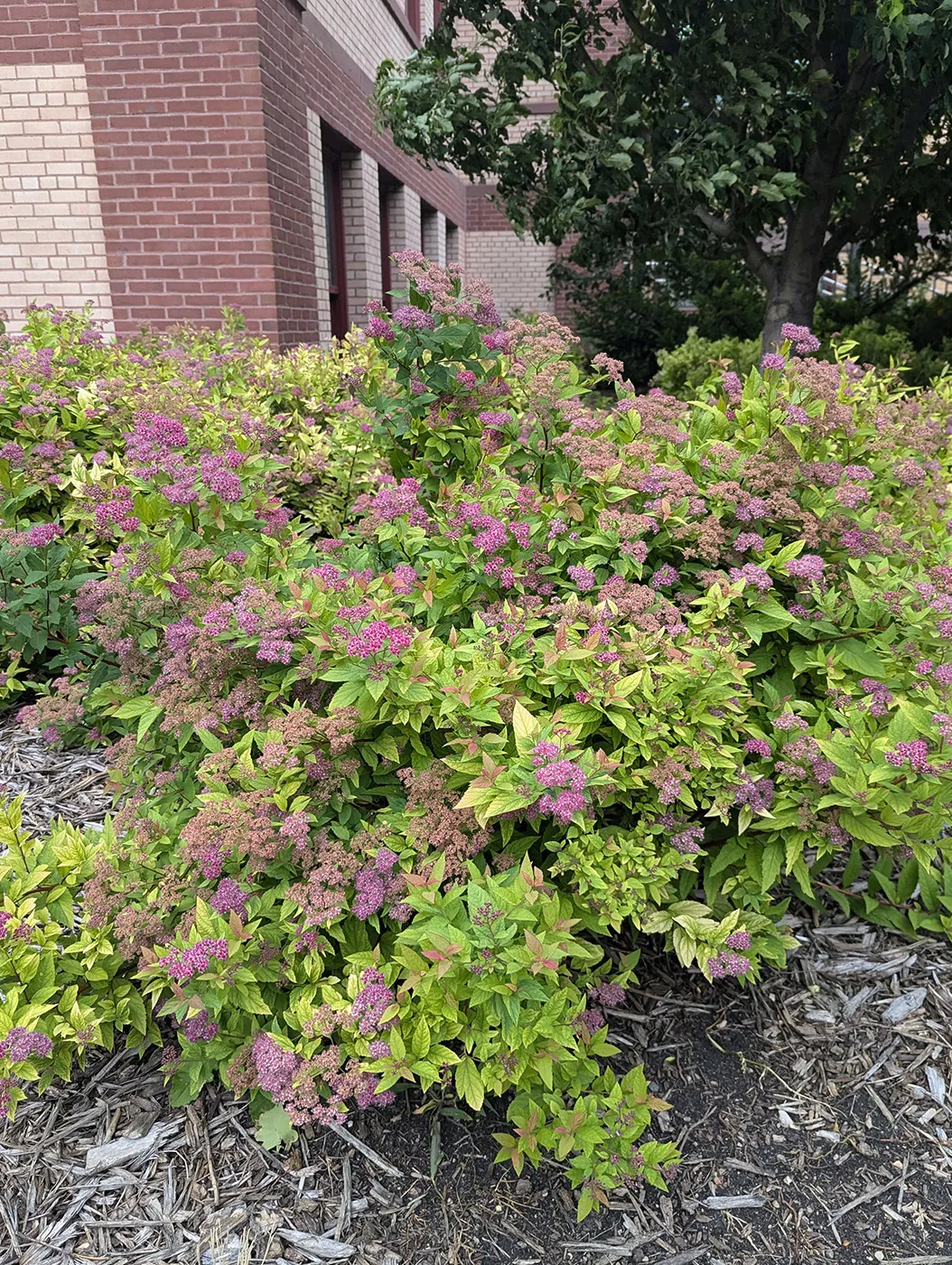
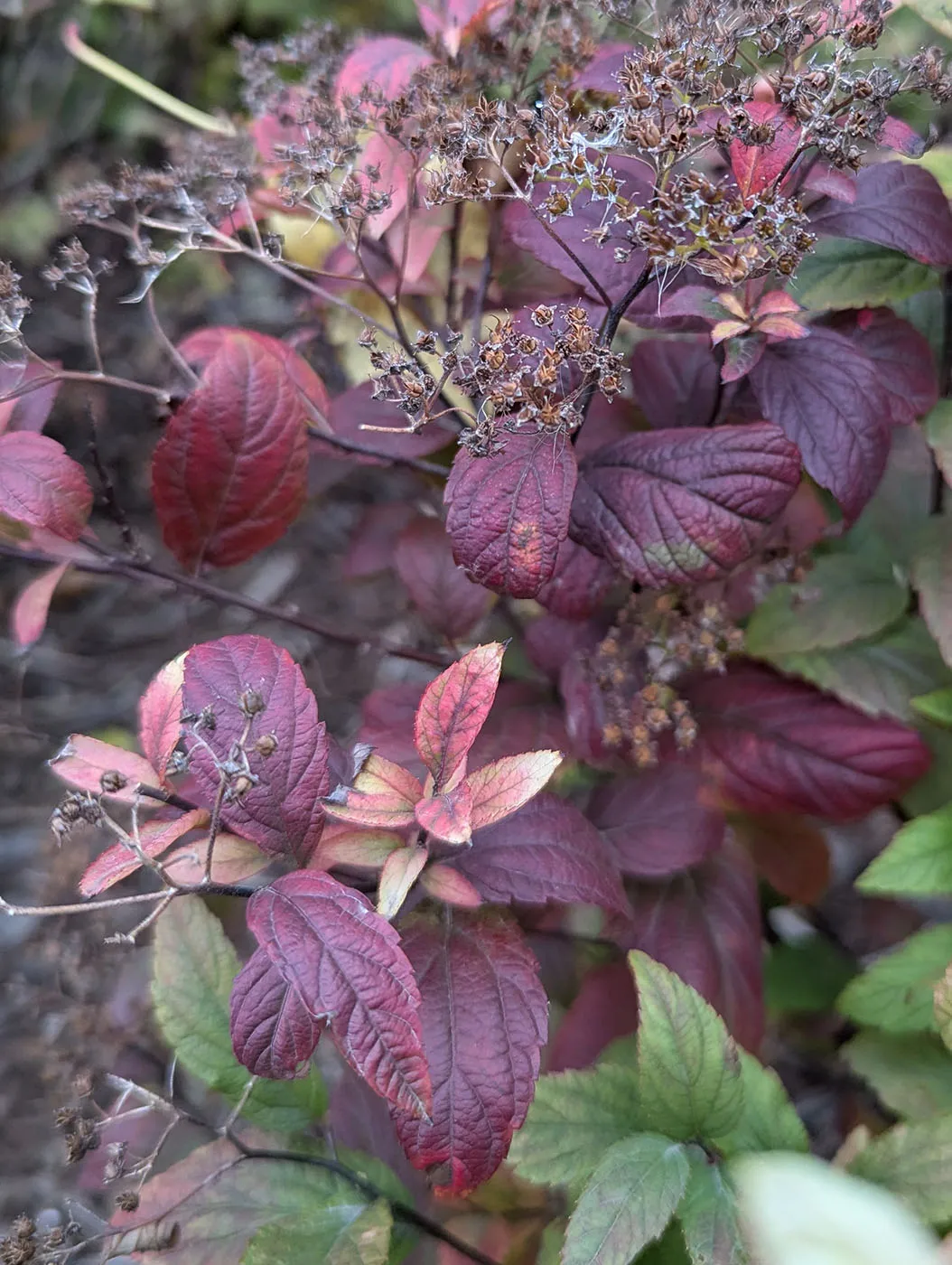
Description: Japanese spirea is a very common and favorited plant among gardeners, however, it can be an aggressive self-seeder and has even naturalized in the eastern United States. This dense, upright, mounded shrub provides late spring and summer flowers and superb fall color.
Hardiness: USDA hardiness zones 4 to 7.
Natural Habitat: Native to Japan and China.
Mature Size: Height: 4’-6’, Spread: 5’-7’
Form (Shape): Mounded; round.
Growth Rate: Fast.
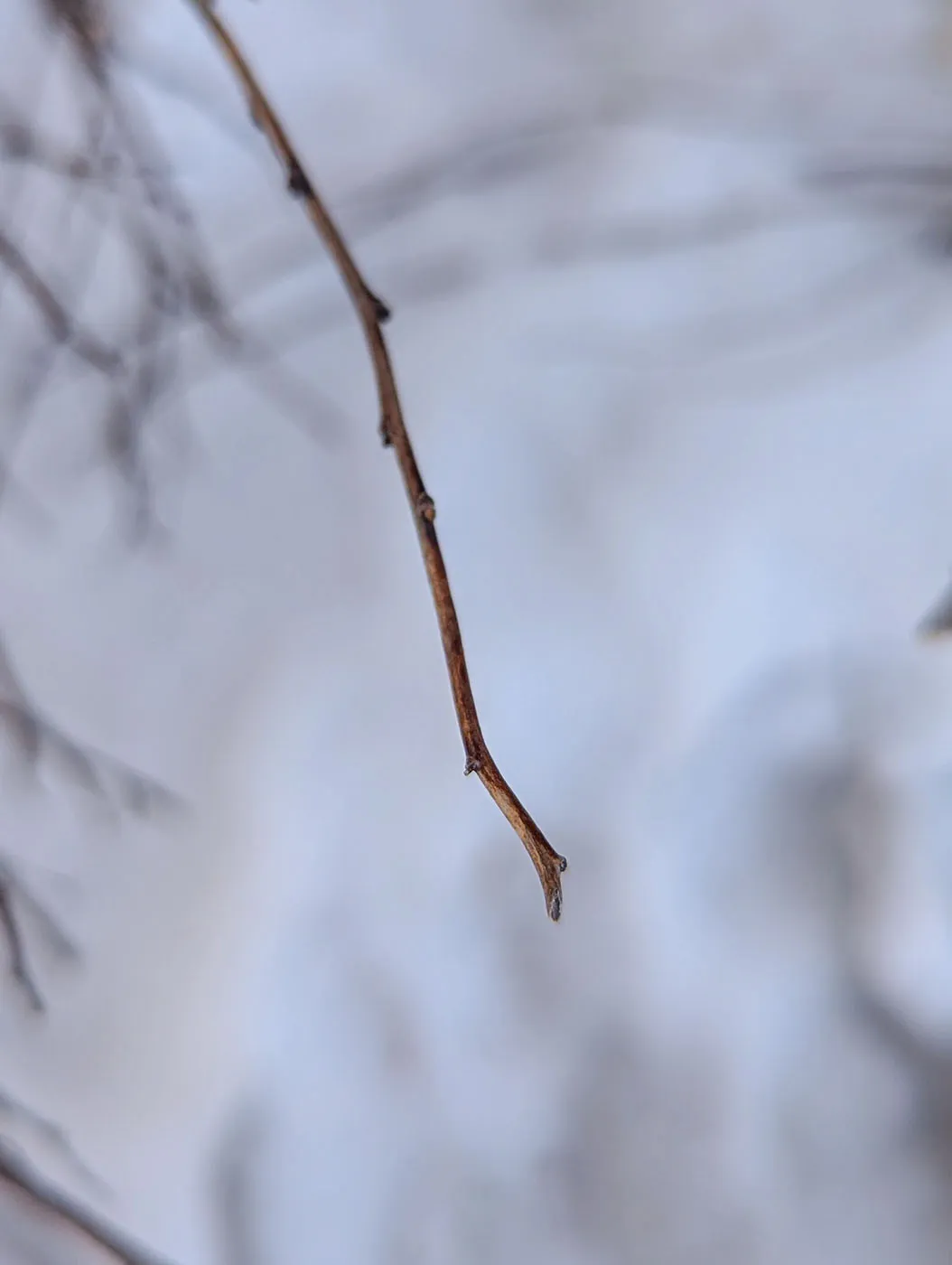
Foliage: Deciduous. Dark green leaves with serrated or toothed margins. Leaves are alternate, simple, and measure 1 to 3 inches long and 1 to 2 inches wide.
Texture: Medium.
Flowers: Tiny white to pink flowers in corymbs.
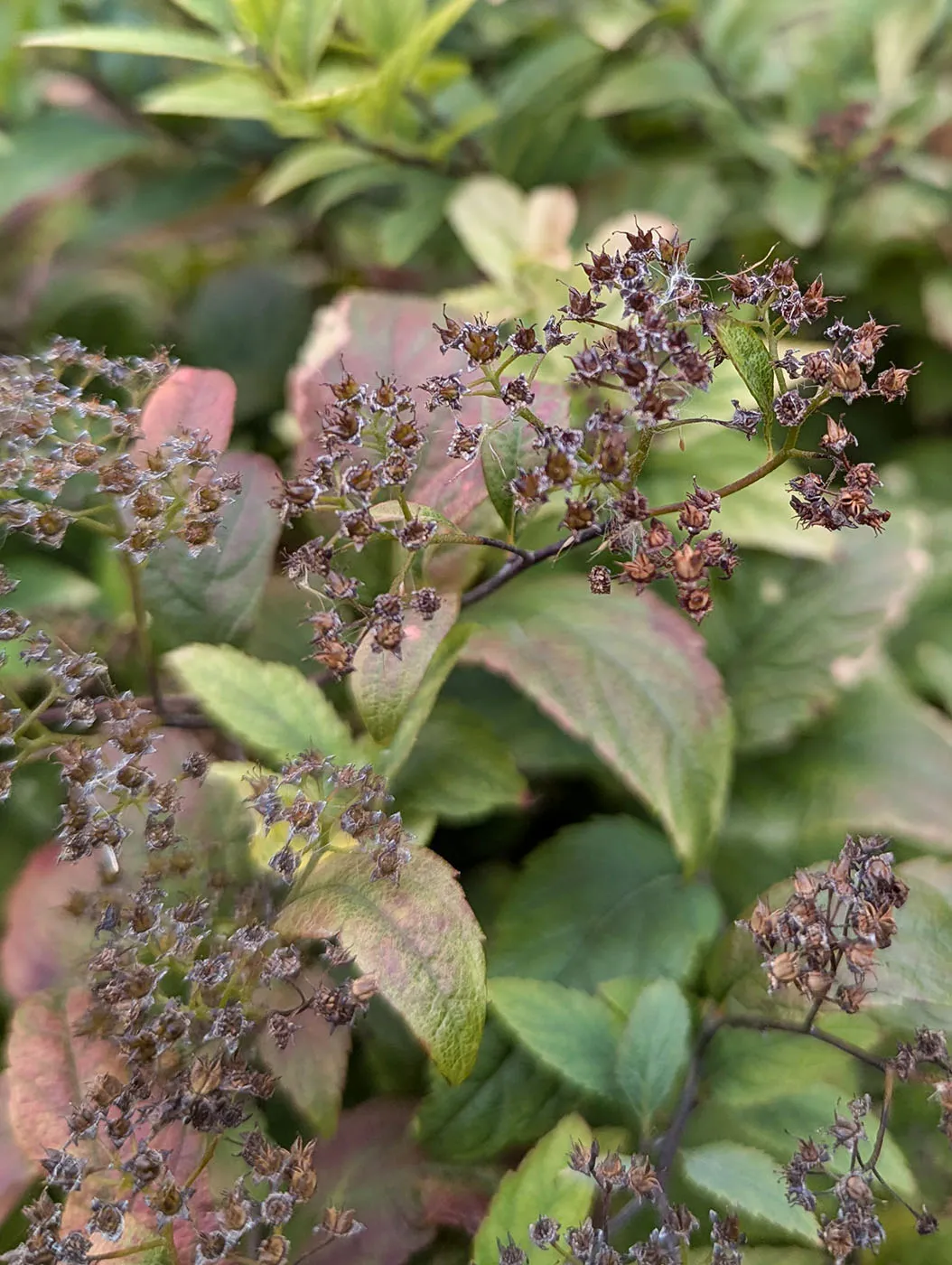
Fruit: Brown follicles. Not ornamentally significant.
Light: Full sun to partial sun.
Soil: Moist, well-drained soil. Tolerates alkaline and clay soil.
Propagation: Most successfully propagated by stem cuttings.
Failure Patterns: Failure is generally uncommon.
Disease and Insects: No serious insect or disease problems. However, wet soils can promote root rot, powdery mildew, and leaf spots.
Landscape Use: Great addition to rock gardens and foundation plantings. Can be used in mass or group plantings.
Availability: Species is uncommonly sold in retail trade, however numerous cultivars are readily available.