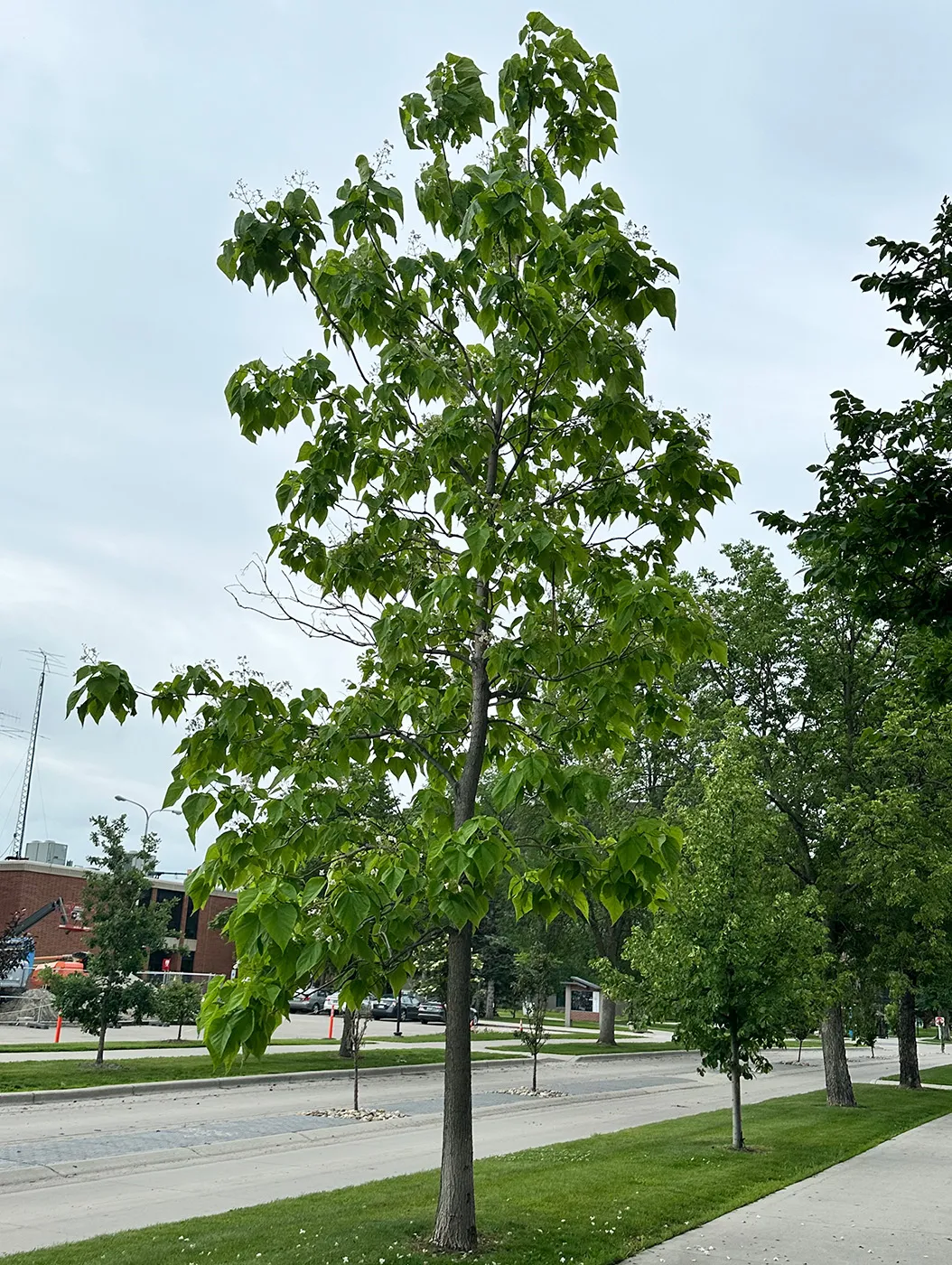
Northern Catalpa
Scientific Name: Catalpa speciosa
Family: Bignoniaceae
Location on Campus: 46.895323, -96.802864
Description: U.S. native tree. Catalpa speciosa is a medium-sized tree that has large, tropical-looking leaves, showy summer flowers and unique fruit capsules that resemble large bean pods.
Hardiness: USDA hardiness zones 4 to 8(9).
Native Habitat: Eastern United States.
Mature Size: Height: 40’ to 60’, Spread: 20’ to 40’.
Form (Shape): Open, irregular oval crown.
Growth Rate: Moderate to fast.
Foliage: Deciduous. Leaves are large and medium green in the summer, turning yellow or brown in the fall.
Texture: Coarse.
Flowers: Flowers are white with yellow throats and purple flecks, blooming in late May or early June. Ornamental, blooms later than many ornamental trees.
Fruit: 12” long seed pod (capsule), messy.
Light: Full sun to partial shade.
Soil: Performs well in deep, moist, and fertile soils, though has tolerance to wet, dry, or alkaline conditions.
Propagation: Seeds or cuttings.
Failure Patterns: Branches may break in wind or ice storms.
Insects and Diseases: Prone to leaf spot, powdery mildew, Verticillium wilt, twig blight, and root rot.
Landscape Use: Can be used in parks, as a street or lawn tree, or in locations with unfavorable soil conditions. Some find its seed pods messy and unattractive, but they can create winter interest. A valuable tree for rain gardens.
Availability: Available in some nurseries in the Midwest.