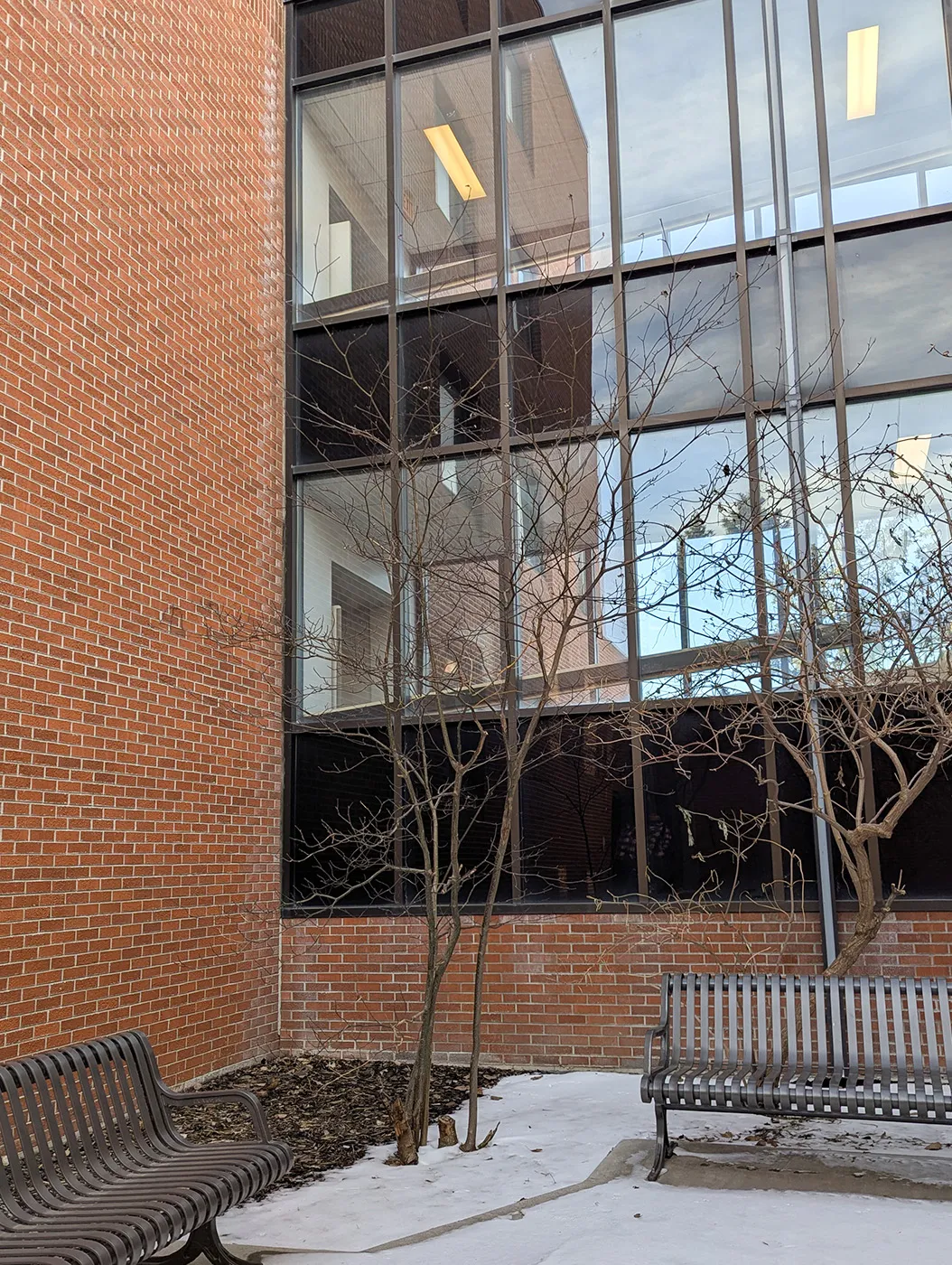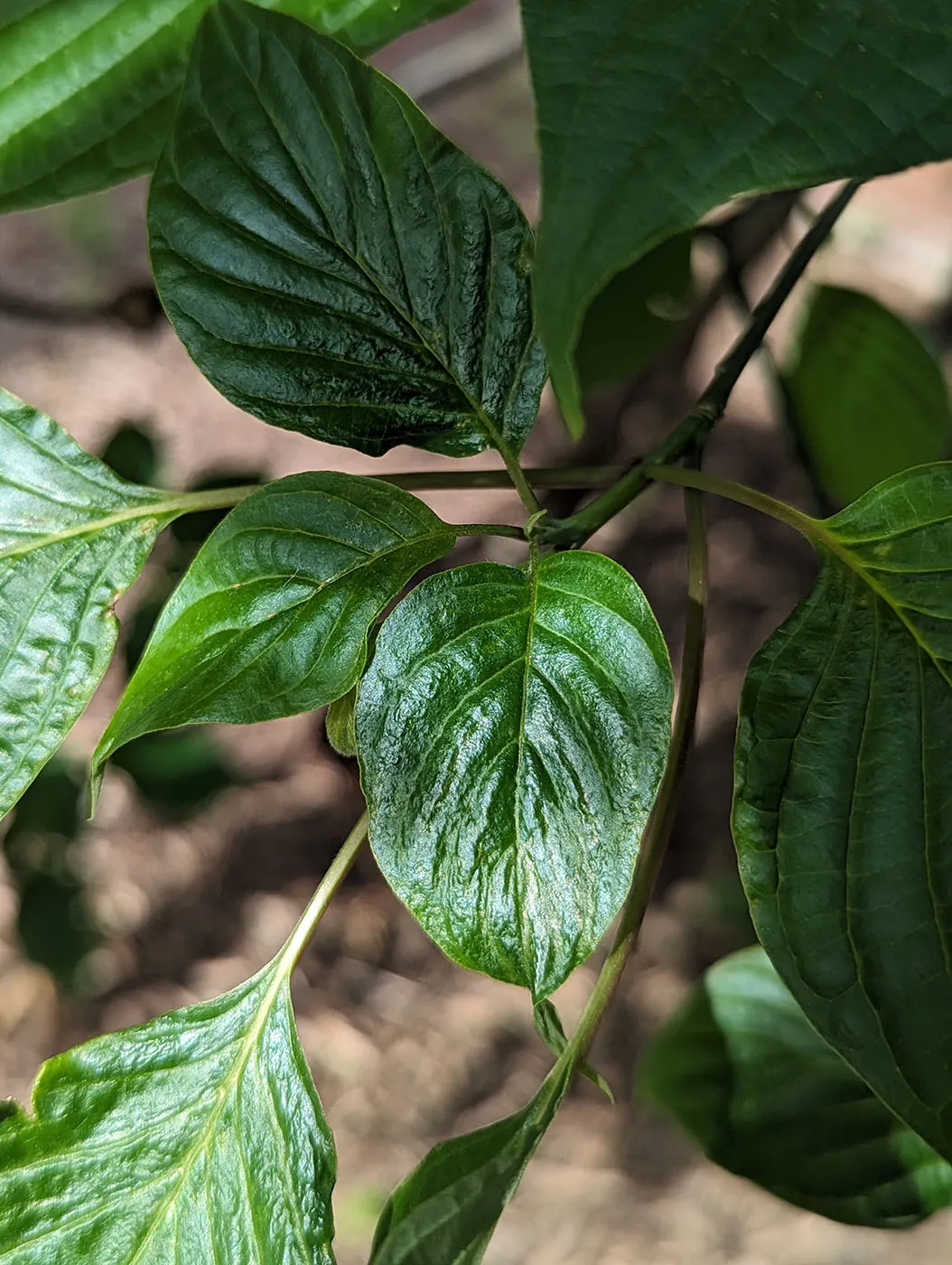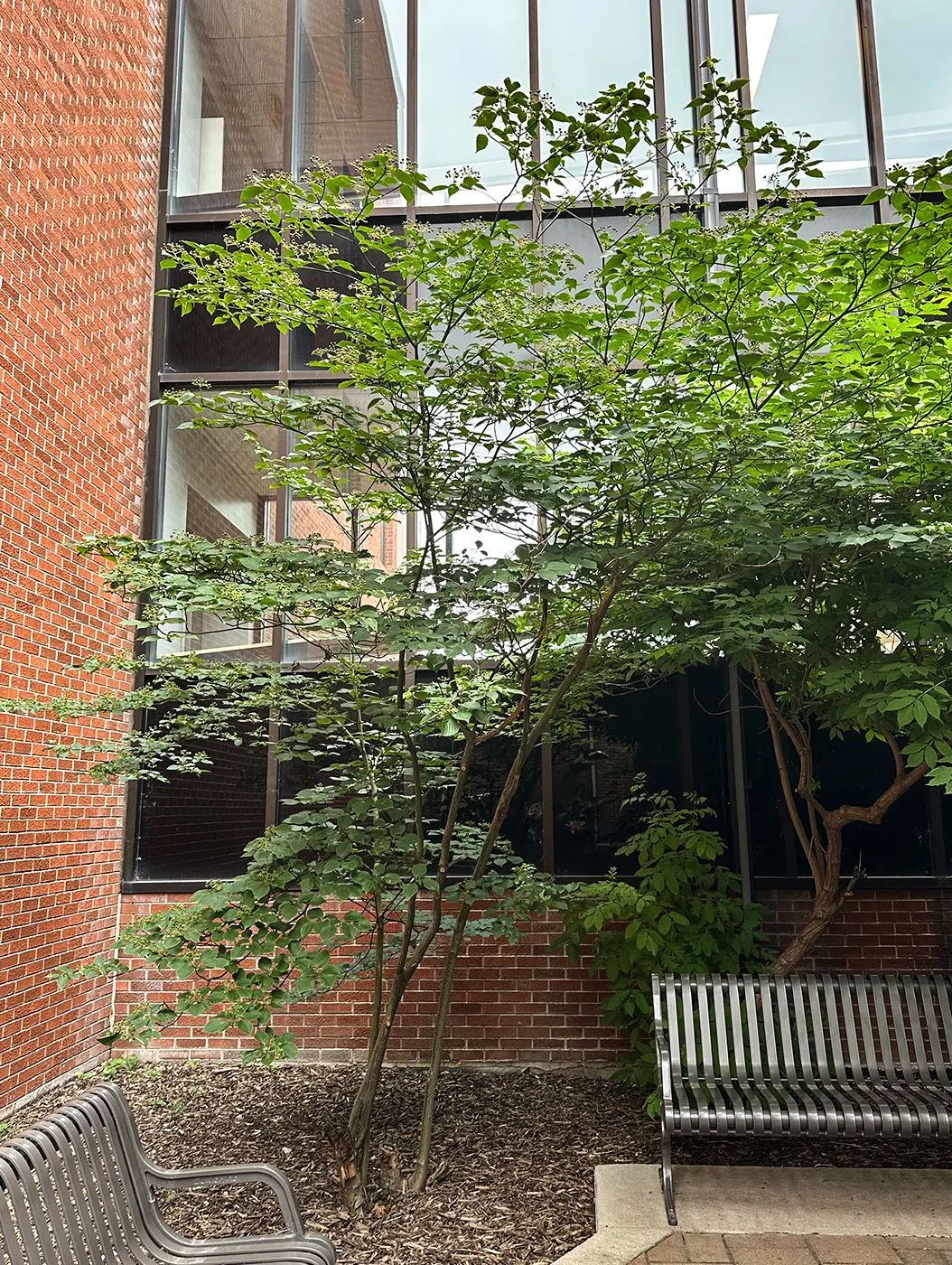
Pagoda Dogwood
Scientific Name: Cornus alternifolia
Family: Cornaceae
Location on Campus: 46.89575, -96.803528
Description: This species is unique to the dogwoods in that it has tiered or layered branches that have often been described as looking like an oriental pagoda. Having fragrant, ornamental flowers in the spring, it is an excellent addition to areas that may not receive much sun.
Hardiness: USDA hardiness zones 3-7.
Natural Habitat: Northeastern United States.
Mature Size: Height: 15’-25’, Spread: 20’-32’
Form (Shape): Low branching tree or large shrub, spreading and horizontal. Branches spread horizontally, forming stratified tiers.
Growth Rate: Slow when young, medium once established.
Foliage: Leaves are a medium to dark green in summer and turn a reddish-purple in the fall.
Texture: Medium
Flowers: Yellowish-white flowers bloom in May to early June and are very fragrant, borne in cymes that are 1.5-2.5” across, flat topped, and upright. Mildly showy.
Fruit: Produces a drupe that is bluish black, .25-.3” across, and matures in July-August.
Light: Partial shade, tolerates full sun.
Soil: Moist, acidic, well-drained soil.
Propagation: Seeds, cuttings. Cuttings should be rooted, overwintered and allowed to break bud before potting.
Failure Patterns: Tree failure is uncommon.
Disease and Insects: Susceptible to leaf spot, twig blight, and cankers.
Landscape Use: Best used as a specimen or as small groups in residential landscapes.
Availability: Readily available in retail nurseries.