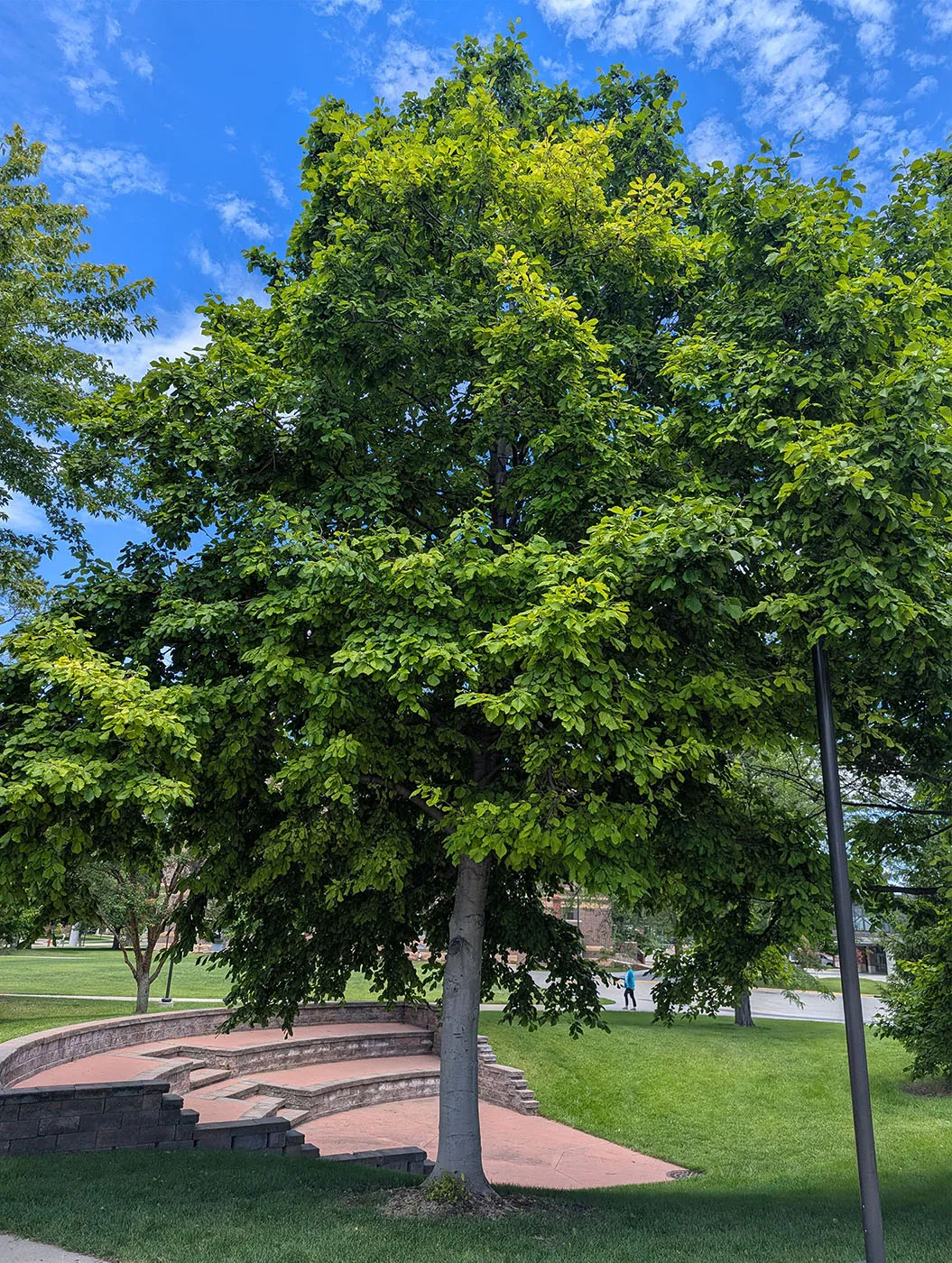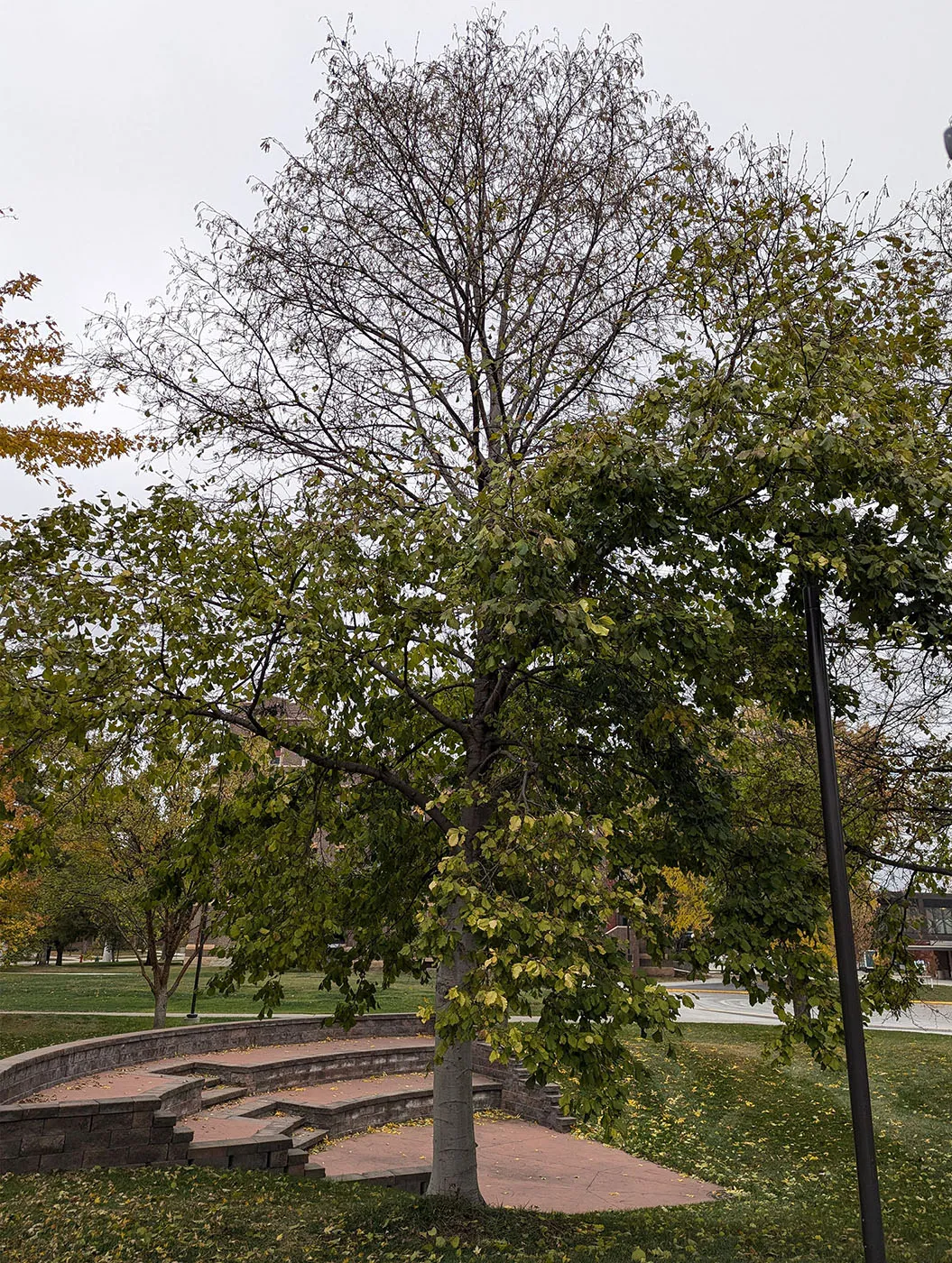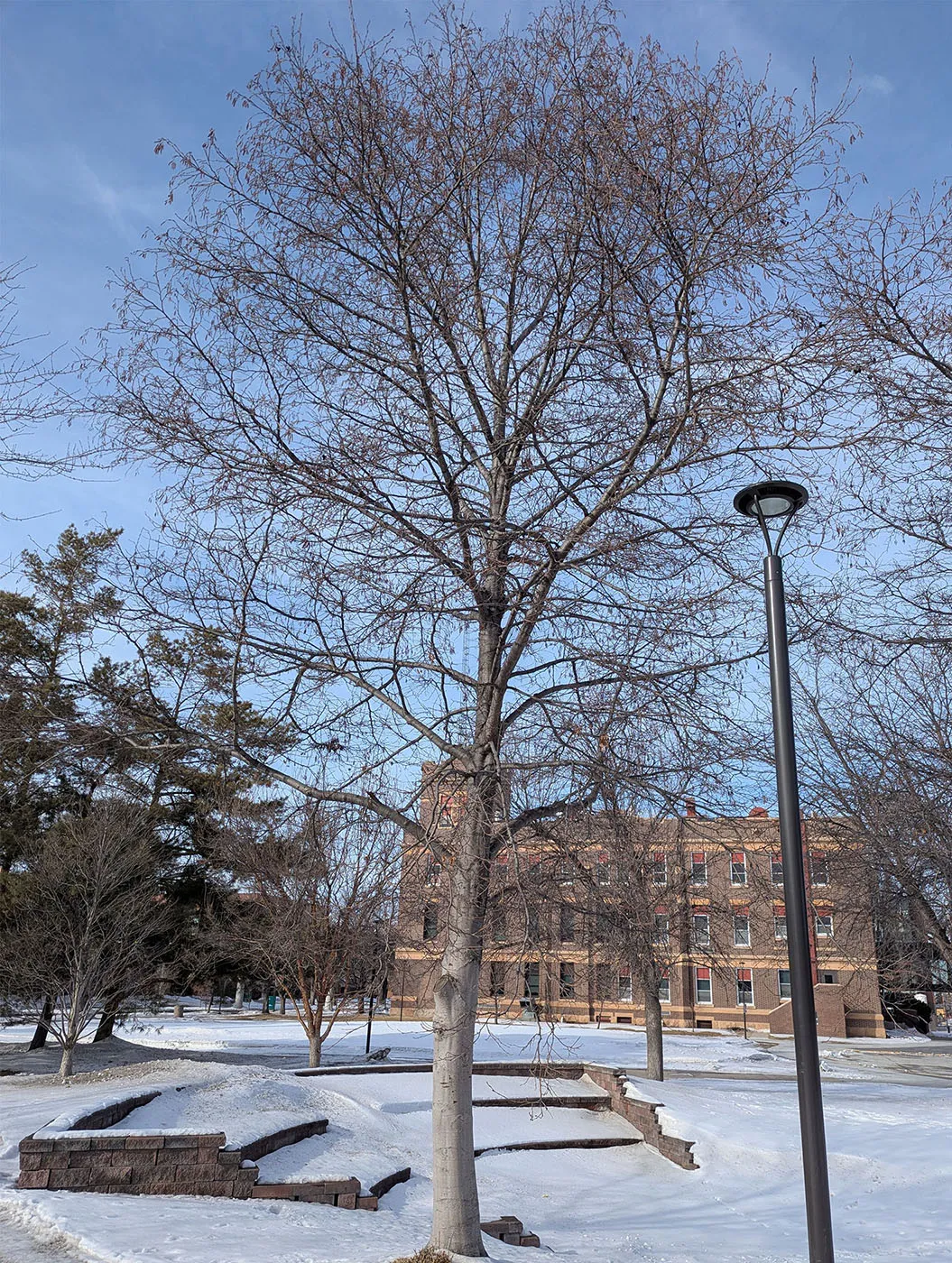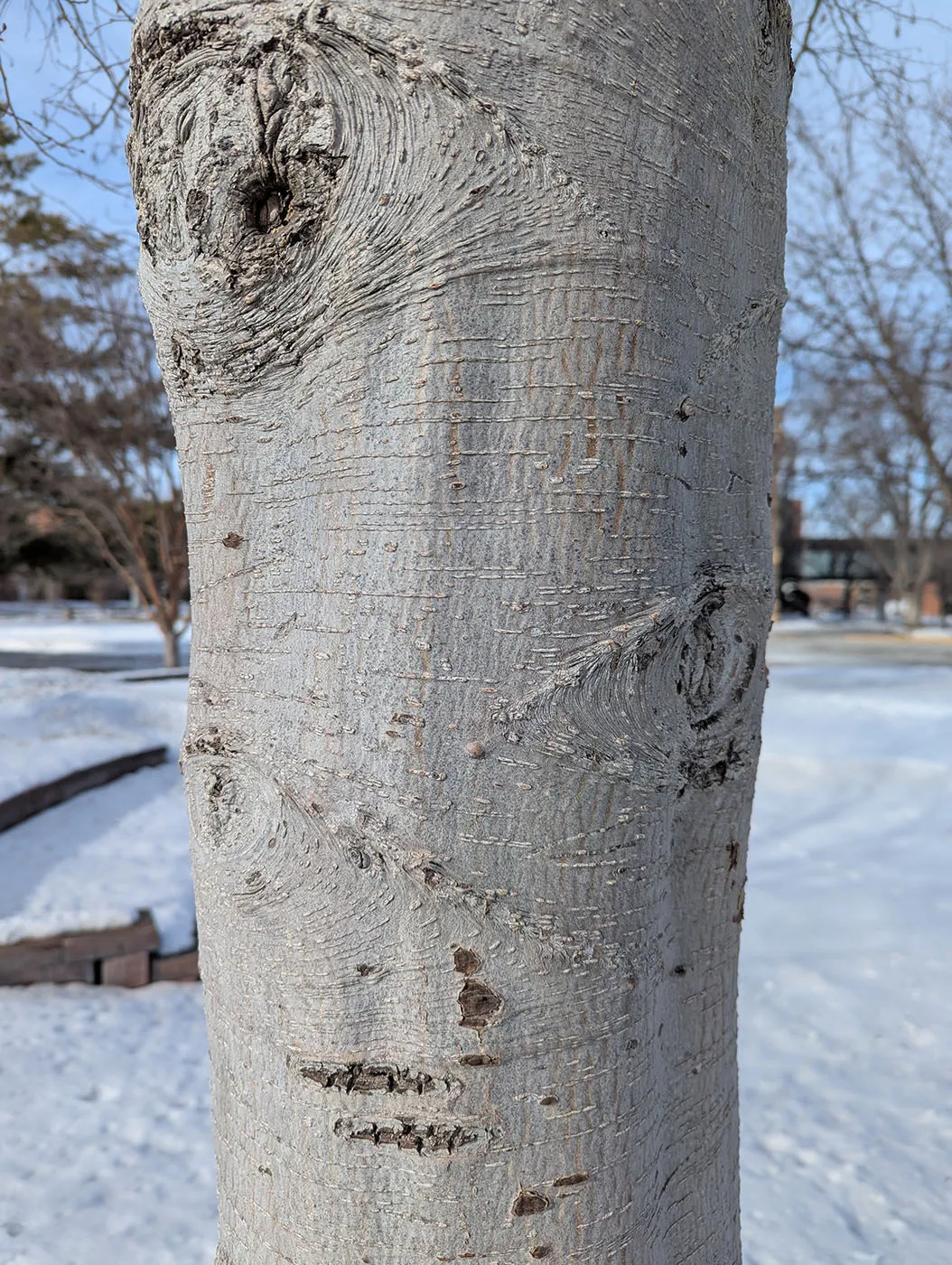
Prairie Horizon® Manchurian Alder
Scientific Name: Alnus hirsuta ‘Harbin’
Family: Betulaceae
Location on Campus: 46.892058, -96.802083
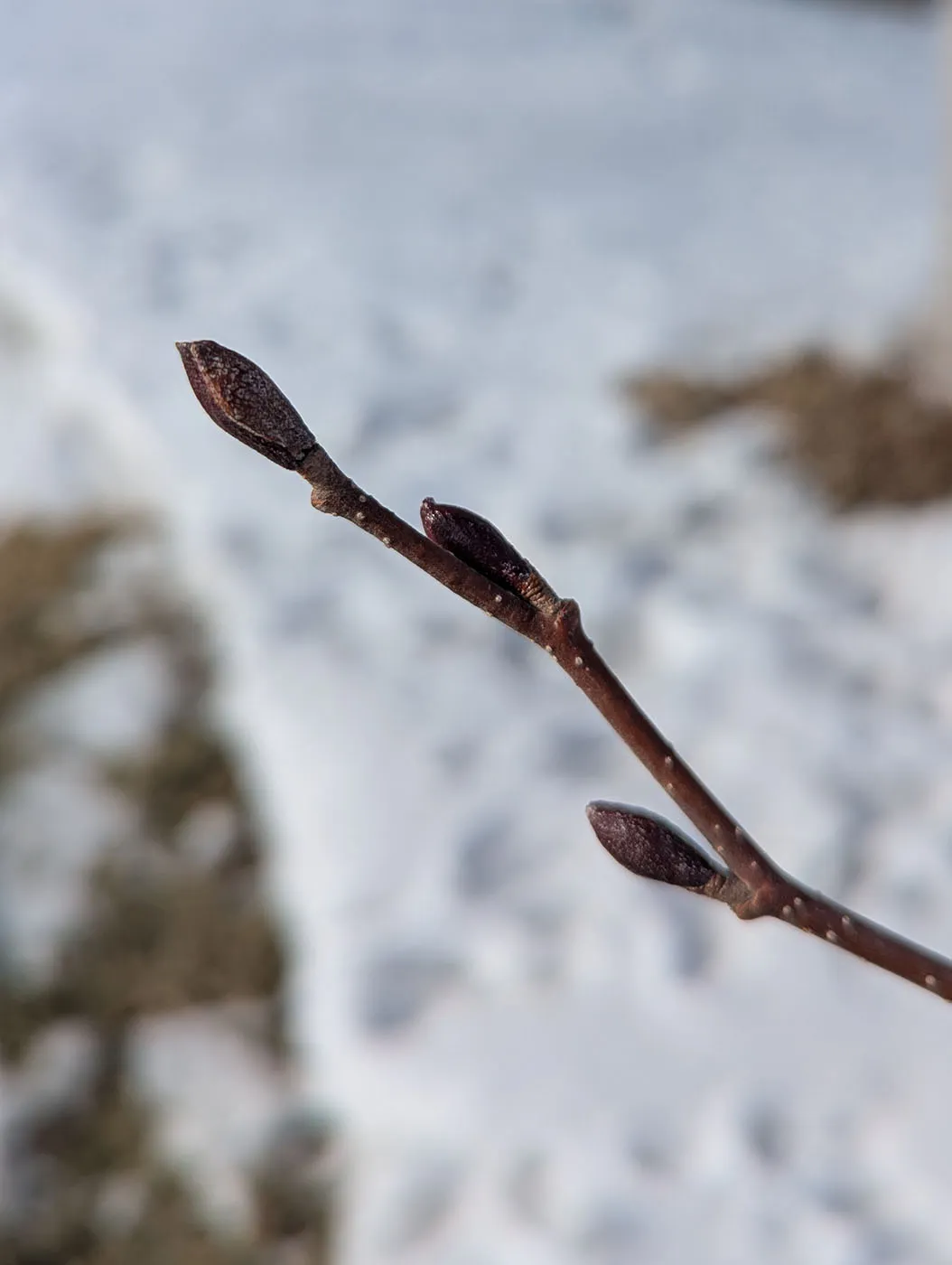
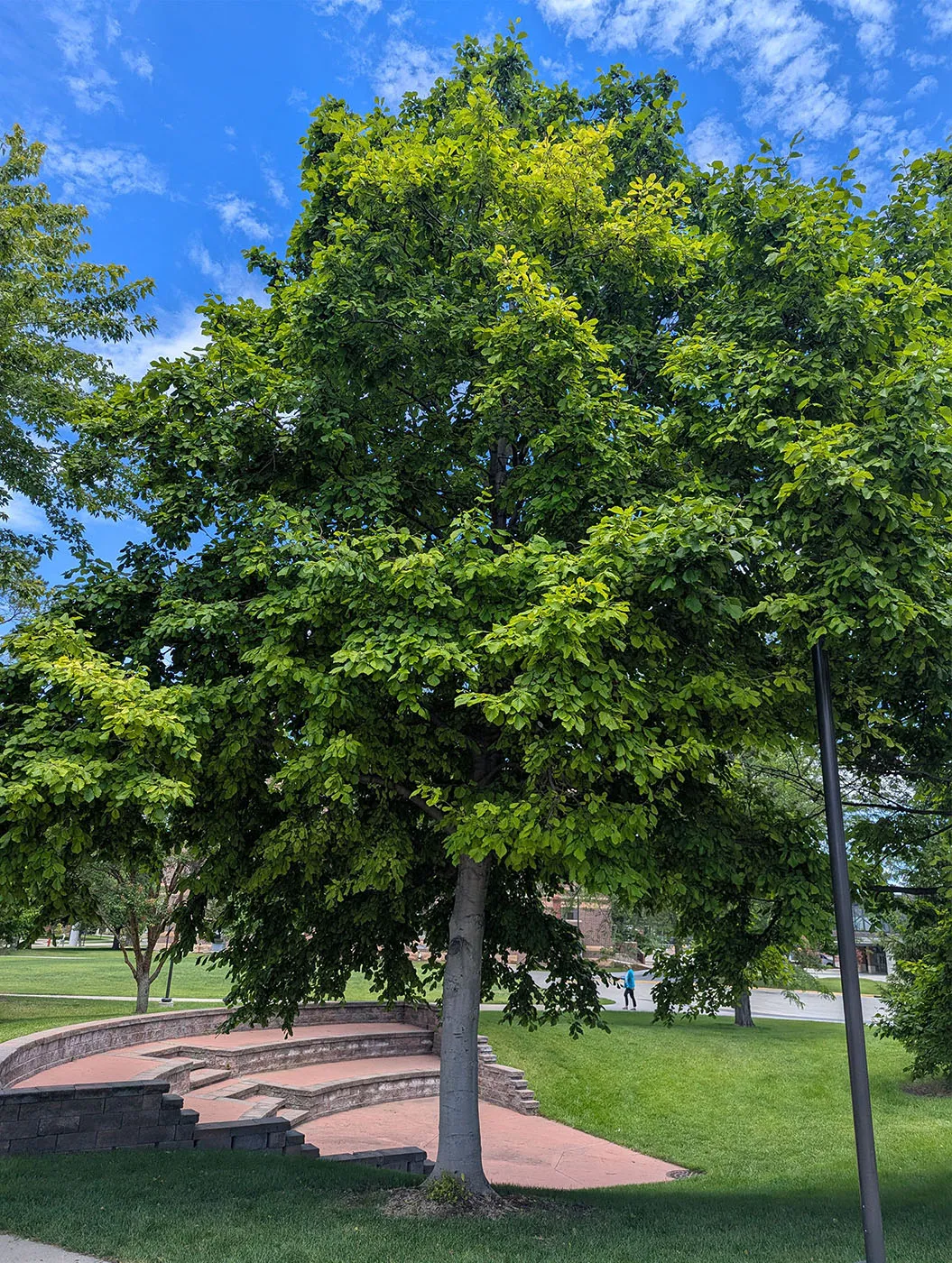
Description: Non-U.S. native tree. The most drought-tolerant alder that was evaluated in NDSU trials. Rapid-growing, medium-sized tree with lush dark green leaves is an attractive tree for dry difficult sites. The bark is gray and beech-like. Purple catkins and clusters of brown, cone-like strobiles add interest to the tree throughout winter.
Hardiness: USDA hardiness zones 3 to 7
Native Habitat: Central and Northern Asia.
Mature Size: Height: 30’, Spread: 25’
Form (Shape): Upright oval.
Growth Rate: Moderate to Fast.
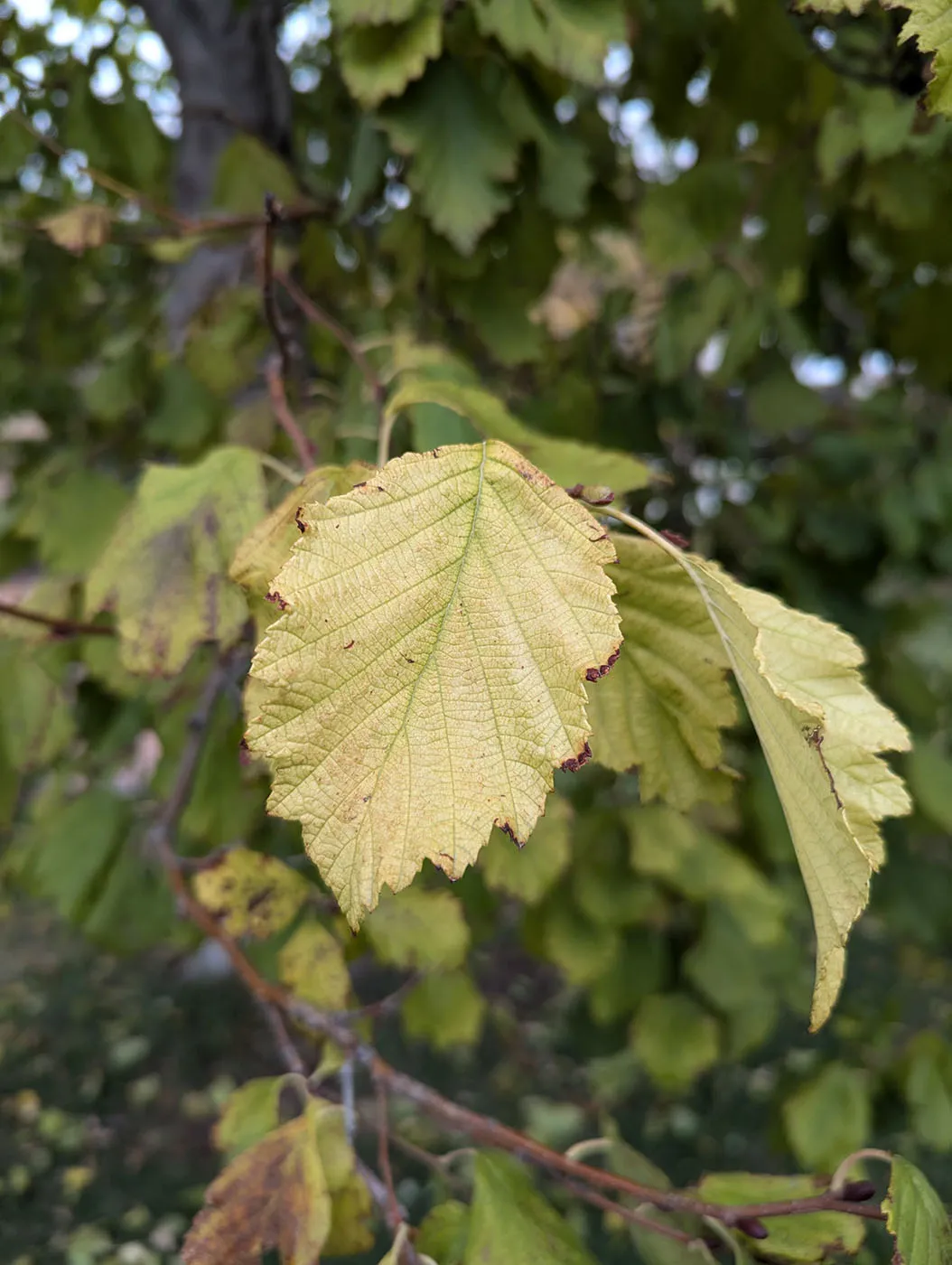
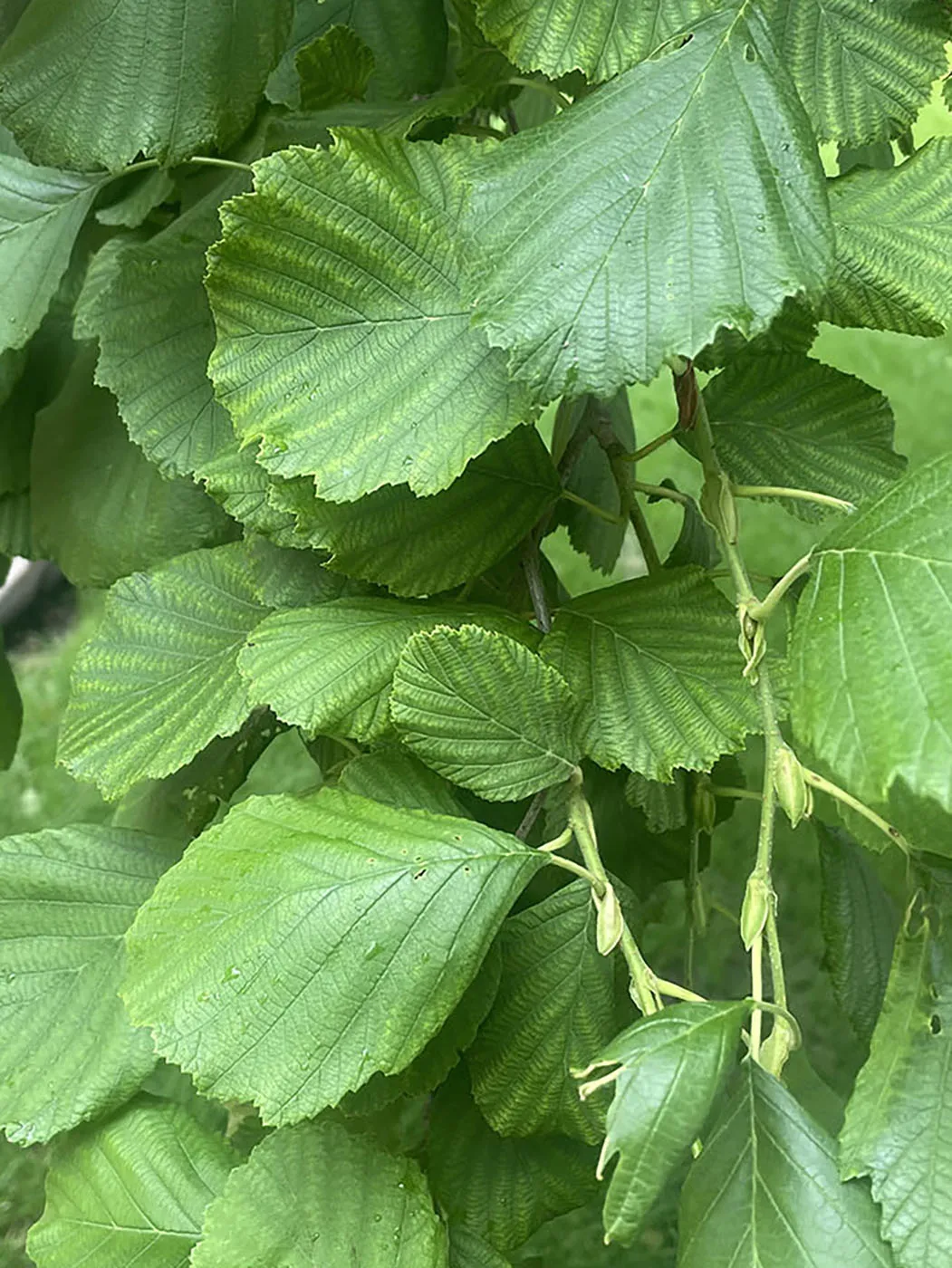
Foliage: Deciduous. Leaves are a dark glossy green in the summer and turn yellow in the fall.
Texture: Medium.
Flowers: Produces reddish-brown flowers (catkins) in March, not ornamental.
Fruit: small, cone-shaped strobiles (seeds are small nutlet) are produced from October to November.
Light: Full sun to part shade.
Soil: Performs well in compacted, dry soils. It is pH tolerant, including alkaline soils.
Propagation: Softwood cuttings and grafting.
Tree Failure Patterns: Sapsuckers can girdle and kill the tree.
Disease and Insects: Susceptible to woolly alder aphid (AKA maple blight aphid) and sapsuckers.
Landscape Use: Shape and texture of summer foliage is unique and interesting. Strobiles add an interesting winter feature to the tree. Recommended as a landscape specimen tree. An excellent tree for difficult, dry locations. Performs well on boulevards and in parking lot islands. Drought tolerant. It has not shown any invasive tendencies.
Availability: Available in trade.