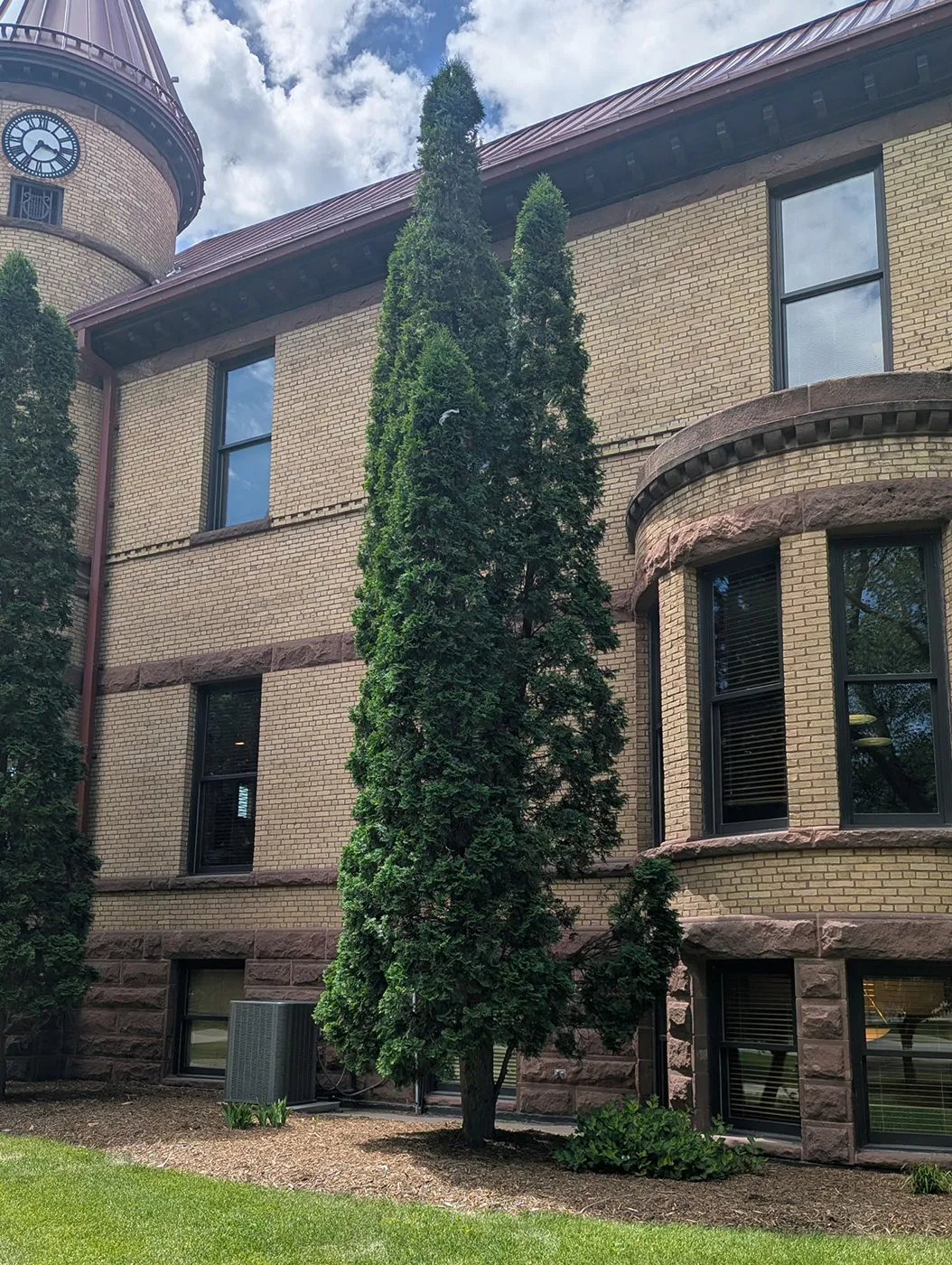
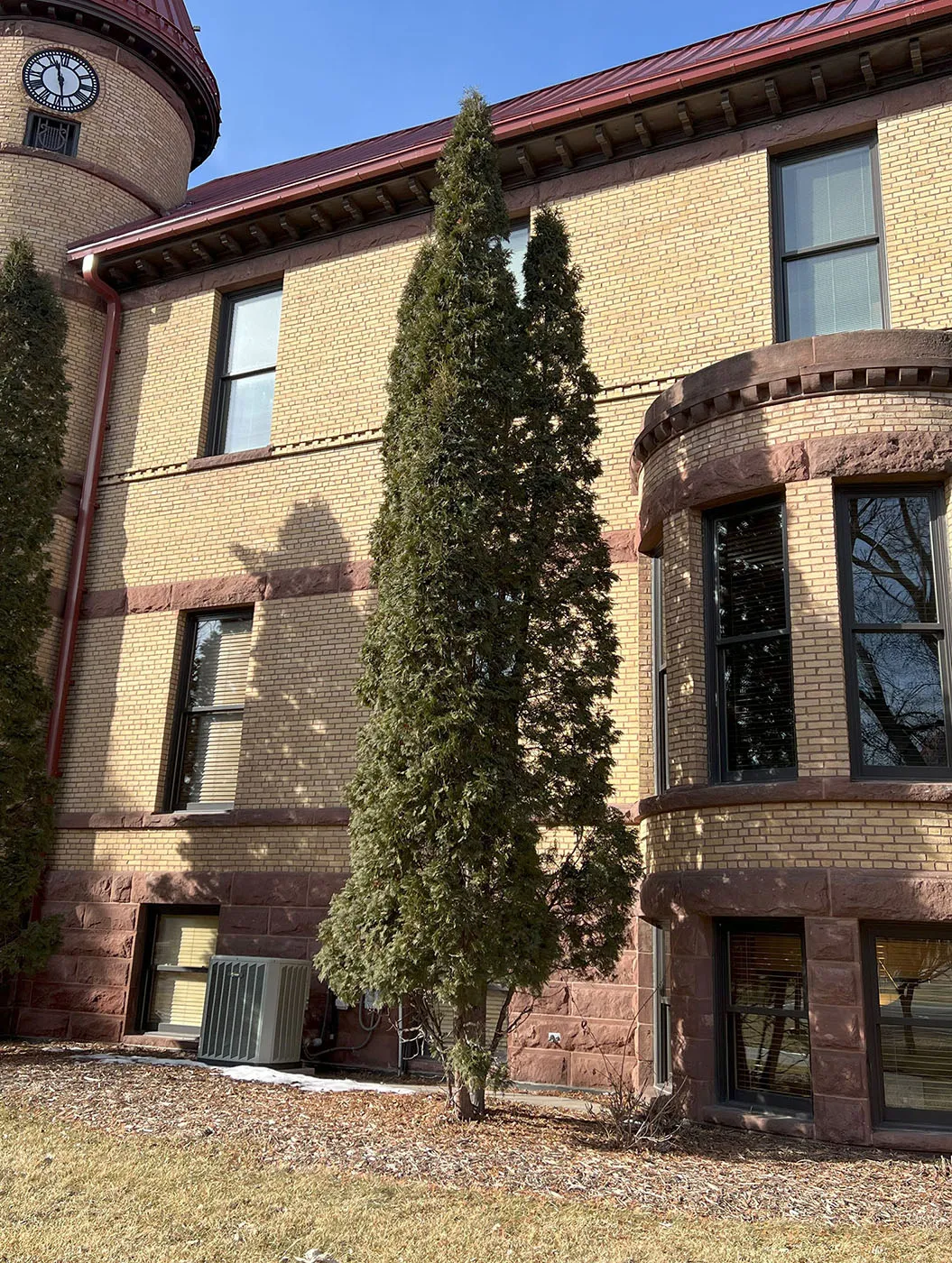
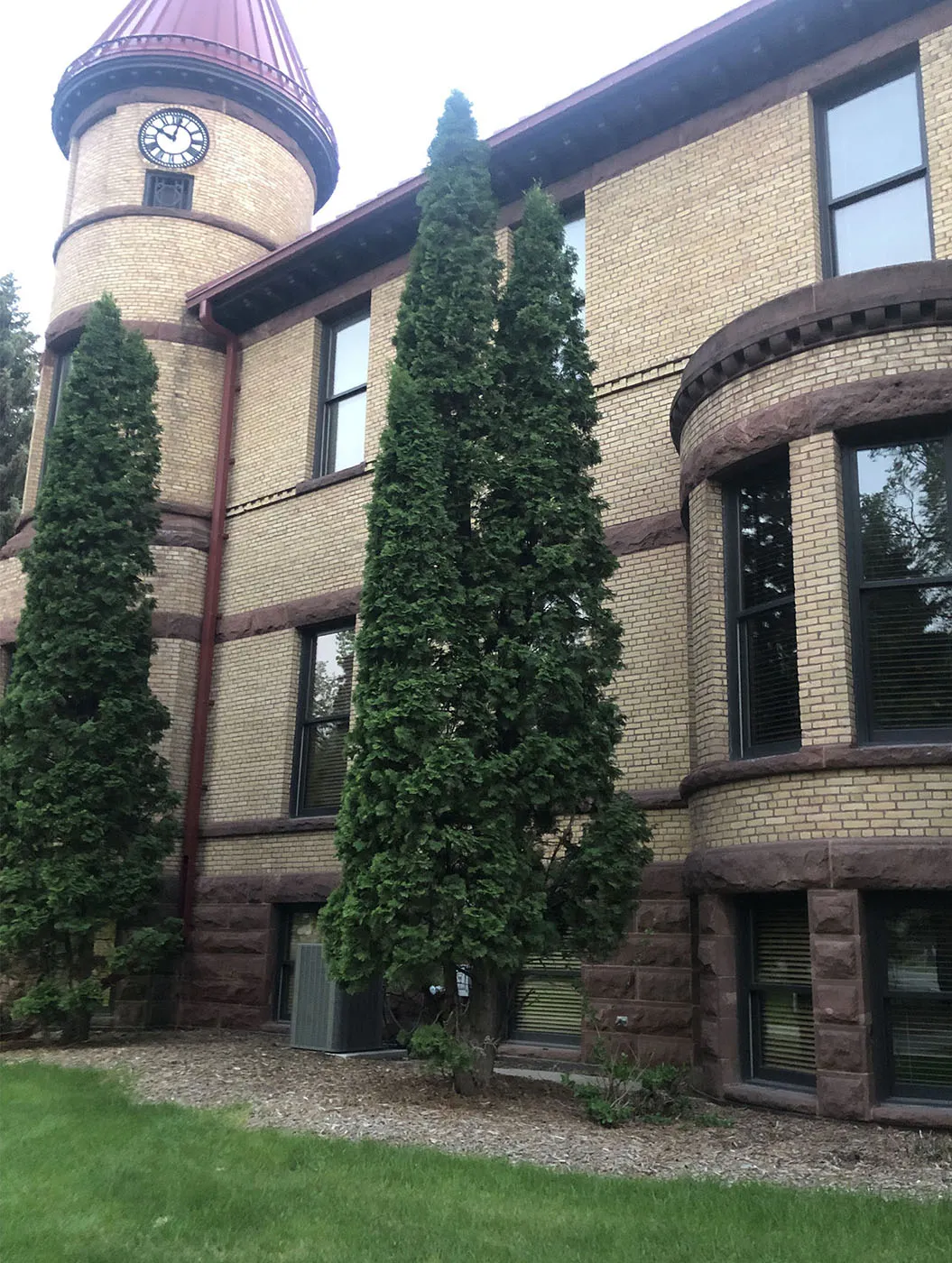
Pyramidal Arborvitae
Scientific Name: Thuja occidentalis ‘Pyramidalis’
Family: Cupressaceae
Location on Campus: 46.891556, -96.799889x
Description: Very columnar, cylindrical cultivar used to emphasize vertical aspects in landscape design. Other cultivars such as ‘Rushmore’, ‘Brandon’, and ‘Skybound’ also have this form that differs from the straight American arborvitae species.
Hardiness: USDA hardiness zones 3 to 7.
Natural Habitat: Northeastern U.S. and southeastern Canada.
Mature Size: Height: 15-22', Spread: 3’-6’
Form (Shape): Upright, narrow pyramidal.
Growth Rate: Slow to medium.
Foliage: Leaves are evergreen and scale-like, in horizontal sprays. May turn yellow-brown in winter.
Texture: Medium to fine.
Flowers: Insignificant.
Fruit: Oblong scaled cones.
Light: Full sun to part shade.
Soil: Deep, well-drained soil, marshy loam with adequate moisture until established where it will survive drought.
Propagation: Cuttings from current year’s growth or tissue culture.
Failure Patterns: Can be collared by grazing damage. Protection from wind and snow is encouraged while plants are establishing.
Disease and Insects: Highly susceptible to grazing damage from deer.
Landscape Use: Good for borders or softening the edges of buildings.
Availability: Readily available in retail nurseries.