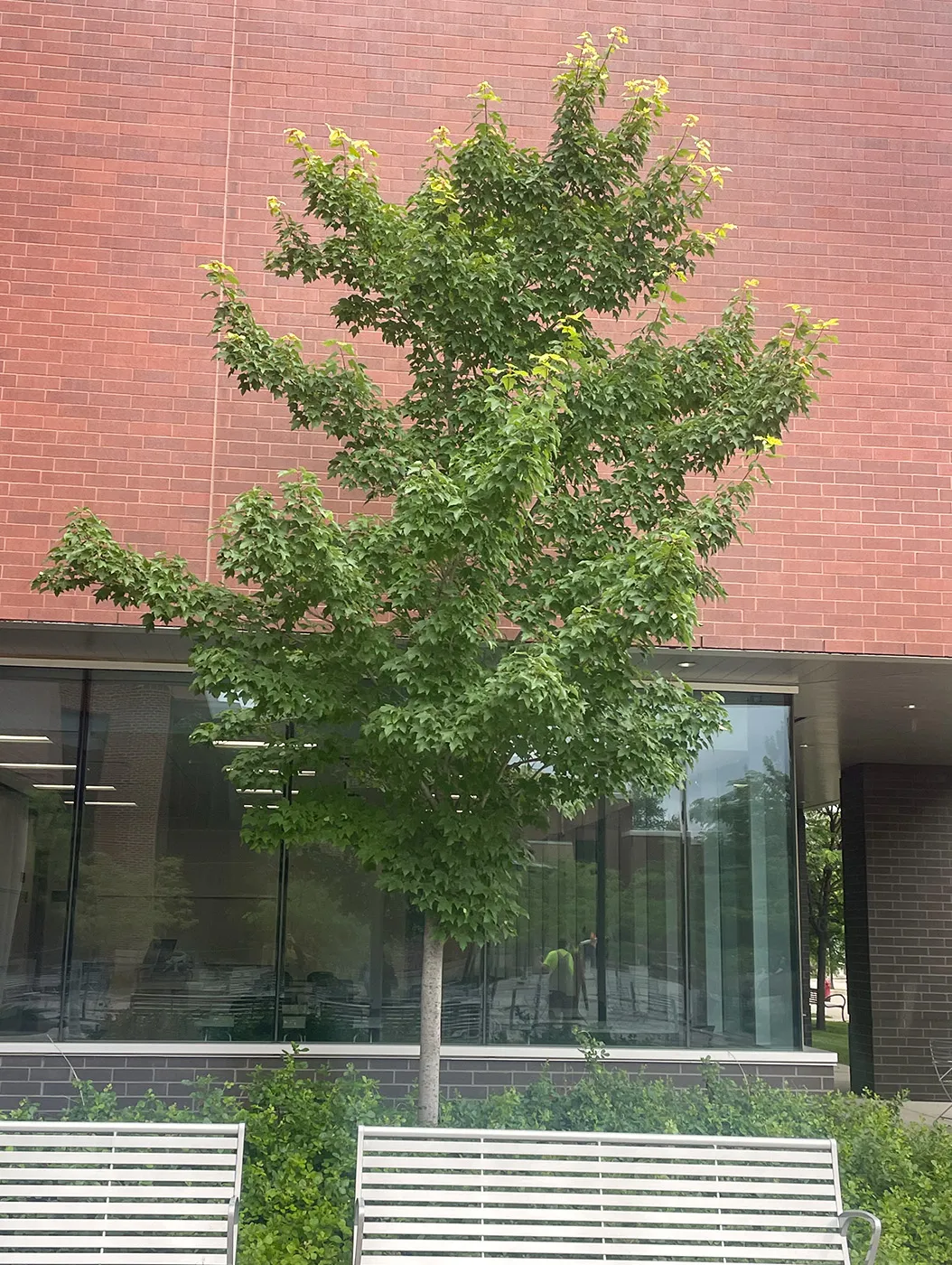
Red Maple
Scientific Name: Acer rubrum
Family: Sapindaceae
Location on Campus: 46.892944, -96.799833
Description: U.S. native tree. This plant is a beautiful addition to a landscape that is commonly found in the lower Midwest. Complete with ashy gray bark and gorgeous fall color, this specimen stands out during the autumn months.
Hardiness: USDA hardiness zones 4 to 9.
Natural Habitat: Very large geographic and climatic range: Central and Eastern United States and Canada. Seed source is particularly important is critical; plants need to originate from the north if the grower wants the plant to be cold hardy.
Mature Size: Height: 40’ to 70’, Spread: 30’ to 50’
Form (Shape): Upright tree with a formal crown, producing a “true Maple” look within the landscape.
Growth Rate: Moderate.
Foliage: Deciduous. Foliage begins light green, darkening as it matures. Fall color is a yellow-orange that transitions to a bright red. One of the first trees to color in the fall.
Texture: Medium.
Flowers: Bright red showy and ornamental flowers, male flowers with yellow stamens. Female flowers are the most ornamental. Blooms late March to early April.
Fruit: Winged seeds (schizocarps) can be seen but are not showy. Fruit can be messy.
Light: Prefers full sun, but can tolerate partial shade.
Soil: Prefers medium to wet soils to perform the best. Can have chlorosis issues in high pH soils. Cultivar selection is particularly important to overcome pH chlorosis issues.
Propagation: Seed stratification and stem cuttings.
Failure Patterns: Failure is uncommon.
Disease and Insects: No serious diseases or insects. Verticillium wilt can be an issue in poorly drained soils.
Landscape Use: Shade tree, street tree, rain garden. It is adaptable and easy to transplant, making it available. Not tolerant of heavily polluted areas.
Availability: Available at nurseys across the United States.


