Staghorn Sumac
Scientific Name: Rhus typhina
Family: Anacardiaceae
Location on Campus: 46.896889, -96.799833
Description: U.S. native shrub. A hardy deciduous shrub used for its brilliant autumn color and the unique bright red panicle flowers. It has a loose spreading form with a flattish crown and can be used in masses, natural areas, or on banks. Also, utilized as a food source for wildlife, especially in the winter months.
Hardiness: USDA hardiness zones 4 to 8.
Native Habitat: Canada and United States.
Mature Size: Height: 15’ to 25’, Spread: 15’ to 25’
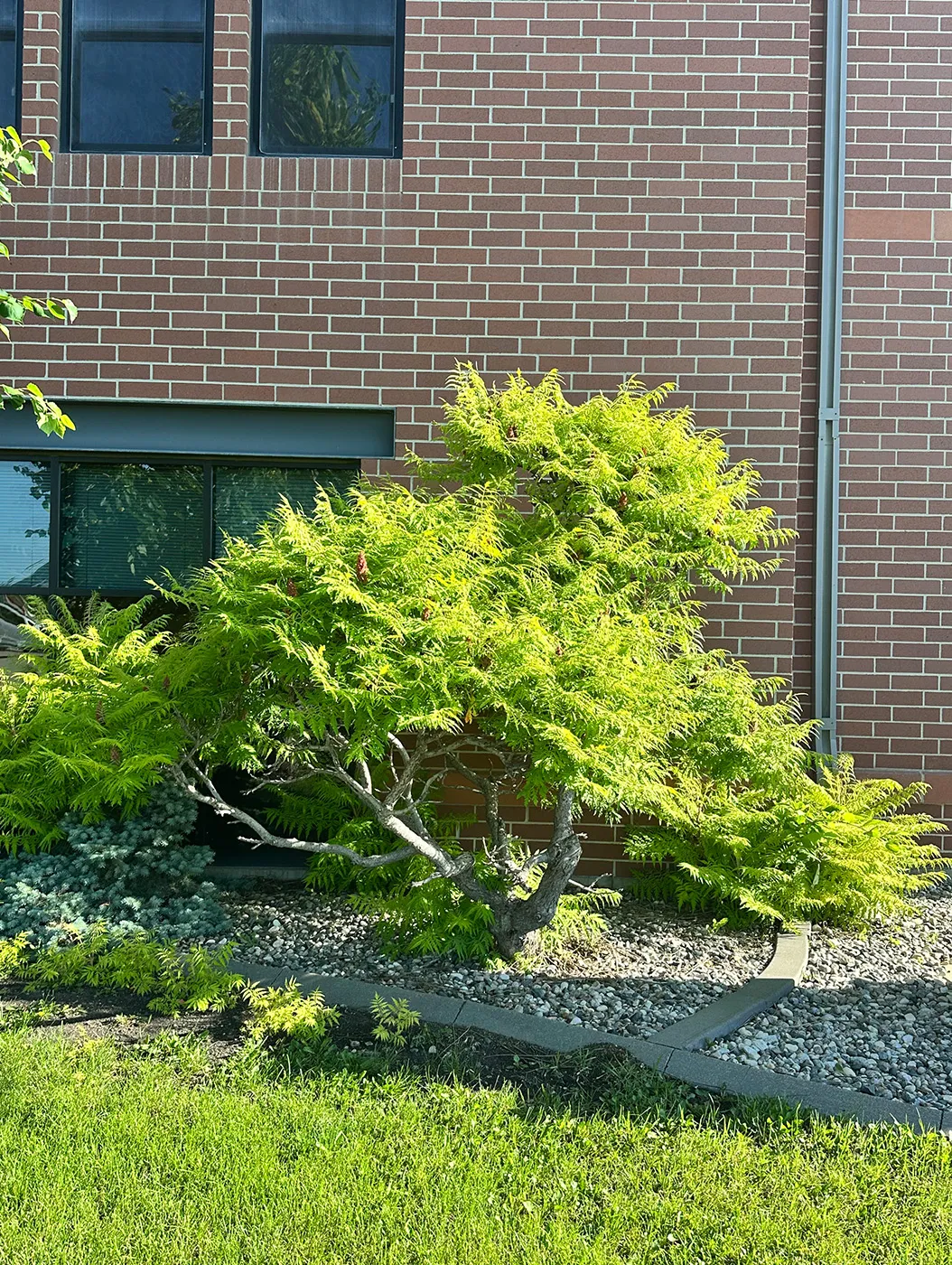
Form (Shape): A loose, open large shrub or small tree with a flattish crown.
Growth Rate: Fast to moderate
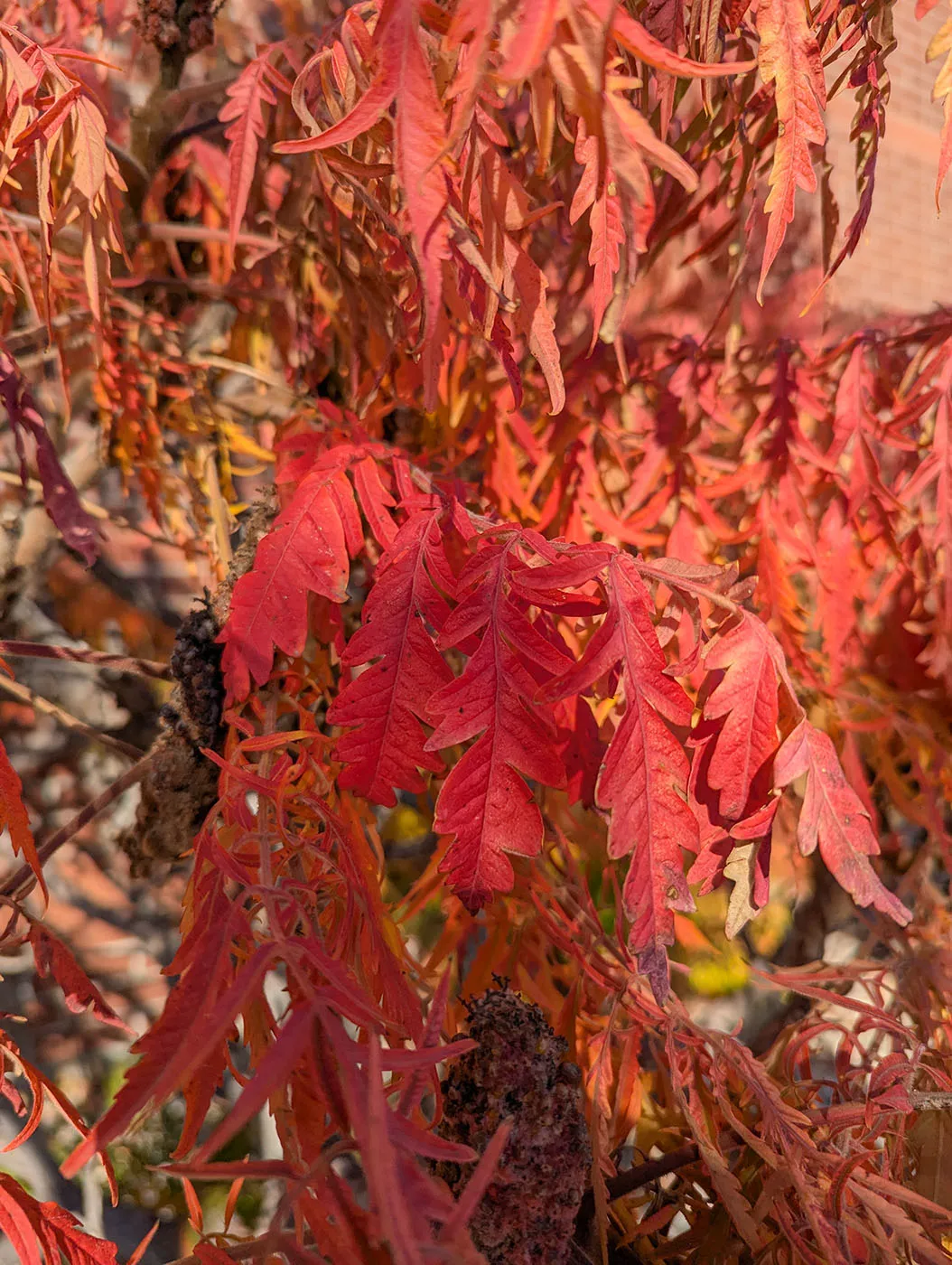
Foliage: Deciduous. Foliage is bright green in summer, changing to shades of yellow, orange and scarlet in the fall.
Texture: Coarse
Flowers: Greenish-yellow flowers are borne in large panicles in June and July.
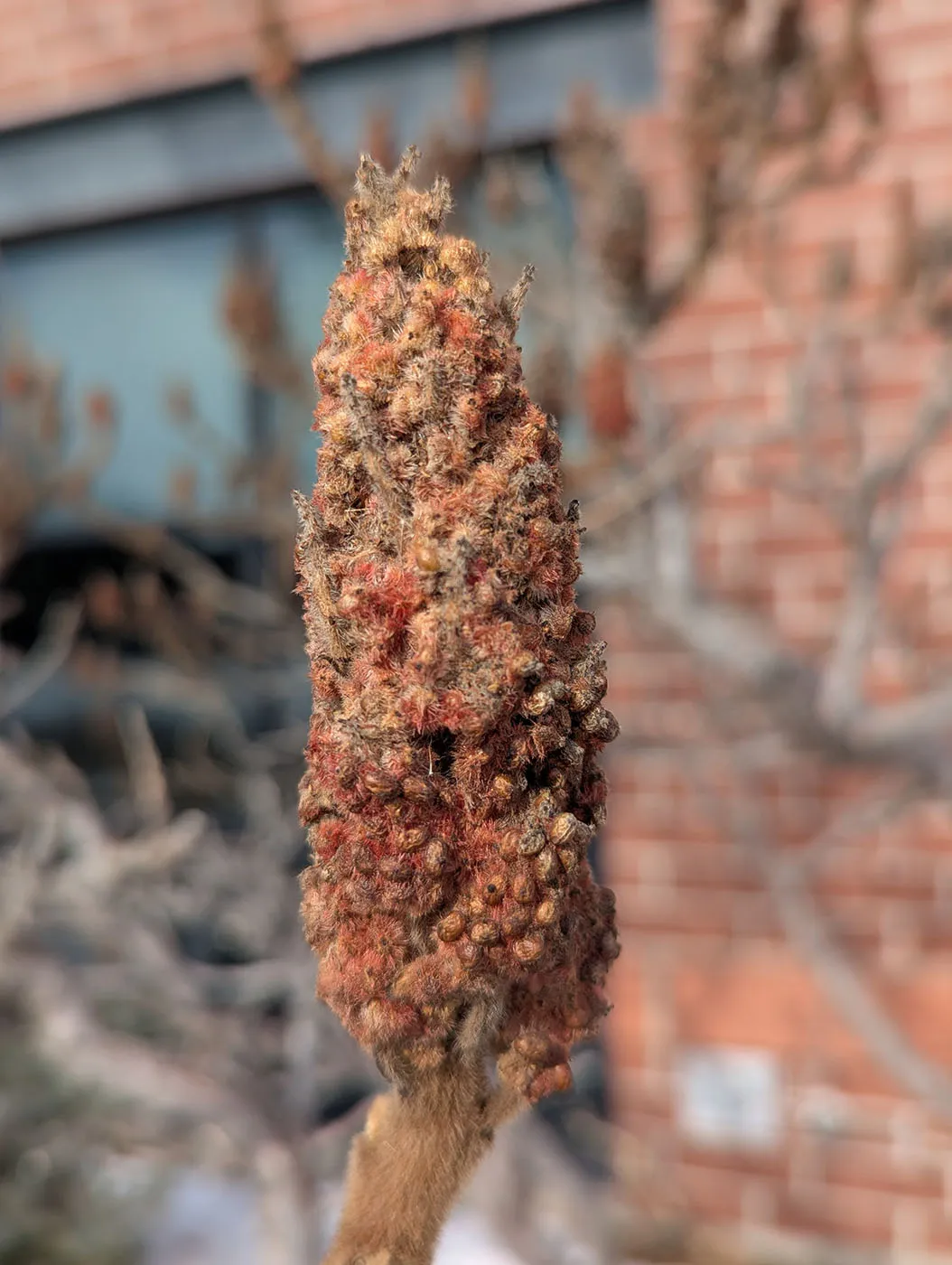
Fruit: Densely hairy seeds borne in large panicles, reddish in color, ornamental.
Light: Full sun to part shade.
Soil: Prefers well-drained soil but is very adaptable to many soil types. Drought tolerant.
Propagation: Seed, root cuttings.
Failure Patterns: Failure is uncommon
Insects and Diseases: Verticillium wilt, various wilts, leaf spots, powdery mildew, rusts, cankers, aphids, mites and scales
Landscape Use: Can be used in masses, naturalizing, waste areas and banks. Cut leaf forms offer a unique texture and a beautiful yellow-orange-red fall color. Tends to spread and colonize large areas; not suitable for small residential landscapes.
Availability: Available at retail nurseries