Challey Spotlight: Ruhaimatu Abudu
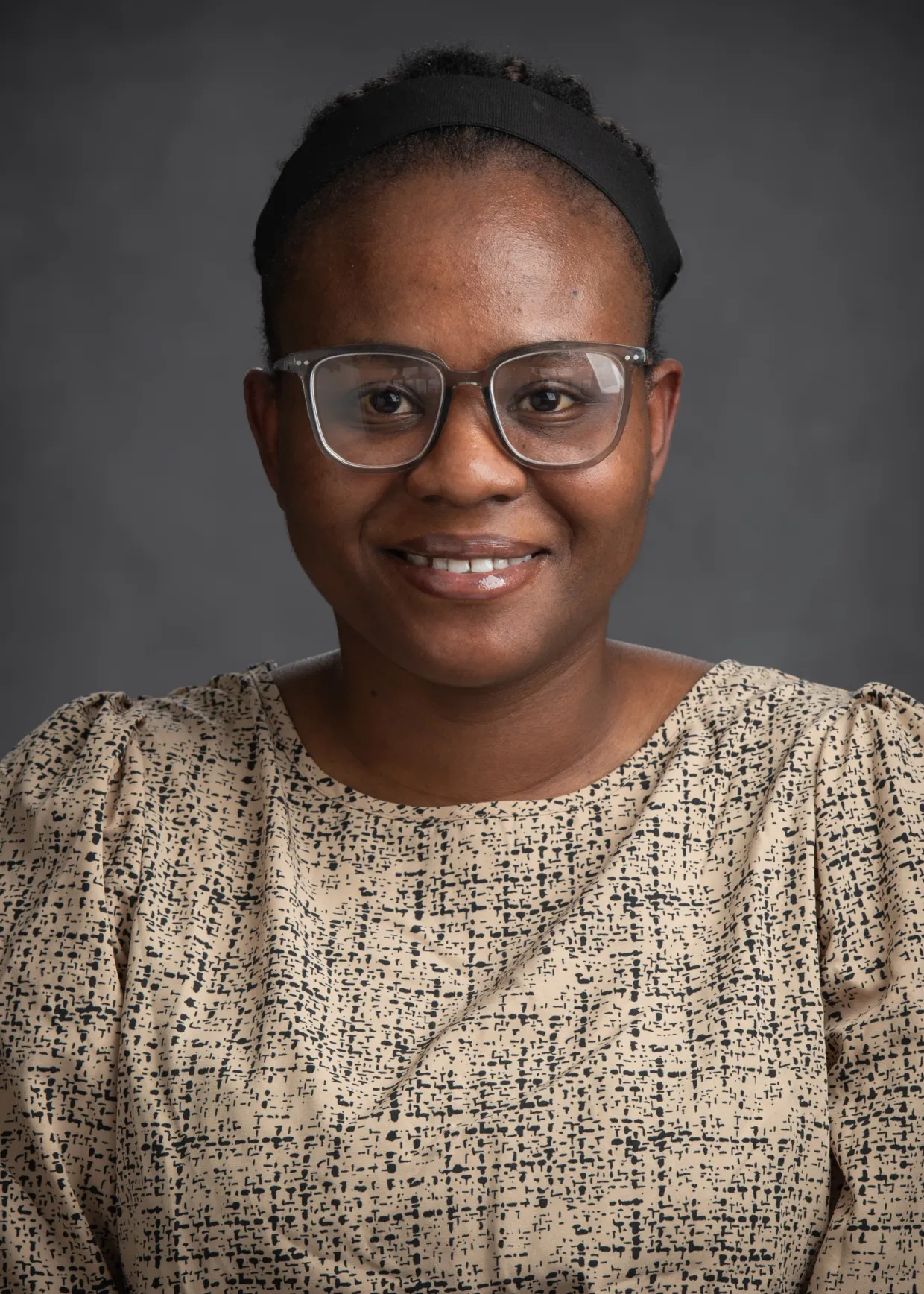
Background and academic journey
Ruhaimatu Abudu did not initially imagine herself pursuing a career in supply chain. As an undergraduate in Ghana, she first considered engineering. But a conversation with her father, who worked in logistics, shifted her perspective. Seeing her interest in business and organization, he encouraged her to study logistics management instead. She followed his advice—and quickly discovered she had found the right field.
Abudu earned her bachelor’s degree in Logistics Management from Regional Maritime University in Accra, graduating as one of the top students. What began as a suggestion became a passion. Professors encouraged her to pursue graduate studies. She initially had no plans but changed her mind due to mentors' encouragement. “Everyone around me knew I had something,” she says, “I just didn’t know it yet.” She completed a master’s in Transportation Planning and Management at Shanghai Maritime University, where her interests grew beyond ports to broader transportation issues, including freight networks and infrastructure planning, emphasizing how goods move and system failures.
Her decision to pursue a PhD was shaped by something more personal: a long-standing passion for teaching. From high school onward, she found herself tutoring children in her community and helping classmates understand difficult material. She always knew she wanted to teach but was unsure whether that meant a traditional classroom or a university setting. Graduate study clarified that path. A PhD would allow her to combine teaching with research, training the next generation of business leaders while contributing new knowledge to the field.
Now a PhD candidate in Transportation and Supply Chain at North Dakota State University, Abudu focuses on supply chain resilience—an area that has become increasingly urgent in recent years. Mentors throughout her academic journey have helped shape her direction, encouraging her not only to build on existing scholarship but to ask forward-looking questions about how businesses survive in an increasingly uncertain world.
Research focus and insights
When asked to describe her research in simple terms, Abudu begins with a practical question: What happens when disruption strikes?
She invites people to imagine another COVID-19-level crisis. Or a hurricane. Or a flood that shuts down transportation routes. Or a semiconductor shortage that halts production. In each case, the disruption may look different, but the stakes are the same: businesses must continue operating, and consumers still expect food on their tables and goods on store shelves.
Her research examines how firms—especially small and medium-sized enterprises—can remain operational during and after disruptions. Larger corporations often have dedicated risk officers, advanced forecasting systems, and financial buffers. Smaller firms, by contrast, frequently lack those resources. They may struggle to determine which resilience strategies are worth the investment and which tools actually improve their chances of survival.
Abudu’s work addresses that gap. Through empirical modeling and simulation, she evaluates which resilience tactics—such as supplier diversification, inventory management, or resource sharing—meaningfully strengthen business continuity. Importantly, her research pushes beyond traditional models that assume recovery periods between disruptions.
“What if the disruption doesn’t end?” she asks. “What if it’s flood, then hurricane, then fire?”
Increasingly, crises overlap. Climate events intensify. Global supply shocks ripple across industries. Recovery time shrinks. Abudu uses scenario modeling to explore how businesses respond when shocks are back-to-back or compounding. Rather than focusing solely on how firms bounce back, she studies how they endure.
Data analysis is her favorite part of the research process. Collecting and examining real-world data often reveals patterns that challenge assumptions. “You look at the numbers and think you know what they’ll say,” she explains, “but sometimes the data tells a different story.” Those moments—when evidence overturns intuition—are what make the work especially rewarding.
Broader impact and public engagement
Abudu hopes her research provides practical guidance for business leaders and policymakers, particularly those working with small and medium-sized enterprises. Many firms assume that purchasing new technology will automatically improve resilience. But she emphasizes that tools alone are not enough. Implementation, training, and strategic alignment matter just as much as the technology itself.
Her goal is to move beyond theoretical discussions of resilience and offer concrete, evidence-based recommendations that firms can apply in real-world conditions.
Communicating those findings requires clarity. Supply chain research can quickly become technical and jargon-heavy. Abudu works intentionally to translate complex ideas into everyday language. She compares inventory to blood in the human body: without it, operations cannot function. By grounding her explanations in relatable examples, she bridges the gap between academic rigor and public understanding.
Her engagement extends beyond research publications. She serves as a reviewer for multiple academic journals, participates in professional associations, and is actively involved in student leadership roles. She is also a Research Fellow with the Challey Institute and a recipient of the Mancur Olson Graduate Fellowship. These roles connect her research to broader conversations about economic resilience and institutional performance.
Professional motivation and future goals
Looking ahead, Abudu plans to continue focusing on supply chain resilience while deepening the practical dimension of her work. She is especially interested in ensuring that academic research translates into actionable strategies for industry leaders.
Her long-term goal remains clear: to become a professor. Teaching continues to motivate her as strongly as research. She has already served as an instructor for several courses at NDSU, developing curriculum and mentoring students in supply chain management. For her, the classroom and the research lab are not separate pursuits but complementary ones.
In an era marked by uncertainty, Abudu’s work centers on a simple but urgent question: how do businesses keep moving forward when disruption refuses to pause?
Beyond research
Outside of academia, Abudu finds perspective through leadership and reading. She holds leadership positions in several student and professional organizations, interacting with peers from diverse backgrounds. Those experiences help her see how supply chain thinking connects to everyday life.
One book currently on her reading list is Spy the Lie, written by former CIA officers. The book explores how to assess situations logically rather than emotionally. Its emphasis on critical thinking mirrors her research mindset: do not rely on assumptions—test them.
Whether analyzing data or reflecting on leadership experiences, Abudu approaches the world with curiosity and discipline. In studying how systems respond under pressure, she is ultimately working toward something simple but vital: stability in uncertain times.