Prevent chemical damage to woody plants this growing season
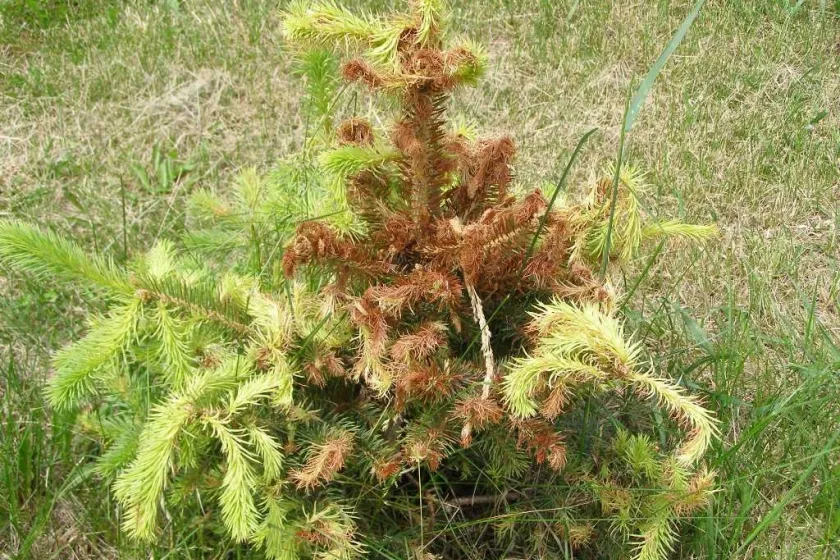
Spring has sprung, and as many North Dakotans begin their yard work, now is the time to review the chemical control options for lawns. Considerations should be taken about what and how to apply herbicides; many weeds that homeowners want to control are broadleaf plants, but it’s important to keep in mind that woody plants like trees and shrubs are also broadleaf plants. These herbicides may not outright kill ornamental woody plants but they can damage them, which can cause stress, leading to secondary insect and disease infections. Over time, repeated chemical damage can even kill the largest of our trees.
One common issue seen is through the use of “weed-n-feed” or granular fertilizer mixed with herbicide. While there is generally no drift involved when using these, the chemical can still be absorbed into woody plants through their root systems. Most labels suggest not to apply within the drip line of a tree or shrub, but many times the root system extends beyond the drip line. This should be taken into consideration during application. Runoff is another potential issue. Heavy rains or over-irrigated soil can cause the herbicide to move somewhere that it was not intended to go. While granular herbicides are common, insecticides can also be granular and may damage plants if applied incorrectly.
When referring to pesticides, the label is the law. Applicators should only be applying the correct amount of chemical stated on the label to the correctly identified type of plant. This also includes guidelines for the number of applications that should be made in a season. Too many applications or incorrect rates can cause buildup of chemical in the soil, leading to damage to the plants that can last for months or even years.
Keeping these considerations in mind, other methods of weed control may be preferable. Alternative methods include increasing the size of mulch rings around plants, hand pulling weeds, or using ground covers that naturally prevent weed growth by growing thick and crowding them out.
While North Dakota had a relatively mild winter season this year, damage from deicing salts may start to appear. The main remedy for this is to leach out the salts early in the spring with water or not using deicing salts at all. Organic mulch like wood chips placed around plants can help with preventing salt damage. Some plants naturally have a higher tolerance level to salts; placing these near walkways that expect traffic and the use of salts in winter can help mitigate damage as well. Purdue Extension’s publication about salt damage has science-based information on how to reduce the effects of salt on landscape plants.