NDWRRI researchers tackling issues affecting state’s water supply and quality
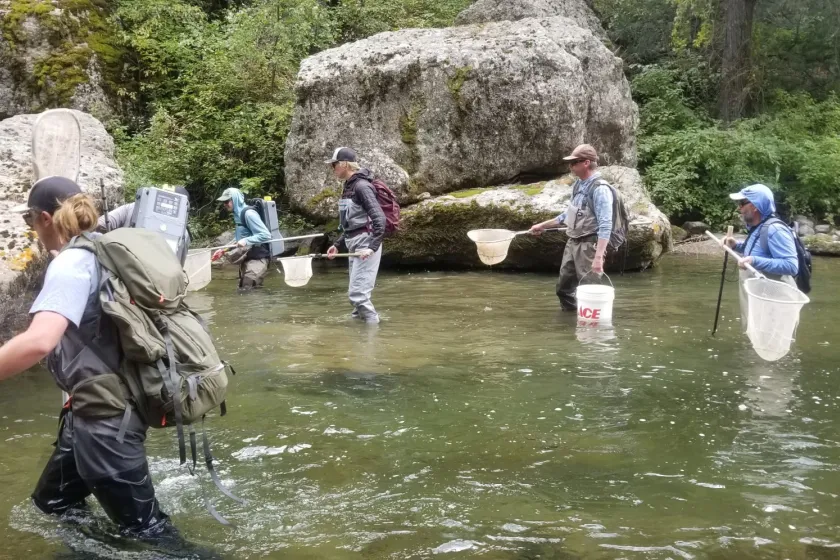
In the words of North Dakota Water Resources Research Institute (NDWRRI) interim director Trung Le, water management in the state isn’t only an environmental issue.
“Because the state relies so heavily on agriculture and energy, water is the backbone of the economy,” said Le, who was named NDWRRI interim director in January 2026.
Water management isn’t only about conserving water to ensure there is enough for various uses in the state, such as food production, energy, industry and data centers, but also about protecting it from contaminants like per- and polyfluoroalkyl substances (PFAS), which have been shown to pose significant human health risks and do not readily break down in the environment.
NDWRRI research also explores water usage involved with energy production in the state. Substantial amounts of water are needed for hydraulic fracturing operations; the Environmental Protection Agency estimated in 2022 that between 70 and 140 billion gallons of water are used in the Williston Basin. Water is also an important source of electric power in the state.
Water usage and availability for AI Data Centers, such as the one recently built near Ellendale, North Dakota, are also topics of research. How their water usage may impact surrounding communities will be among the items researched for AI Data Centers.
“We want to have a clear vision of how water use will shape the future of North Dakota economy in the next decade,” Le said. “Our current priorities are now focused on new developments in emerging areas such as water contamination and industrial uses, specifically the linkage between food production, water use and energy extraction. That is why we encourage new research in PFAS contamination, water use for AI data centers, rare earth materials recovery and others.”
NDWRRI researchers are conducting research across three initiatives:
- Water management and flow: The work examines irrigation and hydrology and involves assessing sensors for irrigation scheduling and using remote sensing to estimate evapotranspiration related to irrigation. Other research includes developing smart irrigation systems, studying cold-region hydrology and exploring the interconnections between food, water and energy production.
- Clean water and environmental threats: NDSU researchers are working hard in water quality studies, which include tracking the spread of harmful algal blooms/cyanobacteria. Faculty are aiming to restore wetlands damaged by pollutants and impacted by energy-related activities.
- Wildlife and natural resources: Researchers at NDSU explore how flooding and drought have affected tree growth and dendrochronology. Water has direct impacts on the viability of wildlife and other natural resources in North Dakota and other federal jurisdictions.
“We are confident that Dr. Le’s leadership will propel the NDWRRI toward opportunities to increase partnerships with the state of North Dakota’s Department of Water Resources and Department of Environmental Quality,” said NDSU interim vice president for research and creative activity Heidi Grunwald. “Dr. Le’s scientific expertise in computational computing and fluid mechanics will allow him to lead efforts to support the state’s priorities of today and into the future."
Recent extreme weather events, such as drought and flooding, have also changed the water landscape in the state. The longest river in the United States is the Missouri, which flows through the central part of the state. The North Dakota Department of Water Resources defines the Missouri River as the state’s most valuable and readily available water source. The Missouri River supports irrigation for the state’s farmers, provides drinking water and supplies water for industrial and municipal use. According to the Dakota Water Science Center, the Missouri River accounts for 80 percent of the total mean streamflow in the state.
Research by the NDWRRI, led by NDSU associate professor Zhulu Lin, recently conducted a feasibility study on irrigation in the Missouri River Basin, the state's largest basin.
The Missouri River reservoir system features six dams and reservoir projects constructed by the federal government and operated by the U.S. Army Corps of Engineers. These projects provide flood control, water supply, recreation, irrigation and hydropower generation. This development of the Missouri River provides important economic, environmental and social benefits to basin states such as North Dakota. Through research from groups like the NDWRRI, North Dakota works to protect and develop those interests.
“We expect more research will continue using this precious water resource in the coming years,” Le said.
Other rivers important to the landscape include the Red River, which flows along the border of North Dakota and Minnesota, and the James and Sheyenne, located in the eastern half of North Dakota. In addition, North Dakota’s population has grown by 18 percent since 2010, indicating that water use will continue to grow sharply.
“Food and energy production, the key components of North Dakota economic development, all depend on water resources,” Le said. “Research activities through the NDWRRI provide key insights to help the state navigate challenges in managing competing water demands.”
The NDWRRI’s research portfolio is collaborative, including featuring experts from North Dakota State University and the University of North Dakota, along with state agencies including the North Dakota Department of Water Resources, the North Dakota Game and Fish Department and the United States Geological Survey.
NDSU professor of agriculture and biosystems engineering Xinhua Jia served as the NDWRRI director from 2022-25. During her tenure, she worked to address the state's water resource workforce and to prioritize flood control and PFAS contamination reduction.
Jia led the development of NDSU’s Water Resource Certificate Program for undergraduate students, which aims to help alleviate workforce shortages in the state.
“There are two missions: help the state solve the critical water problems, and train the workforce in water resources,” Jia said. “These two missions directly support North Dakota and various agencies.”
She also led outreach efforts for NDWRRI, strengthening collaboration with the North Dakota Department of Water Resources and the North Dakota Department of Environmental Quality. During Jia’s tenure as director, NDWRRI supported faculty-led student research. In 2023–24 alone, the institute funded 24 research projects, which produced 12 peer-reviewed journal articles, nine theses and dissertations, 28 presentations and a wide range of educational activities.
The NDWRRI held its annual meeting on March 24, at the Memorial Union on the NDSU campus.
The meeting, themed "Water Resources Issues in North Dakota: Challenges and Opportunities," featured several cutting-edge discussions on current and emerging issues of North Dakota water resources. Topics ranged from the impact of tillage on crop productivity and water quality to the hydraulics of ice-covered rivers, to new methods for PFAS remediation, and the emerging water footprints of AI Data Centers. The meeting also featured Graduate Research Fellowship posters highlighting the next generation of scientists from NDSU and UND working on topics ranging from soil microbiomes to wetland restoration.
The NDWRRI is expanding collaborations with research groups; one example is working with River Keepers, a Fargo-based nonprofit that aims to raise awareness of water issues in the Red River Valley.
“The role of NDWRRI is to initiate and sustain interests in water research in the state from both the industries and academic institutions,” Le said. “Collaboration is the key to success in a state with a small population, such as North Dakota. We need to utilize all the resources we have to accomplish the goal. NDWRRI will continue to work hard to foster collaboration among research groups in North Dakota.”
Le said expanding cooperation and collaboration with neighboring states and other research groups is a priority.
Le sees potential and wants to work to expand NDWRRI’s relationship with neighboring states. “We will expand collaboration across state lines and form alliances with other research groups in the Upper Plains region to solve the regional water resources problem,” he said.
The NDWRRI is one of 54 institutes nationwide that comprise the National Institutes for Water Resources (NIWR). Established by Congress in the Water Resources Research Act of 1965, the program is administered through the United States Geological Survey (USGS). The NDWRRI also receives funding from the state of North Dakota.
Under the Water Resources Research Act, NDWRRI is required to use its federal funding to plan and support high-quality research, collaborate with colleges and universities to build a coordinated statewide program addressing regional and state water issues, and work closely with other organizations and institutes to enhance its overall effectiveness.