NDSU and Casselton partners share stories from “Collecting Casselton” and launch deep mapping prototype
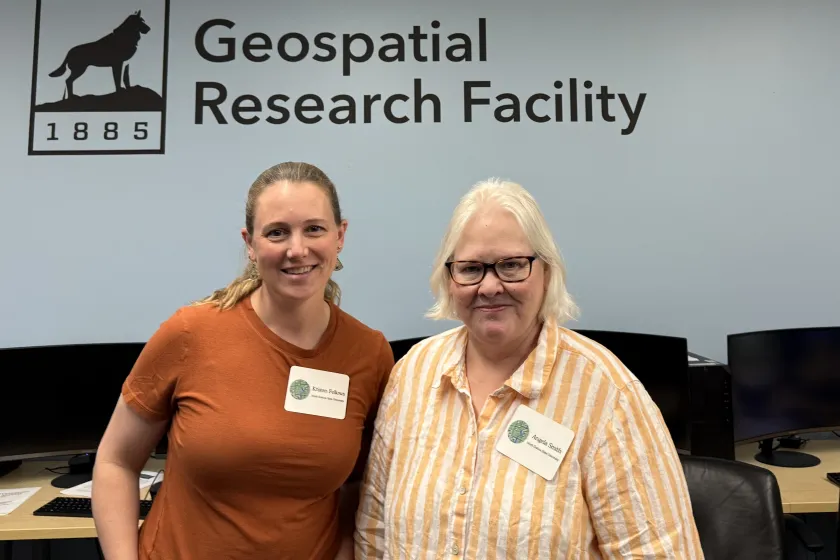
NDSU and community partners in Casselton will present a selection of stories uncovered through “Collecting Casselton,” a semester-long research project on the town and introduce a new digital mapping initiative designed to document the history of the Red River Valley through deep mapping.
A deep map layers geography with human experience. It brings together digitized maps, archival documents, historical photographs, oral history recordings, artifacts and environmental datasets within a single, interactive GIS platform to show how a place changes over time. Rather than a single narrative, it reveals multiple, connected stories grounded in the landscape itself.
The project is led by Angela Smith, professor of history and director of the public history program at NDSU, and Kristen Fellows, associate professor of anthropology and an archaeologist. Fellows has directed three years of archaeological field schools on the homestead that is now 4E Winery, adding material and environmental context to the work. Together, they are developing the Glacier, Prairie, Farm Deep Mapping Project, which examines the Red River Valley as a layered landscape shaped over the last 10,000 years.
Casselton and Everest Townships serve as the project’s prototype. Casselton’s history as a railroad hub and center of bonanza farming, combined with the surrounding rural landscape and the archaeological work at 4E Winery, creates a focused setting where environmental, agricultural, and community histories intersect. This concentration makes the area an effective testing ground for building a larger regional model.
The work is built through partnerships with the Casselton Heritage Center and 4E Winery, as well as ongoing collaboration with local residents. Community participation is central to the project’s approach, with residents contributing photographs, documents, artifacts, and personal stories that shape the interpretation of the past.
The Casselton prototype is designed to establish a replicable process for small towns across the Red River Valley. By refining methods for collecting, digitizing and mapping local history, the project team is building a scalable model that will support applications for larger grants to expand the work regionally.
A key component of the project is Smith’s graduate course, Community Engagement for the Public Historian. Graduate students RoseE Hadden, Max Sabin, Olivia Bervig, Emily Harmon, Mitch Axness and Wyatt Berry conducted research, worked with community members, and helped organize the “Collecting Casselton” event.
Held on March 28, 2026, “Collecting Casselton” invited residents to bring photographs, documents, and artifacts for digitization and to share their stories through recorded interviews. These materials now form the foundation of the deep map.
Initial results are available through ArcGIS StoryMaps, featuring topics such as Angela Gibson’s Casselton movie studio, archaeological work at 4E Winery, Sehn family recollections of the farmstead, a historic pharmacy ledger, regional floods, rabies outbreaks, township schools and local veterans. These examples reflect the range of stories that emerge when place, memory and material evidence are brought together.
At its core, the project demonstrates how local history is built. By anchoring stories in specific locations and combining them with physical and archival evidence, the deep map provides a more grounded understanding of the past and highlights the role communities play in preserving their own history.
The public is invited to learn more at an upcoming presentation:
What: Public Presentation on the Glacier, Prairie, Farm Deep Mapping Prototype of Casselton
Who: Dr. Angela Smith, Dr. Kristen Fellows and NDSU graduate students
Where: Martin’s Lutheran Church, 502 Martin's Ave N Casselton, ND 58012
When: 3:00 p.m., Tuesday, May 12
The event is free and open to the public.