NDSU faculty help strengthen disaster preparedness in Togo
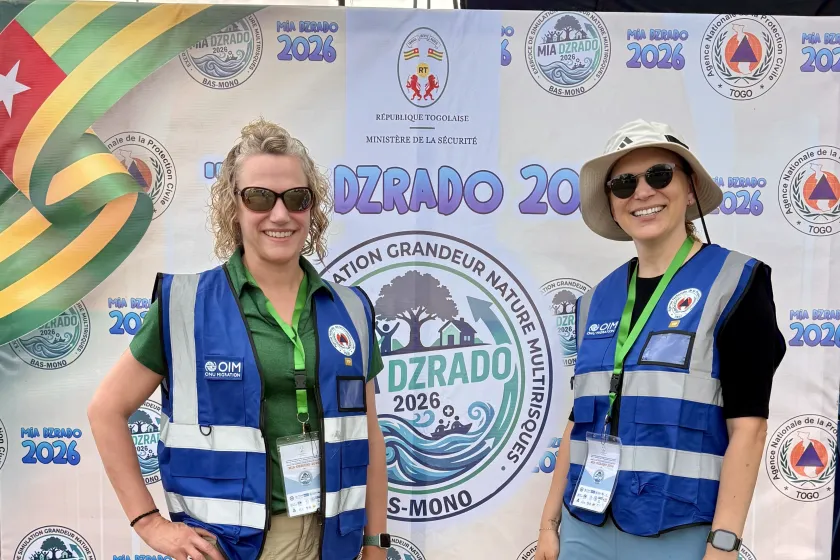
Two NDSU faculty members recently shared their expertise in agriculture and healthcare on a global level.
Miranda Meehan, NDSU Extension livestock environmental stewardship specialist and disaster education coordinator, and Abigail Brunsvold, assistant professor of practice in nursing, traveled to Agome-Glozou, Togo, in West Africa in June as part of a two-week disaster preparedness initiative through the Department of War National Guard Bureau State Partnership Program. Serving as observers and instructors, the pair worked alongside the North Dakota National Guard, state emergency management leaders and Togolese officials to strengthen disaster response planning through a large-scale flood simulation.
“I was thrilled to have our partners from NDSU participate in this disaster preparedness and response exercise in Togo, Africa,” said North Dakota Army National Guard Lieutenant Colonel Alan Roehrich. “In the world of disaster preparedness perspectives matter and anytime we can bring in a different entity, with varied experience, it improves the overall objectives of the event. The team from NDSU provided real world experience and scenarios that greatly benefited the State Partnership Program, our partner country, and Togolese National Civil Protection Agency (ANPC).”
“This successful joint effort highlights the power of persistent partnership, and we actively look forward to building on this momentum by getting NDSU even more involved in supporting the State Partnership Program disaster response portfolio,” said North Dakota Army National Guard Lieutenant Colonel Jarrod Simek.
The North Dakota National Guard and Togo have partnered through the State Partnership Program for more than a decade, with NDSU being added to the partnership this year for the first time. This year's training exercise, Operation Lignite Coast 2026, focused on improving Togo's capacity to respond to natural disasters through a whole-of-government approach.
Meehan and Brunsvold’s involvement in the training highlighted how NDSU's land-grant mission of education, outreach and service can create a meaningful impact on a global scale.
"The education and experience we provide to our students, the expertise of our colleagues and the partnerships we have with state, local and regional agencies all extend globally," Brunsvold said. "A lot of people think only about what we do right here in Fargo or North Dakota, but we really do have a global reach, and that ripple effect is being felt in a lot of places."
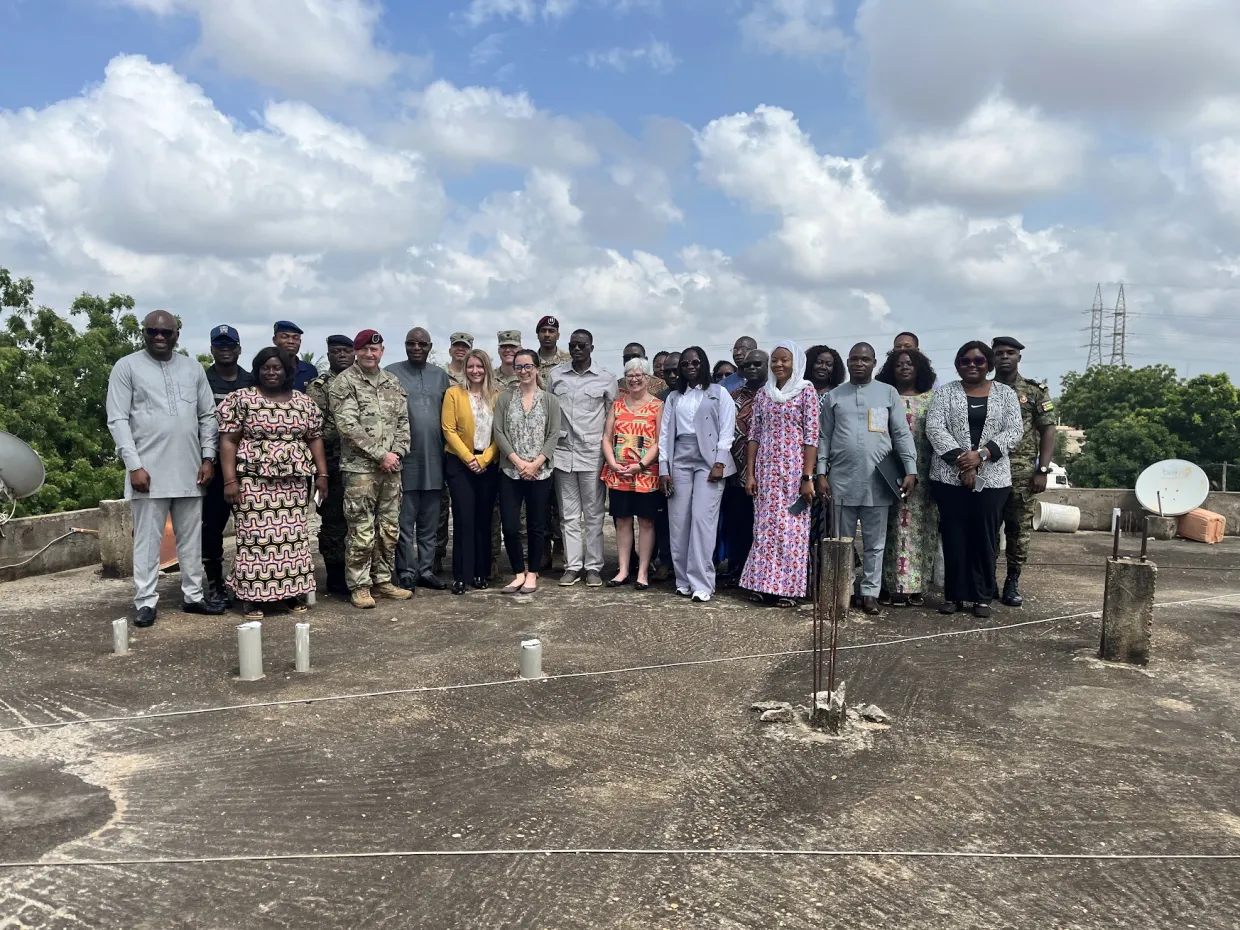
An opportunity to share resources abroad
Meehan became involved in the State Partnership for her expertise in agricultural systems and disaster education. As NDSU Extension's disaster education coordinator, she coordinates Extension’s efforts to prepare communities across North Dakota for disasters ranging from floods and wildfires to drought and livestock disease outbreaks, such as avian influenza.
During the training in Togo, she provided guidance on how agriculture should be integrated into emergency planning, including livestock evacuation, water quality monitoring, disease prevention and long-term recovery.
"One of the reasons I was brought in is because they want to build on the agricultural side," Meehan said. "One of the goals is increasing agricultural resilience and food security. How can we expand into that area? Those are the types of considerations and suggestions I was able to provide."
Brunsvold contributed her expertise in pediatric acute care, global health and emergency response. Her background in mass-casualty simulations and global health education enabled her to provide feedback in triage, emergency medical response and community health preparedness. During the trip, she also helped teach CPR and basic emergency care to community members.
Learning through collaboration
The first week of the exercise training focused on classroom-based instruction, where approximately 30 participants from various Togolese government agencies developed incident command strategies and response plans. During the second week, more than 200 government and nongovernmental partners joined approximately 300 local residents for a full-scale flood simulation based on annual flooding along the river separating Togo and neighboring Benin.
The exercise included scenarios involving displaced families, capsized transport canoes, disease outbreaks, chemical spills and agricultural impacts.
For Meehan, one of the most valuable aspects was seeing how local officials educated communities about flood preparedness.
"We observed the education they were providing on their early warning system, helping people understand when they needed to evacuate, how to safely move livestock and what resources would be available afterward," Meehan said. "The Togolese people led those conversations and did a fantastic job. We were able to offer additional ideas and considerations, but they were building solutions that worked for their communities."
Brunsvold said the experience reinforced how important collaboration between agencies is.
"Everything was so interlinked," she said. "Miranda was talking about livestock that had died because of the disaster and what that meant for sanitation and disease prevention. Those issues directly affect people's health. Even though our professional paths normally wouldn't cross, we found there was tremendous overlap."
Strengthening communities in North Dakota
While the experience centered on supporting disaster preparedness in Togo, Meehan and Brunsvold said the partnership also strengthened relationships with state agencies and will enrich classroom instruction by bringing real-world global examples back to campus.
Meehan and Brunsvold also see opportunities for future involvement in the State Partnership from additional NDSU faculty and, eventually, students representing disciplines such as agriculture, emergency management, natural resources, nursing, public health and counseling.
"I think one of the biggest takeaways is that the expertise we have at NDSU truly has value around the world," Brunsvold said. "It's an honor to represent both NDSU and North Dakota while helping communities become more prepared, more resilient and better equipped to respond to future disasters."
NDSU is planning to help plan and execute the next exercise scheduled for Ghana next year.