Maack’s research aims to help pharmacies integrate tobacco treatment into everyday workflow
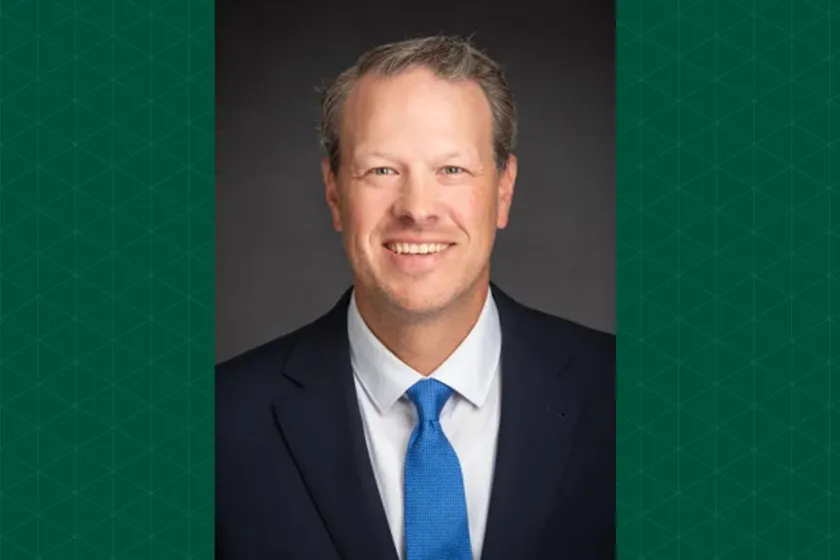
Brody Maack, NDSU associate professor of pharmacy practice, has received a $463,444 award from the North Dakota Department of Health and Human Services for his Pharmacy Service Enhancement Project.
PSEP is an implementation-focused research project designed to help community pharmacies integrate tobacco and nicotine treatment into their everyday workflow. The project emerged from a goal to better understand the practical implementation, documentation, billing, and long-term sustainability of pharmacy-based clinical services in community pharmacy settings.
The program helps pharmacies develop a three-step process: asking patients about tobacco or nicotine use, offering quick yet supportive advice, and providing treatment and counseling.
“We did not want to simply provide education and hope pharmacies would change,” Maack said. “We wanted to study what support they need, what barriers they face, what strategies work, and how this type of service could be expanded across the state. A key part of that is advancing medical billing and reimbursement practices in pharmacies, so that pharmacists are not only able to provide important patient care services, but also have a sustainable pathway to be reimbursed for that work.”
According to the American Lung Association, Tobacco-related deaths are the leading cause of preventable death in the United States and cause nearly 500,000 fatalities annually. In North Dakota, 13.3% percent of adults are cigarette smokers, which is higher than the national average of 11.5%, according to a North Dakota Department of Health survey.
“Dr. Mack’s work directly mirrors the core pillars of the federal rural health transformation initiative by expanding preventive care at our rural healthcare access points in North Dakota, supporting the rural healthcare workforce, and addressing a leading cause of preventable disease and death,” said NDSU interim vice president for research and creative activity Heidi Grunwald. “North Dakota Community Pharmacies play a vital role in engaging with patients, so embedding the Ask, Advise, Treat practice into daily workflow means North Dakotans receive evidence-based, preventive care as close to home as possible.”
Many North Dakotans see their pharmacists more often than they see physicians or other clinicians. With tobacco and nicotine use continuing to be a public health issue and many smokers interested in quitting, those individuals may not have easy access to counseling, medications or follow-up support.
“Allowing pharmacists to provide tobacco and nicotine treatment benefits North Dakotans by increasing their access to care,” Maack said. “This is especially important in rural areas, where patients may have limited access to primary care, behavioral health services, or specialty tobacco treatment programs. Community pharmacies are often located where people live and work, and patients can usually access a pharmacist without an appointment.”
Maack identified the opportunity to bring these two realities together. “Community pharmacies already have trusted relationships with patients, strong medication expertise, and frequent touchpoints with people who may be using tobacco or nicotine products,” he said. “PSEP was created to help pharmacies build practical, sustainable workflows so that asking about tobacco use, advising patients to quit, and providing and connecting them to treatment can become part of the routine pharmacy practice.”
In the first phase of PSEP, Maack worked with several independent community pharmacies in North Dakota, providing training, ongoing support, implementation resources and site-specific feedback. It was important to determine how each pharmacy could handle the workflow based on its existing staffing model.
“Every pharmacy is different, and we want to learn how to support individual locations as they implement new clinical services like PSEP.” Maack said. “ A rural independent pharmacy with two pharmacists may need a very different workflow than a larger pharmacy with multiple pharmacists, technicians, interns, and central leadership. We want to design PSEP to meet pharmacies where they are and help them build a service that is realistic, meaningful, and sustainable.”
For the upcoming PSEP 2.0 cohort, Maack’s team is expanding the process by implementing a more thorough baseline assessment, the Pharmacy Baseline Readiness Assessment Tool. This will help determine how ready each pharmacy is to implement clinical services.
“The tool is directly aligned with implementation science frameworks, which translate research evidence into real-world practice. This will allow us to better identify what supports a pharmacy may need before and during implementation,” Maack said.
“The project has shown that pharmacy-based tobacco treatment is feasible, but sustainability requires attention to workflow, staffing, reimbursement, and ongoing support,” Maack added.
Maack said that PSEP is the first effort in the state to study how tobacco and nicotine treatment can be implemented systemically. Still, he added that there is not enough evidence yet to determine patient outcomes, such as quit rates, in the state. Maack said the focus in the early stages of PSEP is on implementation outcomes.
“The goal is that by making tobacco and nicotine treatment more accessible through pharmacies, more North Dakotans will receive evidence-based support to quit,” Maack said.
For Maack, the PSEP is a starting point in a process, where he hopes pharmacists can provide training and services that increase access to care for many in the state.
“I would like PSEP to become a model for how we implement and sustain pharmacist-provided clinical services in community pharmacies,” Maack said. “Tobacco treatment is the starting point, but the long-term vision is much broader. As the authority of pharmacists in North Dakota continues to expand, pharmacists have increasing opportunities to practice at the level of their training and to provide services that improve access to care. PSEP is intended to help make sure pharmacies have the tools, workflows, expertise, and support needed to adapt to those opportunities.”