NDSU assistant professor secures NSF award to unlock the genetics of heat-tolerant plants
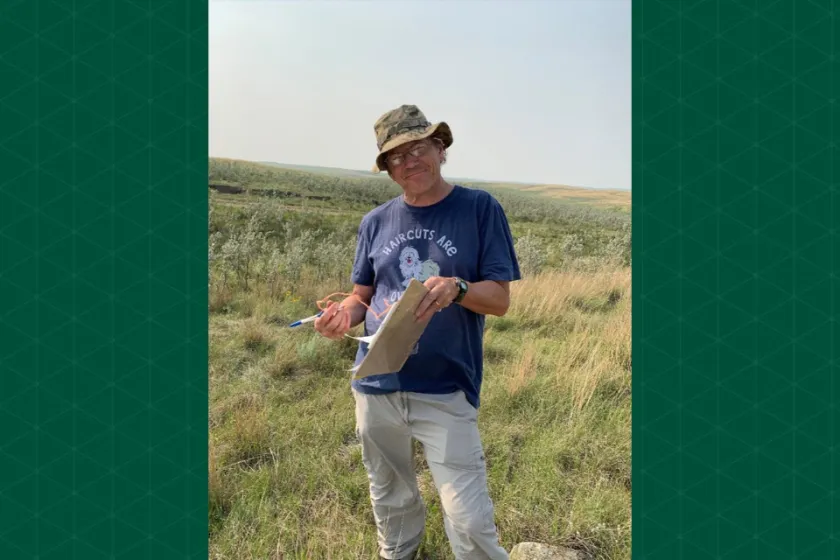
NDSU biological sciences associate professor Steve Travers has received an award of $1,360,963 from the National Science Foundation for his research project, “evolutionary potential for increased thermal tolerance in a widespread annual plant.”
There is a crucial need today to understand how plants respond to thermal stress and to uncover the genetic basis of high-temperature adaptation. The project began with a simple idea: as the planet continues to warm, the individual plants that will most often survive and reproduce at any given latitude are those originally distributed farther south and already adapted to warmer conditions.
In an earlier study, Travers and a graduate student explored how heat affects pollen in individual plants in Texas compared with the same species in Minnesota. “Our current project expands on that work by switching to a more tractable species (wild mustard) and, importantly, by including collaborators that will allow us to study the question from the gene level up to the ecosystem level,” Travers said.
The study of Brassica rapa, also known as wild mustard, is relevant to North Dakota because it is a very close relative of canola, which is grown in the state.
“Our findings are expected to inform future efforts to breed heat-tolerant canola, which is predominantly grown in North Dakota,” Travers said. “More broadly, the Brassica genus and the plant family to which it belongs include a wide variety of other crops as well.”
Travers has been at NDSU since 2007, and his lab’s primary research studies are on the evolutionary ecology of plant reproduction. His team has focused on understanding how rarity affects reproductive and Darwinian fitness, particularly on how insufficient pollinator service reduces fruit and seed production in the federally threatened western prairie fringed orchid and how climate change and shifts in the length of the growing season influence the flowering patterns of native plants in the tallgrass prairie.
"Dr. Travers's project addresses one of the defining questions of our generation: how plants will cope as the planet warms,” said NDSU interim vice president for research Heidi Grunwald. “By tracing thermal tolerance in wild mustard from the genomic level to the ecosystem level, this work turns a regional study into a general model; one that will inform heat-tolerant canola breeding here in North Dakota and, more broadly, shape how plant ecology predicts the future of wild and crop species across the globe."
Recently, Travers put together a collaborative project to study how plants adapt to a warmer climate by examining how a species that occurs across a large latitudinal gradient has already done so.
“Climate adaptation is one of the most important scientific pursuits for our generation, as climate change has already caused many global stressors and will continue to do so,” said NDSU graduate student Emily Callcut, who is working on the project. “With our research, we aim to understand how phenological, genetic, and epigenetic differences in wild mustard across the world change adaptive potential in response to increasing heat stress in variable environments. We can then extrapolate our findings to other species and make reasonable predictions about the future success of wild and crop plant species. This can serve as a baseline for farmers, habitat restoration experts, and biologists to make informed decisions about plant conservation in the face of climate change, as well as conserving plant production for crop species.”
There are three components to Travers’s project: common garden assessments of local adaptation, accelerated evolution experiments, and genomic mechanisms of thermal tolerance. The garden assessments will include growing wild mustard plants from across the globe in one controlled environment.
Travers plans to grow plants from 16 different locations around the globe in a single environment and then stress them. His team will then quantify the degree to which each has adapted to those original thermal environments. “Those findings will then guide the genomic/transcriptomic investigations aimed at uncovering the underlying genomic, transcriptomic and epigenetic basis for thermal tolerance, he said.
“Increasing temperatures are just one impact of climate change important to plant populations,” he added. A natural next step for the project is to examine plants from highly stressed populations in greater detail to understand better the mechanisms of tolerance and how ecological demands shape them.
“The ultimate impact of the project will be to understand better how plants have already adjusted to living in warmer conditions and thus inform the production of crops able to withstand increasing temperatures associated with climate change,” Travers said. “By collaborating with NDSU canola breeders, we hope to facilitate the production of varieties of this important crop that can tolerate warmer conditions. Producers are thus expected to benefit, in addition to consumers dependent on food production in the future.”
Travers’s research is funded by NSF Award 2613153.