NDSU professor working to improve health and fitness for volunteer firefighters
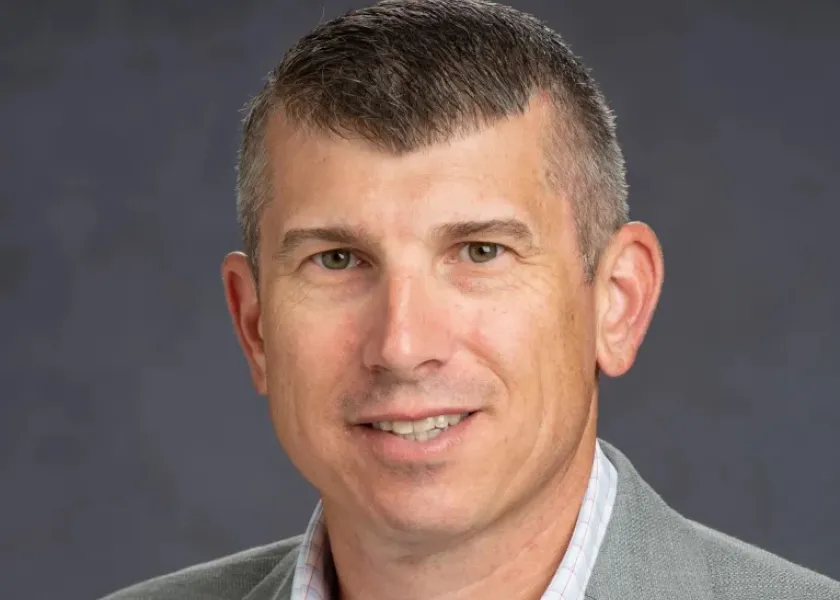
Nearly 95 percent of fire departments in North Dakota are volunteer departments, and many of their firefighters lack access to health assessments, wellness resources and education on topics such as fitness, nutrition and sleep hygiene. Research led by NDSU assistant professor of health, nutrition and exercise science, Nathan Dicks, aims to change that and improve the health and fitness of the firefighters.
“This project is expected to build a critical understanding of the health, fitness and wellness needs of volunteer emergency responders, who provide the primary fire and EMS response across rural North Dakota,” Dicks said. “This research serves as a vehicle to support and improve the health and resilience of emergency responders, thereby contributing to stronger emergency response capacity and healthier rural communities.”
Dicks adds that 50 percent of line-of-duty firefighter deaths are related to cardiac events, which are often linked to modifiable risk factors.
The research team is assessing the health, physical fitness and lifestyle behavior of those firefighters. To do this, the NDSU team has designed a fully mobile fitness assessment system that brings all necessary testing equipment directly to volunteer fire departments, eliminating the need for firefighters to travel to participate.
“Dr. Dicks’ work is working to fill a critical gap by bringing evidence-based assessments directly to these communities,” said NDSU Dean of the College of Health and Human Services, Teresa Conner. “This project reflects the College of HHS and NDSU’s commitment to advancing rural health and ensuring that the people who protect our communities have the tools they need to stay healthy and safe.”
Assessments included field-based measures of muscular strength, muscular endurance, aerobic capacity and body composition (height, weight, body fat). Online questionnaires on lifestyle and behavior, including sleep, nutrition, physical activity and exercise, were set up so participants could complete them before the assessments.
“Through this work, we have seen that volunteer firefighters are one of the most understudied and under-resourced groups in the public safety community,” Dicks added.
Dicks has experience researching tactical populations, including military personnel and career first responders.
Funding for the firefighter research project came from a Research Seed Grant distributed by Conner. Conner’s Dean Awards criteria emphasized projects that advance a broad scientific understanding and have a meaningful impact on the college.
“This project illustrates NDSU’s commitment, through our land grant mission, to serving the families, businesses, growers and ranchers of North Dakota and beyond,” said NDSU interim vice president for research and creative activity Heidi Grunwald. “Creating the ability to study micro-communities like first responders where they are, instead of imposing the burden of planning and travelling, is of utmost importance to the success of participation. That’s the first step in being able to collect the data the researcher needs to design and deploy programs that help keep our volunteer firefighters strong and healthy enough to mitigate injuries while serving their communities.”
“We’ve learned that a mobile, on‑site testing model is essential; pilot assessments showed that traveling to volunteer departments is far more practical than asking firefighters to come to campus,” Dicks said. “Moving all questionnaires online has also made participation much easier than having them fill out paper questionnaires while we are at the station.”
Dicks added that this flexibility was a critical component to the research. “We’ve learned that volunteer firefighters are highly interested in the project but face significant time constraints, since they work full‑time day jobs and most of their volunteer responsibilities, including training, take place during evenings and weekends. This reinforces the need for flexible scheduling and field‑based assessments tailored to their availability.”
Dicks said data collection from the departments was to begin towards the end of February.
Data from this project will be used to secure resources to expand health and wellness resources for volunteer firefighters across rural North Dakota, Dicks said.
“These efforts aim to position both states to pursue larger federal funding opportunities that support sustainable, evidence-based wellness programs designed to reduce preventable cardiac and other health-related risks among rural emergency responders,” Dicks said.
“What I enjoy most about being involved in research is seeing how the data we collect can translate into real-world impact,” said NDSU graduate student Maeva Lichensteiger, who is working on the project. “Working directly with volunteer firefighters has shown me how research isn’t just numbers on a spreadsheet. It represents people, their health and their safety. What excites me the most is knowing that our findings can help create future wellness programs, improve fitness standards and ultimately support those who serve their communities. Being part of that process makes the work meaningful and rewarding.”