NDSU, RAND launch research partnership focusing on issues faced in North Dakota's rural, remote and Indigenous communities
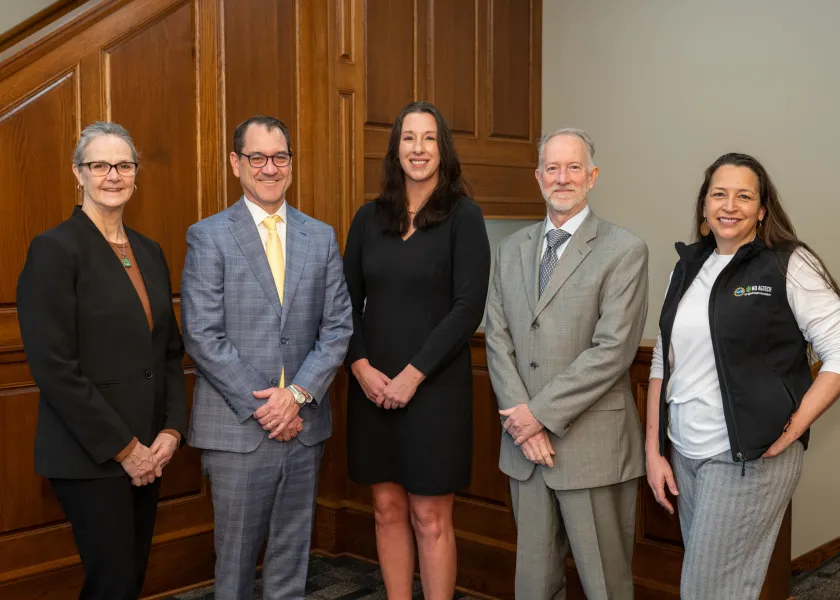
To strengthen policymaking that supports resilient, future-ready rural communities, North Dakota State University and RAND have launched a new research partnership focused on workforce development and other critical issues facing North Dakota.
The collaboration — part of the RAND Rural America Partnership—will combine NDSU’s land-grant mission and research expertise with RAND’s decades of experience providing nonpartisan, evidence-based analysis to inform public policy. Together, the institutions will develop proposed solutions to challenges in workforce readiness, access to rural healthcare, agricultural innovation and economic sustainability.
“At North Dakota State University, we are deeply committed to serving the people and communities of our state,” said NDSU President David Cook. “This partnership with RAND will help us translate our research into actionable strategies that strengthen rural economies, expand workforce opportunities and improve quality of life across North Dakota.”
Heidi Grunwald, NDSU interim vice president for research and associate vice president for research and faculty development said, “NDSU’s ongoing work in rural-need areas provides a strong foundation for the partnership. The university leads the NSF ND AgTech Engine, a national initiative advancing place-based, agricultural technology and innovation to support farmers, ranchers, rural communities and agribusinesses in the Upper Great Plains region. NDSU researchers, practice-based clinicians and pharmacists are also addressing rural healthcare challenges, including access to care, telehealth expansion and workforce shortages in critical medical fields. In addition, the university’s Agricultural Risk Policy Center continue to inform state and national decisions on farmer insurance programs, farm policy, commodity markets and rural development.”
“RAND’s collaboration with NDSU will help ensure that rural voices and needs are central to national policy discussions,” said Jason Matheny, RAND president and CEO. “Together, we can generate insights that guide investments in education, healthcare, and technology — areas essential to the vitality of rural America.”
Initial commentary, thought leadership and research will focus on workforce trends and developing strategies to expand North Dakota’s workforce tailored to rural industries such as agriculture, energy and healthcare. The partnership will also explore ways to strengthen local training programs and connect them to emerging opportunities in advanced manufacturing and AgTech.
“This is the kind of applied research that can change economic trajectories for entire regions,” said Jim Mitre, RAND senior vice president and chief research officer. “By combining NDSU’s deep community engagement with RAND’s analytic capacity, we can help rural North Dakota — and rural America more broadly — adapt and thrive in a rapidly changing economy.”
Early findings from the NDSU–RAND collaboration are expected later this year and will inform state and federal policy discussions on rural workforce development and innovation.
“This partnership exemplifies how research can directly serve communities,” said David Luckey, director of the RAND Rural America Partnership. “By working with NDSU, we’re building a model for how evidence-based policy can empower rural communities to meet 21st-century challenges.”