Day 14
Day 14
Did You Know?
Music isn’t just entertainment—it’s actually a window into how society works. Sociologists study music because it reflects who we are, how we connect with others, and how culture shapes our everyday lives. Even your music taste isn’t just about what sounds good—it’s influenced by where you come from, what you’ve been exposed to, and how you fit into the world around you.
Pierre Bourdieu, an influential sociologist, helps explain this idea. He introduced the concept of cultural capital, which basically means the knowledge, skills, and tastes that can give people social advantages. In terms of music, cultural capital can look different depending on your social circle. For some groups, knowing underground artists or niche genres might make you seem more “in the know.” In others, understanding music history or theory might be what earns respect. What counts as “good taste” isn’t universal—it depends on the group.
But it’s not all about status. At the end of the day, music is also about connection. Whether it’s concerts, festivals, parties, or even online fandoms, music brings people together. These shared experiences create a sense of belonging, which is a big reason why sociologists care about it in the first place.

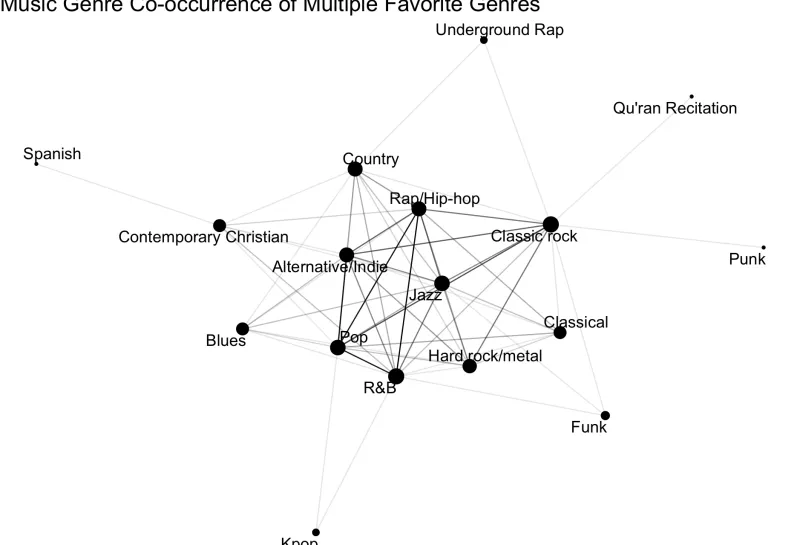
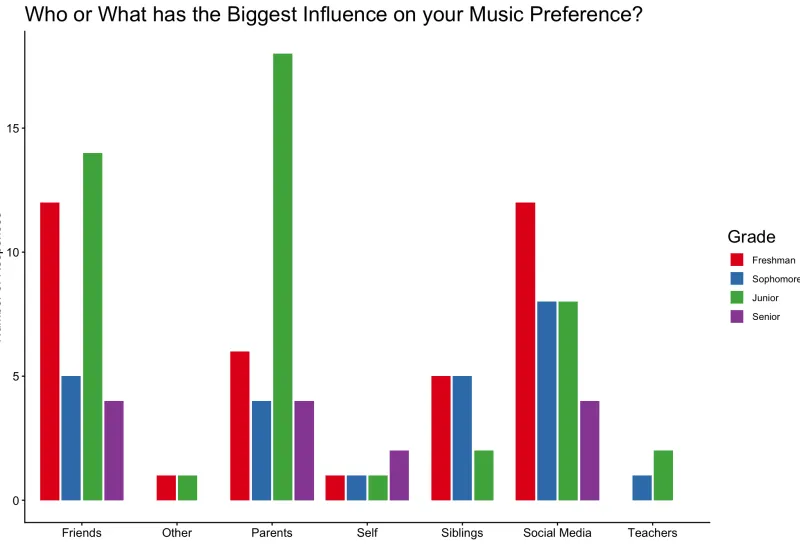
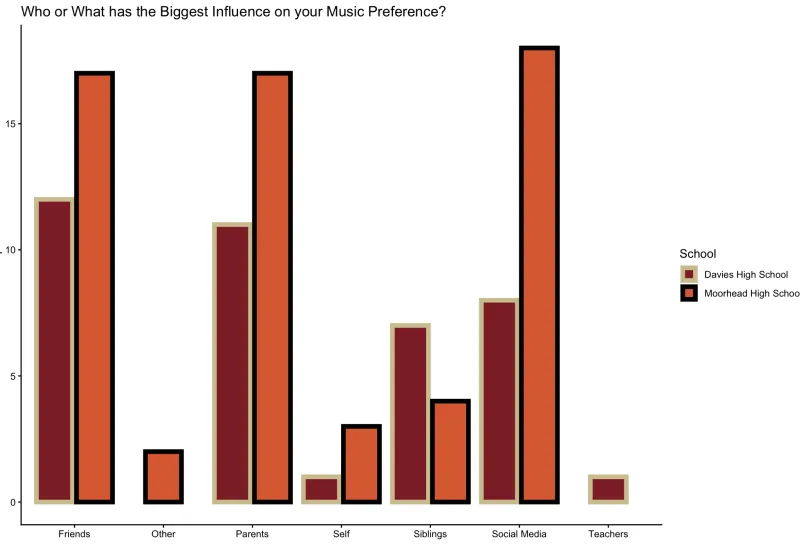
We’re still gathering real-time data from local high school students—and the trends are starting to tell a story. Take a look at the charts to see what’s emerging.