Day 23
Day 23
Did You Know?
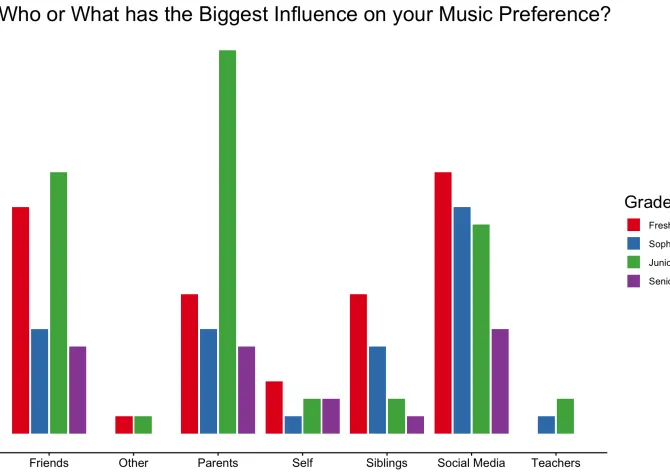
After collecting data from Moorhead, Davies, and South Fargo High Schools, we started noticing some interesting patterns in what influences students’ music taste. When we broke it down by grade, one group really stood out.
For freshmen, sophomores, and seniors, the biggest influences were social media and friends—pretty much what you’d expect. But juniors were different: parents were their top influence. So what’s going on there? Why do juniors see their influences differently than everyone else?
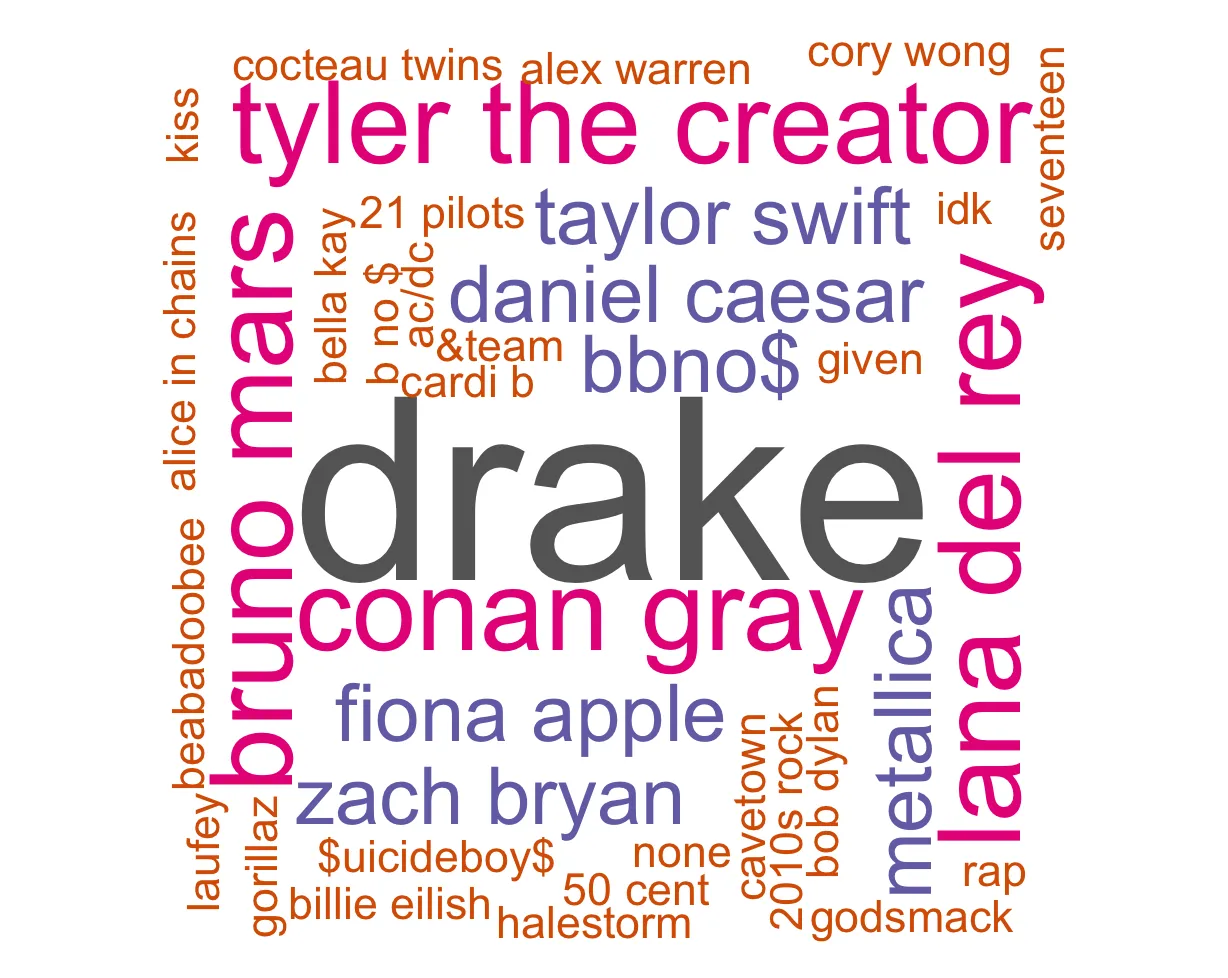
At the same time, students across these schools had very different listening habits. Out of nearly 150 surveys, no single artist really dominated. The most-mentioned artist was Drake—and even then, only seven students picked him. Artists like Lana Del Rey and Tyler the Creator were each named by just three students. Beyond that, almost every student listed different artists, meaning there was very little overlap in what people are listening to right now.
This connects to a concept in cultural sociology called monoculture. A monoculture is when large groups of people share the same cultural experiences—like everyone watching the same shows, listening to the same songs, or buying the same products. Think of a time when most people knew the same top songs or TV moments.
North Dakota native Chuck Klosterman talks about this in his book The Nineties. He argues that monoculture was strongest from the 1950s through the early 2000s. Back then, people were more likely to be tuned into the same media at the same time.
Today, though, that shared experience seems to be fading. With the rise of social media and personalized algorithms, people are exposed to completely different content—even when they’re sitting in the same classroom.
So instead of one big shared culture, we’re seeing many smaller, individualized ones.