Day 8
Day 8
Did You Know?
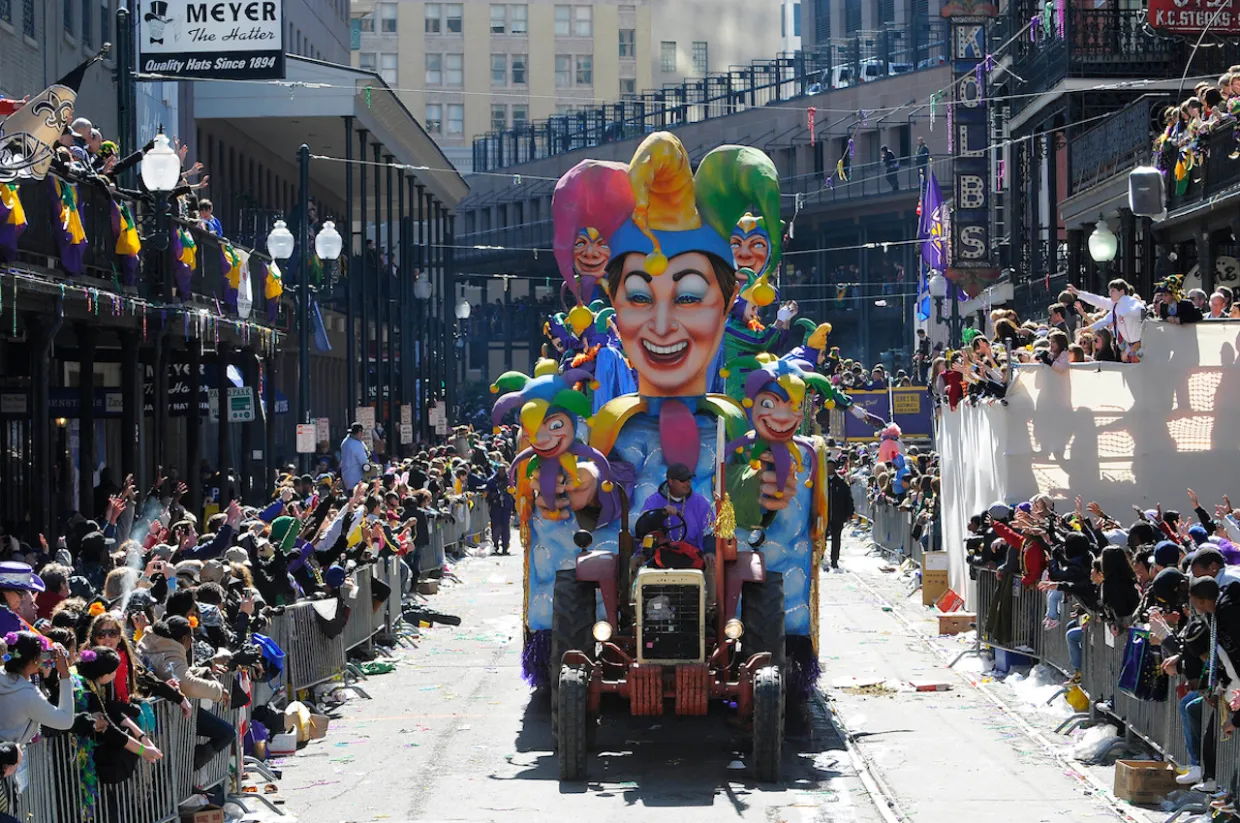
Since the first Mardi Gras parade rolled through New Orleans in 1856, the celebration has grown from a single procession into a citywide spectacle with more than 68 official parades. But Mardi Gras isn’t just a giant party—it’s a cultural tradition shaped by social groups, inequality, resistance, and the evolving identity of a community. It exemplifies the value of social cohesion.
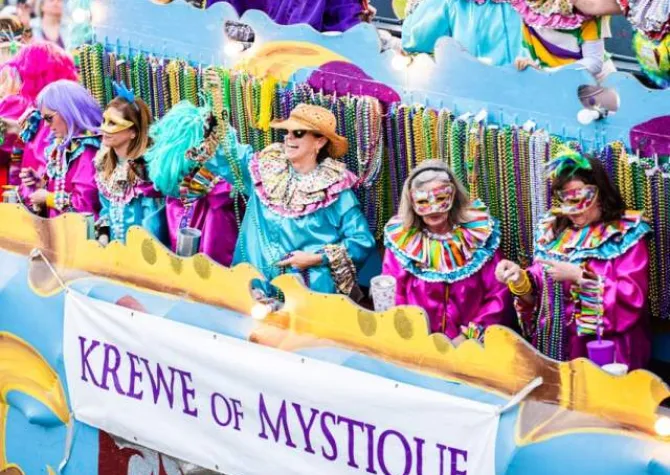
The groups that organize the parades, called krewes, originally kept their circles pretty tight, often excluding people based on race or gender. But that exclusion didn’t stop people—it sparked creativity. New krewes formed, pushing back against those boundaries and bringing new voices, identities, and traditions into the celebration.
Today, every krewe brings its own vibe, symbols, and stories to the streets, turning Mardi Gras into a living reflection of the city’s history and culture. At its core, Mardi Gras is about more than beads and parades—it’s about community, expression, and the freedom to let loose and celebrate the messy, joyful experience of being human.
“In this sense, Mardi Gras in New Orleans is truly a product of locals who choose to play a role in creating its magic every year. That is, unlike other spectacles — like the city of Las Vegas or the Macy’s Thanksgiving Day Parade — Mardi Gras in New Orleans is a non-corporate holiday facilitated, but not put on by, the city or state government. Even in light of its oppressive past and present, it is truly one of the most purely generous, creative, and authentic things I have ever had the pleasure to observe.”
-Sociologist, Lisa Wade