
How the Fruit Project measures sweetness
If you look at the fruit project data, you see a measurement called “Brix”. This is a very useful measurement for fruit ripeness and quality. However, if you don’t work with fruit, you may not be as familiar with it.
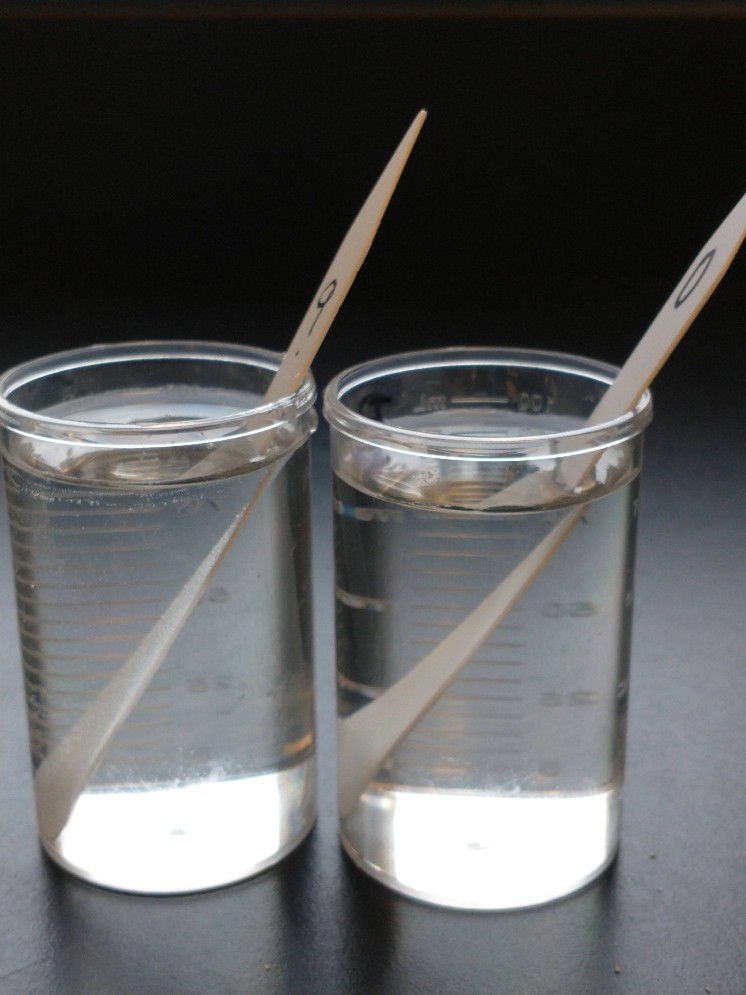
Brix is an estimate of how much sugar is in a liquid. We measure Brix with a refractometer. Light changes direction as it passes through water. How much it changes direction is affected by how much solids (like sugar) are dissolved in the water. The refractometer converts the change in light direction into an easy-to-read scale. That’s good, because it’s hard to see with the naked eye. In the picture below, the solution in the left beaker has a Brix of 9. The one on the right has a Brix of 0. Can you tell the difference in how much the plant label appears bent?
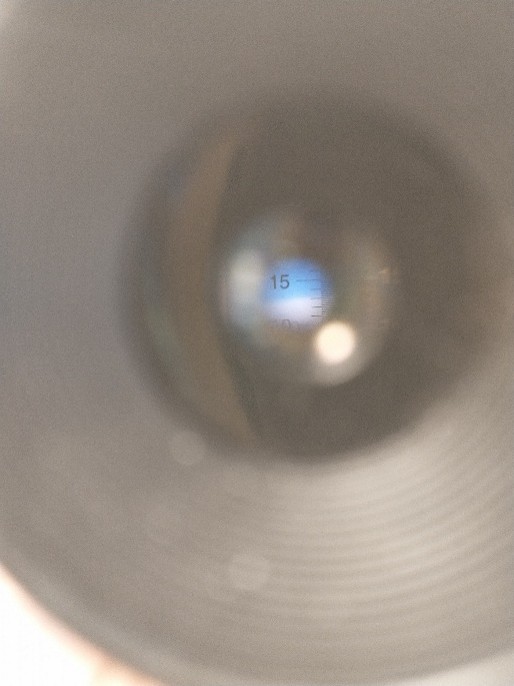
One Brix is 1 part dissolved solids per 100 parts solution, by mass. An example helps to see what that means for taste. Since Thanksgiving is only a few days away, let’s use pie. I’m obviously not going to put pie in my refractometer, but we can pretend with some apples and sugar. Here are plain ‘Haralred’ apple slices. They have a Brix of 13. This means the apple juice is about 13% sugar by mass. Juice also has minerals, acids, and vitamins. These things are dissolved in the juice and affect the way light refracts through it. However, there is much more sugar than any of these things, so Brix is an estimate of sugar. A Brix of 13 is pretty typical for an apple.
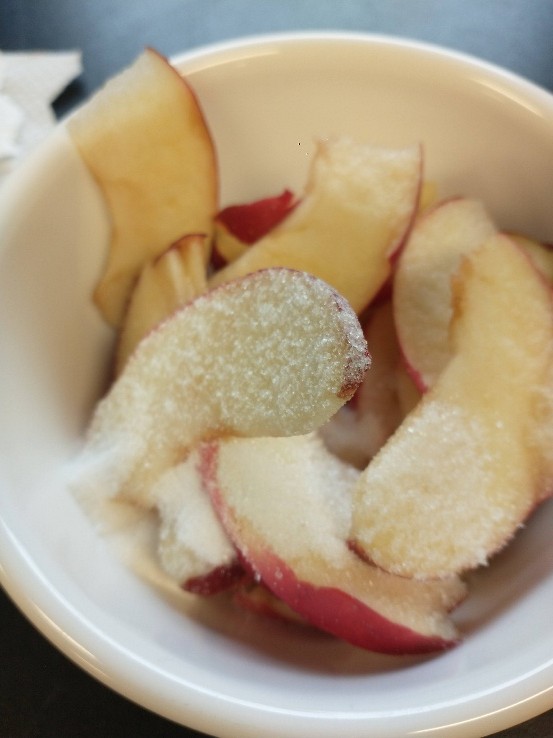
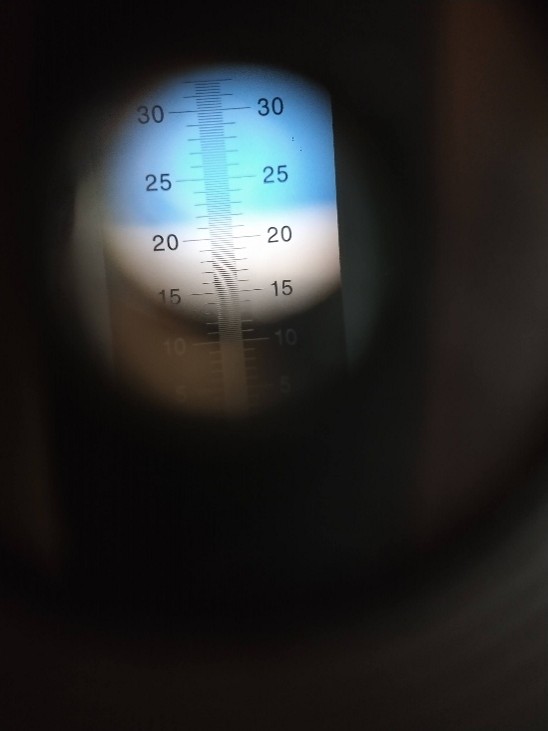
Then I added some sugar to the apples. I added 2 teaspoons for 1 apple, which is about the same ratio as an apple crisp recipe I have. Now the juice has 22 Brix. We’ve gone from 13% sugar to 22% sugar in our juice! This sugar level is more typical of a wine grape than an apple. I had to squish juice out of the apple slice to get a readable measurement. The juice on the surface of the apples was above 32 Brix, too high for my refractometer to read. These measurements are like “raw” pie filling before any water cooks away. According to the one source on the Brix of pie I could find, a cooked commercial pie filling has a Brix of 35-60 (Allen, 2003).
In the fruit project, we use Brix as an indicator of fruit quality. Higher Brix usually indicates sweeter fruit. There are Brix differences between cultivars. I have too many cultivars to show here, but I can show the range in Brix for each species this year.
| Fruit species | Brix range |
| Apple | 12.5 - 13.5 |
| Juneberry | 13 - 16.7 |
| Black currant | 13.2 - 20.6 |
| Aronia | 19 - 20.6 |
| Tart cherry | 10 - 12.1 |
| Haskap | 11.1 - 16 |
| Grape | 16 - 25 |
Brix can also be used to monitor ripeness. Brix increases as fruit gets riper. Fruit growers take regular Brix measurements while the crop is still growing on the plants. They harvest once fruit reaches its target Brix level. Brix (or just tasting) is a more reliable cue than the fruit’s appearance. For example, I learned that black currants and haskaps get ripe coloring well before they actually taste ripe.
Have a delicious Thanksgiving!
Elizabeth Krause
Elizabeth.Krause@ndsu.edu
CREC Fruit Project Manager