

Improving weed management: manage field perimeters and weed patches inside the field
One major reason for increased weed seed spread in crop fields is improper management of field perimeters and weed patches.
In Griggs County in 2021, only four percent of hard red spring wheat (HRSW) fields had Canada thistle present within the field at harvest time. In 2025, that number increased to a whopping 25 percent! Two reasons for this are allowing wind-dispersed Canada thistle seeds to blow into the field (especially from non-managed field perimeters), and not applying clopyralid in wheat as often as in the past.
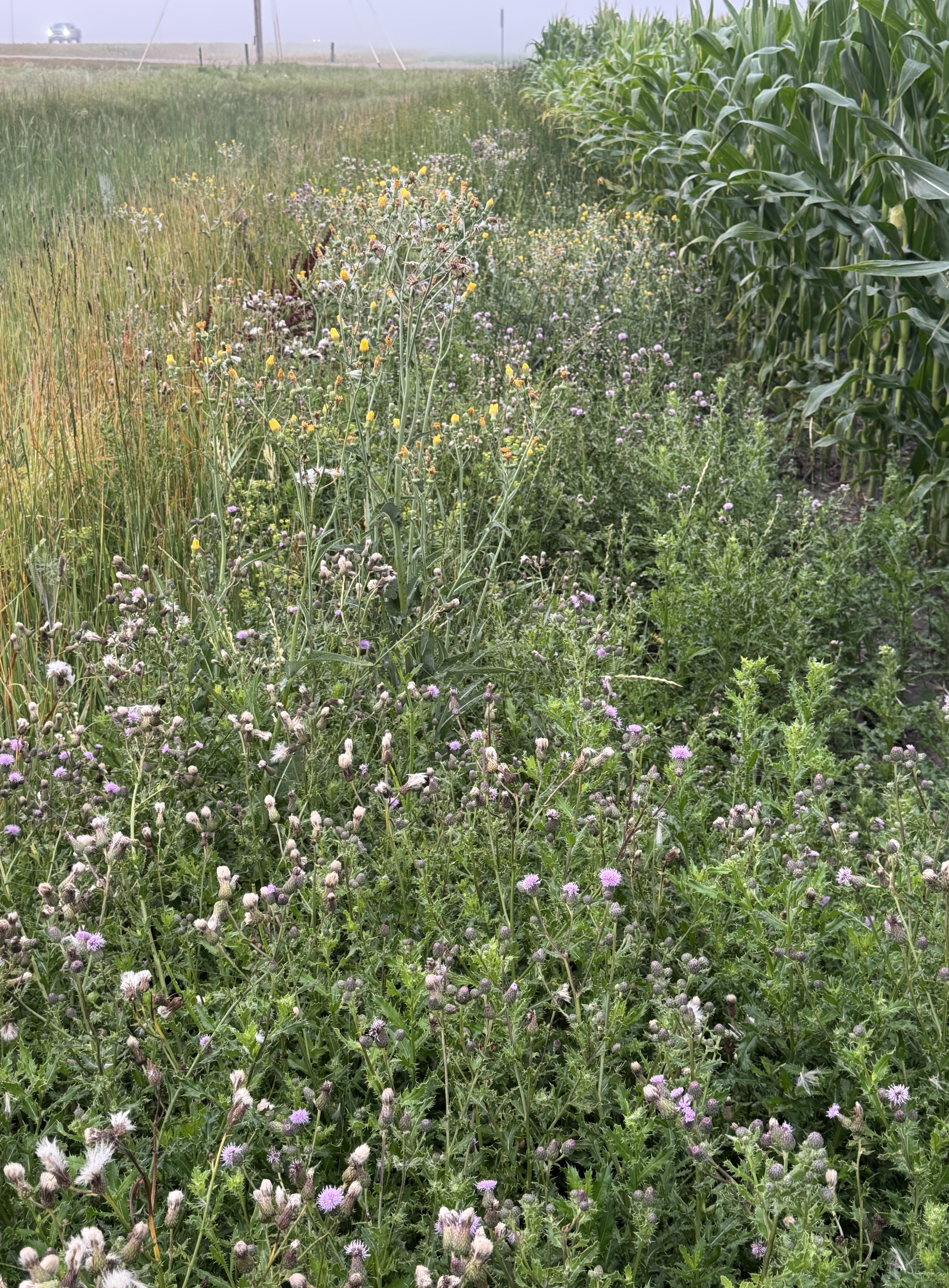
Weeds such as Canada thistle and perennial sowthistle on the field perimeter, as seen in the photo,
create future weed management problems when wind carries weed seed into the field. Other wind-dispersed weeds include absinth wormwood, horseweed (marestail), other sowthistle species, and prickly lettuce. In Eddy County in 2025, 33 percent of HRSW fields had absinth wormwood within the field at harvest time.
Applying glyphosate beyond the last crop row (into the outside field perimeter) kills the perennial grass species, allowing annual grass and broadleaf weeds to colonize this outside field perimeter. If the outside spray boom only has a standard single flat fan nozzle, most weeds are receiving a reduced rate of any applied herbicide(s) therefore selecting for herbicide-resistant annual weeds.
Allowing annual weeds, particularly kochia, waterhemp, wild oat, green foxtail, horseweed, and common ragweed, (which are likely resistant to many herbicides), to stay along the field perimeter until harvest creates future weed management challenges. During harvest the combine header cuts these plants and scatters weed seeds into the field (and, potentially, into other fields if weed seeds travel to the next field with the combine).
Neglecting foxtail barley and kochia weed patches within a field, especially where there is no or very little crop, causes weed seeds to spread within and among crop fields, also making future weed control more difficult.
The best solution to managing the outside field perimeter is to mow plants to a height of 12 inches at the first visible flowering of the most problematic weed species, such as Canada thistle, perennial sowthistle, absinth wormwood, or herbicide-resistant annual weeds. Drive slowly when mowing to evenly cut the weeds. Mowing at a 12-inch height encourages branching weed species such as kochia and waterhemp to create stronger branches at the base and branches higher up the plant for more effective mowing next time. If mowing has not been done yet at this time of the year, mow the outside field perimeter as low as possible. After mowing high the first time, mow a second time when plants start to flower again, but mow as low as possible and in the opposite direction of the initial mowing. Scout field margins and mow as often as necessary to reduce seed production. If only annual weeds are present along the field border, mow only the first five feet along the field perimeter. If perennial wind-dispersed weed species are present, mow the first 15 feet from the field perimeter. Don’t mow more than 15 feet from the field perimeter to allow habitat for beneficial insects and other living creatures.
If large patches of foxtail barley are present in saline areas within fields, mow all visible foxtail barley, including the few crop plants that may be present, to keep the seeds from blowing into the crop field. If foxtail barley is the main weed problem within a field, mow at the presence of the first seedhead and mow as low as possible. Subsequent mowings will reduce seed production. Mowing saline areas is better than tilling, which causes salts to move into the crop field.
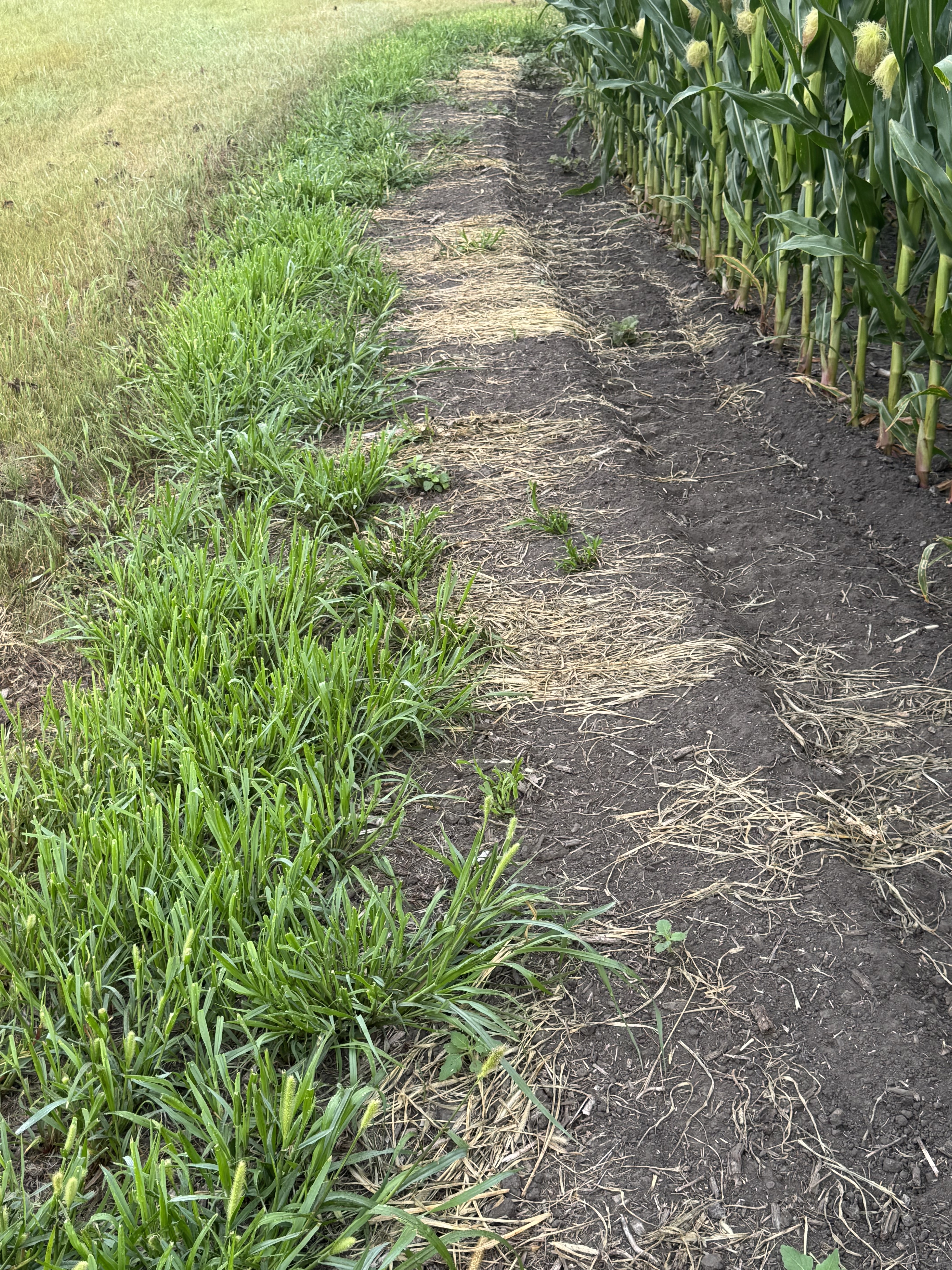
When mowing field perimeters, mow off all crop plants present within the weeds because stopping weed seed spread is more important than minor crop loss. Be sure to mow weeds between fields as well. Mow all field perimeters and dense weed patches to look like the field in the photo to improve future weed management.
Special thank you to Tom Peters for reviewing this article.
Jeff Stachler, Ph. D.
Jeff.Stachler@ndsu.edu
Extension Cropping Systems Specialist
