
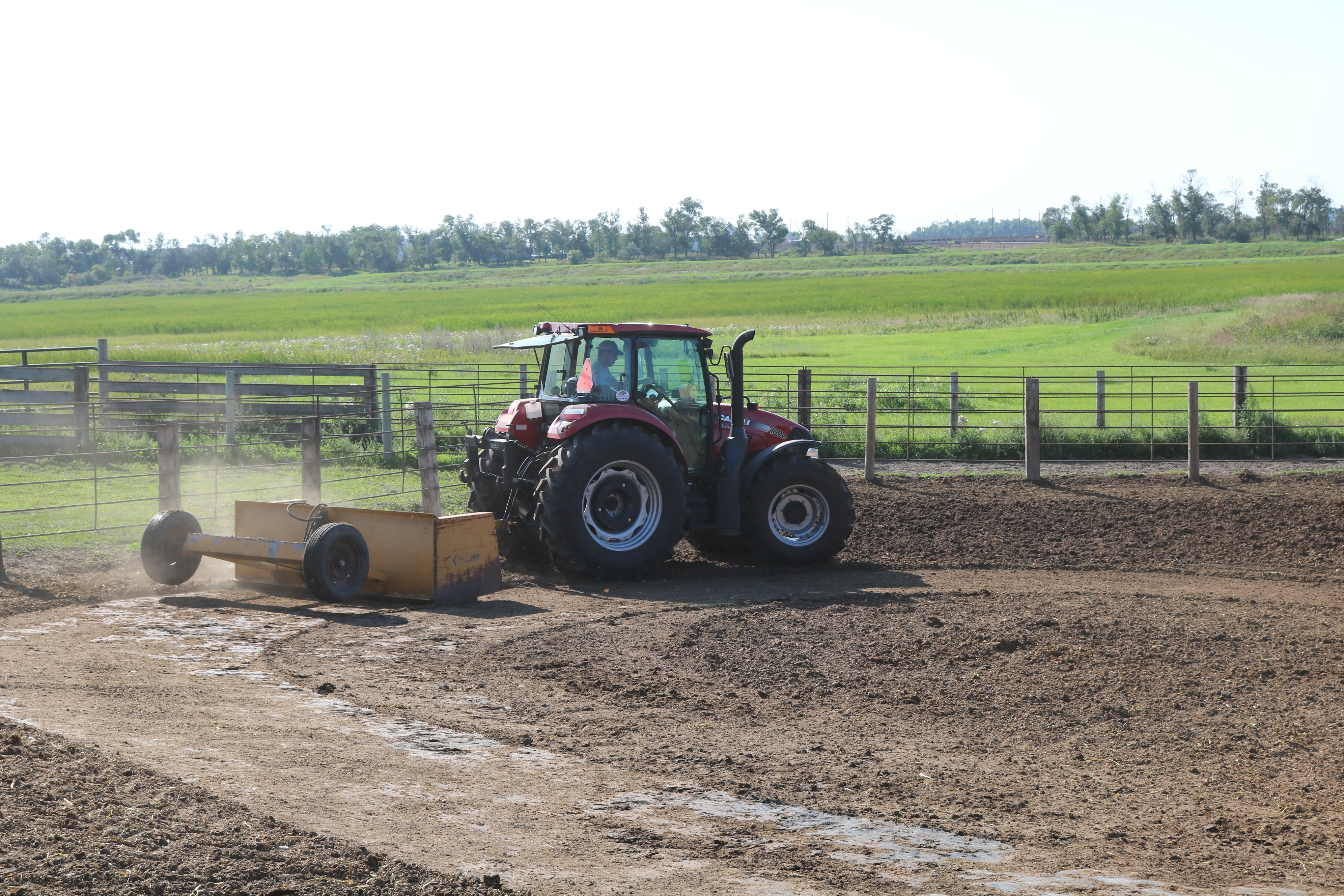
Lot management doesn't happen by accident: managing feedlot manure and mortalities
Feedlot lot management involves more than keeping cattle fed and watered. The condition of the lot, how manure is handled, and having a plan for livestock mortalities all contribute to animal health, environmental stewardship and the overall efficiency of a feeding operation.
Mud and manure buildup can affect cattle performance and health. Wet, muddy conditions reduce the insulating value of cattle hair coats, increase the risk of health problems, and can decrease feed intake, thereby affecting feed efficiency. A 3% to 5% slope away from the feed bunk when scraping lots and reshaping mounds is recommended to promote drainage. Preventing water from standing in pens and maintaining a firm, well-drained surface are important management priorities.
Manure is a resource, but it requires management to capture its value. Regularly removing manure from pens helps maintain usable lot surfaces and provides an opportunity to stockpile or compost material for future use. Composting can reduce manure volume by approximately 50%, decreasing hauling requirements. Composting also reduces pathogens, parasites and weed seeds when properly managed. You can learn more about composting manure in this NDSU/UMN Extension Online Compost Workshop.
Manure management also means thinking beyond the feedlot gate. Nutrient content, storage, handling and application all influence how effectively manure can be incorporated into a crop fertility program. Manure is not simply a waste product to remove; it is a source of nutrients that can benefit crop production when managed appropriately. Learn more about manure use in the NDSU Extension publication titled: North Dakota Manure Fertilizer Use Recommendations.
Livestock losses are an unfortunate reality of cattle feeding. Weather events, disease, injuries and other circumstances can result in mortalities. Waiting until an animal dies to determine how it will be handled can create unnecessary challenges.
North Dakota producers have several approved carcass disposal options, including composting, burial, rendering and incineration. Each has advantages and limitations related to equipment, location, cost and biosecurity. Composting is one option that can make use of materials already available on many livestock operations, including manure, straw and spoiled feed.
A mortality management plan should identify the disposal method, appropriate location, available equipment and materials, and steps for managing carcasses promptly and appropriately. You can learn more about composting dead livestock in the NDSU Extension publication titled: 4 Easy Steps for Composting Dead Livestock.
Maintaining pen surfaces, managing manure and planning for mortalities are connected practices that support cattle well-being, protect natural resources and improve the long-term function of a feeding operation. Good lot management doesn't happen by accident. It takes planning and follow-through. You can learn more about manure and mortality management by watching the 2026 NDSU Extension Backgrounding Series available here: https://www.ndsu.edu/agriculture/ag-hub/ag-topics/livestock/beef/production/backgrounding-cattle.
Mary Keena
Mary.Keena@ndsu.edu
Extension Livestock Environmental Management Specialist