
2025: Screening of Canola Cultivars for Tolerance to Verticillium Stripe
(Research Report, Langdon REC, December 2025)Canola cultivars/varieties: Seventeen commercial canola cultivars with unknown tolerance to Verticillium stripe were planted to monitor the level of tolerance against the pathogen Verticillium longisporum (Table 1). The trial was planted on May 28, 2025, in a randomized complete block design (RCBD) with four replications. The amount of Verticillium stripe infection obtained in the research plots was from a meticulously developed artificial inoculum in the lab, using wheat grain as the source.
Table 1: Canola cultivars evaluated for Verticillium longisporum in North Dakota.
| Cultivar | Seed Source |
|---|---|
| P612L | Pioneer |
| P617SL | Pioneer |
| P520L | Pioneer |
| P1540L | Pioneer |
| CP9551TF | Croplan Genetics |
| CP9978TF | Croplan Genetics |
| CP7130LL | Croplan Genetics |
| CP9221TF | Croplan Genetics |
| CP7250LL | Croplan Genetics |
| BY7204L | BrettYoung |
| InVigor L343PC | BASF |
| InVigor L340PC | BASF |
| InVigor L233P | BASF |
| InVigor LR354PC | BASF |
| InVigor L345PC | BASF |
| InVigor L350PC | BASF |
| DKTFLL21SC | Dekalb |
Percent incidence and severity of Verticillium stripe was evaluated on August 29, 2025, by cross-section clipping of canola stems a half inch below ground level. Percent incidence was determined by the percentage of infected stems, and percent severity was determined by the percentage of the pith infected in each stem.
Data analysis: Statistical analysis was done using Genovix Generation II software. Fisher’s least significant difference (LSD) was used to compare means at p (α = 0.05).
Results: The cultivars demonstrated significant differences in Verticillium stripe incidence at P-Value < 0.05, with a least significant difference (LSD) of 13. The cultivars ‘P1540L’ and ‘InVigor L350PC’ exhibited the lowest Verticillium stripe disease incidence (8%), whereas the ‘InVigor L233P’ cultivar showed the highest incidence (35%) of Verticillium stripe (Figure 1). In addition, statistically significant differences in yield were observed at P-Value < 0.05, with an LSD of 259 (Figure 2), and the mean yield was 2,510 lbs/a. The InVigor L340PC cultivar achieved the highest yield, 2,832 lbs/a, supporting the robustness of these results and providing a basis for future decisions on choosing a cultivar with better tolerance to Verticillium stripe.
Figure 1: Percent Verticillium stripe incidence obtained on various commercial cultivars of canola tested in 2025 under field conditions.
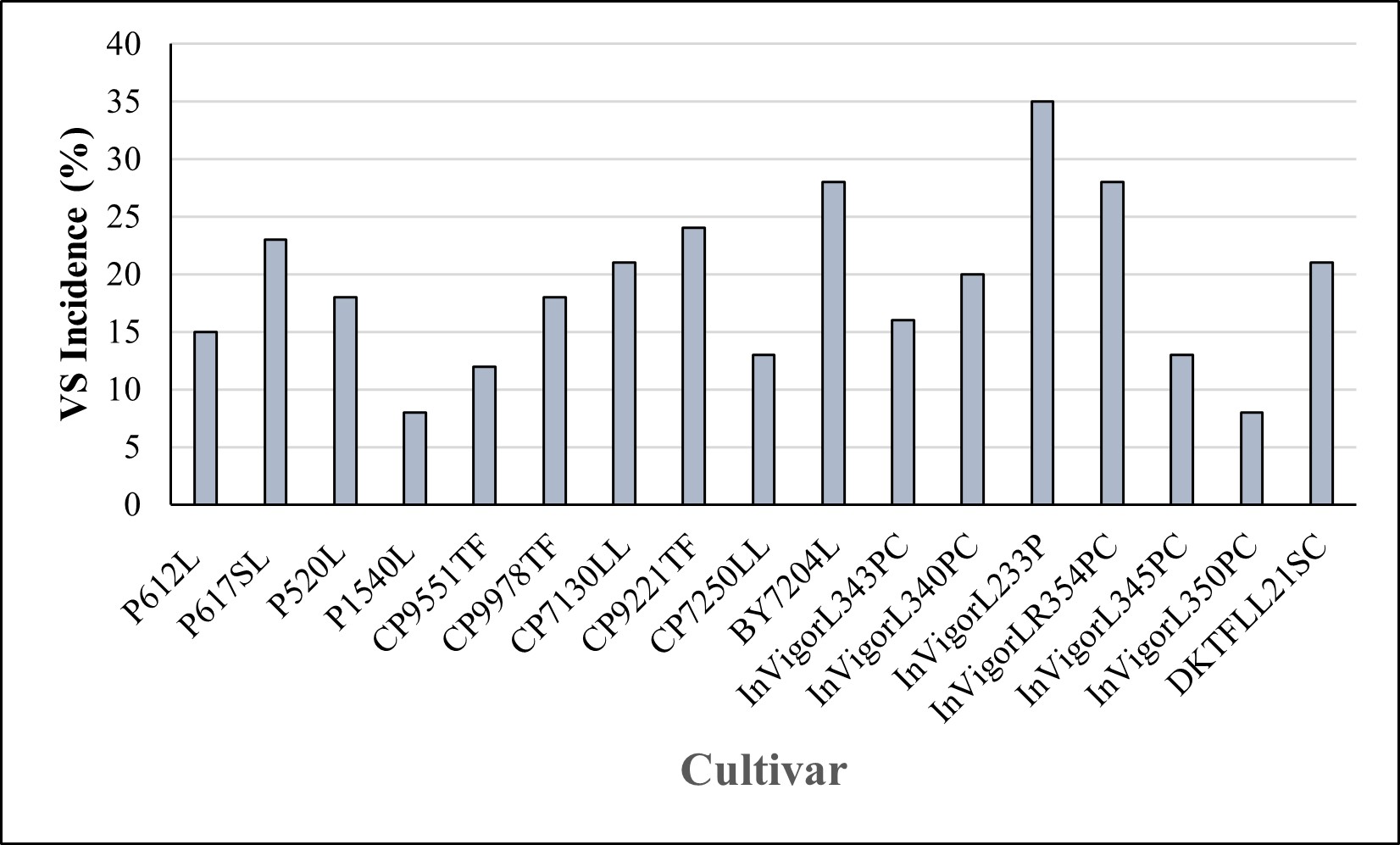
Figure 2: The average yield obtained on various commercial cultivars of canola tested in 2025 under the Verticillium stripe infection in field conditions.
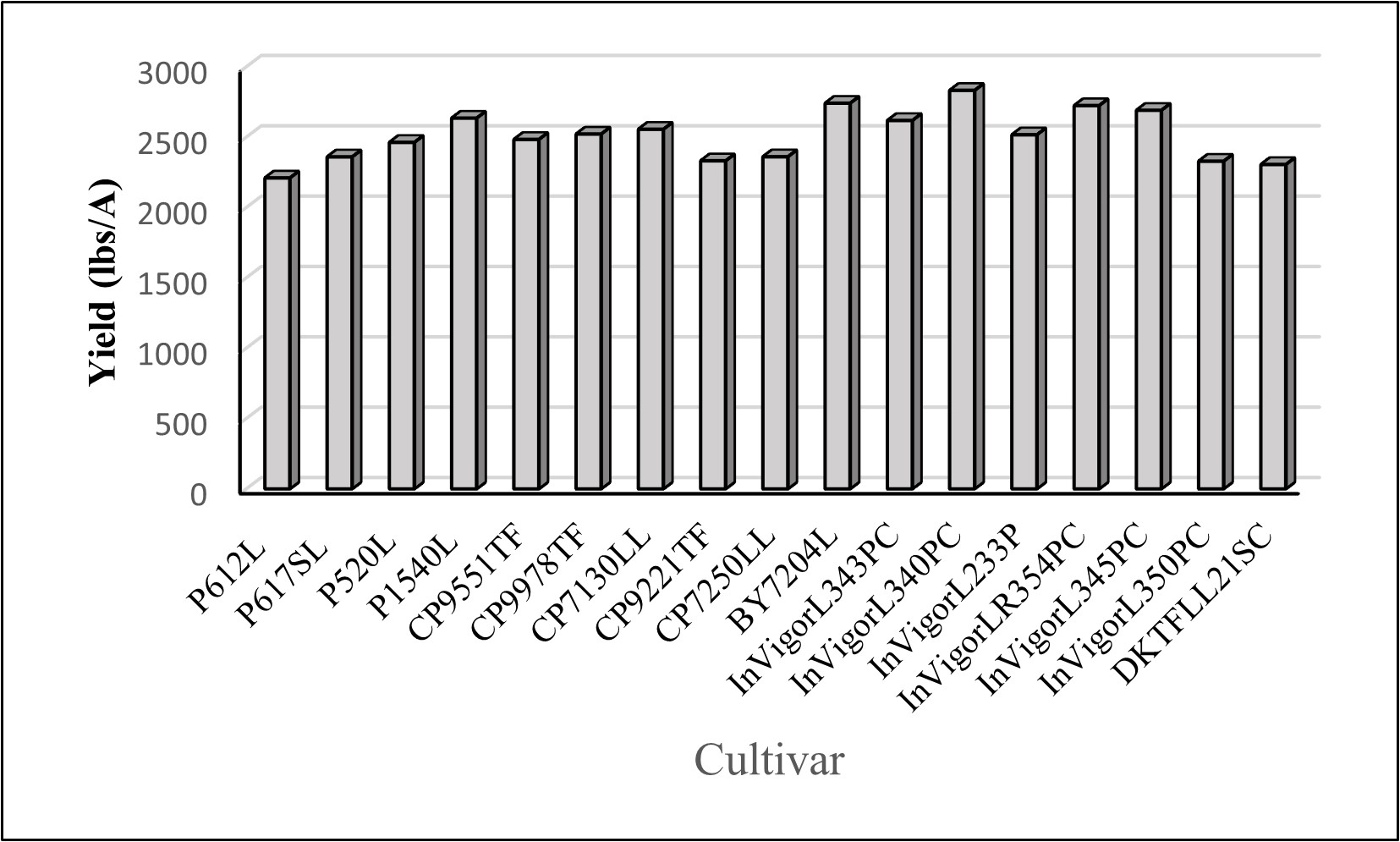
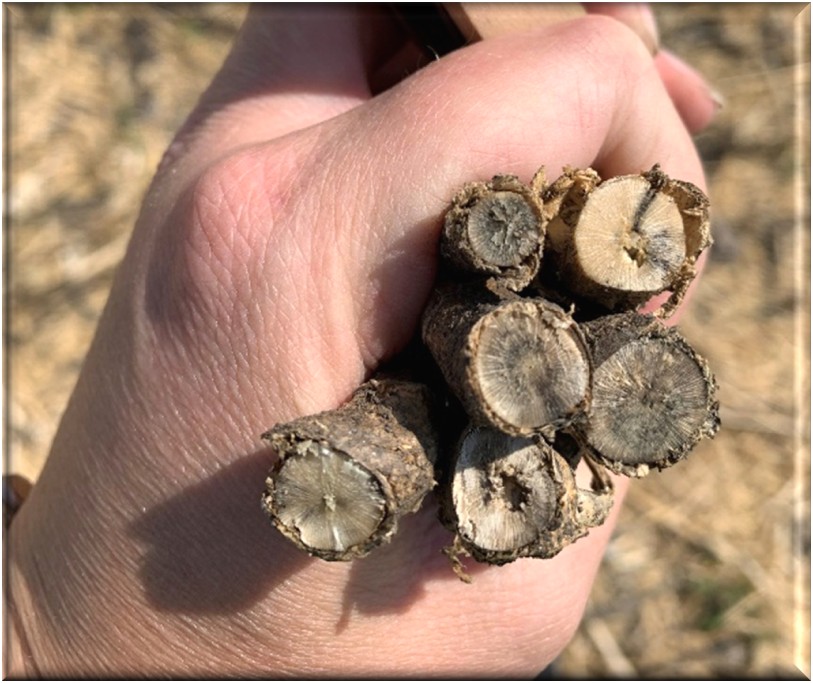
Figure 3: The picture below depicts Verticillium stripe disease on the cross-section of canola stubble.
Acknowledgements: Northern Canola Growers Association and a special thanks to Noah Foster, Kaleb Foster, Aiden Brown, and Carleen Schill.
