
Cost share for water quantity and quality for cattle
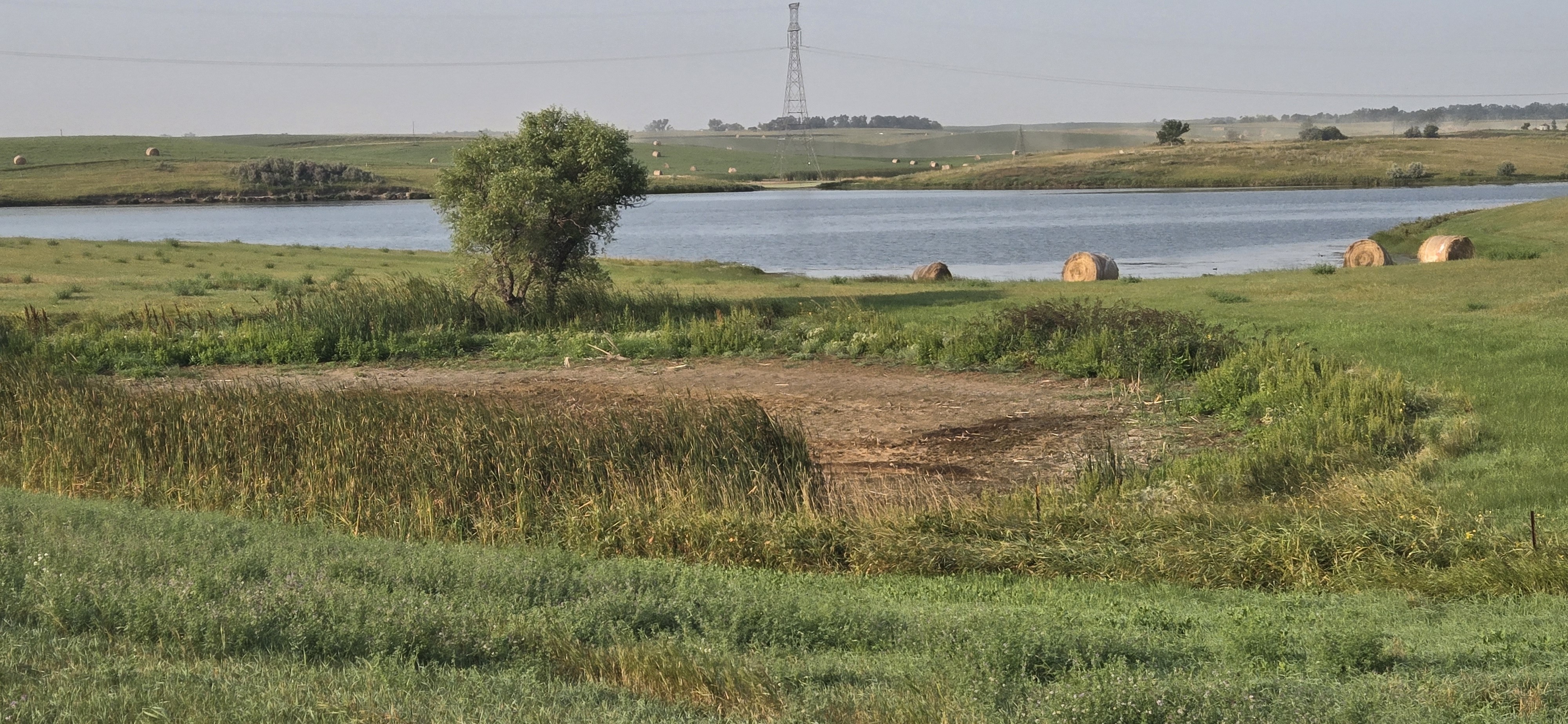
It’s a drought in North Dakota. It’s been almost two months since a daily rain greater than a half inch has occurred at the Carrington Research Extension Center NDAWN site.
Water sources for cattle need to be checked for water quantity and quality immediately. Cows need 20-25 gallons of water per day.
When water is unsuitable for livestock consumption, either haul water to the pasture or move cattle to another pasture with better water. Areas with deep mud surrounding water may lead to an inability to access that water, no matter how good the quality may be.
Another option is to enhance current water systems. The North Dakota Department of Water Resources has recently announced an assistance program for livestock water.
Drought Disaster Livestock Water Supply Project Assistance Program
NDAC, Section 89-11 provides the Department of Water Resources the ability to provide cost-share assistance to livestock producers with water supply shortages caused by drought.
The following North Dakota counties are eligible: Adams, Barnes, Benson, Billings, Bottineau, Bowman, Burke, Burleigh, Cass, Dickey, Divide, Dunn, Eddy, Emmons, Foster, Golden Valley, Grand Forks, Grant, Griggs, Hettinger, Kidder, LaMoure, McHenry, McKenzie, McLean, Mercer, Morton, Mountrail, Nelson, Oliver, Pierce, Ransom, Renville, Richland, Rolette, Sargent, Sheridan, Sioux, Slope, Stark, Steele, Stutsman, Towner, Traill, Walsh, Ward, Wells, Williams.
Livestock producers in all affected North Dakota counties may qualify for up to $10,000 in cost-share assistance, for up to three projects, on the following items:
- New water wells;
- New rural water system connections;
- New pipeline extensions, pasture taps, and associated works; and
- Contract labor, materials, and equipment rentals for work completed by the producer to develop new water supply projects.
Cost-share payments made through this program can be considered taxable income. Successful applicants will need to submit IRS Form W-9 upon completion of their projects before program reimbursement can be made.
Online applications can be found at: https://www.dwr.nd.gov/project_development/drought_disaster_livestock.html
Table 1 Daily water guidelines for beef cattle when temperatures reach 90°F.
| Cattle Type | Animal Details | Daily Water Needed (Gallons) |
| Cows | Nursing a calf | 18.0 |
| Bred dry cows and heifers | 15.3 | |
| Bulls | Mature bulls | 20.0 |
| Growing Cattle | 400-pound calf | 9.5 |
| 600-pound animal | 12.7 | |
| 800-pound animal | 15.0 | |
| Finishing Cattle | 600-pound animal | 14.3 |
| 800-pound animal | 17.4 | |
| 1,000-pound animal | 20.6 | |
| 1,200-pound animal | 24.0 |
Critical Water Quality Thresholds
Water quality drops as water levels lower during droughts, concentrating toxic minerals. Producers should screen water sources using these NDSU thresholds:
- Total Dissolved Solids (TDS): Must be less than 5,000 ppm for most grazing livestock. If a field screening shows TDS higher than 4,500 ppm, send a sample to a lab.
- Sulfates: Must be less than 500 ppm for calves and less than 1,000 ppm for adult cattle. High levels cause central nervous system issues and brain damage.
If you have questions regarding these programs, or any other livestock production matters, please reach out to me.
Karl Hoppe, Ph. D.
Karl.Hoppe@ndsu.edu
Extension Livestock Systems Specialist
