

Beating wheat scab on time: comparing drone and ground fungicide applications at CREC
Fusarium head blight, commonly known as wheat scab, remains one of the most challenging diseases for North Dakota wheat growers. The disease can reduce yield, lower grain quality, and increase deoxynivalenol, or DON, a toxin that can result in dockage or rejection at the elevator. Fungicides can help manage wheat scab, but successful control depends heavily on timely application during the narrow flowering window.
That timing can be difficult in wet years. When wheat reaches early flowering, field conditions may be too wet for a ground sprayer to enter without causing rutting or delaying treatment. Spray drones may provide another option because they can fly over wet fields and apply fungicide without driving through the crop or soil. However, more local field data are needed to understand how drone applications compare with ground sprayers under North Dakota conditions.
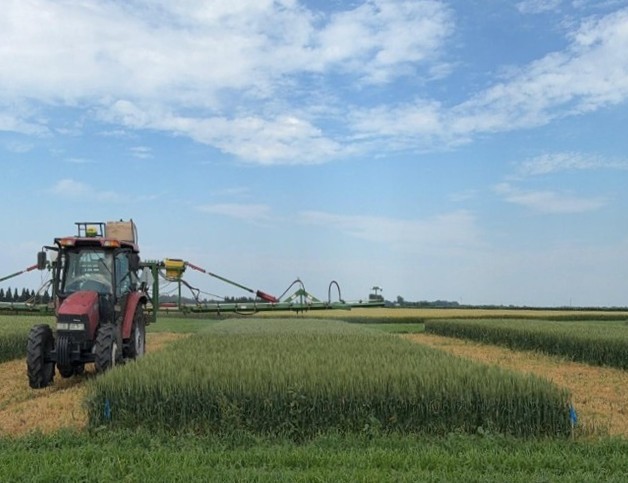
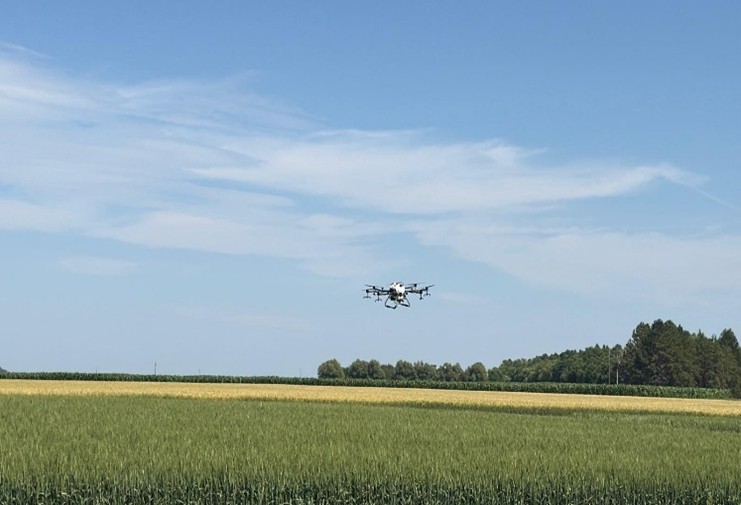
This season, Dr. Karn’s Lab at the NDSU Carrington Research Extension Center conducted a replicated field study to compare fungicide application methods for managing Fusarium head blight in hard red spring wheat. The study included three treatments: an untreated control, fungicide applied with a ground sprayer, and fungicide applied with a Hylio AG-230 spray drone. Miravis Ace was applied at the same product rate, with the ground sprayer using 15 gallons per acre and the drone using 5 gallons per acre. The drone application was made at 12 feet above ground level and 10 miles per hour.
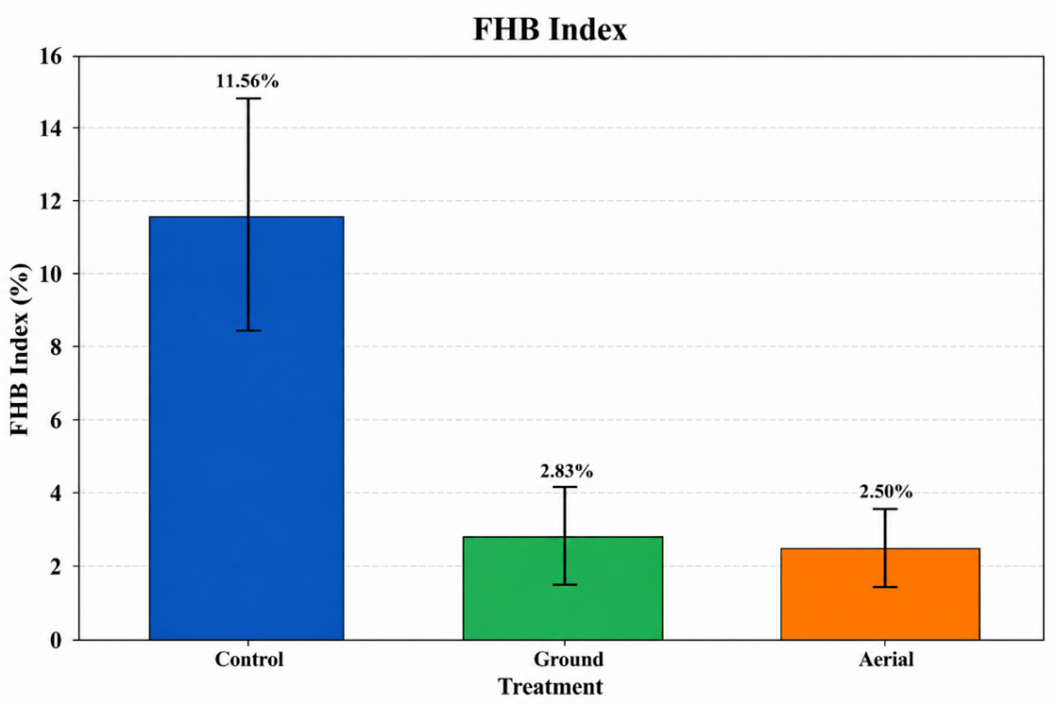
Preliminary results showed clear disease reduction from both fungicide application methods. The untreated control had an FHB index of 11.56%, while the ground application reduced the index to 2.83% and the drone application reduced it to 2.50%. This represents approximately 75 to 80% numerical reduction in FHB index compared with the untreated control. Both application methods also reduced disease incidence and severity, showing that timely fungicide application can play an important role in protecting wheat during flowering.
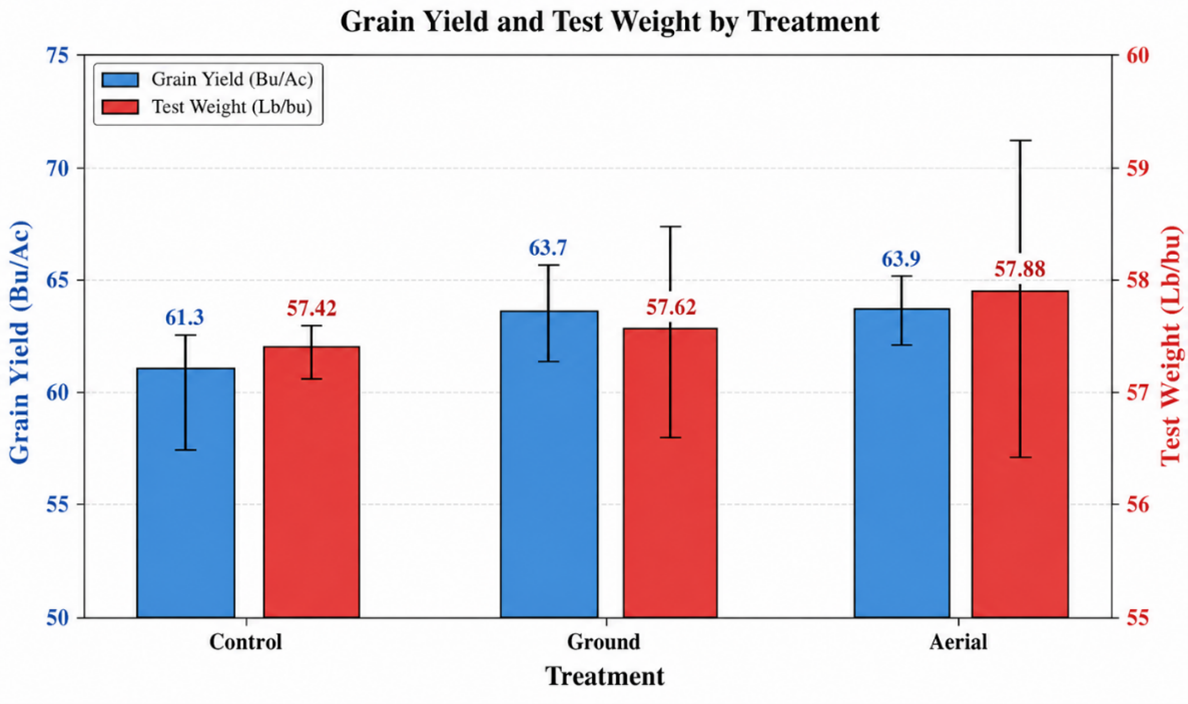
Yield and test weight were also slightly higher where fungicide was applied. Grain yield increased from 61.3 bushels per acre in the untreated control to 63.7 bushels per acre with the ground application and 63.9 bushels per acre with the drone application. Test weight increased from 57.42 pounds per bushel in the untreated control to 57.62 pounds per bushel with the ground application and 57.88 pounds per bushel with the drone application.
Although these results are preliminary, they suggest that spray drones may be a promising tool for timely fungicide application when field conditions limit ground equipment access. The value of drone application may be especially important in wet seasons, when missing the flowering window can increase disease risk and reduce grain quality.
This research is helping generate local, field-based information for North Dakota producers. By comparing drone and ground fungicide applications side by side, the project will help identify practical application settings, coverage patterns, and management considerations for using spray drones in wheat disease management. The goal is not to replace ground sprayers, but to evaluate whether drones can provide growers with another reliable option when timely crop protection is needed.
NDSU Extension does not endorse commercial products or companies even though reference may be made to tradenames, trademarks or service.
Rupak Karn, Ph. D.
Rupak.Karn@ndsu.edu
Extension Precision Agriculture Specialist
