Summer Research in Australia
ME Undergraduate Students Conducted Summer Research in Australia

“My research experience in Australia has truly been life changing,” has been a common refrain from two NDSU mechanical engineering students, Brenner Spaeth and Travis Reighard, who spent the summer conducting research at the University of Adelaide in Australia. These two students had a unique opportunity that has greatly impacted their engineering education and helped further the development of nascent energy-related engineering fields.
This opportunity was provided thanks to an NSF International Research Experience for Students (IRES) grant obtained through collaboration between North Dakota State University, the University of North Dakota, and Kansas State University. The grant funded sending a small cohort of students from these universities to a partner university in Australia to conduct engineering research. The trip to Australia is the center point of a year-long program which started in the spring with planning the research, continued through summer during which the research was conducted, and finishes in the fall with data analysis and dissemination of the results. During the spring semester, through a weekly class, they learned the basics of engineering research and learned the requisite experimental and numerical research techniques in their U.S. adviser’s lab. A key requirement for the students in the spring semester was to develop a research plan, with an appropriate objective and well-planned set of experiments, for the summer. To develop their plan, each student was partnered with a faculty member from their home institution and from the University of Adelaide. The students worked hard to understand their research topics and develop a meaningful plan. During the summer, the students spent eight weeks in Australia working at the partner institution to complete their plan and collect data. This fall they are analyzing the data, finalizing a report, and preparing multiple presentations to technical and non-technical audiences such as a local high school.
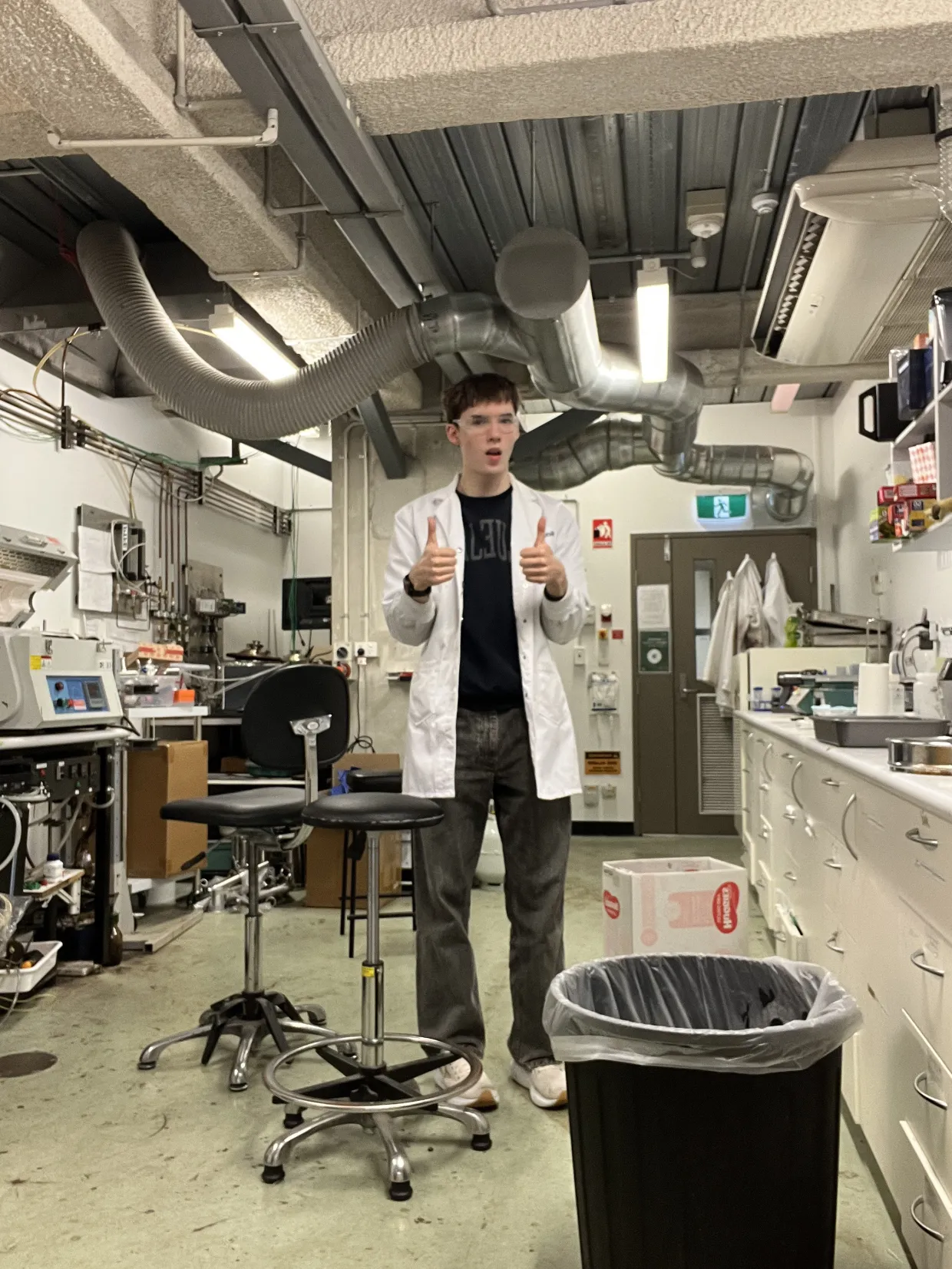
Brenner’s research topic focused on experimentally investigating novel ways to convert waste biomass into a higher-quality fuel source or a soil amendment product. As Brenner puts it, “I worked on a project that focused on biomass energy, and doing so taught me a lot about renewable energy and engineering. Throughout the experience, I learned so much from both my mentors and peers. In particular, I found it incredibly valuable to observe the different perspectives and approaches of my home and international mentors. My favorite part of the research experience was getting to work hands-on in the lab. I really enjoyed being able to apply my own experimental plans that I worked hard on and see the results come to fruition.”
“I researched pollinator-friendly solar energy systems, specifically site selection,” stated Travis about his research which worked to identify and analyze locations for dual land use of solar energy generation and creating pollinator habitat. “Ultimately, I developed a site selection tool in ArcGIS. This tool was used to identify locations and model dual-use systems in South Australia and North Dakota where pollinator habitat and solar energy production had the highest potential. This project has improved my interdisciplinary communication skills, which will be extremely beneficial for the rest of my career. I also learned the techniques and importance of presenting technical information to a wide range of audiences.”
In addition to the research experience and the opportunity to travel to a different country, it broadened the students’ horizons professionally and culturally, and thus, deepened their educational experience. “Outside the lab, it was extremely eye-opening to learn about the diverse culture in Adelaide and Australia as a whole,” said Brenner. “One specific aspect I found valuable was learning about South Australia’s focus on sustainable energy. It was very motivating to work on a project that focused on renewable energy in a region that puts so much attention on reducing its carbon footprint.”
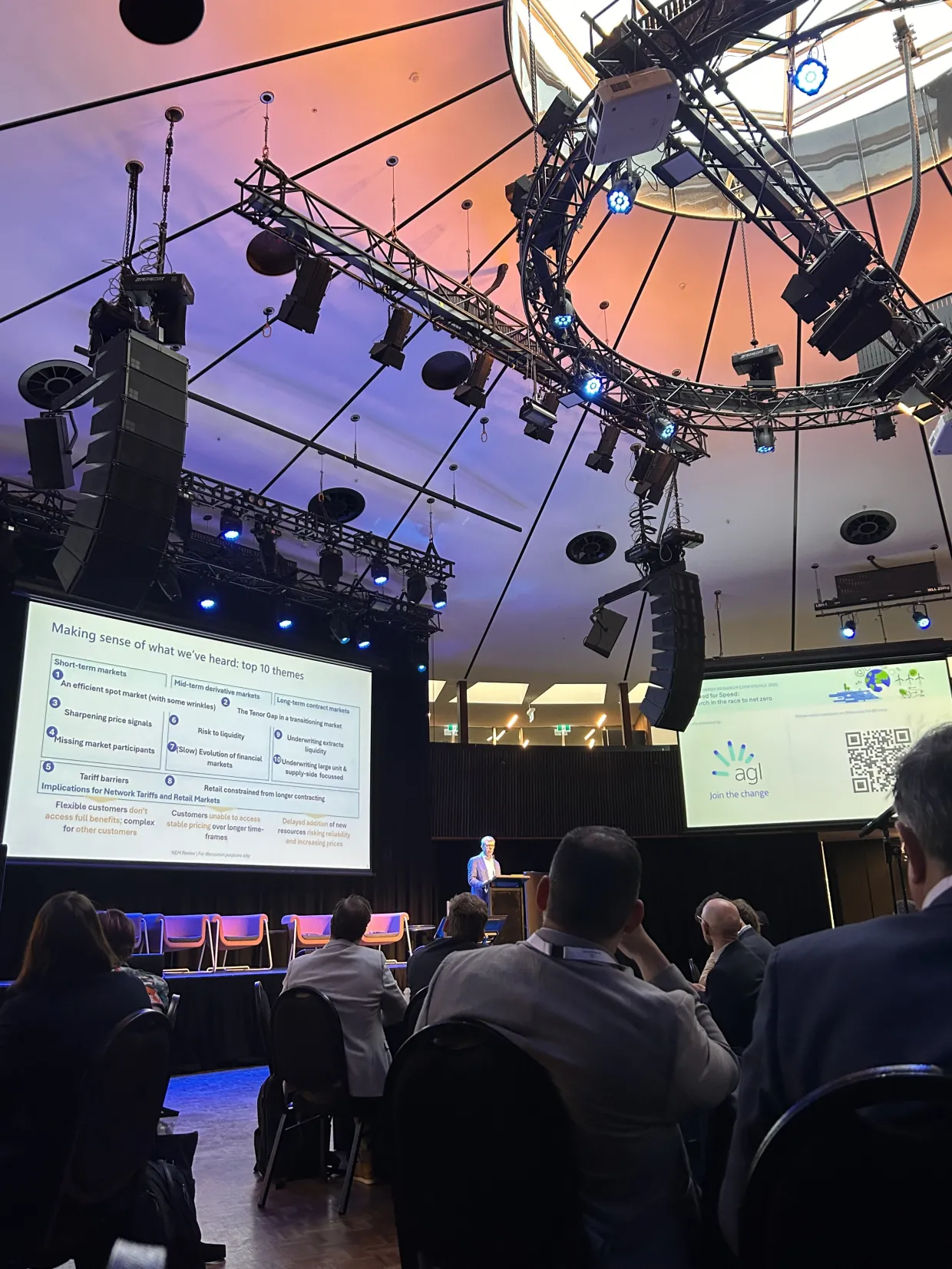
“Having the opportunity to interact with engineers, researchers, policy makers, and communities in a foreign country allowed me to consider new perspectives on challenges that I would not have considered otherwise,” Travis said. “One of my favorite experiences was meeting with a representative of a local indigenous community to explain my project. It helped me conclude that their community has a high suitability for a pollinator-friendly solar system. This was extremely rewarding to see how my work can help others. Some other highlights from my time down under include taking a field trip to the Flinders Ranges, where I toured a renewable energy park and learned about how South Australia is leading the way in clean energy. I also attended a renewable energy research conference in Sydney.”
Overall, the experience had a profound impact on the students. “My research has led to meaningful discoveries, and I am excited to see where my research may lead,” said Travis. “The IRES program was a life-changing project for me as a person and as a researcher/student.”
Brenner echoed this sentiment. “My experience abroad in Australia was an incredible opportunity to learn about research and the culture in the country. Because of this experience, I have made memories, built friendships, and gained knowledge that will last a lifetime”
Experiences like these help NDSU engineering students appreciate the breadth of engineering and connect them with the broader field of engineers working around the world on challenging problems. The NDSU mechanical engineering department is proud of the work that these students have done and how they have represented NDSU engineering.