Vini Marcilio da Silva
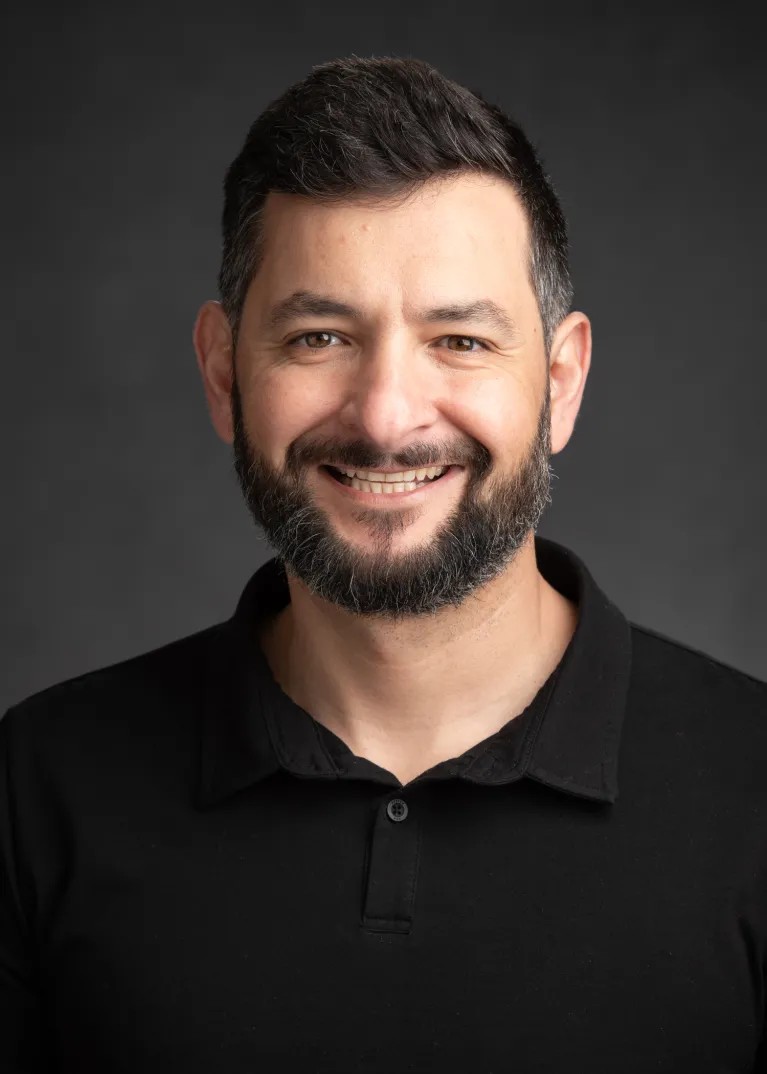
Assistant Professor
Natural Resources
Morrill Hall 205A
(701) 231-5598
Background
Dr. Vinicius Marcilio da Silva, Vini, is an Assistant Professor of Natural Resources in the School of Natural Resource Sciences at North Dakota State University (NDSU). He leads the Plant Ecology and Biodiversity Lab (PEBL), where his group studies how climate, land use, and management shape plant diversity, community structure, and ecosystem functions across landscapes. His work sits at the interface of plant community ecology, forest ecology, and biodiversity science, with an emphasis on translating ecological theory into decision-relevant tools for conservation and sustainable ecosystem management in anthropogenic systems.
Research Interests
- Remote sensing–enabled ecology (e.g., land surface phenology, LiDAR/spaceborne structure) for biodiversity, forest health, and natural resources management
- Hyperspectral applications for plant and soil assessments
- Land-use change and socioecological trade-offs linking biodiversity, human well-being, and production systems
- Predictive ecology using machine learning and hierarchical modeling to map and explain biodiversity patterns
- Mechanisms of plant community assembly and biodiversity maintenance
- Functional and phylogenetic dimensions of biodiversity
Select Publications
(Full list at Google Scholar)
- Marcilio Silva, V., Paz, A., Cavender-Bares, J., Marques, M. C. M., Vibrans, A. C., & Carnaval, A. C. (2025). Synergies and trade-offs between biodiversity conservation, human well-being, and agricultural production: Lessons from the Southern Atlantic Forest of Brazil. Applied Vegetation Science, 28(4), e70047. https://doi.org/10.1111/avsc.70047
- Marcilio-Silva, V., Marques, M. C. M., & Cavender-Bares, J. (2018). Land-use trade-offs between tree biodiversity and crop production in the Atlantic Forest. Conservation Biology, 32(5), 1074–1084. https://doi.org/10.1111/cobi.13138
- Marcilio-Silva, V., Donovan, S., Hobbie, S. E., Guzmán Q., J. A., Knight, J. F., & Cavender-Bares, J. (2025). Integrating remote sensing and field inventories to understand determinants of urban forest diversity and structure. Ecology, 106(2), e70020. https://doi.org/10.1002/ecy.70020
- Marcilio-Silva, V., Zwiener, V. P., & Marques, M. C. M. (2017). Metacommunity structure, additive partitioning and environmental drivers of woody plants diversity in the Brazilian Atlantic Forest. Diversity and Distributions, 23(10), 1110–1119. doi: 10.1111/ddi.12616.
- Scalon, M. C., Bohn, A., Coelho, G. C., Meister, L., Alves, R. F., Secco, R. T., Zwiener, V. P., Marcilio-Silva, V., Trindade, W. C. F., & Marques, M. C. M. (2022). Relationship between growth trajectories and functional traits for woody trees in a secondary tropical forest. Frontiers in Forests and Global Change, 5, 754656. https://doi.org/10.3389/ffgc.2022.754656
- Coelho, G. C., Resende, R. S., Marcilio-Silva, V., & Marques, M. C. M. (2025). Distribution of functional traits along climatic gradients in the subtropical Atlantic Forest. Austral Ecology. https://doi.org/10.1111/aec.70136
Book Chapter
Carlucci, M. B., Marcilio-Silva, V., & Torezan, J. M. (2021). The Southern Atlantic Forest: Use, Degradation, and Perspectives for Conservation. In M. C. M. Marques & C. E. V. Grelle (Eds.), The Atlantic Forest: History, Biodiversity, Threats and Opportunities of the Mega-diverse Forest (pp. 91–111). Springer, Cham. doi: 10.1007/978-3-030-55322-7_5.