Advancing soil reclamation through research and outreach
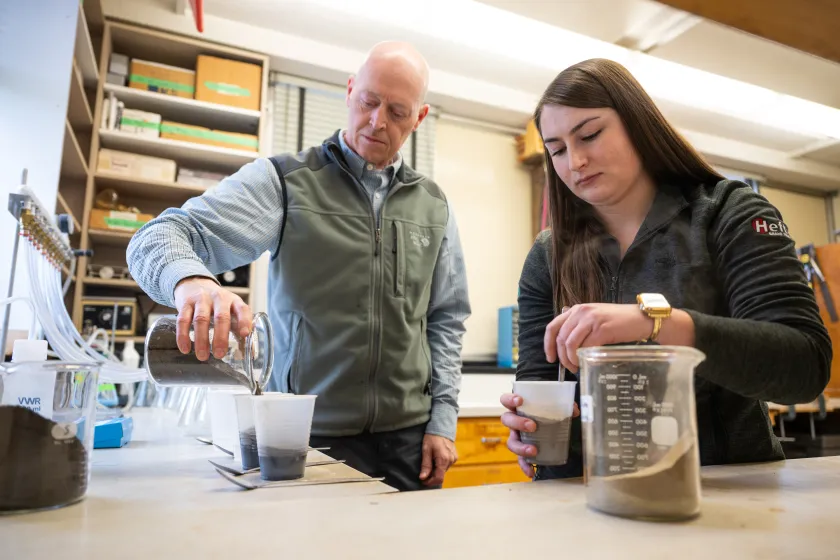
Tom DeSutter, University Distinguished Professor of soil science, finds research is more than studying the land; it’s about serving the people who depend on it. Since joining NDSU in 2006, DeSutter has dedicated his career to helping farmers and stakeholders across North Dakota navigate the challenges posed by the state’s diverse landscapes and soils through practical, solution-driven research.
“North Dakota is a beautiful state, with wide-ranging geology, landscapes and soils. Here, the varying cultures have shaped the land, and the land has shaped cultures,” DeSutter said. “The toughness and grit of our farmers and ranchers is impressive, and these folks seemingly have endless decisions to make to maintain their operations and livelihoods.”
DeSutter devotes most of his time to researching the reclamation of disturbed soils resulting from the extraction and transportation of energy resources. Soil reclamation is the process of restoring damaged and degraded land to a productive and healthy state that can be suitable for agricultural and industrial use.
“We focus mainly on the salt tolerances of plants to be used in areas impacted by releases of produced waters and soils with naturally occurring salinity, the delineation of accidental releases of oil and produced waters, and also how the installation of pipelines impacts soil properties and the subsequent establishment of plants,” DeSutter said.
Through research, extension and outreach, he works to help industries and landowners apply science-based practices that restore soil health and re-establish plant life, with the goal of returning the land’s function to conditions that closely mirror what existed before it was disturbed.
Another research focus for DeSutter is on zinc biofortification in dry beans, with the ultimate goal of increasing nutritional values through soil and plant management. The research results would have immense impacts, not only for North Dakota, which is one of the top dry bean producers in the country, but also the world by tackling global dietary deficiencies.
“Zinc is important for human health and development and is one of the elements often missing from diets around the world. So, if we can find a way to better incorporate zinc through soil and plant management practices, our farmers will have an international market for biofortified zinc beans,” he said.
For DeSutter, research is a way to address the questions that come from the progression of his own ideas, as well as questions from stakeholders. By conducting research and working closely with NDSU Extension partners, solutions are transferable to communities across the state.
“Our research drives change, and these changes enhance soil productivity, which then enhances the economic returns of our farmers and ranchers,” he said. “I take my position at NDSU very seriously since I know that our stakeholders and our students depend on me to empower them with knowledge. I am privileged to work in a state that holds our knowledge and research in this high regard.”
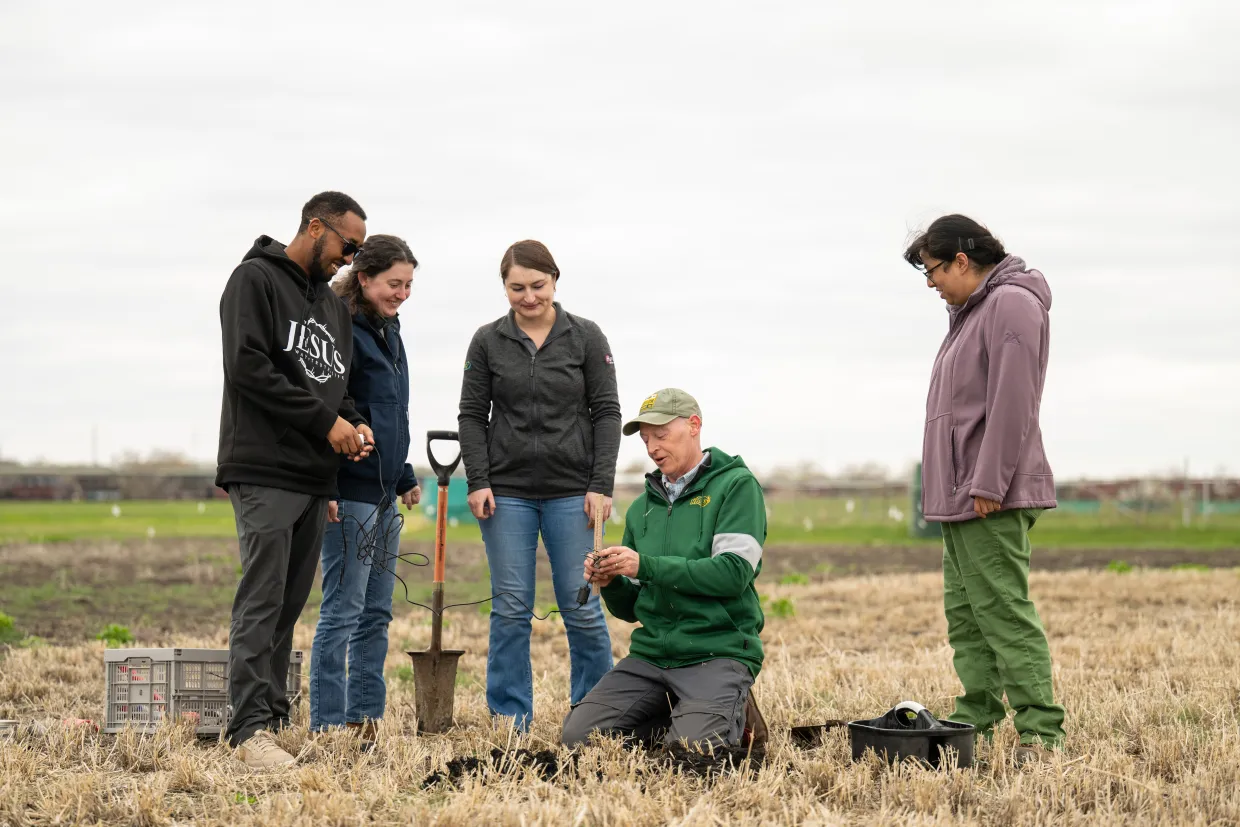
DeSutter’s students gain hands-on, real-world experience throughout their time in NDSU’s soil science program. From working alongside DeSutter in his campus lab to conducting research at one of NDSU’s Research Extension Centers across the state, students are immersed in research that directly impacts communities. Getting out into the field and connecting with landowners is a top priority for DeSutter’s graduate students, many of whom grew up in North Dakota and Minnesota and understand the importance of meeting people where they are.
Working with graduate students has been one of the most rewarding parts of DeSutter’s career, and he considers mentoring the next generation of soil scientists an honor.
“I look back at my mentors who believed in me, and I want to give others the same mentoring that I received,” he said. “The greatest joy of my career is watching the growth of students’ confidence and their professional development during their time at NDSU. They are an integral part of every research project that we do, and I can’t thank each of them enough for their persistence and drive, and for positively impacting me in ways beyond what they may realize.”
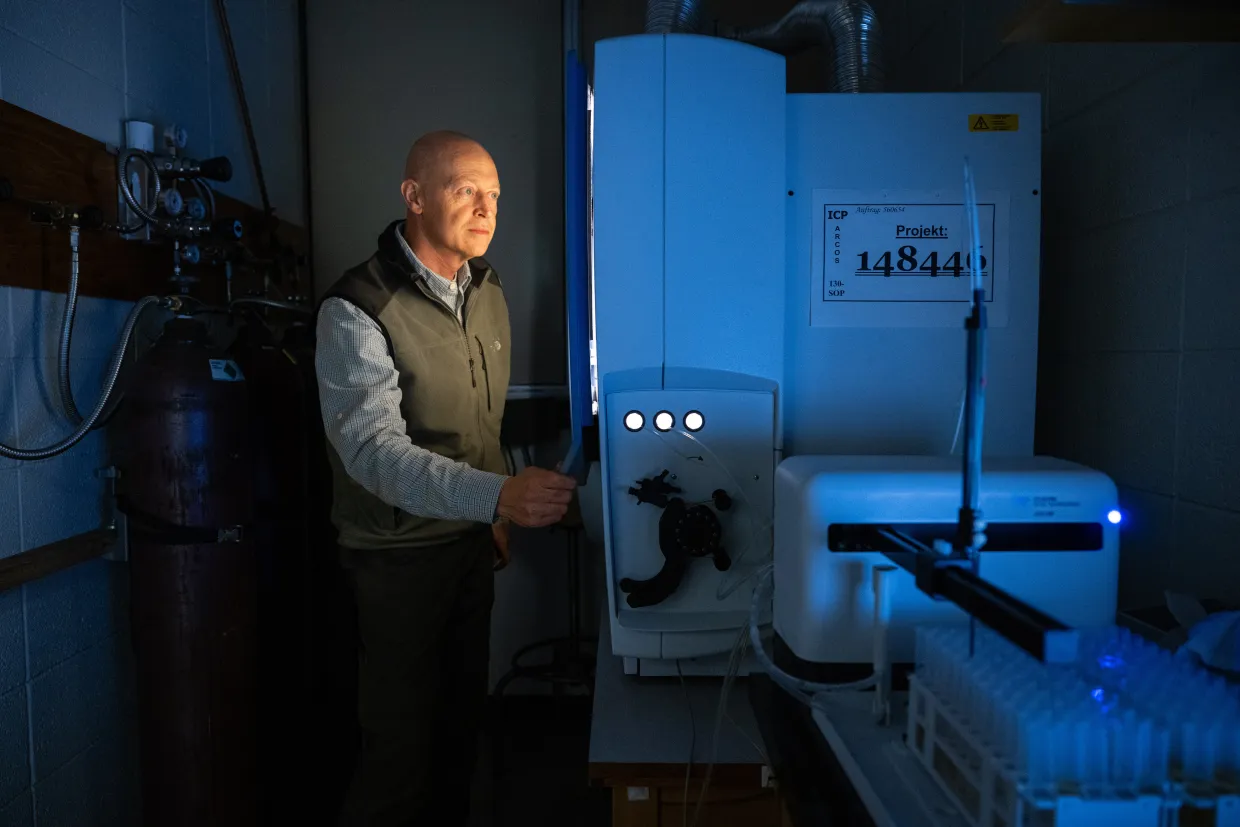
A career in soil science wasn’t always the path DeSutter imagined for himself. As a first-generation college student, he initially knew little about college beyond collegiate sports, but his strong work ethic pushed him to learn how to study and balance distractions. While he had a strong interest in chemistry, his true passion came to light after taking a soil science class during his geography and environmental management undergraduate majors taught by an NDSU alum.
“I then got minors in soil science and chemistry, had great mentors who challenged and supported me, and I have never looked back, wondering about other disciplines,” DeSutter said. He then pursued an MS degree at South Dakota State University that focused on soil chemistry followed by a doctorate degree that focused on environmental soil science at Kansas State University. After which, DeSutter conducted soil management research while working at the USDA/ARS National Laboratory for Agriculture and the Environment in Ames, Iowa. DeSutter then started his career in academia as an Assistant Professor of environmental soil science at NDSU, where he has made a noticeable impact. This past fall, DeSutter was one of six faculty members named University Distinguished Professors, the highest academic honor awarded at NDSU.
DeSutter credits his colleagues in the School of Natural Resource Sciences and in the College of Agriculture, Food Systems, and Natural Resources, along with NDSU leadership, for the opportunities and success he has had over his tenure.
“I have been blessed with having great leadership at NDSU from wonderful people who have believed in me, and my research and teaching programs,” he said.
As he looks to the future, DeSutter’s main goal is to secure endowed faculty and chair positions for his colleagues and the reclamation program.
“Specifically, we are working toward finding partners for an Endowed Chair of Soil Reclamation so that the work we started can be maintained for future faculty,” he said. “Ultimately, I want NDSU to be in the conversation for every reclamation project that occurs when energy extraction efforts take place in North Dakota.”
DeSutter also looks forward to continuing his work in the classroom, mentoring his students.
“We have wonderful students at NDSU, and I look forward to many more years of educating them about the fundamental principles and theories of soil science,” he said.