Agricultural commodity research evaluates numerous risks including logistics
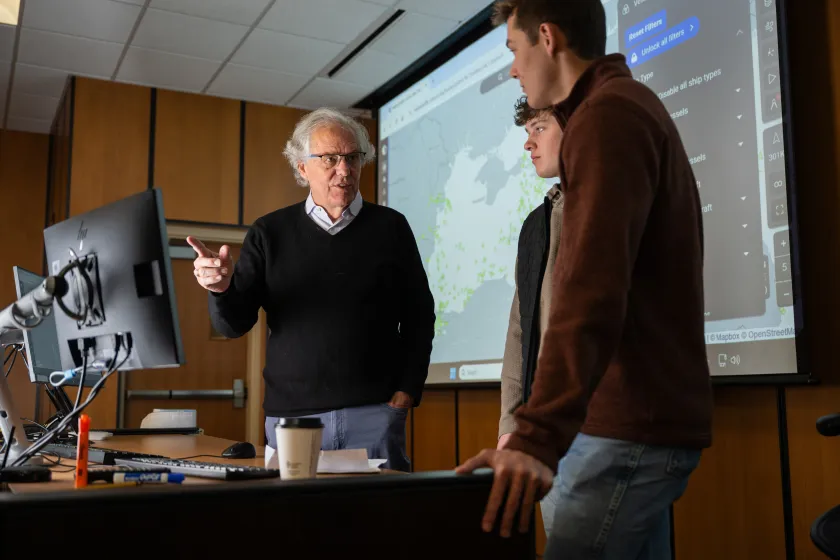
Since he started teaching at NDSU in 1980, William Wilson has been a leading voice in agricultural commodity markets, logistics and risk strategy. As a University Distinguished Professor in agribusiness and applied economics and CHS Endowed Chair in Risk Management and trading, Wilson’s work has shaped global conversations around how agricultural products move through complex supply chains and how businesses can manage risk in an increasingly uncertain world.
Being named a University Distinguished Professor is one of the highest honors at NDSU, recognizing sustained excellence in teaching, research and service. For Wilson, the distinction reflects both his scholarly expertise and his commitment to mentoring students and fellow faculty.
“It’s an honor, but it’s also a responsibility. As a University Distinguished Professor, we have to be good at teaching, research and service, both domestically and internationally. I try to be a mentor to other faculty and hope that the way I perform gives them aspirations for the way they conduct their careers,” Wilson said.
On campus and beyond, Wilson is widely known for his expertise in agricultural commodity markets and risk strategy. His work focuses on how risk affects agriculture and agribusiness, particularly in areas such as commodity trading, procurement, transportation and logistics, international marketing and competition, and ag technology development and commercialization.
Much of Wilson’s current research examines one of the agriculture industry’s most significant sources of uncertainty: logistics. Global disruptions, ranging from geopolitical conflicts to supply chain bottlenecks, can increase costs and delay shipments, challenges that directly affect the movement of commodities like grain. These impacts are fundamentally very similar to those occurring with the Strait of Hormuz.
“Most of my work today deals with logistics of domestic and international commodity marketing, particularly looking at how do you manage risk ahead of these challenges in international challenges of international trade,” Wilson said.
Wilson’s research helps firms better understand the risks within agricultural supply chains and develop strategies to navigate them.
“I think it’s really important for people or firms in the commodity marketing business to have a strategy about logistics and managing risks. Ultimately, commodity marketing is a logistical business. It’s a supply chain business, and there’s a lot of risk in that supply chain,” he said.
Wilson said research plays a critical role in preparing industries and communities for the challenges ahead.
“The world is changing really fast. No one’s got a monopoly on understanding everything that’s going on today, or what’s going to happen in the next 2, 5 or 10 days forward; or 10, 20 or 50 years,” he said. “Having rigorous research about the effects of changes on industries, communities, states and regions is very important.”
For over four decades, Wilson’s expertise has also led to involvement in high-impact projects. In the early 1990’s he led a project for the U.S. on the privatization of the grain marketing system in Russia. Today, he continues to work with clients and projects across the globe, including in the United States, Russia, Ukraine, Mexico, Argentina, Japan and Australia.
He has also advised major agribusiness firms, the Panama Canal, the U.S. Army Corps of Engineers, major railroads and global food and beverage companies, offering expertise on logistics, transportation and commodity markets.
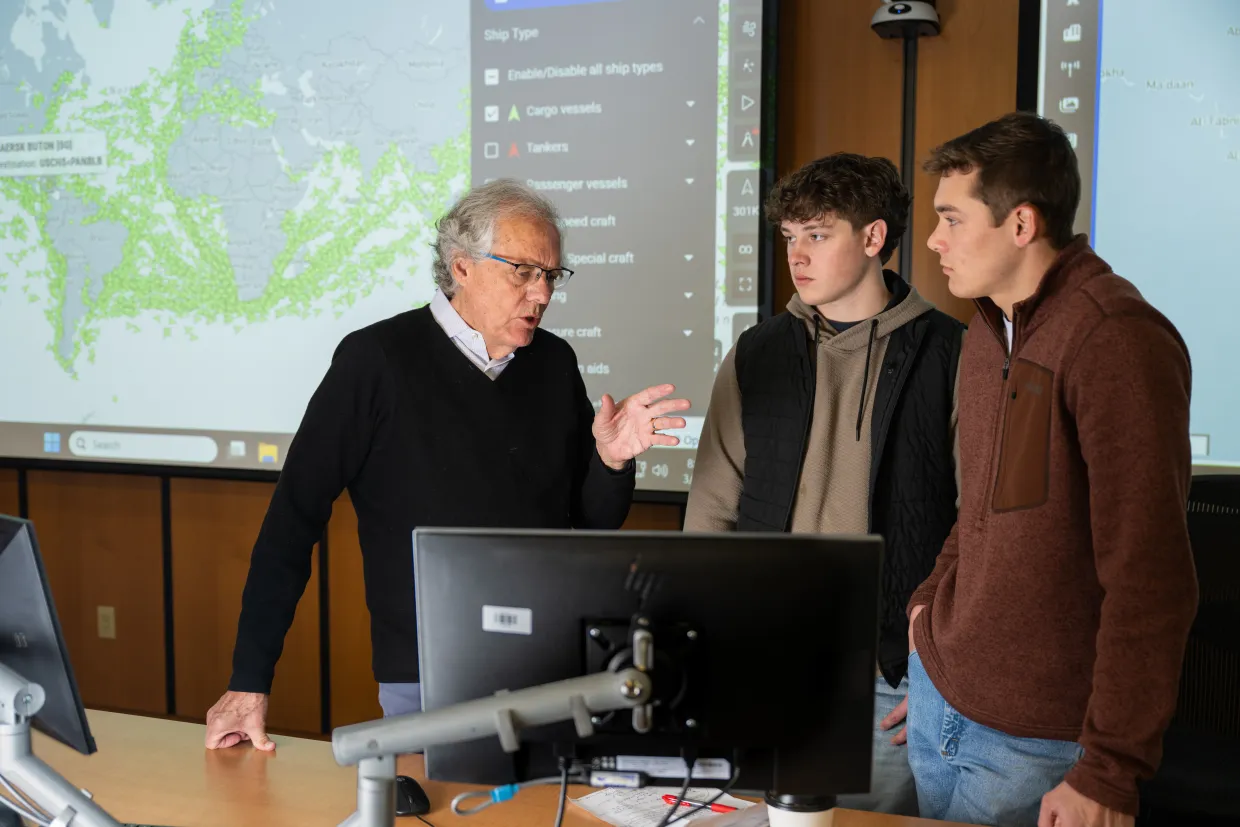
Wilson brings that real-world expertise into the classroom, where undergraduate and graduate students often seek him out as a mentor and contribute to his research. He teaches courses focused on commodity markets and risk strategy, often incorporating discussions on current global developments and using visual tools such as world market maps to help students understand the complexity of global agriculture.
“I think it’s really important in today’s world, as it’s changing, that students have a way to express themselves and become knowledgeable about world developments,” he said.
Wilson’s mentorship has had a lasting impact on students entering the industry. Former students now work at major commodity trading companies across the U.S. and internationally, as well as at shuttle elevators throughout the Midwest and with major railroads.
Wilson continues to stay connected with many of his former students, often meeting them for coffee and helping them network long after they graduate. Just last summer he met up with three of his former students who were in his class in 1982 and have since all gone on to successful careers with premier companies. One is now the vice president at Cargill, one is Executive Vice president at the CHS, one recently retired as vice president at Gavilon (now Bunge), and another is vice president at Bunge.
“We met over lunch to talk about big things, and that’s great because I facilitated networking. It helps my older students and my younger students. That’s what gives me pride,” Wilson said.
Learn more about Wilson’s impact at NDSU on the official NDSU YouTube channel.