Innovative, collaborative research advances 3D printing
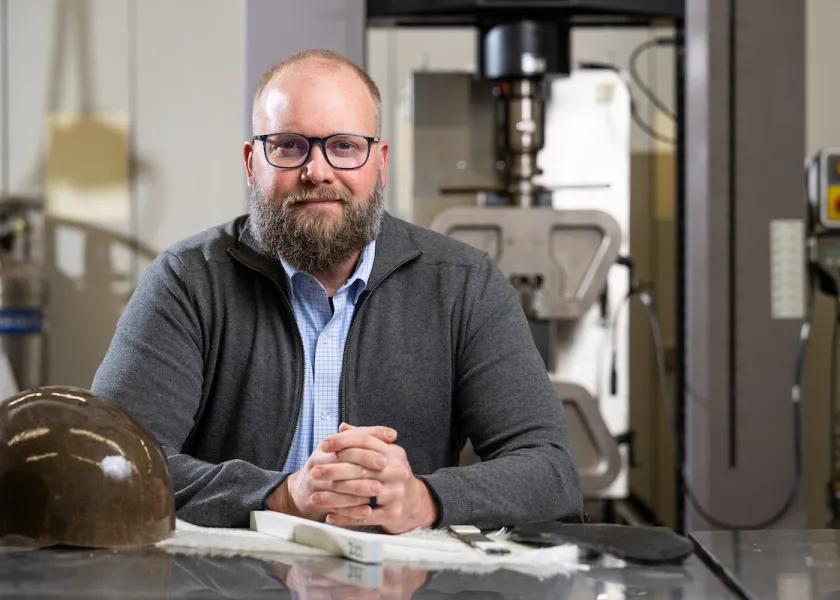
Every time Chad Ulven, NDSU University Distinguished Professor of mechanical engineering, steps into his lab, he looks forward to developing new ways to better society through his research.
Ulven’s research focuses on developing advanced composite material 3D printing technologies to make printed materials stronger and more durable for various commercial and defense applications. While the concept of 3D printing isn’t new, Ulven said integrating composite materials with a high concentration of fiber reinforcement into 3D printed structures is a relatively new and challenging area of study.
“The ability to print high-performance parts/components quickly and efficiently to prove new designs, repair failed or worn components, or for mass production is in its infancy,” Ulven said. “It is hard to predict the entirety of impact if successful. However, we have some good indicators as more and more people have adopted 3D printing at different levels of education, at home as hobbyists and throughout various industry sectors.”
This groundbreaking research is paving the way for creating advanced and efficient manufacturing solutions that will be applicable to several industries, ranging from biomedical engineering to the automotive industry.
Ulven, who has been teaching at NDSU since 2005, first started researching composite materials when he was an undergraduate student at NDSU. Since then, he has become a leader in the lab, winning numerous awards for his research, including being named a Fellow of the National Academy of Inventors, and securing four patents.
Ulven was recently named University Distinguished Professor, NDSU’s highest academic honor bestowed upon a faculty member, which recognizes individuals who exemplify the very best of NDSU’s mission as the state’s land-grant, R1 university, embodying a legacy of excellence that extends beyond their own disciplines and into the broader academic community.
Earlier this year, Ulven was also awarded the Waldron Excellence in Research Award, which is awarded to one faculty member at NDSU each year who has made significant contributions to research in their field.
For Ulven, receiving this recognition highlights the work of his entire team.
“Receiving honors like the Waldron Excellence in Research Award are special to me because they represent my entire team’s hard work and perseverance in the laboratory, along with the contributions of various collaborations we have with other researchers,” he said.
In the classroom, Ulven serves as a mentor to both undergraduate and graduate students who are eager to receive hands-on research opportunities that will help shape their future careers. Ulven credits his students for pushing him to incorporate new and creative ideas into his research.
“Student interest, hard work and passion are critical to my team’s research success. They are the ones asking new questions, trying various approaches and seeking out answers,” Ulven said. “They constantly inspire me to try different approaches, think differently and get outside of my comfort zone.”
Ulven instills in his students the mindset that it’s okay not to understand something, but having the courage and drive to seek out solutions is key to success.
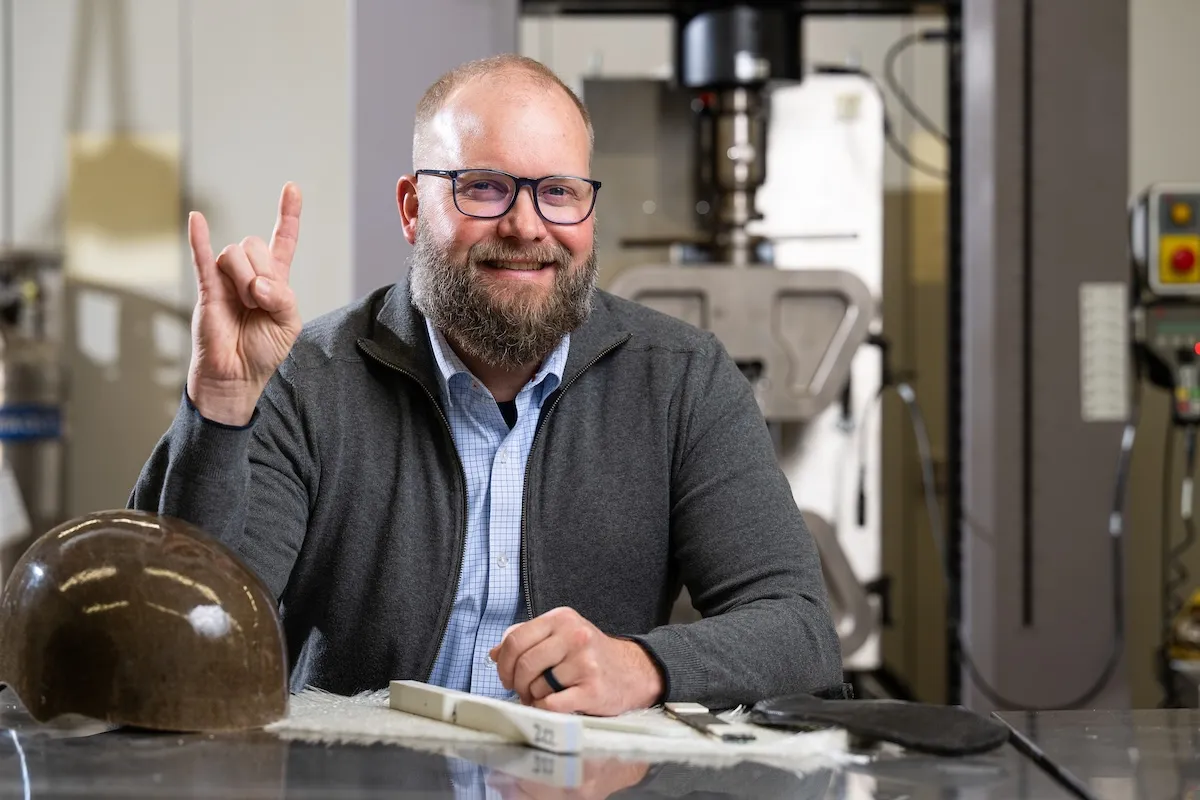
Outside of the classroom, Ulven serves as the director of the Great Plains NSF I-Corps Hub and is the site director for the NSF Center for Biopolymers and Biocomposites I/UCRC, both of which are made up of researchers from various disciplines and universities in the region.
Ulven values collaboration with those outside mechanical engineering, as it helps garner innovative ways to approach his research.
“Collaboration across disciplines is an absolute necessity nowadays because of the increased complexity of technology. In my work, true innovative breakthroughs require combinations of new polymer chemistries, mechanical design, electronics and programming to develop new advanced composite 3D printing approaches,” he said.
Looking ahead, Ulven wants to continue developing new composite material and processing technologies to shape the future of 3D printing.
“No other material platform provides as much versatility and capabilities in solving new problems or opportunities that arise,” Ulven said. “NDSU will continue to be a great place for me to attract talented, curious and hard-working students to do research along with the great colleagues and facilities I have had the privilege to work with for the past 20 years.”
Learn more about Chad's research on the official NDSU YouTube channel.