Plant Pathology

October 16, 2026
Soybean Cyst Nematode Confirmed in Williams County, North Dakota
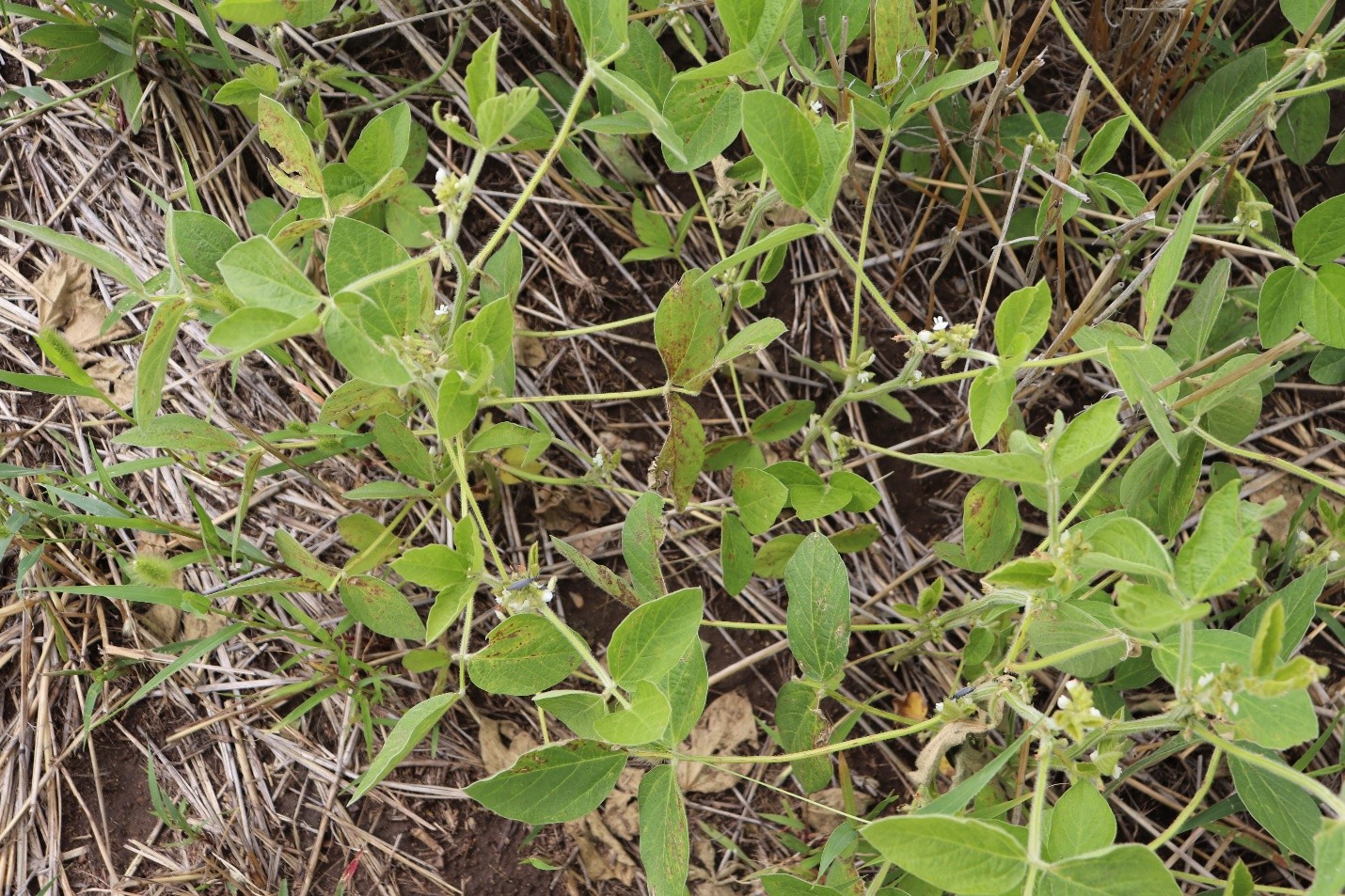
Soybean cyst nematode (SCN), Heterodera glycines, has been confirmed in soybean fields in Williams County. SCN is the most damaging soybean pest in the United States and can cut yields by up to 30% even when soybeans look healthy. The finding suggests that SCN continues to spread across North Dakota primarily through the movement of infested soil.
Producers should watch for:
· Unexplained yield reductions
· Stunted or yellow soybean plants
· Patches of poor growth
· Fields with a history of continuous soybean production
Recommended Actions
· Test soybean fields for SCN after harvest by sampling around soybean roots.
· Rotate to non-host crops such as corn or small grains when practical.
· Plant soybean varieties with SCN resistance.
· Minimize movement of soil on equipment between fields.
· Include SCN testing as part of routine soil health monitoring.
Sampling and Monitoring
The discovery of SCN in Williams County shows that this pest is not limited to eastern North Dakota. Continued soil sampling and monitoring are important for tracking its distribution and slowing its spread.
NDSU Extension and the North Dakota Soybean Council offer a free SCN Soil Sampling Program to help growers detect infestations early. Western North Dakota remains under-sampled for SCN, and additional testing may reveal infestations in other areas.
For assistance with SCN sampling and management recommendations, contact your local NDSU Extension office or the Williston Research Extension Center.
Contacts
Edson Ncube, Plant Pathologist, NDSU Williston Research Extension Center
701-651-6460
Wade Webster, Extension Soybean Pathologist, NDSU
701-231-7057
The Plant Pathology Program at the NDSU Williston Research Extension Center is a leading regional resource for pulse and cereal crops disease research. Our work focuses on economically significant diseases like root rot of field peas, lentils, and chickpeas, as well as Fusarium Head Blight (scab) and Deoxynivalenol (DON) management in durum and spring wheat.
In addition to the core emphasis on root rot and scab, the program also addresses critical disease challenges affecting barley, canola, soybeans, and spring wheat. We collaborate closely with scientists across other Research Extension Centers, NDSU’s main campus, and private industry partners to deliver research-driven solutions that benefit growers in the region and beyond.
Contact us:
email: edson.ncube@ndsu.edu
phone: (701)-774-4315
Research Updates
2026
- Planting date impacts disease progression and yield of chickpea (Cicer arietinum L.) grown in the Northern Great Plains. Plant Disease.
2025
- DON (vomitoxin) Levels in Durum Wheat Across North Dakota Variety Trials (2023 - 2024). NDSU Williston Research Extension Center & MSU Eastern Agricultural Research Center Joint Annual Research Report, p. 55-56.
- Previewing CruiserMaxx® Vibrance Elite Seed Treatment for Pythium Control in Field Pea. NDSU WREC & MSU EARC Joint Annual Research Report, p. 65-67.
- Effect of Rhizobia Inoculation Rates on Soybean Yield in Western North Dakota. NDSU WREC & MSU EARC Joint Annual Research Report, p. 73-75.
- Effect of seed applied fungicide on nodulation, disease management and crop yield in chickpea (Cicer arietinum L.). Plant Health Progress 26:499-506. https://doi.org/10.1094/PHP-01-25-0013-RS
2024
- Optimizing nodulation in chickpea for enhanced nitrogen fixation. NDSU WREC & MSU EARC Joint Annual Research Report, p 57-61.
Crop Disease Photos
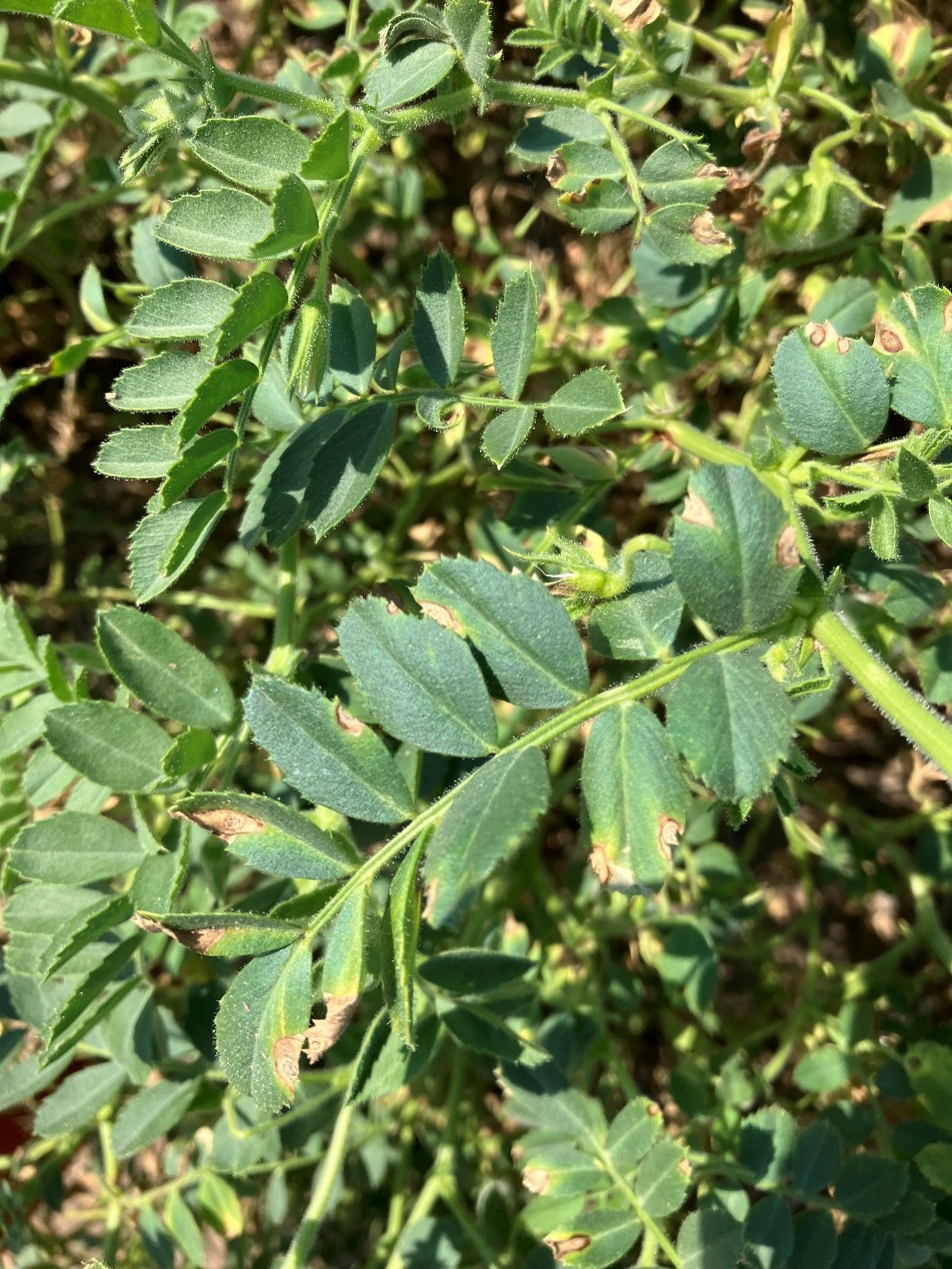
Ascochyta blight in chickpea
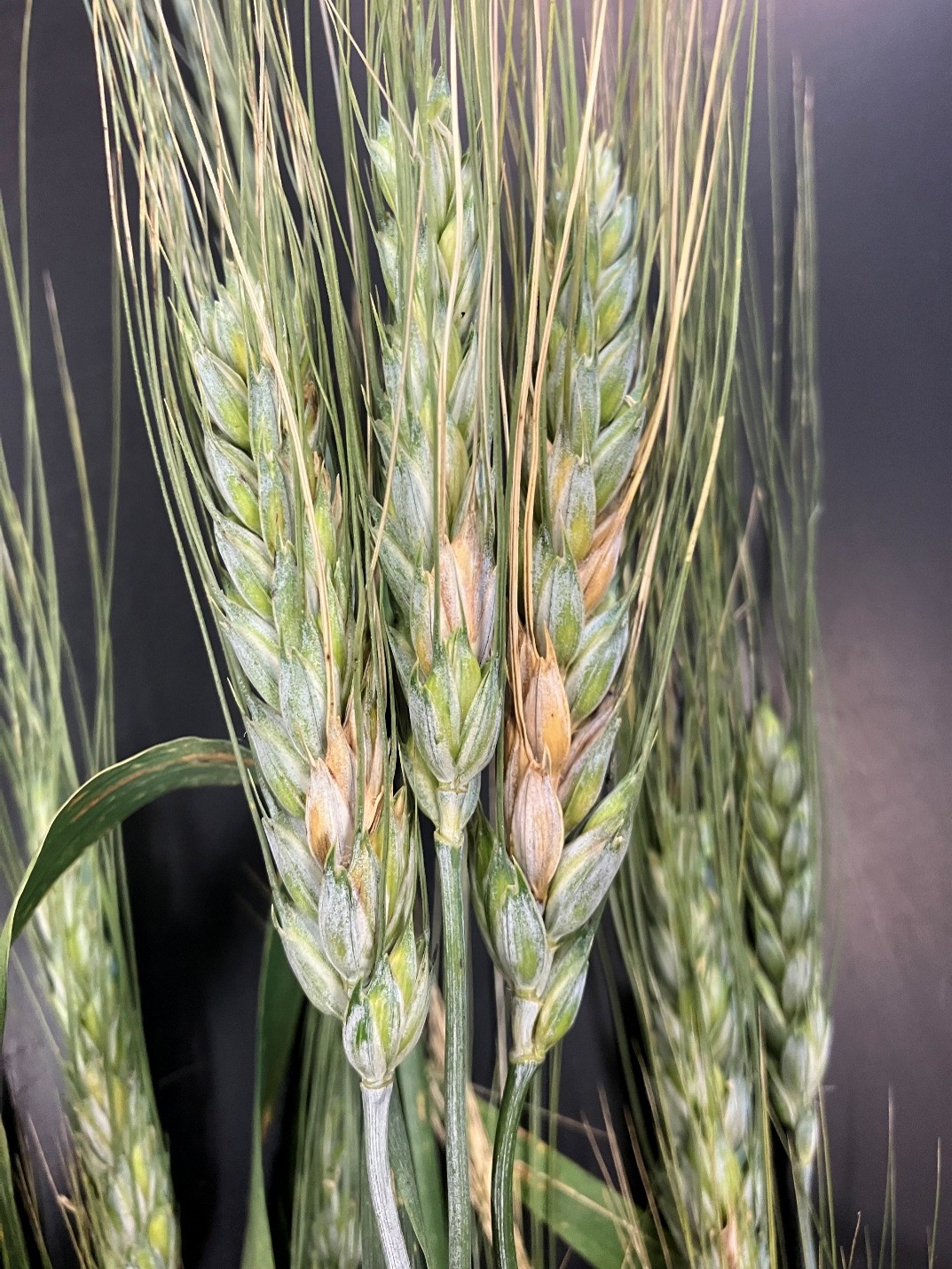
Fusarium Head Blight (scab) in durum wheat
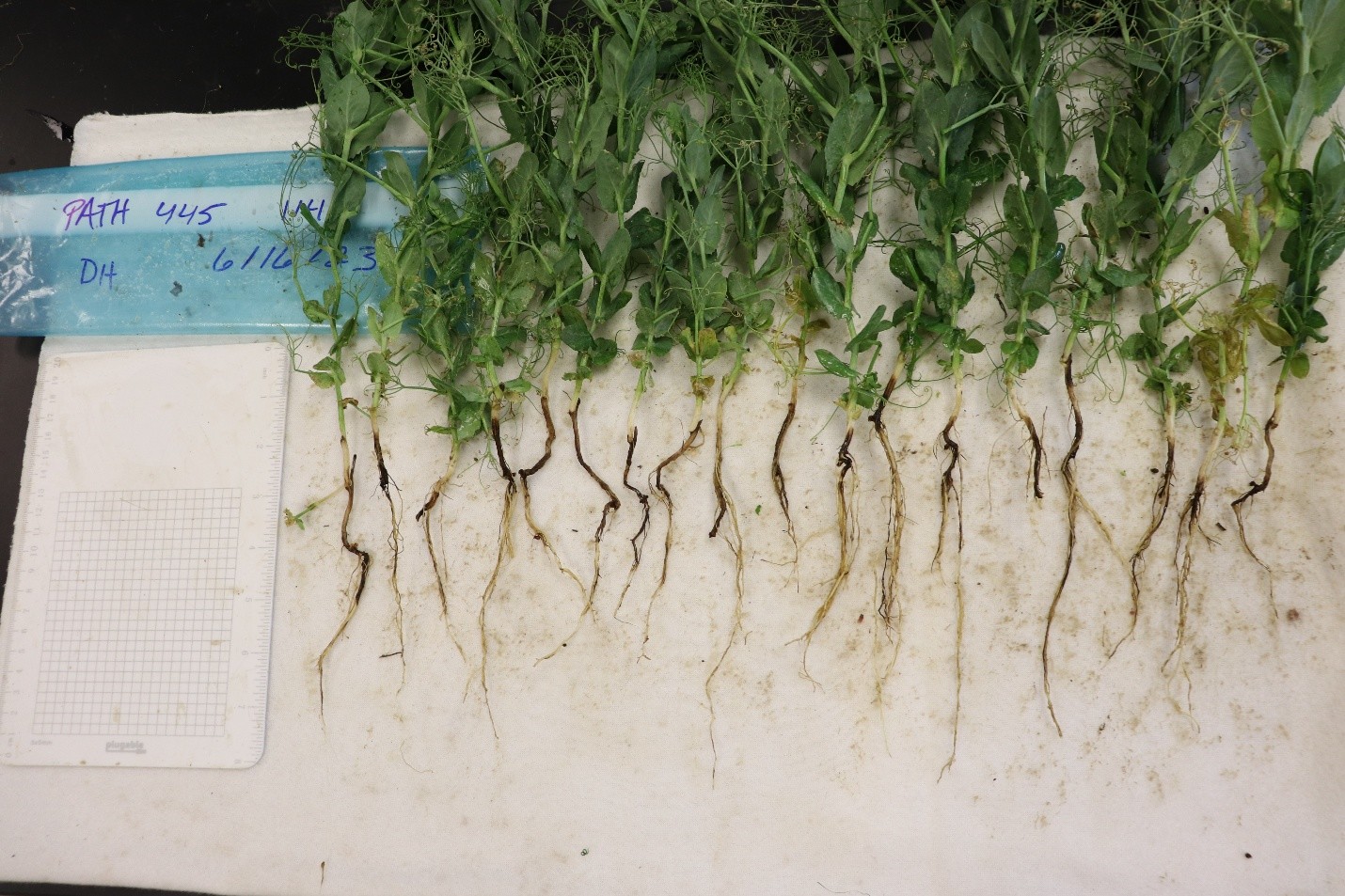
Fusarium root rot in field pea
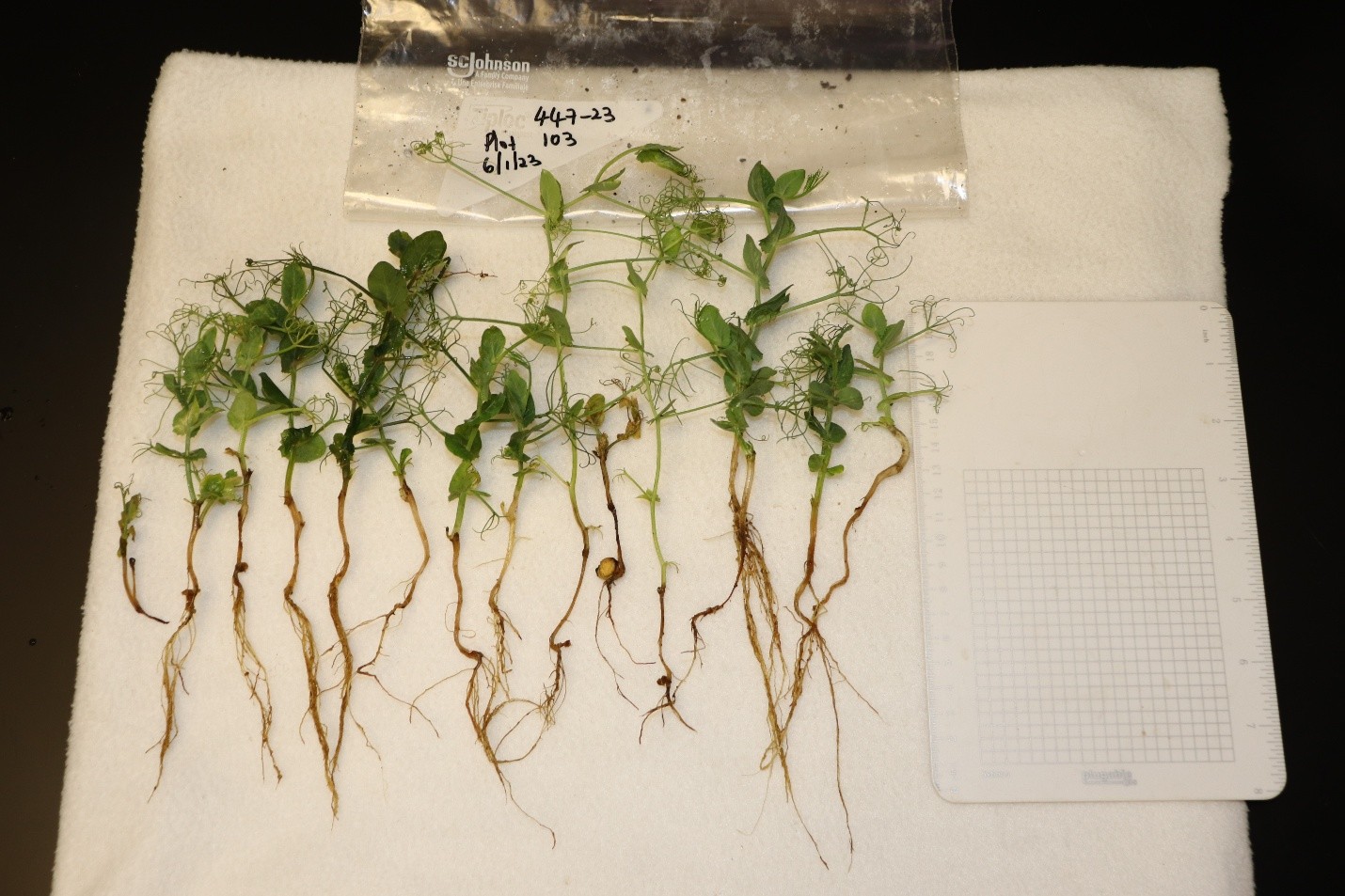
Aphanomyces root rot in field pea
Septoria Brown Spot in soybean