Do you have a sick tree?
If you suspect one of your trees may be diseased, damaged, or even affected by an invasive pest species, please fill out this survey. Our Forest Health team can help!

Emerald Ash Borer
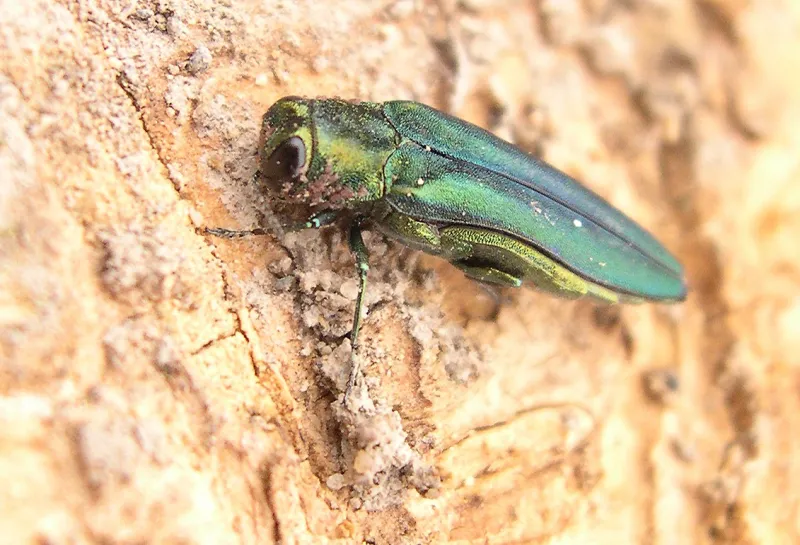
Emerald ash borer (Agrilus planipennis) has been confirmed in Lamoure County, ND, 9 miles north of Edgeley, and now in Fargo, ND. It is not uncommon for ash trees to decline in our state due to reasons other than emerald ash borer, however, if you are concerned by a symptomatic tree you are encouraged to report those trees.
Native to eastern Asia, the emerald ash borer was first discovered near Detroit, Michigan in 2002. Scientists believe that it was unintentionally brought into the U.S. inside infested ash crating or pallets. Since its initial discovery, the insect has spread rapidly. Unlike native ash-boring beetles that only kill weakened and dying trees, EAB attacks all ash trees regardless of their vigor, size, or age. Tens of millions of ash trees have been destroyed by the insect representing a significant economic cost to municipalities, property owners, nursery operators and forest products industries. Primary long-distance spread is thought to occur via infested firewood and may also spread by infested nursery stock.
- EAB attacks all types of ash trees in the genus Fraxinus, including green ash. Green ash comprises more than 30% of ND conservation plantings, such as shelterbelts. Green ash comprises more than 60% of natural riparian forests in ND.
- High tree removal and replacement costs for cities and towns (many ND communities have over 65% green ash boulevard trees).
- Drastic habitat change in natural forest areas and riparian (riverside) areas. Negative impacts on water quality and aquatic life due to the loss of canopy trees in riparian forests.
- Major reduction in resource conservation and crop protection benefits due to loss of shelterbelts.
According to the USDA Forest Service, Forest Inventory and Analysis Program, there are 78 million ash trees in North Dakota’s forests and woodlands. The compensatory value of this resource is estimated to be $3.55 billion. The species comprises as much as 90% of the total canopy cover of some of the state’s woodlands. The loss of ash within riparian areas would have major negative impacts on water quality, wildlife habitat and recreational opportunities. Similarly, ash is a major component of the states 55,000 miles of shelterbelts and is the most abundant species within communities.
- Do NOT move firewood. Buy it where you burn it, use heat-treated wood, or gather locally where permitted. Firewood Scout can help you locate firewood vendors wherever you are; just enter your zip code and search.
- At this time, ash trees should only be chemically treated if they are high value and within 15 miles of a known infestation.
- Report suspected a pest by here.
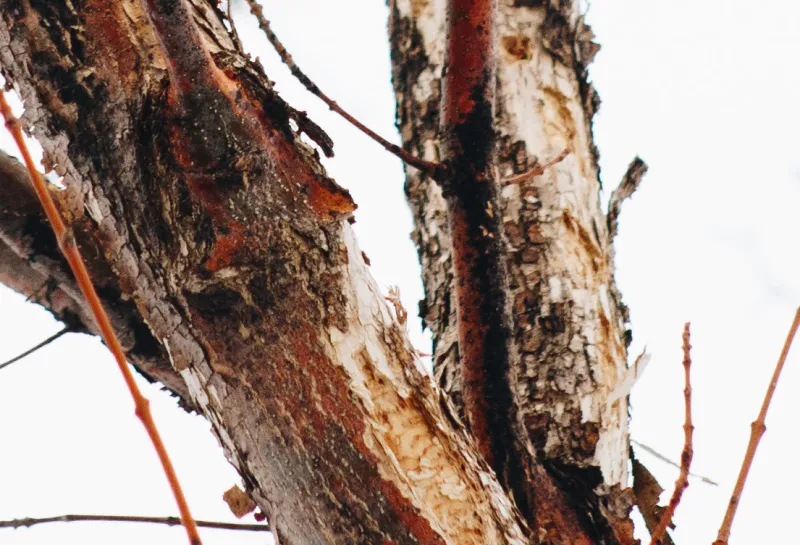
Signs & Symptoms of EAB
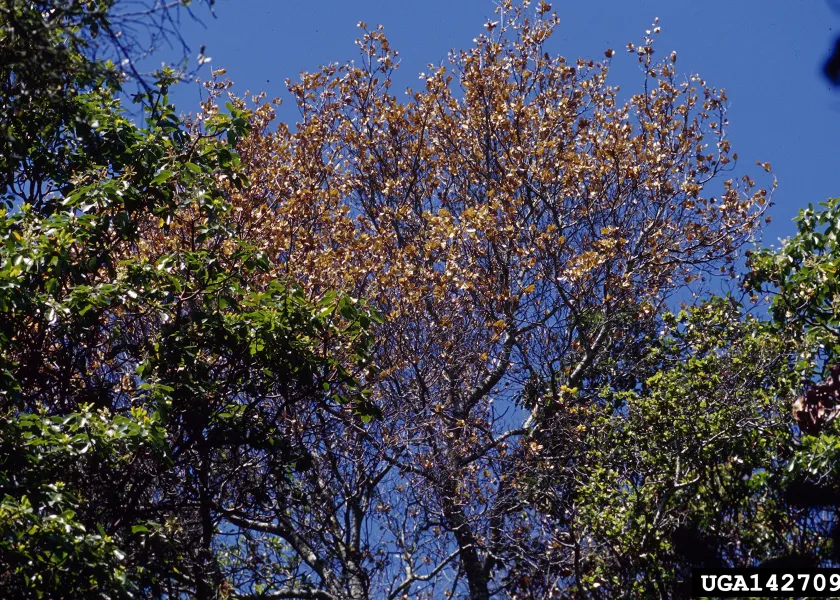
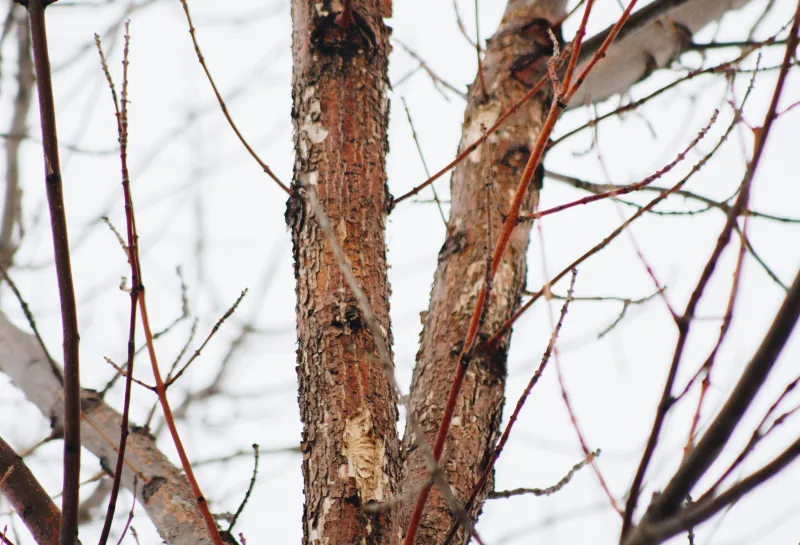
- Canopy and foliage dieback
- Bark splits
- Trunk or branch sprouts
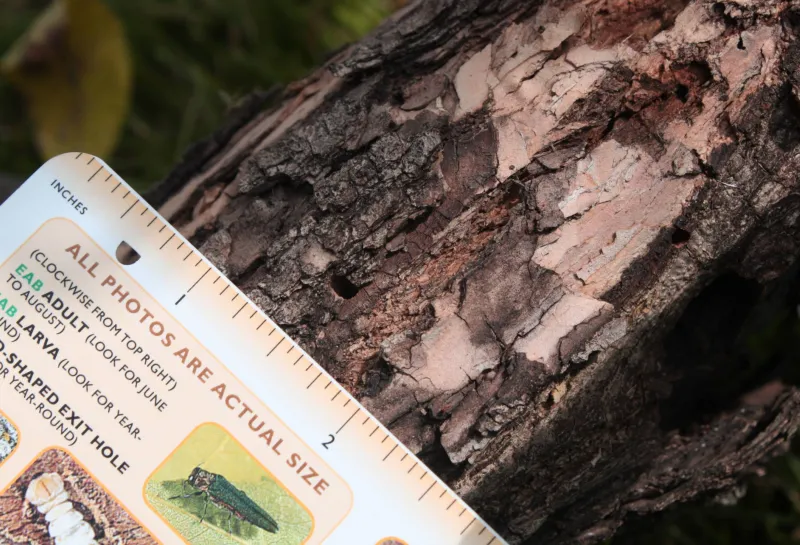
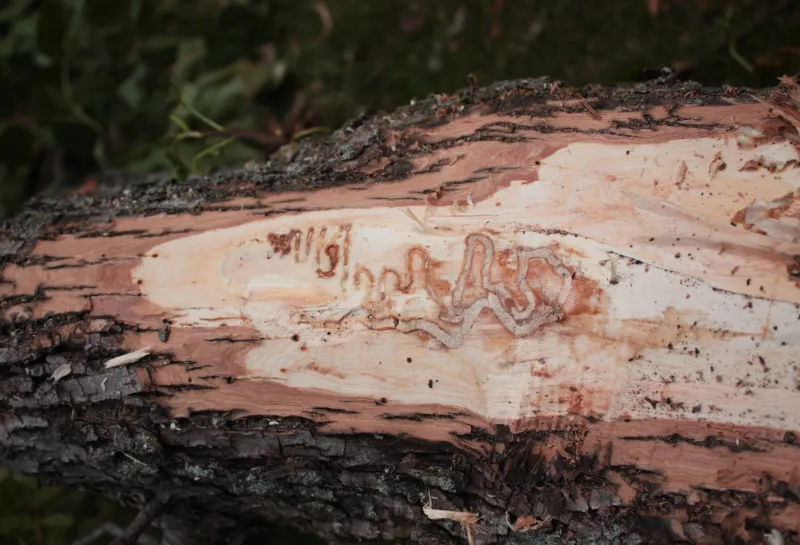
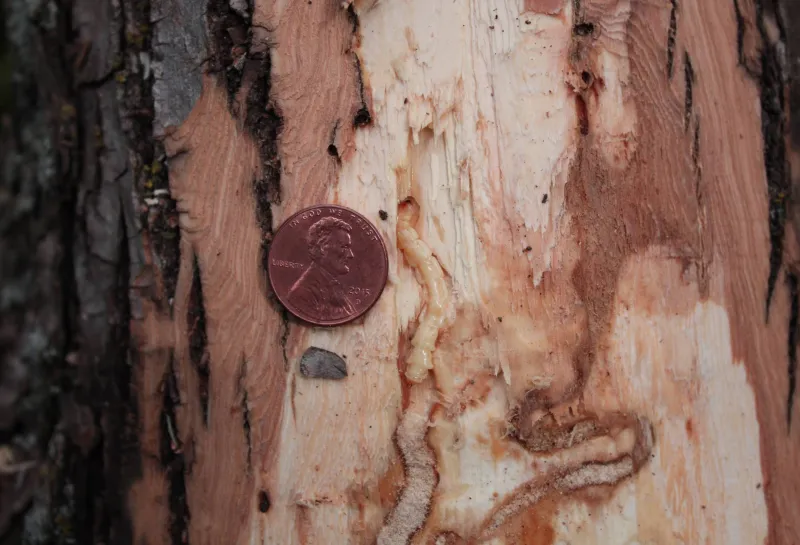
- S-shaped larvae galleries
- D-shaped exit holes
- Woodpeck activity ("blonding")
Dutch Elm Disease
Dutch elm disease (DED) was first detected in North Dakota in 1969, and has since been recorded in all North Dakota counties.
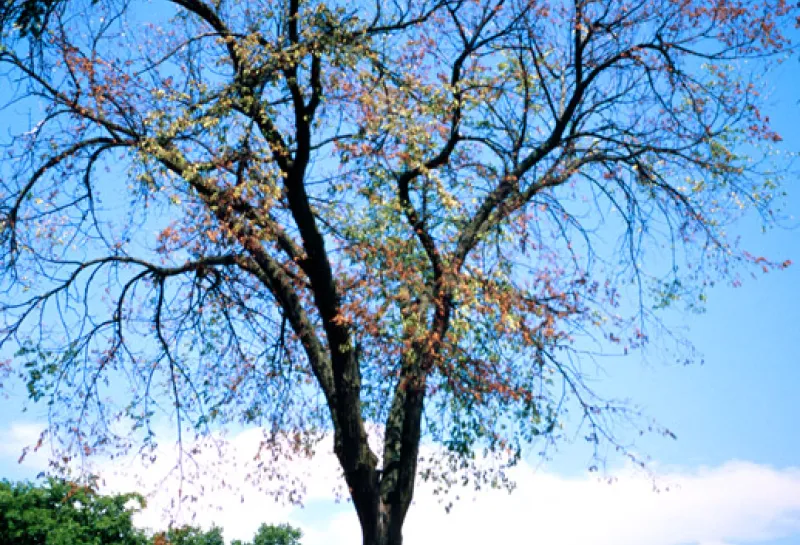
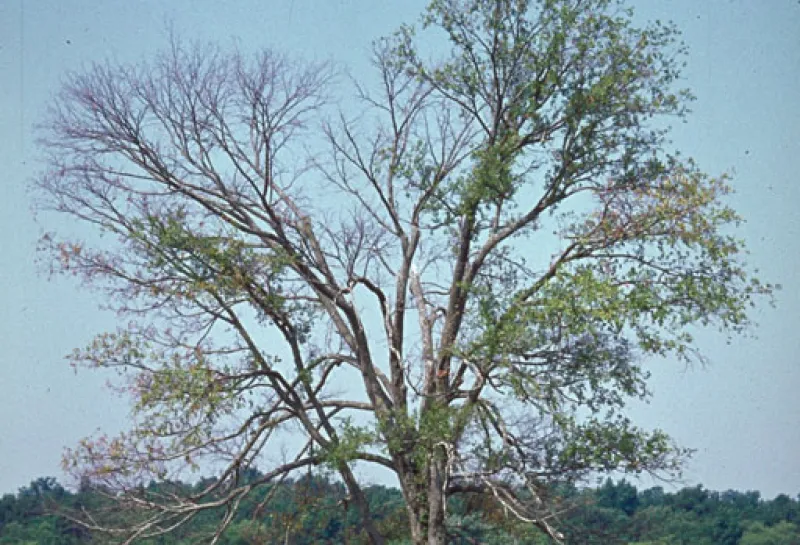
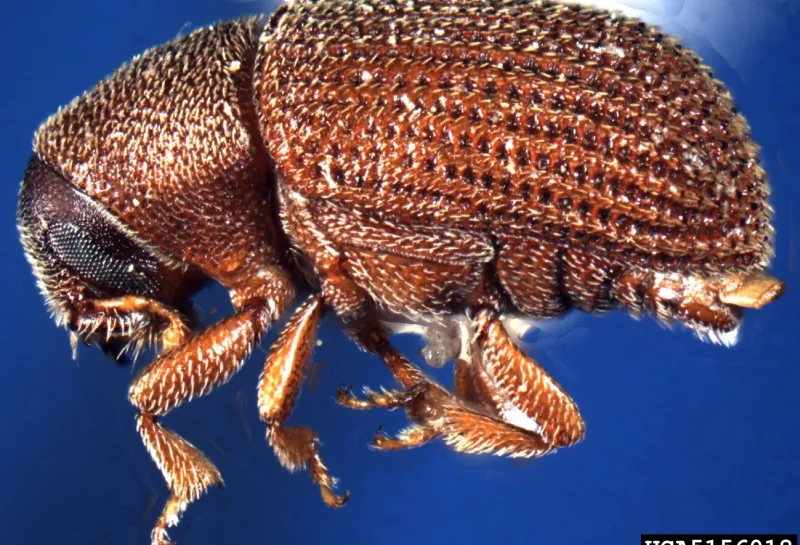
Dutch elm disease is a wilt disease caused by the fungus Ophiostoma novo-ulmi and only affects trees in the elm family (Ulmaceae). Dutch elm disease (DED) is spread (vectored) by native elm bark beetles, European elm bark beetles and the banded elm bark beetle in North Dakota. DED is also spread by moving elm firewood from infected trees into new areas.
Tree mortality can occur within one year of infection, though DED generally takes three years or more to kill a tree.
- Dutch elm disease kills trees rapidly and spreads readily if not properly managed.
- There is no 'cure' for DED and the disease is widespread in urban and rural areas throughout North Dakota.
- Dutch elm disease kills American elm trees, the North Dakota State Tree, which is well-adapted to environmental conditions in our state.
- Management of Dutch elm disease in North Dakota communities is costly.
Current impacts in North Dakota include...
- Continual need to spend considerable amounts of money to manage Dutch elm disease in North Dakota communities.
- Continual loss of a prominent, well-adapted tree species in natural settings.
Continual incremental loss of a prominent and excellent tree for urban settings.
Signs & Symptoms of DED
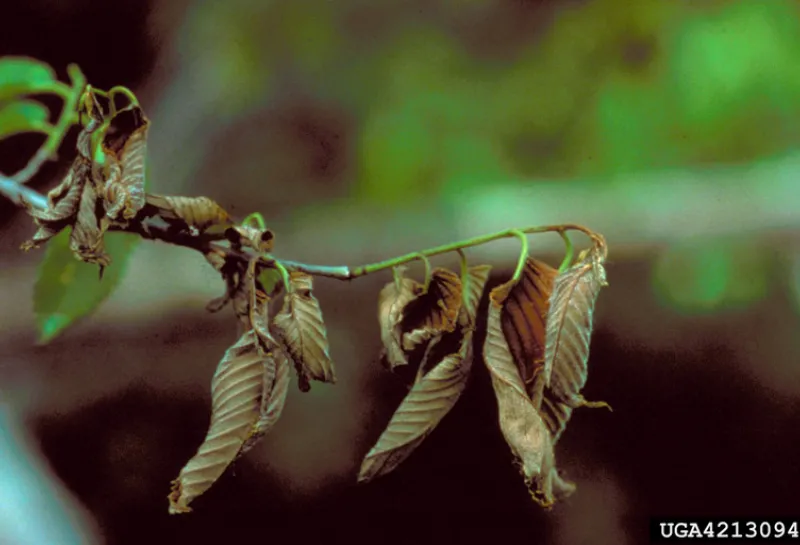
- Wilting of leaves on branches throughout canopy ("flagging")
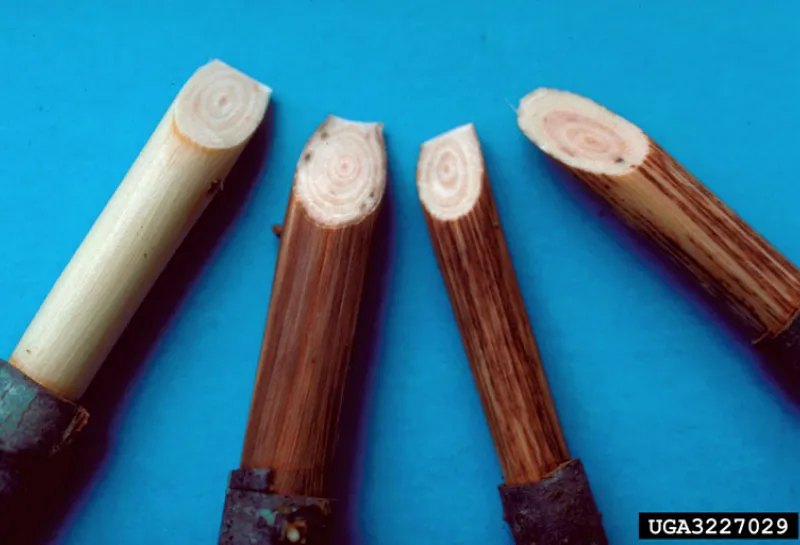
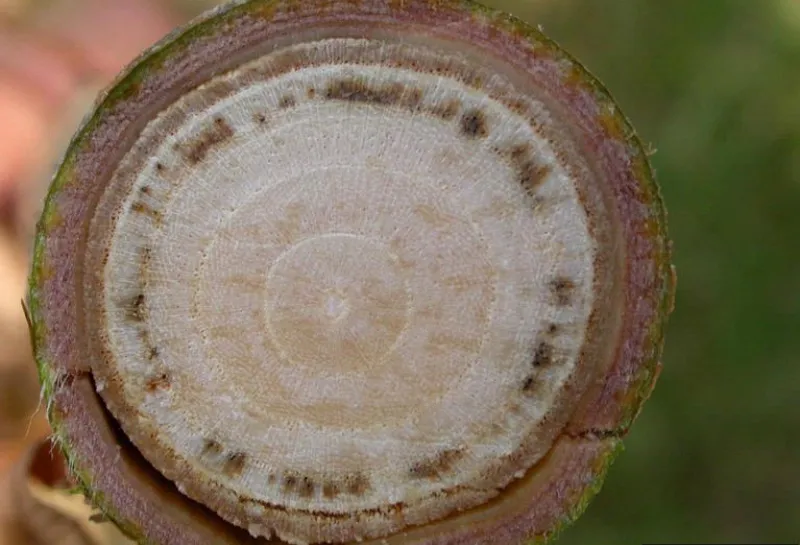
- Staining of xylem on twigs
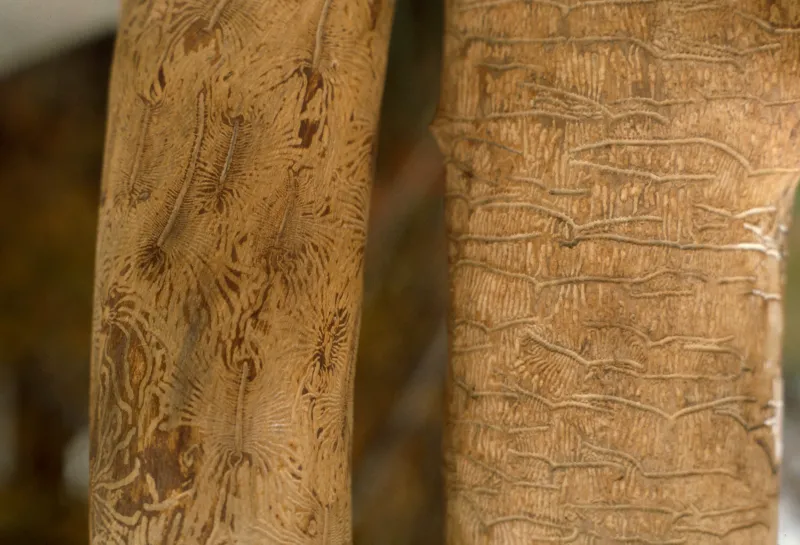
- Galleries underneath bark
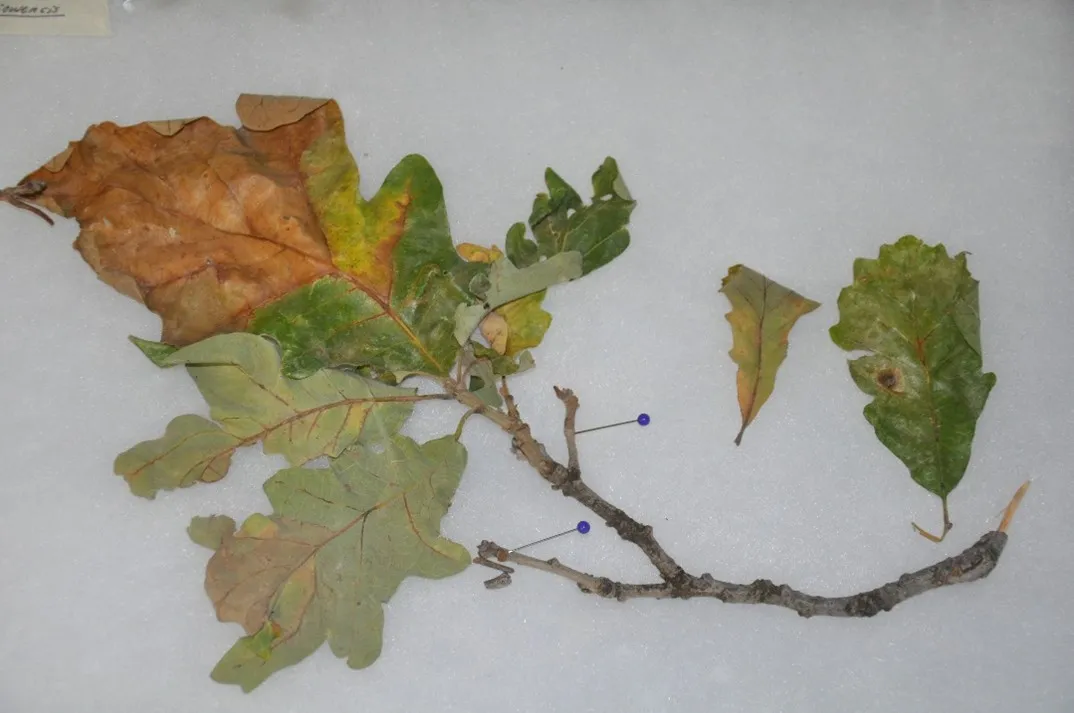
Bur Oak Blight (BOB)
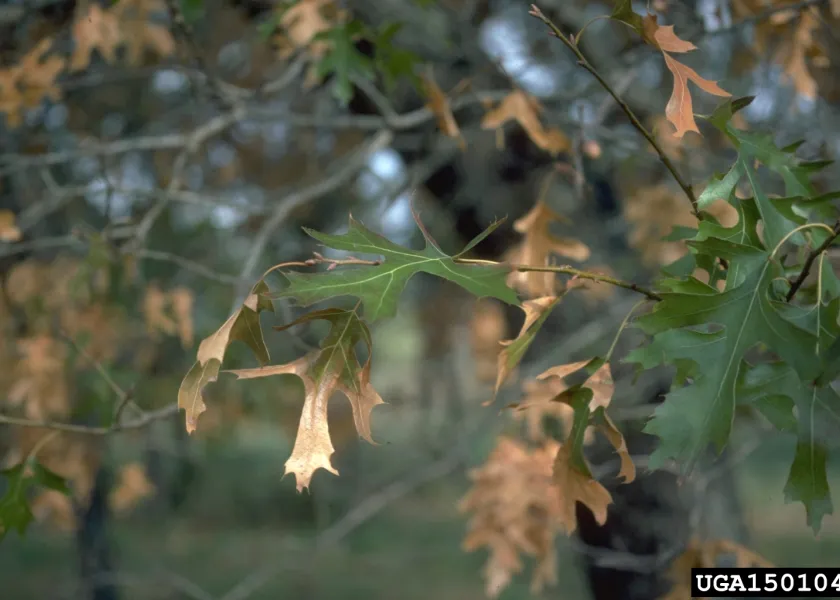
Bur Oak Blight is a leaf blight caused by a fungus. The fungus, Tubakia iowensis, causes defoliation of the tree and can lead to secondary problems such as two-lined chestnut borer and Armillaria root rot.
Bur oak blight’s early symptoms appear in midsummer, but the most obvious expression happens in late summer. Leaf symptoms include dark veins on the undersides of leaves and brown, wedge-shaped segments between leaf veins. The disease starts in the lower canopy and progresses up the tree. In severe cases, all but the outermost leaves around the canopy will die.
- Bur oak is grown throughout the state as an important shade tree and habitat for wildlife
- No cultural management is known to prevent spread
- BOB can stress bur oak to lead to other problems which can kill the tree
Pinewood Nematode & Pine Wilt Disease
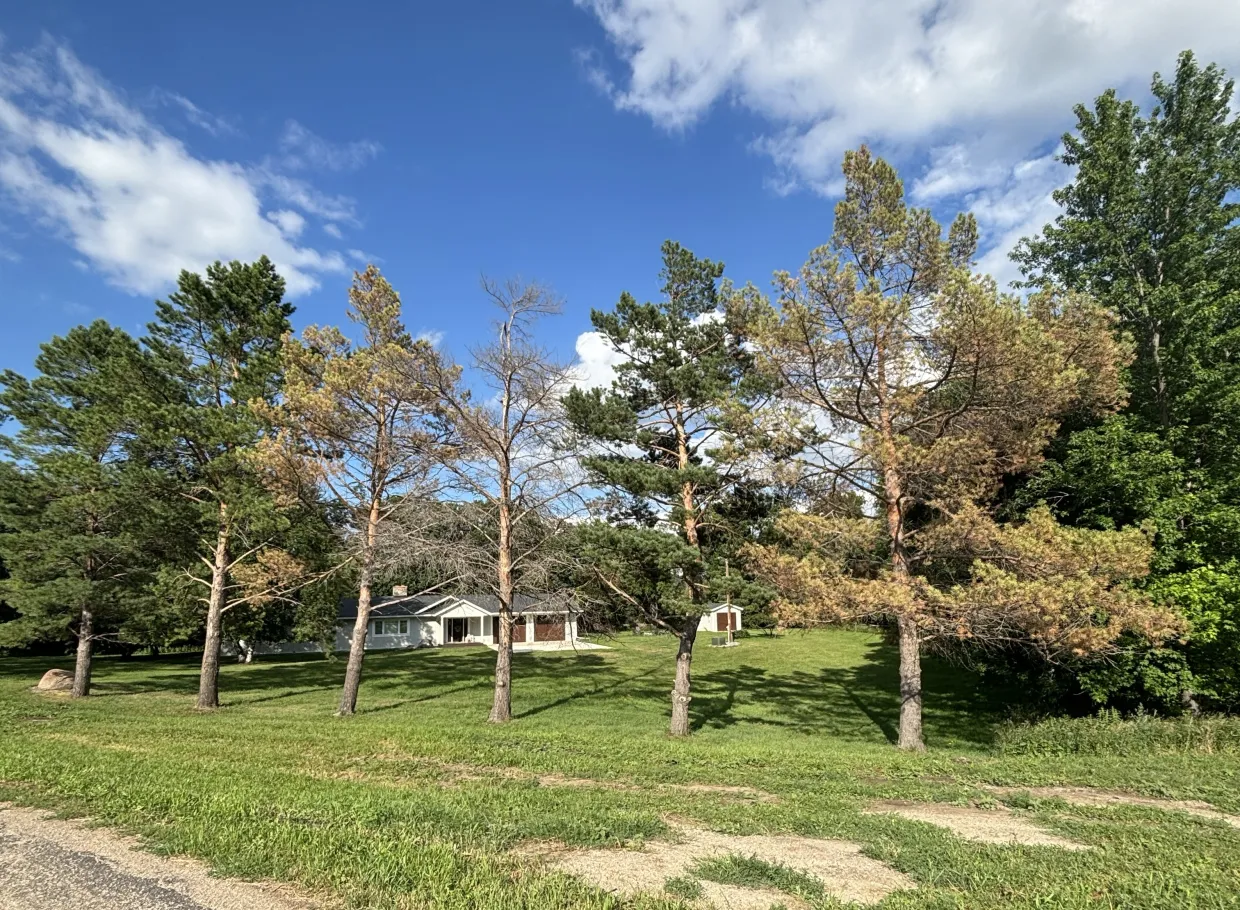
Pinewood Nematode (Bursaphelenchus xylophilus) is a very small nematode (or roundworm) which is known to kill many exotic or non-native pines. First detected in 1979, the nematode is responsible for the Pine wilt disease, and is now confirmed in North Dakota in Ransom and Sargent counties. One of the more commonly affected trees, Pinus sylvestris or Scotch Pine, is a good example of a tree that could be affected by Pinewood Nematode.
The nematodes cause water-conducting pores to collapse within the tree, essentially starving the afflicted tree. Symptoms begin with needles turning grayish green, then progressing to yellow to reddish-brown. The tree declines rapidly, often retaining the dried needles on the tree. Scotch pine trees will generally die within one season of contracting the disease, while Austrian pine may take two seasons to succumb.
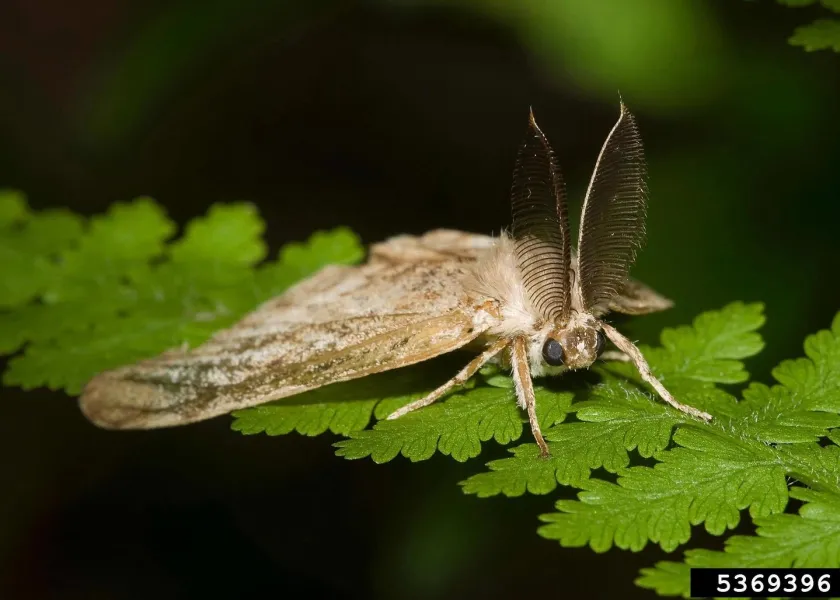
Pinewood Nematode has a unique relationship with a group of insects from the genus Monochamus. These beetles you may commonly know as Sawyers, or Sawyer beetles. They are a group of longhorn beetles which are found in many places around the globe. These beetles are attracted to recently dead or dying trees for breeding, and they lay eggs underneath the bark. The larva then feeds there for 1-2 months, during which time the dormant larvae of the Pinewood Nematode are able to invade the insect through the thoracic spiracles (part of the insect's respiratory tract) and then stay dormant in the beetle's tracheae. After maturation, the adult emerges from the dead tree, now infested with Pinewood Nematode. The larva carried by the insect will then be transmitted by the insects feeding on a new tree, at which point the process may begin again.
- Scot's Pine is a common planting in windbreaks and in communities across North Dakota, meaning that there is a large potential for damage.
- There is no remedy for Pinewood Nematode or Pine Wilt disease. Once a tree is infected it should be removed and disposed of appropriately to prevent spread of the disease.