
Many of North Dakota's native tree species are threatened by non-native insects and diseases. Thankfully, researchers have identified and developed trees from around the world that can thrive in our growing conditions. While not exhaustive, this publication should serve as a starting point for communities wanting hardy trees that can withstand the challenges of urban settings. This list reflects commonly available nursery stock based on supplier references. Comparable cultivars may be considered, pending review by NDFS Community Forestry staff.
A
Alder & Aspen
Alder
MANCHURIAN ALDER
RECOMMENDED CULTIVAR:
Prairie Horizon alder
Alnus hirsuta ‘Harbin’
HEIGHT: 30-40’ | SPREAD: 20-30’ | SHAPE: Pyramidal | FALL: Yellow-brown
NDSU selection for upright growth and attractive foliage. Rapid growing. Decorative purple catkins and clusters of brown cone-like fruit. Drought tolerant.

Aspen
QUAKING ASPEN
Populus tremuloides
HEIGHT: 40-50’ | SPREAD: 20-30’ | SHAPE: Oval | FALL: Vibrant yellow
Provides a soothing sound in the landscape with its ‘quaking’ leaves in the wind. Smooth, cream bark. Tends to have fast growth and prefers a moist, well-drained site. Aspens can send sprouts up from roots which makes this an appropriate selection for park settings.
RECOMMENDED CULTIVARS:
Mountain Sentinel aspen
Populus tremuloides ‘JFS-Column’
HEIGHT: 35’ | SPREAD: 8’ | SHAPE: Narrow, upright | FALL: Golden yellow
Prairie Skyrise aspen
Populus tremuloides ‘Prairie Skyrise’
HEIGHT: 40-50’ | SPREAD: 5-7’ | SHAPE: Narrow, compact | FALL: Golden yellow

B
Birch & Buckeye
Birch
PAPER BIRCH
RECOMMENDED CULTIVAR:
Prairie Dream birch
Betula papyrifera ‘Varen’
HEIGHT: 50' | SPREAD: 40' | SHAPE: Pyramidal, upright oval | FALL: Golden yellow
NDSU introduction. Showy, white exfoliating bark with orange inner bark. A very adaptable tree and requires little maintenance. Resistant to deer. Apply mulch around tree when young to protect roots from drying out.
RIVER BIRCH
Betula nigra
HEIGHT: 30-40’ | SPREAD: 20-30’ | SHAPE: Pyramidal, round | FALL: Buttery-yellow
Fast growing, native tree and has exfoliating reddish-brown bark. Prefers a moist, well-drained soil. Shows resistance to bronze birch borer (BBB). An excellent selection for park settings.
RECOMMENDED CULTIVARS:
Heritage birch
Betula nigra ‘Cully’
HEIGHT: 50’ | SPREAD: 30’ | SHAPE: Pyramidal, upright | FALL: Yellow
Larger, glossy leaves. Heat tolerant. Peeling bark has shades of cream, orange, and salmon. Tolerates a variety of soil types.
Northern Tribute birch
Betula nigra ‘Dickinson’
HEIGHT: 35’ | SPREAD: 30’ | SHAPE: Round, upright | FALL: Yellow
NDSU Introduction with ivory bark that exfoliates to copper-bronze. Tolerant of a variety of soil types. Heat tolerant.
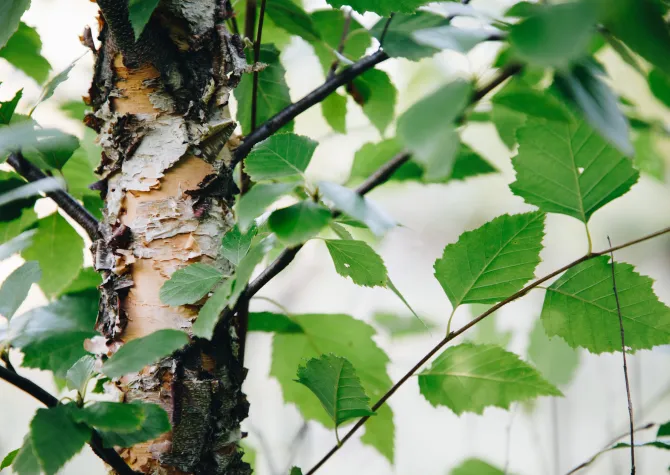
TIANSHAN BIRCH
RECOMMENDED CULTIVAR:
Emerald Flare birch
Betula tianschanica ‘Emerdak’
HEIGHT: 30’ | SPREAD: 12’ | SHAPE: Narrow, pyramidal | FALL: Yellow
NDSU introduction. Crisp white, exfoliating bark with gray and a hint of orange inner bark. Tolerant of drought and high pH soils.
Buckeye
HYBRID BUCKEYE
RECOMMENDED CULTIVARS:
Autumn Splendor buckeye
Aesculus x arnoldiana ‘Autumn Splendor’
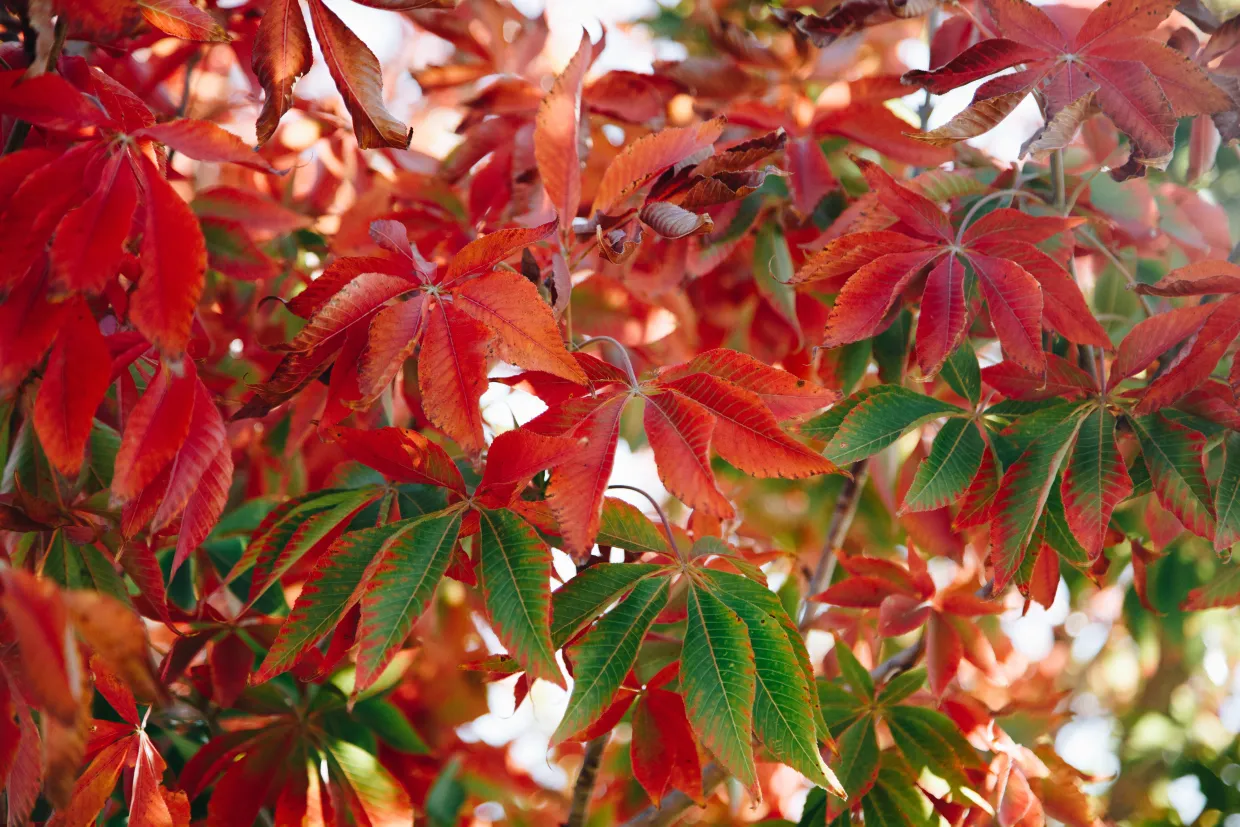
HEIGHT: 30-35' | SPREAD: 25' | SHAPE: Round | FALL: Orange-red
Tolerates a wide range of soil conditions. An interspecies hybrid between Ohio, yellow, and red buckeye.
Homestead buckeye
Aesculus x ‘Homestead’
HEIGHT: 30' | SPREAD: 30' | SHAPE: Round | FALL: Red, burnt orange
An excellent SDSU introduction with a dense, round form. The flowers are yellow with a red tint.
Prairie Torch buckeye
Aesculus x ‘Bergeson’
HEIGHT: 30' | SPREAD: 30' | SHAPE: Round | FALL: Orange-red
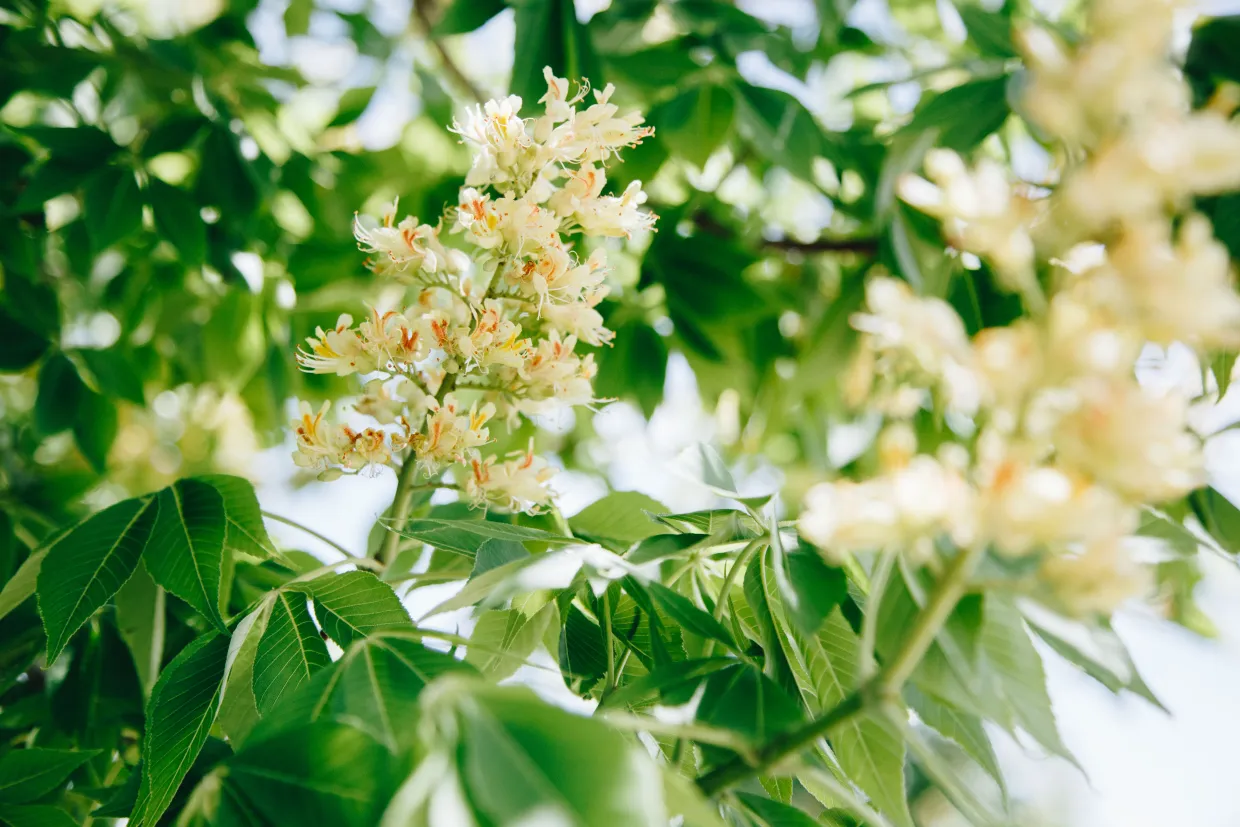
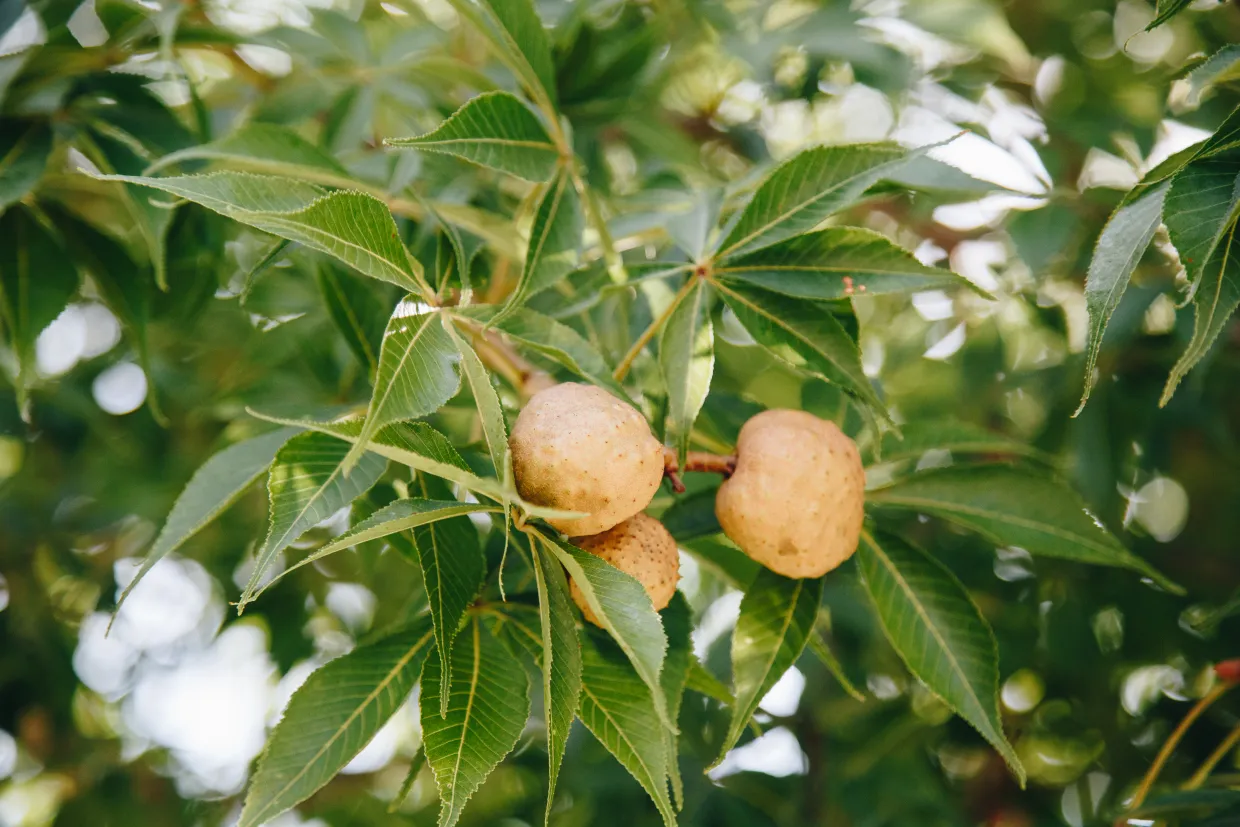
NDSU introduction. Quick initial growth in the first 10-15 years with a dense, round form maturing into a mushroom-like shape. 4-7” long flower panicles producing spiny golf ball-sized seed capsules. Prefers moist, well-drained soils.
OHIO BUCKEYE
Aesculus glabra
HEIGHT: 20-40' | SPREAD: 20-35' | SHAPE: Round | FALL: Orange-red-purple
Large white blooms in spring. Prefers moist soil and full sun. Fruit are spiny golf ball sized seed capsules.
RECOMMENDED CULTIVARS:
Early Glow buckeye
Aesculus glabra ‘JN Select’
HEIGHT: 30' | SPREAD: 20' | SHAPE: Upright, round | FALL: Orange-red
Resists leaf scorch and early defoliation. Fall color is earlier than other species. Sparse seed production.
Lavaburst buckeye
Aesculus glabra ‘LavaDak’
HEIGHT: 28' | SPREAD: 14-18' | SHAPE: Upright, narrow | FALL: Orange-red
NDSU introduction. Shows better resistance to leaf scorch. Produces shorter flower panicles with smaller and fewer fruit capsules. Prefers well-drained, non-droughty site.
C
Catalpa, Chokecherry, Coffeetree, & Crabapple
Catalpa
CHINESE CATALPA
Catalpa ovata
HEIGHT: 20-30' | SPREAD: 20-30' | SHAPE: Oval, round
May be difficult to find in the nursery trade. It is a very tolerant, tough tree in wet, low spots to dry sites with poor soils.
NORTHERN CATALPA
Catalpa speciosa
HEIGHT: 50-60' | SPREAD: 35-40' | SHAPE: Upright, oval
Fast growing. 2” long, tube-like white flowers appear in 4-8” clusters. Fruit is a long persistent pod. Very tolerant of heat and drought.

Chokecherry
AMUR CHOKECHERRY
Prunus maackii
HEIGHT: 15-25' | SPREAD: 15-25' | SHAPE: Upright, round | FALL: Yellow
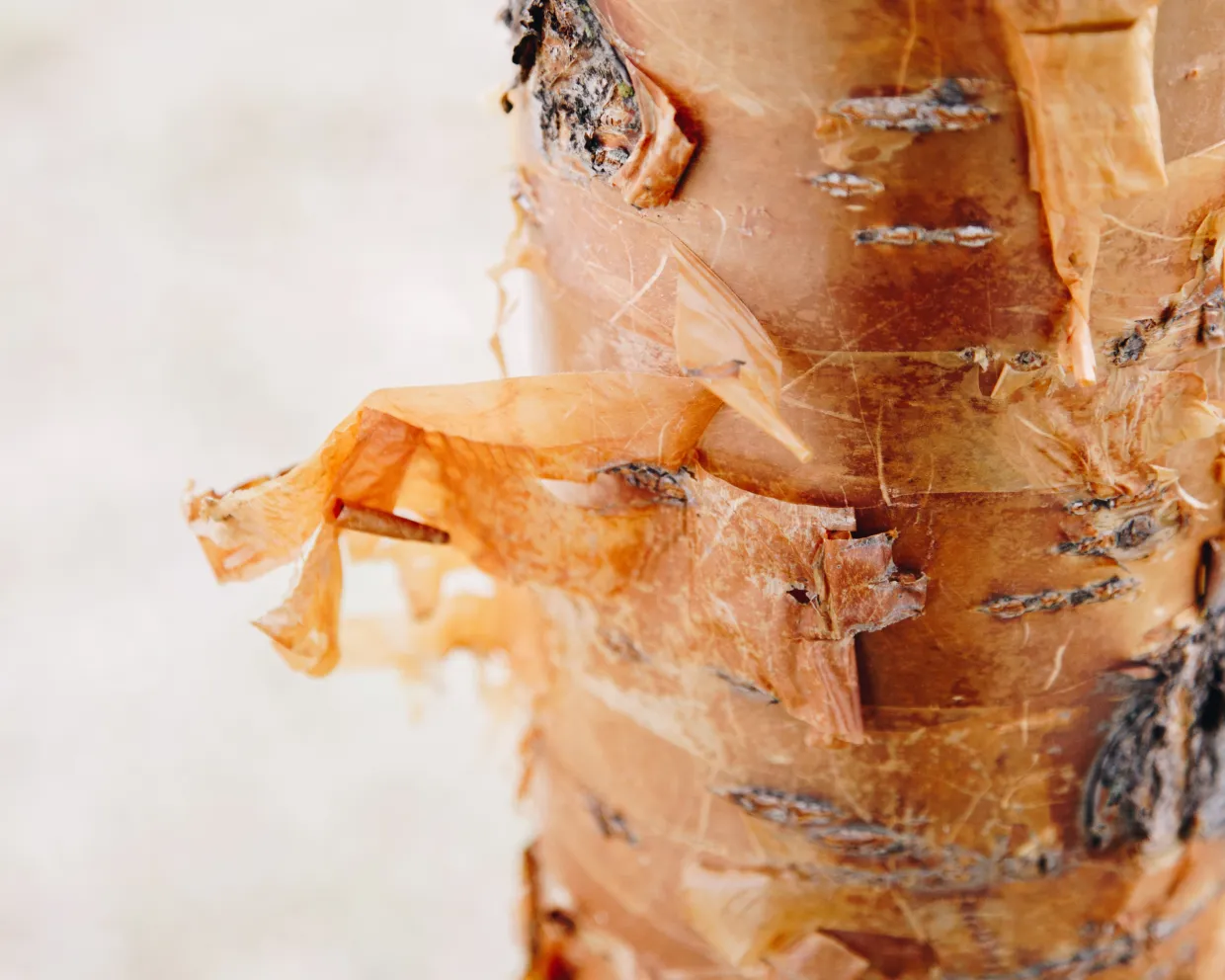
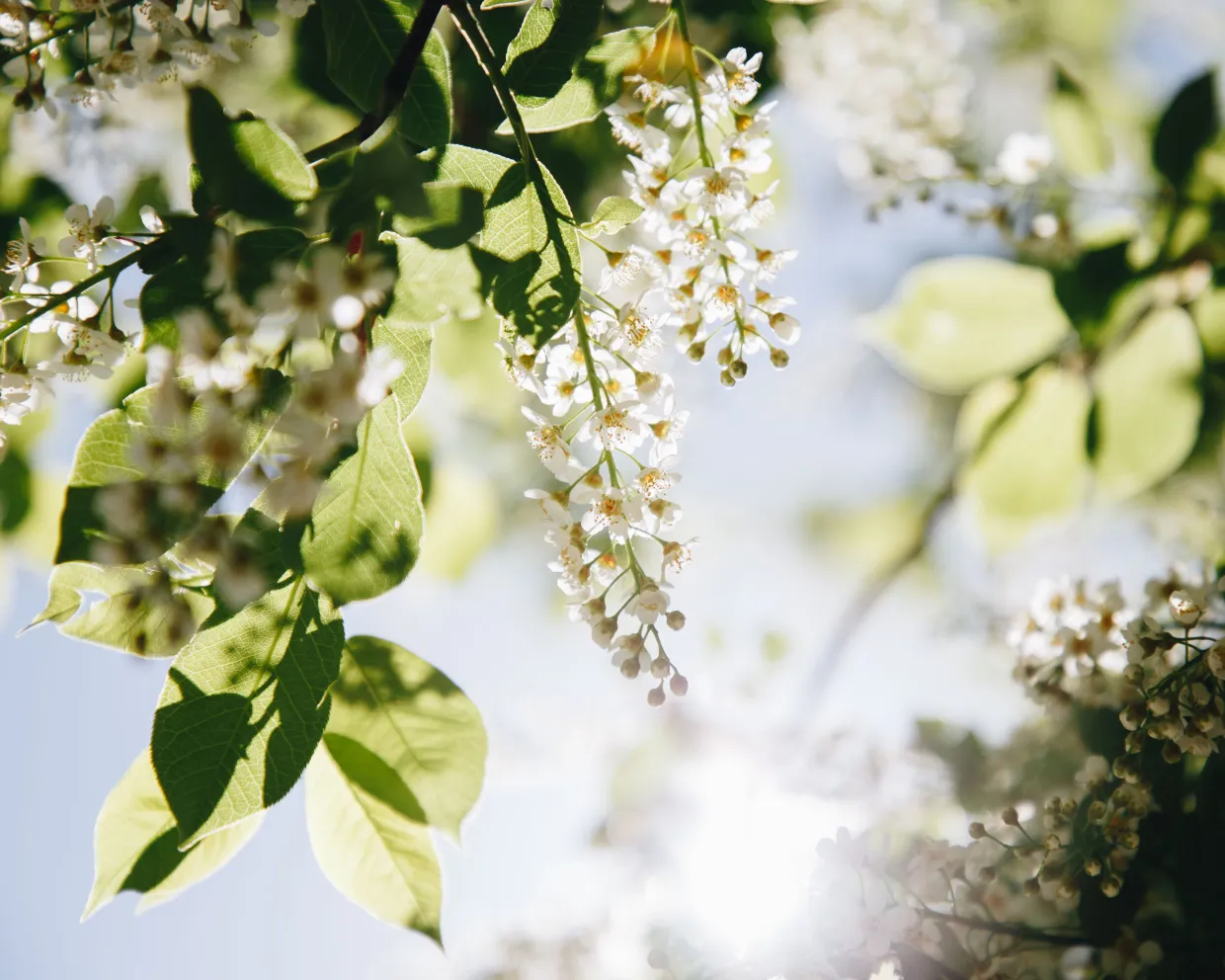
Very hardy, non-suckering. Produces white flowers and black fruit. Striking metallic, golden-brown, exfoliating bark. Good wildlife plant.
RECOMMENDED CULTIVARS:
Gold Spur chokecherry
Prunus maackii ‘Jefspur’
HEIGHT: 12' | SPREAD: 6' | SHAPE: Upright, narrow | FALL: Yellow
A dwarf, dense selection. Resistant to black knot. The bark is coppery-red adding interest to the landscape.
Klondike chokecherry
Prunus maackii ‘Klondike’
HEIGHT: 20-25' | SPREAD: 15’ | SHAPE: Upright, spreading | FALL: Yellow
More resistant to frost cracks and black knot. Very nice exfoliating bark that appears gold-colored. Fragrant flowers followed by black berries. The berries are edible and great for jellies, wine, and preserves. Be quick as birds enjoy them too!
Ming chokecherry
Prunus maackii ‘Ming’
HEIGHT: 10' | SPREAD: 5-10’ | SHAPE: Upright, round | FALL: Yellow
Clusters of white flowers late spring followed by small black fruit. Exfoliating bark containing hints of bronze and orange.
Coffeetree
KENTUCKY COFFEETREE
RECOMMENDED CULTIVARS:
Espresso coffeetree
Gymnocladus dioicus ‘Espresso-JFS’
HEIGHT: 50-60' | SPREAD: 35-40' | SHAPE: Vase, oval | FALL: Yellow
Seedless cultivar. Drought tolerant. Excellent for tough urban locations.
Skinny Latte coffeetree
Gymnocladus dioicus ‘Morton’
HEIGHT: 50’ | SPREAD: 18’ | SHAPE: Upright | FALL: Yellow
Extremely upright creating a very narrow canopy. A seedless cultivar.
True North coffeetree
Gymnocladus dioicus ‘UMNSynergy’
HEIGHT: 50-70’ | SPREAD: 25-35’ | SHAPE: Vase | FALL: Yellow
Upright vase-shaped canopy resembling the classic elm tree form. Interesting bark, especially in winter. A seedless cultivar. Very adaptable tree.

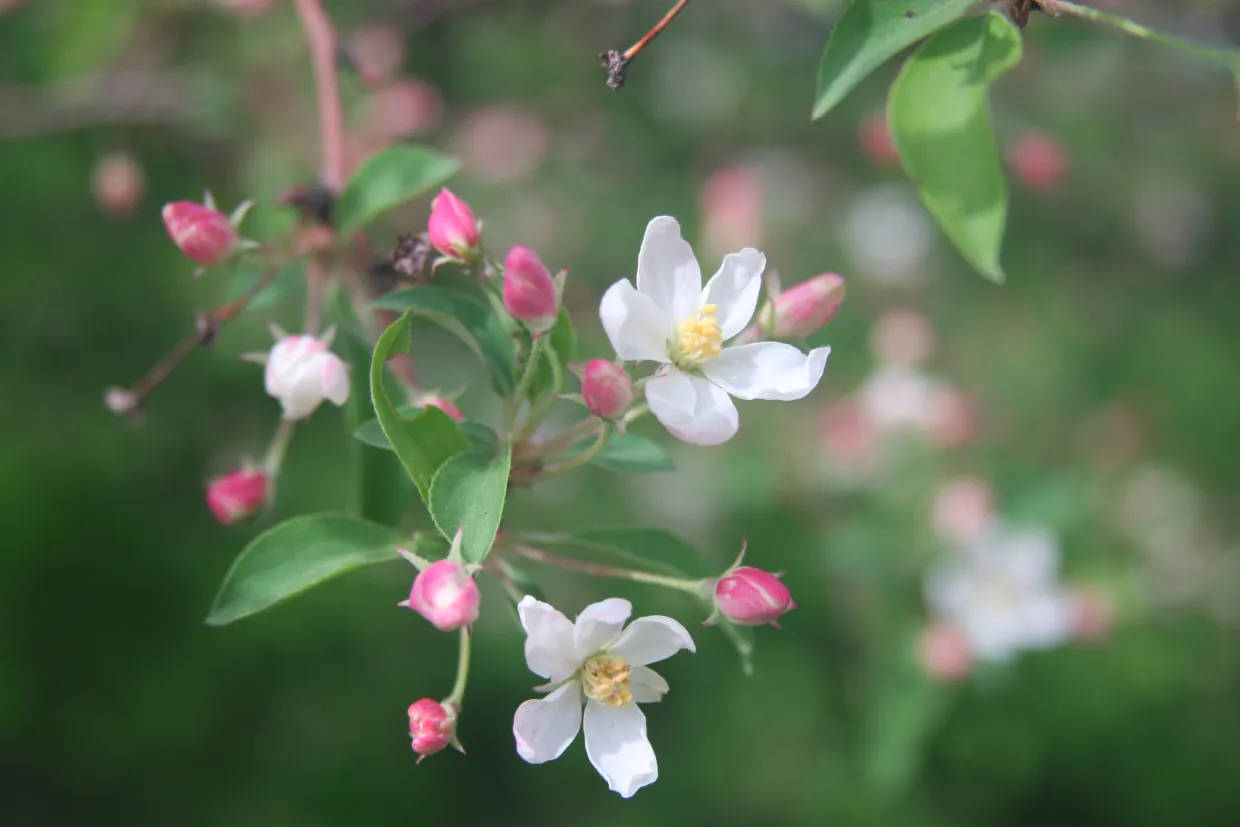
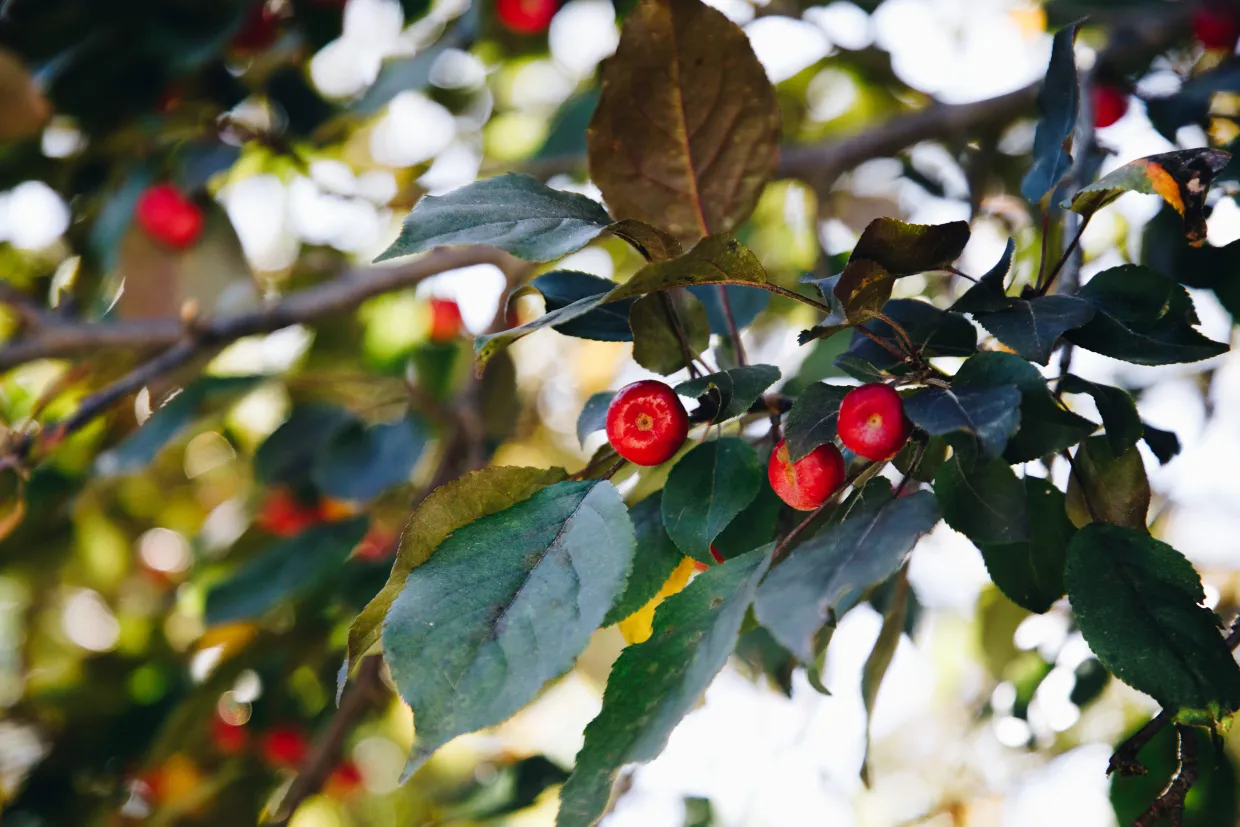
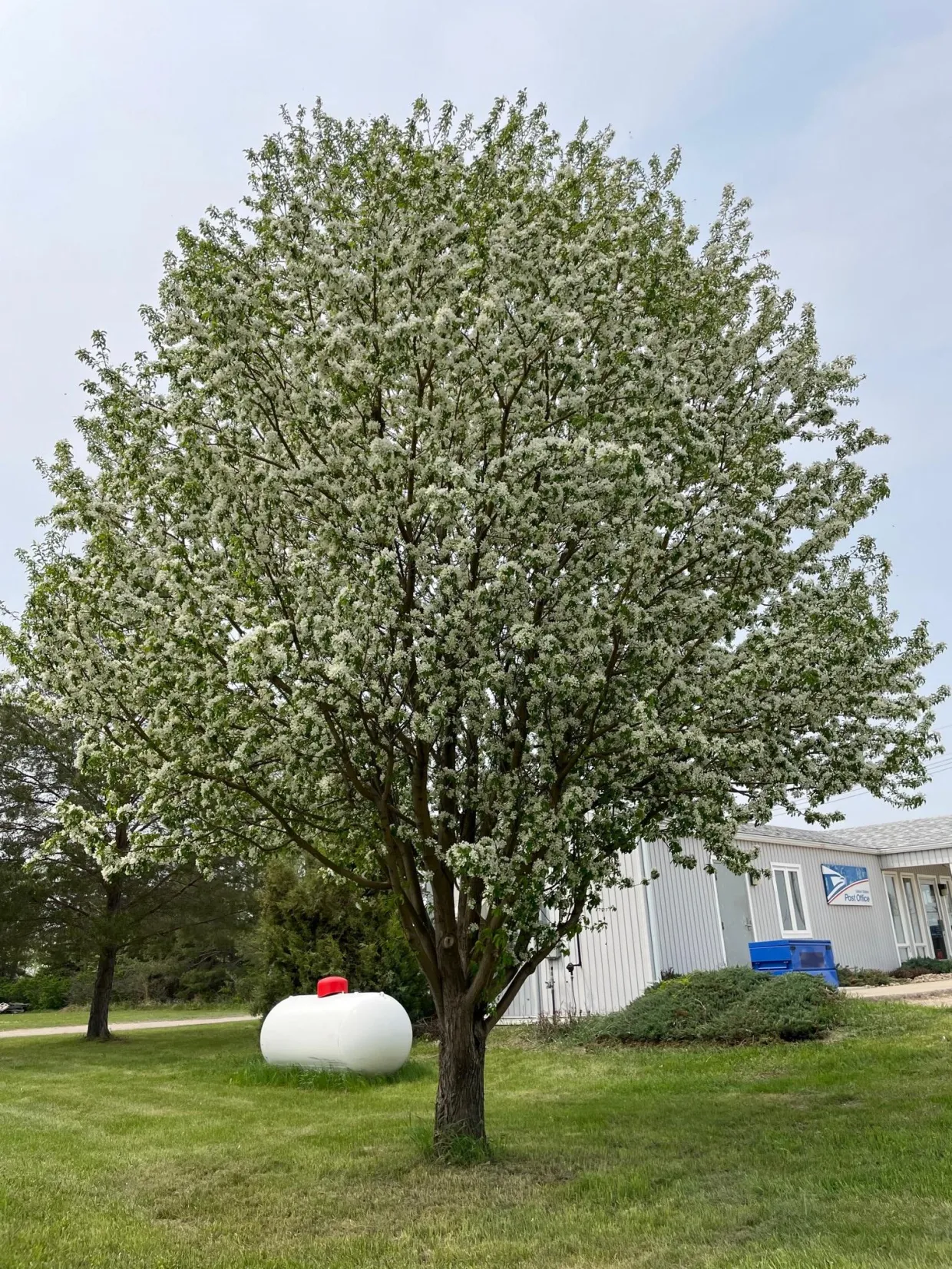
Crabapple
RECOMMENDED CULTIVARS:
Coralburst crabapple
Malus x ‘Coralcole’
HEIGHT: 15’ | SPREAD: 15’ | SHAPE: Round | FALL: None
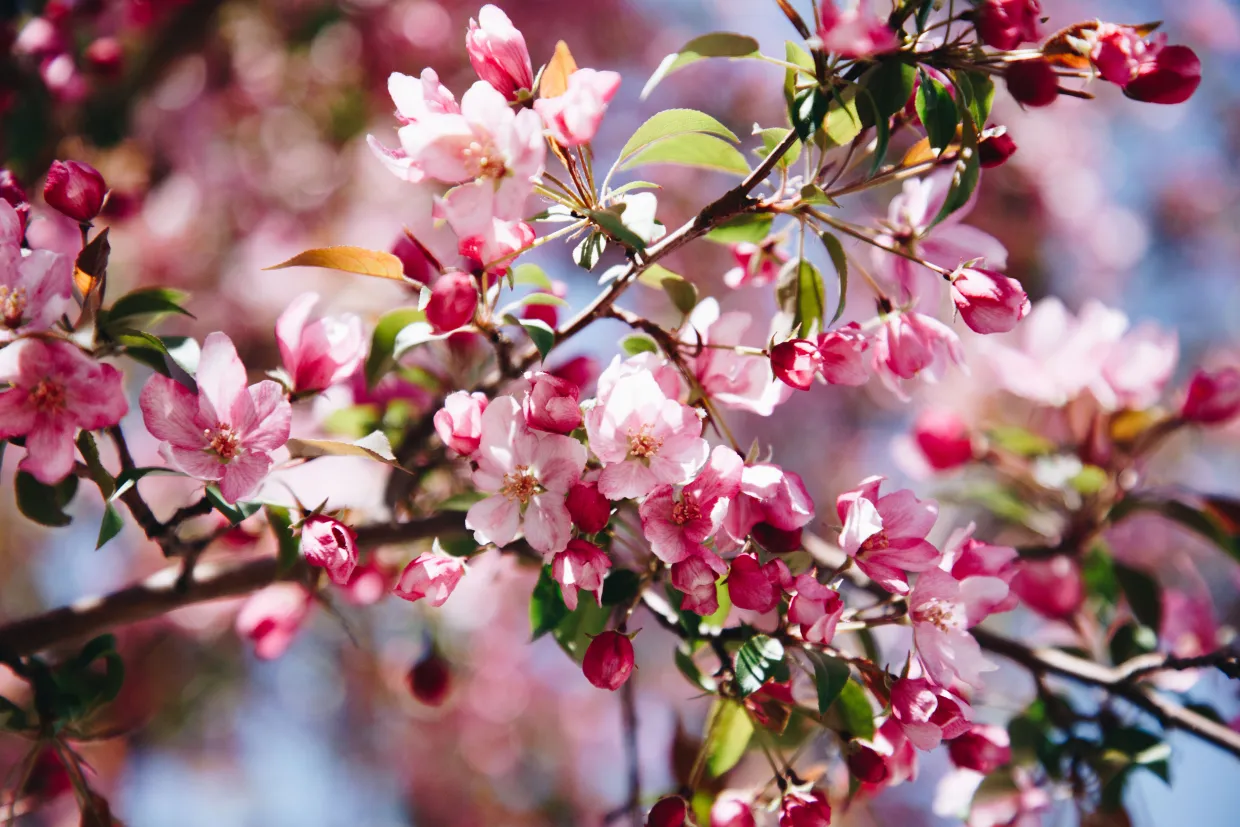
Bright pink flowers. Red-orange fruits. Known to flower and fruit on alternate years.
Courageous crabapple
Malus x adstringens ‘DurLawrence’
HEIGHT: 20’ | SPREAD: 15’ | SHAPE: Oval | FALL: Yellow-orange
Bright pink, abundant flowers in the spring. Bronze-red leaves in the summer. Nearly fruitless.
Emerald Spire crabapple
Malus x adstringens ‘Jefgreen’
HEIGHT: 20’ | SPREAD: 6’ | SHAPE: Narrow, columnar | FALL: Yellow-orange
Pink flowers in spring with dark green-purple leaves throughout summer. The fruit is red and large.
Gladiator crabapple
Malus x adstringens ‘Durleo’
HEIGHT: 20’ | SPREAD: 9’ | SHAPE: Upright, columnar | FALL: None
Pink flowers followed by bronze-purple leaves. The fruit is red-purple in color.
Marilee crabapple
Malus x ‘Jarmin’
HEIGHT: 25’ | SPREAD: 10’ | SHAPE: Upright, narrow | FALL: Orange
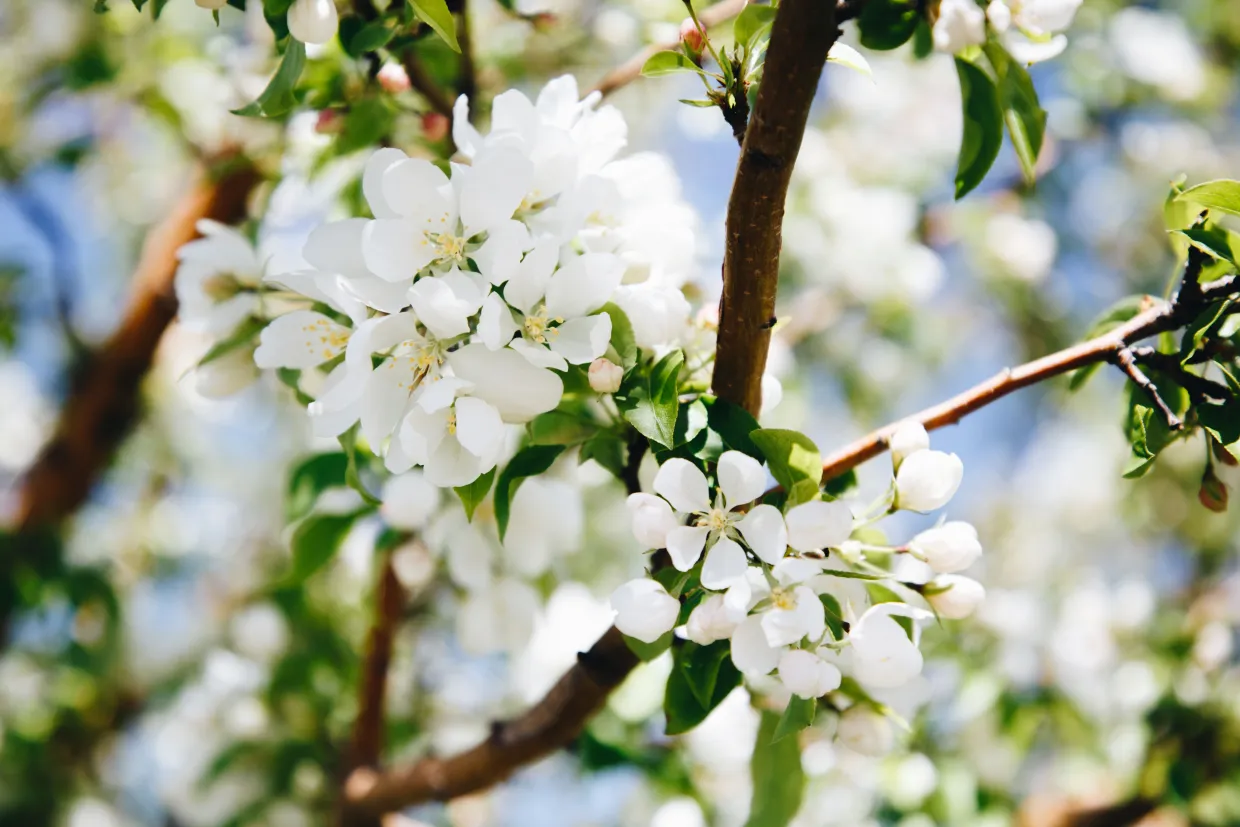
White flowers and nearly fruitless. Good disease resistance.
Midnite Spire crabapple
Malus x adstringens ‘Jefnite’
HEIGHT: 20’ | SPREAD: 6’ | SHAPE: Columnar | FALL: None
Pink flowers followed by purple leaves and red fruit.
Pink Spires crabapple
Malus x ‘Pink Spires’
HEIGHT: 20’ | SPREAD: 12’ | SHAPE: Narrow, upright | FALL: Copper
Light pink flowers before red-purple leaves open in spring, maturing to green. The fruit is purple-red.
Prairifire crabapple
Malus x ‘Prairifire’
HEIGHT: 20’ | SPREAD: 20’ | SHAPE: Round | FALL: None
Deep pink flowers followed by red leaves in the spring, maturing to green. The fruit is dark red-purple, small, and persistent.
Red Splendor crabapple
Malus x ‘Red Splendor’
HEIGHT: 20-25’ | SPREAD: 20’ | SHAPE: Round | FALL: None
Pink flowers and glossy, green leaves. Shiny, cherry-like, persistent fruit.
Royal Raindrops crabapple
Malus x ‘JFS-KW5’
HEIGHT: 20’ | SPREAD: 15’ | SHAPE: Round | FALL: Orange-red
Bright pink-red flowers with purple, cutleaf leaves. Red, persistent fruits.
Show Time crabapple
Malus x ‘Shotizam’
HEIGHT: 25’ | SPREAD: 20’ | SHAPE: Oval | FALL: Orange-red
Fuchsia-red flowers followed by green leaves with red undertone in the spring. Red fruits.
Sugar Tyme crabapple
Malus x ‘Sutyzam’
HEIGHT: 18’ | SPREAD: 15’ | SHAPE: Round | FALL: None
The flowers are white followed by red leaves in the spring, maturing to green. Red, persistent fruits. Excellent disease resistance.
D
Douglas-fir
Douglas-fir
ROCKY MOUNTAIN DOUGLAS-FIR
Pseudotsuga menziesii var. glauca
HEIGHT: 40-70' | SPREAD: 20-30' | SHAPE: Pyramidal
A cone bearing (conifer) tree. Holds needles all yearlong. Prefers moisture, does not tolerate standing water. To help with identification, cones have a 3-pointed bract.

E
Elm
Elm
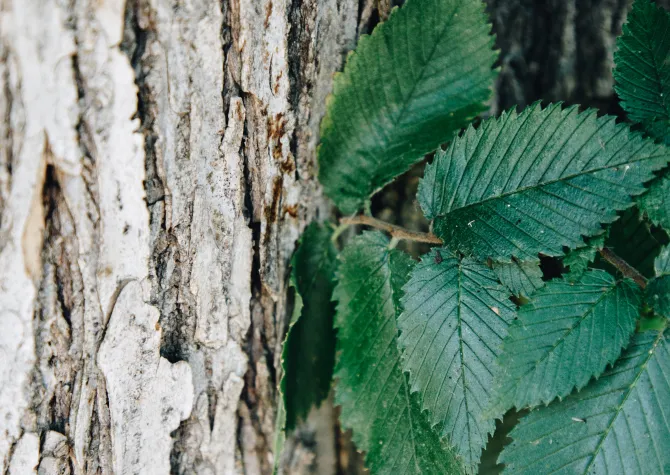
All elms listed have resistance to Dutch elm disease (DED). It should be noted that resistance does not mean immune. Limited planting should still occur in our communities. Elms require significant pruning during the first 10-15 years due to their fast growth and structural needs. Utilize NDSU Extension F1893 Elms for North Dakota for reference.
AMERICAN ELM
Prairie Expedition elm
Ulmus americana ‘Lewis & Clark’
HEIGHT: 60‘ | SPREAD: 40’ | SHAPE: Umbrella | FALL: Yellow
NDSU selection. Moderate pruning needs and has fast growth, nearly 4' per year. Matures into the classic umbrella-like elm form.
Princeton elm
Ulmus americana ‘Princeton’
HEIGHT: 50-70‘ | SPREAD: 30-50’ | SHAPE: Vase | FALL: Yellow
Very upright form with fast growth. Requires a very high pruning need. Potential for narrow branch angles; however, easy to structural prune when young.
St. Croix elm
Ulmus americana ‘St. Croix’
HEIGHT: 60-75‘ | SPREAD: 70-90’ | SHAPE: Vase, spreading | FALL: Yellow
Currently partially recommended in the NDSU Extension article F1893 Elms for North Dakota due to lack of hard data from ND plantings. High resistance to DED and likely to be hardy for ND winters. Very high pruning needs due to extremely fast growth rate.
Valley Forge elm
Ulmus americana ‘Valley Forge’
HEIGHT: 60-70‘ | SPREAD: 50-60’ | SHAPE: Round | FALL: Bright yellow
Young trees can become top-heavy due to vigorous growth. Prone to weak branch attachments. Very high pruning needs. May struggle with hardiness during harsh winters and suffer from winter dieback as it was selected from a more eastern location. Matures into the classic umbrella-like elm form.
HYBRID ELM
Accolade elm
Ulmus x ‘Morton’
HEIGHT: 50-60‘ | SPREAD: 30-40’ | SHAPE: Vase, upright | FALL: Golden yellow
Pruning needs are moderate due to fast growth rate.
HYBRID ELM continued
Cathedral elm
Ulmus x ‘Cathedral’
HEIGHT: 40-50‘ | SPREAD: 40-60’ | SHAPE: Broadly vase | FALL: Yellow
Will require very high pruning needs due to its vigorous growth rate.
New Horizon elm
Ulmus x ‘New Horizon’
HEIGHT: 30-40‘ | SPREAD: 15-25’ | SHAPE: Upright, oval | FALL: Rusty-red
Will require high pruning needs due to its fast growth rate.
Triumph elm
Ulmus x ‘Morton Glossy’
HEIGHT: 60‘ | SPREAD: 35-40’ | SHAPE: Upright | FALL: Yellow
Requires moderate pruning with an extremely fast growth rate.
JAPANESE ELM
Discovery elm
Ulmus davidiana var. japonica ‘Discovery’
HEIGHT: 35-40‘ | SPREAD: 30’ | SHAPE: Upright | FALL: Yellow
A smaller version of the classic American elm tree. Requires moderate pruning with a slower growth rate.
Freedom elm
Ulmus davidiana var. japonica ‘Freedom’
HEIGHT: 40‘ | SPREAD: 30’ | SHAPE: Spreading, mushroom-like | FALL: Golden with red-purple tinge
Does not produce an excessive amount of seeds. Very cold hardy. Growth rate and pruning needs are moderate.
Northern Empress elm
Ulmus davidiana var. japonica ‘Burgundy Glow’
HEIGHT: 28‘ | SPREAD: 24’ | SHAPE: Round | FALL: Orange-red
Requires moderate pruning with a slower growth rate.
G
Ginkgo
Ginkgo
RECOMMENDED CULTIVARS:
Autumn Gold ginkgo
Ginkgo biloba ‘Autumn Gold’
HEIGHT: 28' | SPREAD: 24' | SHAPE: Round | FALL: Golden yellow
A seedless cultivar. Interesting fan-shaped leaves that can be found on fossils. Prefers a sheltered location.
Princeton Sentry ginkgo
Ginkgo biloba ‘PNI 2720’
HEIGHT: 30‘ | SPREAD: 15’ | SHAPE: Narrow, pyramidal | FALL: Bright yellow
A seedless cultivar. Interesting fan-shaped leaves that can be found on fossils. Prefers a sheltered location. Great selection for a site with limited space.

H
Hackberry & Honeylocust
Hackberry
COMMON HACKBERRY
Celtis occidentalis
HEIGHT: 50-75‘ | SPREAD: 50’ | SHAPE: Round, spreading | FALL: Pale yellow
Prefers moist soils. A native tree adaptable to urban conditions. Requires moderate pruning in the first 10 years. Hackberry nipple gall, caused by the hackberry psyllid, is very commonly found on the underside of the leaves; however, it is more of an aesthetic problem than a tree health issue.
RECOMMENDED CULTIVAR:
Prairie Sentinel hackberry
Celtis occidentalis ‘JFS-KSU1’
HEIGHT: 45‘ | SPREAD: 12’ | SHAPE: Columnar | FALL: Vibrant yellow
Excellent selection for narrow boulevards and handles tough climates.

Honeylocust
RECOMMENDED CULTIVARS:
Northern Acclaim honeylocust
Gleditisia triacanthos var. inermis ‘Harve’
HEIGHT: 35-45‘ | SPREAD: 35’ | SHAPE: Upright | FALL: Yellow
NDSU Selection. Very drought tolerant and seedless.
Northern Sentinel honeylocust
Gleditisia triacanthos var. inermis ‘JFS GMorgenson1’
HEIGHT: 45‘ | SPREAD: 25’ | SHAPE: Narrowly upright, oval | FALL: Yellow
Not guaranteed to be seedless under all growing conditions.

I
Ironwood
Ironwood
IRONWOOD
Ostrya virginiana
HEIGHT: 30-45‘ | SPREAD: 25’ | SHAPE: Oval-round | FALL: Golden yellow
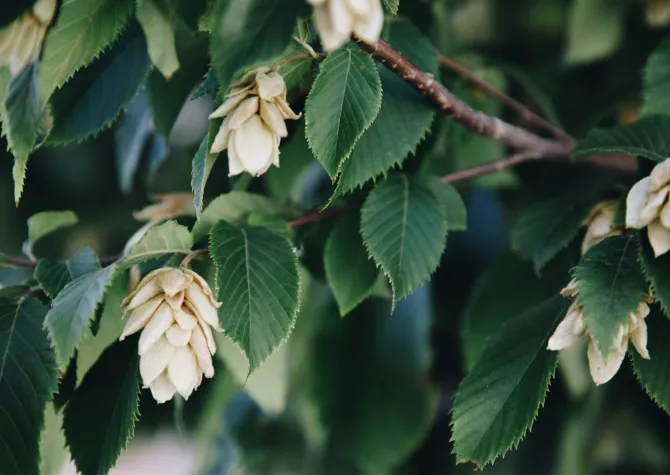
Tough understory tree that is virtually pest-free. Pyramidal when young and slow growing. Hop-like fruits in late summer. The wood is incredibly durable, used for fence posts, tool handles, and firewood.
K
Katsura
Katsura
RECOMMENDED CULTIVAR:
KoolKat katsura
Cercidiphyllum japonicum ‘Kooldak’
HEIGHT: 35‘ | SPREAD: 25’ | SHAPE: Broad pyramidal | FALL: Yellow
NDSU selection. The heart-shaped leaves emerge a deep bronze color in the spring and age to a blue green during the summer months. Great selection for a park setting.
L
Larch, Lilac, & Linden
Larch
SIBERIAN LARCH
Larix siberica
HEIGHT: 30-60‘ | SPREAD: 15-25’ | SHAPE: Broad pyramidal | FALL: Golden yellow
A cone-bearing tree that drops its soft needles every fall making it a rare deciduous conifer! The cones reach a size of 2". An excellent choice for a park planting.

Lilac
JAPANESE TREE LILAC
Syringa reticulata
HEIGHT: 20-30‘ | SPREAD: 15-25’ | SHAPE: Oval | FALL: Yellow-green
Fragrant clusters of creamy-white flowers bloom in June. Prune in the summer after flowering.
RECOMMENDED CULTIVARS:
Ivory Pillar Japanese tree lilac
Syringa reticulata ’Williamette’
HEIGHT: 20-25‘ | SPREAD: 10-15’ | SHAPE: Pyramidal | FALL: None
Ivory Silk Japanese tree lilac
Syringa reticulata ‘Ivory Silk’
HEIGHT: 20-25‘ | SPREAD: 20’ | SHAPE: Oval | FALL: None
Flowers at an early age and profusely sometimes alternating years. More compact growth form.
Snowdance Japanese tree lilac
Syringa reticulata ‘Bailnce’
HEIGHT: 20‘ | SPREAD: 20’ | SHAPE: Vase, spreading | FALL: None
While other Japanese tree lilacs flower biennially (alternating years), Snowdance blooms consistently every year. The blooms are full and large and the leaves are larger and darker green than the species too.
Summer Flare Japanese tree lilac
Syringa reticulata ‘SumDak’
HEIGHT: 30-35‘ | SPREAD: 14-16’ | SHAPE: Narrow upright, oval | FALL: None
NDSU selection. Larger in height than other tree lilacs.

Linden (Basswood)
Prefers moist, well-drained soils and grows natively along north-facing slopes. Will struggle if left on an exposed site, especially in western ND. The leafy bract that holds the cluster of nutlets (seed) fall mid-summer, which oftentimes confuses homeowners into thinking their tree is dropping its leaves. Nothing to fear, the tree is just dropping its seed. Lindens are sensitive to lawn weed and feeds and also to de-icing salts. Consider protecting the bark in the winter due to sunscald issues.
AMERICAN LINDEN
Tilia americana
HEIGHT: 50-60' | SPREAD: 30-40' | SHAPE: Pyramidal, oval | FALL: Yellow, green-brown
A native species and is the largest of all lindens. Very fragrant flowers and is rumored to create some of the best tasting honey.
RECOMMENDED CULTIVARS:
American Sentry linden
Tilia americana ‘McKSentry’
HEIGHT: 40' | SPREAD: 30' | SHAPE: Pyramidal, symmetrical | FALL: Yellow-green
Boulevard linden
Tilia americana ‘Boulevard’
HEIGHT: 50' | SPREAD: 25' | SHAPE: Narrow, pyramidal | FALL: Pale yellow
Redmond linden
Tilia americana ‘Redmond’
HEIGHT: 40-60' | SPREAD: 25-35' | SHAPE: Pyramidal, dense | FALL: None
Very similar to American linden; however, has dense hairs on the underside of leaves giving off a white appearance. Tolerates drought.

LITTLELEAF LINDEN
Tilia cordata
HEIGHT: 40' | SPREAD: 20-25' | SHAPE: Pyramidal, round | FALL: Yellow
More compact growth and blooms a week later than American linden.
RECOMMENDED CULTIVARS:
Corinthian linden
Tilia cordata ‘Corzam’
HEIGHT: 45' | SPREAD: 15' | SHAPE: Narrow, pyramidal | FALL: Yellow
Narrowest of all Linden cultivars.
Golden Cascade linden
Tilia cordata ‘Golden Cascade’
HEIGHT: 40' | SPREAD: 25' | SHAPE: Pyramidal, cascading | FALL: Golden yellow
Unique, weeping branch structure. Ideal for a park planting.
Greenspire linden
Tilia cordata ‘Greenspire’
HEIGHT: 40-50' | SPREAD: 30-35' | SHAPE: Pyramidal | FALL: Yellow
Extremely popular linden. Strong central leader and grows well on difficult sites.
Norlin linden
Tilia cordata ‘Ronald’
HEIGHT: 30-50' | SPREAD: 30-40' | SHAPE: Pyramidal, broad | FALL: Yellow-brown
MONGOLIAN LINDEN
RECOMMENDED CULTIVAR:
Harvest Gold linden
Tilia mongolica ‘Harvest Gold’
HEIGHT: 40' | SPREAD: 30' | SHAPE: Upright, pyramidal | FALL: Golden yellow
Unique, exfoliating bark.

M
Maackia, Maple, & Mountain-ash
Maackia
AMUR MAACKIA
RECOMMENDED CULTIVAR:
MaacNificient maackia
Maackia amurensis ‘JFS-Schichtel1'
HEIGHT: 30' | SPREAD: 22' | SHAPE: Upright, vase | FALL: Yellow
White, spike-like flowers bloom in early to mid-summer. When leaves emerge they have a soft texture with a silvery tint. Amber to copper colored bark.

Maple
In North Dakota, maples are often subject to iron and manganese chlorosis on high pH (alkaline) soils with a pH >7.2, which may cause dieback and death. Maples with chlorosis will exhibit yellow leaves with bright green veins. If there are maples in your community that have leaves that exhibit those symptoms, choose alternative trees.
Fall color on maples is often inconsistent due to our early fall frosts. Consider using trunk wrap to protect the thin bark during the winter months.

AMUR MAPLE
Acer tataricum subsp. ginnala
HEIGHT: 15-18' | SPREAD: 15-18' | SHAPE: Round | FALL: Mix of yellow, orange, red, and purple
Fragrant, white flowers in small clusters. Can be grown as a single or multi-stemmed tree. Shade tolerant. Grows easily from seed.
RECOMMEND CULTIVARS:
Flame maple
Acer tataricum subsp. ginnala ‘Flame’
HEIGHT: 20' | SPREAD: 20' | SHAPE: Round | FALL: Orange-red
Known to have a low canopy clearance approximately 4' from the ground.
Ruby Slippers maple
Acer tataricum subsp. ginnala ‘Ruby Slippers’
HEIGHT: 20' | SPREAD: 20' | SHAPE: Upright, Round | FALL: Bright red
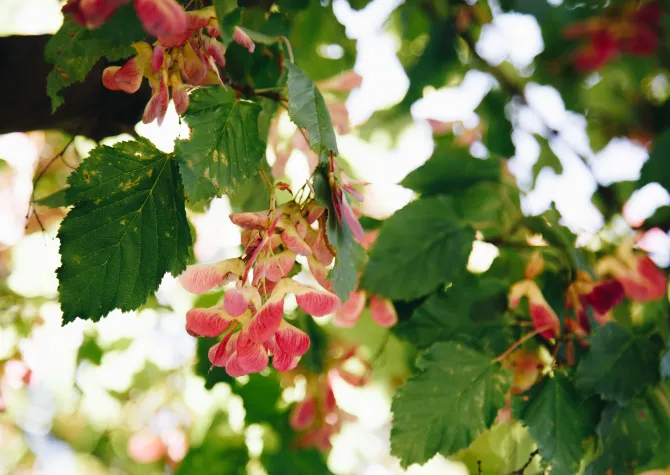
Uniform growth with a straight trunk and dense canopy. The samaras (seed) are bright red in the spring.

BOXELDER MAPLE
RECOMMENDED CULTIVAR:
Baron maple
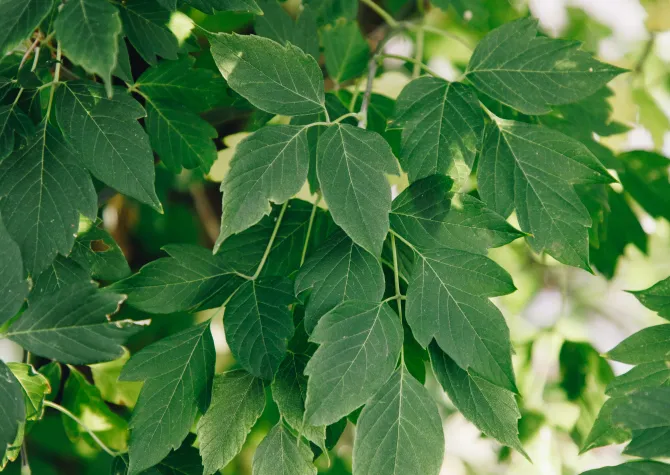
Acer negundo ‘Baron’
HEIGHT: 50' | SPREAD: 30' | SHAPE: Round | FALL: Yellow
Seedless selection. Grows in a wide range of conditions. Sensitive to chemical drift in lawn weed control.
FREEMAN MAPLE
Fall color is inconsistent due to our often early fall frosts. A cross between red and silver maple.
RECOMMENDED CULTIVARS:
Firefall maple
Acer x freemanii ‘AF#1’
HEIGHT: 50' | SPREAD: 35' | SHAPE: Upright, oval | FALL: Inconsistent: orange-red, brown
A University of MN cross between Autumn Spire red maple and Beebe cutleaf silver maple. A seedless selection with good branch angles. The leaves display the deeply cut foliage similar to the parent tree of cutleaf silver maple.
Marmo maple
Acer x freemanii ‘Marmo’
HEIGHT: 55' | SPREAD: 45' | SHAPE: Upright, oval | FALL: Inconsistent: red, yellow, green-brown
Seedless selection. If an early frost occurs, a uniform brown will be the fall color.
Matador maple
Acer x freemanii ‘Bailston’
HEIGHT: 45' | SPREAD: 35' | SHAPE: Pyramidal, upright | FALL: Inconsistent: red
Fall color appears later in the season than other Freeman maple cultivars.
Regal Celebration maple
Acer x freemanii ‘Jefcel’
HEIGHT: 45' | SPREAD: 30' | SHAPE: Oval | FALL: Inconsistent: red
Seedless selection. Fall color appears in late September. Requires soil pH less than 7.5.
Sienna Glen maple
Acer x freemanii ‘Sienna’
HEIGHT: 50' | SPREAD: 35' | SHAPE: Pyramidal | FALL: Orange-burgundy red
Smaller leaves than other Freeman maple cultivars. Fall color appears late in the season creating inconsistent fall color due to our often-early fall frosts.

MIYABE MAPLE
State Street maple
Acer miyabei ‘Morton’
HEIGHT: 40-45' | SPREAD: 30-35' | SHAPE: Round | FALL: Pale yellow
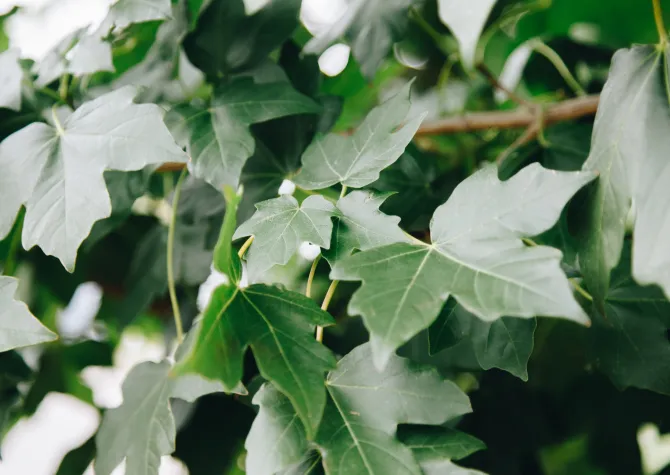
A tough, alkaline soil tolerant tree. Leaves are five-lobed with a thick texture.
NORWAY MAPLE
RECOMMENDED CULTIVARS:
Crimson King maple
Acer platanoides ‘Crimson King’
HEIGHT: 30-40' | SPREAD: 20-40' | SHAPE: Round, dense | FALL: None
Foliage is maroon all summer long. Tolerant of urban conditions and drought. Does best in full sun but will tolerate part shade. Best used as a park tree due to shallow surface roots.
Deborah maple
Acer platanoides ‘Deborah’
HEIGHT: 45' | SPREAD: 40' | SHAPE: Oval, round | FALL: Bronze
Comes from parent plant cultivar, Schwedler Norway maple, that has been around since 1869. In the spring, the leaves start off as a bright reddish-purple color that fades to a dark green into summer. Foliage has a slight crinkle to it, adding interest.
Emerald Lustre maple
Acer platanoides ‘Pond’
HEIGHT: 45' | SPREAD: 40' | SHAPE: Round, spreading FALL: Yellow
Leaves emerge in the spring with a reddish-purple tint and mature in a deep, glossy green into the summer months. Considered one of the hardiest Norway maples but still struggles in our state. Best suited for eastern ND.

SILVER MAPLE
Acer saccharinum
HEIGHT: 50-60' | SPREAD: 30-50' | SHAPE: Round, upright | FALL: Yellow
Fast growing, very large shade tree. Requires frequent pruning due to its structure and weak branch attachments. Known to have large surface roots near the trunk.
RECOMMENDED CULTIVARS:
Silver Queen maple
Acer saccharinum ‘Silver Queen’
HEIGHT: 50' | SPREAD: 40' | SHAPE: Oval, upright | FALL: Yellow
Seedless selection. Silver underside of leaves. Stronger branch structure and attachments than silver maple. Very tough, durable tree.
Symatree maple
Acer saccharinum ‘JFS H1’
HEIGHT: 30' | SPREAD: 20' | SHAPE: Oval, upright | FALL: Yellow-deep red
Cultivar created from a witch’s broom! Good branch structure. Seedless selection.

SUGAR MAPLE
RECOMMENDED CULTIVARS:
Cosmic Flare maple
Acer saccharum ‘CosDak’
HEIGHT: 30' | SPREAD: 18' | SHAPE: Pyramidal, round | FALL: Yellow-orange, orange-red
NDSU selection. No signs of chlorosis on soil pH > 7.8. Prefers moist, well-drained soil. Has a similar shape and size to the Greenspire linden tree.
Green Mountain maple
Acer saccharum ‘Green Mountain’
HEIGHT: 50' | SPREAD: 40' | SHAPE: Oval | FALL: Yellow, sometimes orange-red
Like most maples, prefers a sheltered location in an established park or neighborhood. Thick, leathery textured leaves. Heat and drought tolerant but still can show signs of leaf scorch.
Northern Flare maple
Acer saccharum ‘Sisseton’
HEIGHT: 40-50' | SPREAD: 30-40' | SHAPE: Oval | FALL: Orange-red
NDSU selection. Thick, leathery dark green leaves. Tolerates a higher soil pH.

TATARIAN MAPLE
RECOMMENDED CULTIVARS:
Hot Wings maple
Acer tataricum ‘GarAnn’
HEIGHT: 20' | SPREAD: 24' | SHAPE: Round | FALL: Yellow-reddish purple
Fragrant, small cluster of flowers. Fairs better than Amur maple when it comes to chlorosis but will still struggle. Bacterial blight can also be an issue.
Rugged Charm maple
Acer tataricum ‘JFS-KW2’
HEIGHT: 28' | SPREAD: 15' | SHAPE: Oval, upright | FALL: A mix of yellow, orange, and red
Mountain-ash
OAKLEAF MOUNTAIN-ASH
Sorbus hybrida
HEIGHT: 30' | SPREAD: 20' | SHAPE: Pyramidal, upright | FALL: Rust orange
Interesting oak-like leaves and small clusters of white flowers. Fruit is bitter. Does not tolerate alkaline soils or de-icing salts. More resistant to fireblight than other types of mountain-ash.
O
Oak
Oak
BUR OAK
Quercus macrocarpa
HEIGHT: 60-70' | SPREAD: 60-70' | SHAPE: Round | FALL: Yellow-brown
A native tree that can live more than 200-300 years. A great choice for park settings. Acorns reach anywhere from ¾-1½” in length. Can be difficult to transplant and does not tolerate construction near or around its roots.
RECOMMENDED CULTIVARS:
Cobblestone oak
Quercus macrocarpa ‘JFS-KW14’
HEIGHT: 55' | SPREAD: 45' | SHAPE: Oval | FALL: Yellow
More exaggerated corky bark than bur oak. Resistant to mildew and anthracnose. Acorns range from 1-3".
Urban Pinnacle oak
Quercus macrocarpa ‘JFS-KW3’
HEIGHT: 55' | SPREAD: 25' | SHAPE: Narrow, upright | FALL: Yellow
Dark green, glossy leaves. Acorns grow to ½" diameter, smaller than bur oak, making it more appropriate for planting along city streets. Resistant to mildew and anthracnose.

HYBRID OAK
RECOMMENDED CULTIVARS:
Admiration oak
Quercus x jackiana ‘Jefmir’
HEIGHT: 40' | SPREAD: 30' | SHAPE: Pyramidal | FALL: Yellow-green
A seedless cultivar discovered in Saskatchewan growing as a mature street tree. Excellent growth rate and develops shaggy bark as it matures. The leaves are glossy green and remain on the tree throughout winter. Ensure nursery stock is grafted onto bur oak rootstock.
Crimson Spire oak
Quercus x bimundorum ‘Crimschmidt’
HEIGHT: 45' | SPREAD: 15' | SHAPE: Columnar | FALL: Rust red
An English and white oak cross. Brown leaves remain on the tree throughout winter.
Prairie Stature oak
Quercus x bimundorum ‘Midwest’
HEIGHT: 50' | SPREAD: 40' | SHAPE: Pyramidal, broad | FALL: Ranges from yellow, orange, and red
An English and white oak cross. Brown leaves tend to remain on the tree throughout the winter.
Streetspire oak
Quercus x bimundorum ‘JFS-KW1QX’
HEIGHT: 45' | SPREAD: 14' | SHAPE: Narrow, columnar | FALL: Rusty red
An English and white oak cross. Similar to Crimson Spire oak; however, Streetspire does not hold onto its brown leaves throughout the winter. Has strong branch angles which provide a more storm-resistant form.

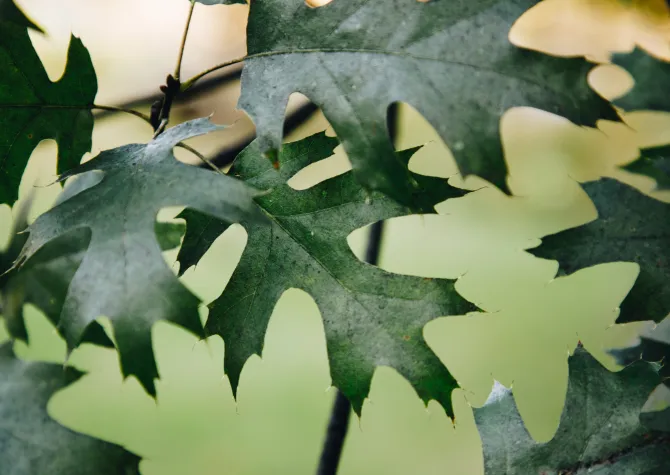
NORTHERN PIN OAK
RECOMMENDED CULTIVAR:
Shooting Star oak
Quercus ellipsoidalis ‘DurMag’
HEIGHT: 55' | SPREAD: 40' | SHAPE: Pyramidal, oval | FALL: Red
Very hardy with good form. A tree that should have limited planting as a specimen tree in a park setting. Needs to be grafted on to a bur oak rootstock as this allows greater pH tolerance. Graft compatibility concerns remain with the graft union between a red and white oak.
P
Pear, Pine, Plum, & Poplar
Pear
USSURIAN PEAR
RECOMMENDED CULTIVARS:
Mountain Frost pear
Pyrus ussuriensis ‘Bailfrost’
HEIGHT: 25' | SPREAD: 18' | SHAPE: Upright, oval | FALL: Orange-red
Low fruit production. Highly resistant to fireblight. Wrap trunks in the fall to protect from winter rodent damage.
Prairie Gem pear
Pyrus ussuriensis ‘MorDak’
HEIGHT: 25' | SPREAD: 20' | SHAPE: Round, dense | FALL: Golden yellow
NDSU introduction. Will produce a 1" pear only if planted near another pear cultivar/species. Planted for its spring beauty of white flowers and fall color, not for its fruit quality. Highly resistant to fireblight. Wrap trunks in the fall to protect from winter rodent damage.

Pine
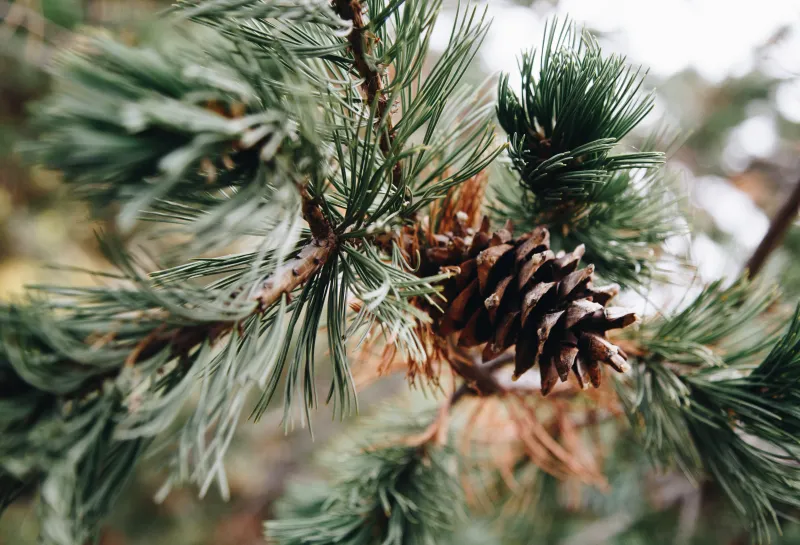
LIMBER PINE
Pinus flexilis
HEIGHT: 30-50' | SPREAD: 15-35' | SHAPE: Pyramid, oval
Tolerant of alkaline soils. Has a blue green needle which adds interest to the landscape. Prefers moist, well-drained soils; however, can tolerate periodic drought. Pine wilt disease, not yet found in our state, should be considered when planting.
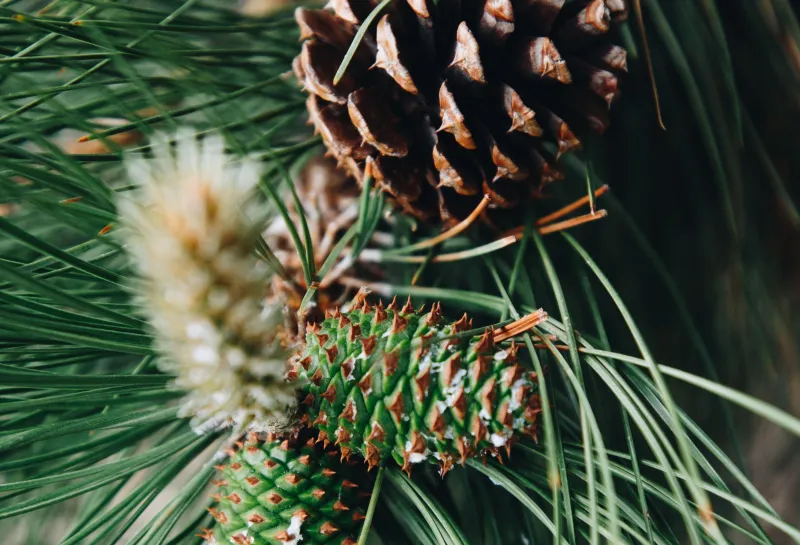
PONDEROSA PINE
Pinus ponderosa
HEIGHT: 50-60' | SPREAD: 30' | SHAPE: Pyramidal, broad
Excellent choice for a clump planting in a park setting.
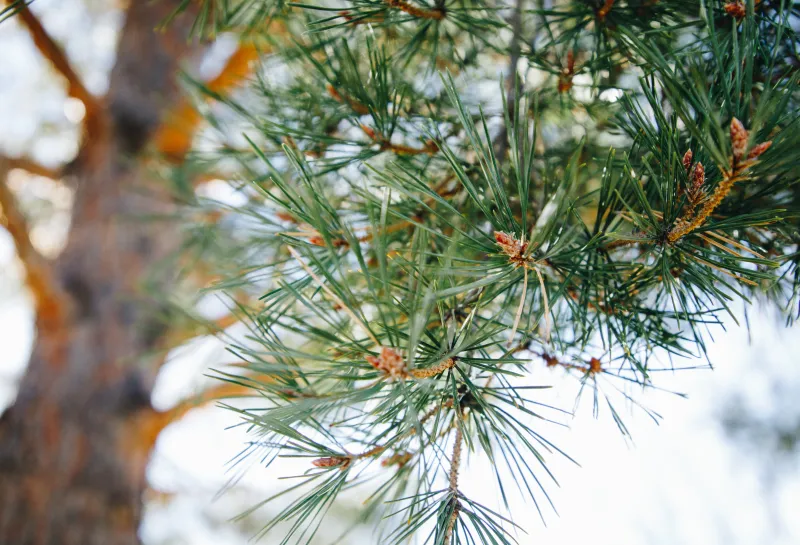
SCOTCH PINE
Pinus sylvestris
HEIGHT: 40-50' | SPREAD: 30-40' | SHAPE: Pyramidal, broad
Also referred to as Scots pine. Excellent choice for a clump planting in a park setting. Pyramidal shape when young; as it matures the shape can be inconsistent, ranging anywhere from remaining pyramidal to an open, spreading canopy. The bark is of interest as it has a coppery, orange mixed with brown peeling texture. Pine Wilt, not yet found in our state, is a disease to consider when planting Scotch pine. Do not overplant in your community.
SWISS STONE PINE
RECOMMENDED CULTIVAR:
Prairie Statesman pine
Pinus cembra ‘Herman’
HEIGHT: 25-30' | SPREAD: 15' | SHAPE: Narrow, upright
NDSU introduction. Very upright growth with dark green soft needles with a hint of silver-blue. A nice accent tree in a landscape bed.
Pine Photos
Plum
CANADIAN (BLACK) PLUM
RECOMMENDED CULTIVAR:
Princess Kay plum
Prunus nigra ‘Princess Kay’
HEIGHT: 10-15' | SPREAD: 7-10' | SHAPE: Round, upright | FALL: Orange-yellow
Beautiful, double white flowers before leaves appear in the spring producing a pleasant fragrance. The bark is a dark grey, almost black. Can produce fruit but is rare. Excellent choice for a landscape bed. A short-lived tree of maybe 15 years.

Poplar
Most trees in the genus Populus grow quickly in size; however, with this comes short longevity (20-50 years).
BALSAM POPLAR
Populus balsamea
HEIGHT: 50' | SPREAD: 25' | SHAPE: Pyramidal | FALL: Yellow
Prefers moist soil. A good choice along waterways or low spots in a park setting. The buds and leaves produce a pleasant balsam scent. Does not produce suckers. Produces seed but not like that of the plains cottonwood.
HYBRID POPLAR
RECOMMENDED CULTIVARS:
Highland poplar
Populus x ‘Highland’
HEIGHT: 45-50' | SPREAD: 20-25' | SHAPE: Oval, upright | FALL: Green-brown
Seedless selection. Light colored bark.
Prairie Sky poplar
Populus x canadensis ‘Prairie Sky’
HEIGHT: 60' | SPREAD: 8-12' | SHAPE: Narrow, upright | FALL: Yellow
Seedless selection. Longer lived than other hybrids. Provides a nice vertical screen.
Robusta poplar
Populus x canadensis ‘Robusta’
HEIGHT: 40-50' | SPREAD: 30-40' | SHAPE: Oval | FALL: Yellow
Seedless selection. Not as resistant to canker as other hybrids. Drought-tolerant.
S
Serviceberry, Spruce, & Sycamore
Serviceberry (Juneberry)
APPLE SERVICEBERRY
RECOMMENDED CULTIVAR:
Autumn Brilliance serviceberry
Amelanchier x grandiflora ‘Autumn Brilliance’
HEIGHT: 20' | SPREAD: 15' | SHAPE: Upright, spreading | FALL: Red-purple
White flowers in the spring. Fall color isn’t dependable due to our early frosts. Prefers to be planted in light shade. Can be single or multi-stemmed. If the rootstock is crabapple (rare) or mountain-ash (occasionally), suckering can become a problem. Ensure it is budded onto serviceberry rootstock.
SASKATOON SERVICEBERRY
RECOMMENDED CULTIVAR:
Standing Ovation serviceberry
Amelanchier alnifolia ‘Obelisk’
HEIGHT: 15' | SPREAD: 7' | SHAPE: Upright, columnar | FALL: Orange-red
Excellent shrub-like choice for tight spaces. Not a good selection for city rights-of-way due to low branching. Produces delicious edible fruits that birds will compete you for.

Spruce
BLACK HILLS SPRUCE
Picea glauca var. densata
HEIGHT: 50' | SPREAD: 15-20' | SHAPE: Pyramidal
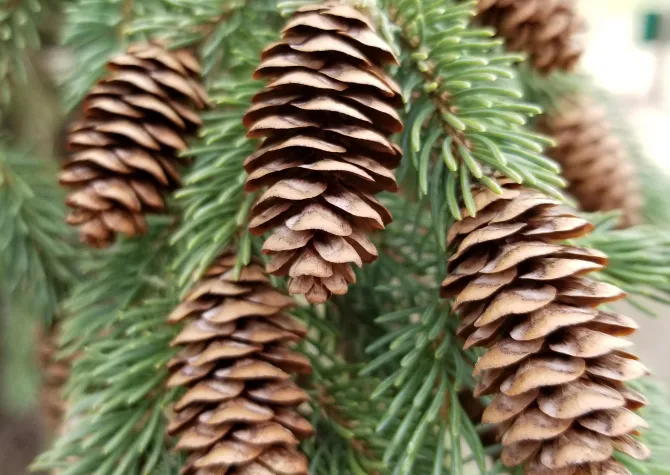
Blue-green needles. Cones are 1-2" long. Tolerant of shade and is hardy to our prairie environment. Can struggle under lengthy drought conditions.
MEYER SPRUCE
Picea meyeri
HEIGHT: 40-50' | SPREAD: 15-30' | SHAPE: Pyramidal, dense
Similar in appearance to the overplanted Colorado blue spruce and showing more disease resistance. Needle tips are blunt and not sharp like that of Colorado blue spruce. Relatively new to the plains but appears to tolerate drier sites well. Native to Mongolia and NE China.
Sycamore (Planetree)
AMERICAN SYCAMORE
RECOMMENDED CULTIVAR:
Northern Advance sycamore
Platanus occidentalis ‘Bismarck’
HEIGHT: 60-70' | SPREAD: 60-70' | SHAPE: Irregular | FALL: Brown
NDSU introduction. Best known for its peeling bark of white and grey. Can be affected by anthracnose, a fungal disease, causing leaves to drop midsummer during humid weather. The leaves are huge, making fall cleanup a definite chore.

W
Walnut & Willow
Walnut
BLACK WALNUT
Juglans nigra
HEIGHT: 50' | SPREAD: 50' | SHAPE: Round | FALL: Yellow
Produces edible nuts in late fall, hard to crack. It is a very tolerant tree. Walnuts have a strong taproot when young; however, the taproot doesn't continue to grow down as the tree grows upward. Roots and fallen leaves are toxic to other nearby plants especially gardens (tomatoes and potatoes) and can stunt growth. Plant walnut trees at least 50' away from gardens. Good choice for park plantings.

Willow
HYBRID WILLOW
RECOMMENDED CULTIVAR:
Prairie Cascade willow
Salix ‘Prairie Cascade’
HEIGHT: 30' | SPREAD: 40' | SHAPE: Weeping, round | FALL: Green-brown
Golden stems and glossy, dark green leaves. Moist soil preferred. Excellent choice for park plantings.
LAUREL WILLOW
RECOMMENDED CULTIVAR:
Prairie Reflection willow
Salix pentandra ‘Silver Lake’
HEIGHT: 35-40' | SPREAD: 25' | SHAPE: Round | FALL: Yellow
NDSU introduction. Very glossy leaves. Prune, especially when young, to help develop a strong central leader. Moist soils are preferred. Excellent choice for park plantings.

Powerline Friendly
The listed species are appropriate selections to plant under powerlines along city rights-of-way as they are relatively short trees.
Chokecherry
Gold Spur Amur chokecherry
Ming Amur chokecherry
Crabapple
Coralburst crabapple
Sugar Tyme crabapple
Plum
Princess Kay plum
Serviceberry
Autumn Brilliance serviceberry
Standing Ovation serviceberry
Trees Suitable for Park Plantings
Aspen
Birch
Prairie Dream birch
River birch
Buckeye
Douglas-fir
Ironwood
Katsura
Koolkat katsura
Larch
Siberian larch
Linden
Golden Cascade linden
Maackia
MaacNificient maackia
Maple
Norway maple
Silver maple
Mountain-ash
Oakleaf mountain-ash
Oak
Bur oak
Northern pin oak
Pine
Poplar
Balsam poplar
Spruce
Sycamore
Northern Advance sycamore