
Research in the Department of Plant Pathology, Microbiology, and Biotechnology is united by a fundamental question: how do microorganisms, from destructive pathogens to life-sustaining symbionts, shape the health of crops, soils, and people? Our faculty address this question from molecular mechanisms to field systems, and from fundamental discovery to applied research and Extension, giving the department an unusually broad reach across the agricultural and biological sciences.
The department’s research programs span plant disease biology and management, microbiome science and engineering, soil and environmental restoration, functional food development, gut microbiome physiology, biotechnology, and science education.
Research Faculty
The following are brief research descriptions for all faculty members in the Department of Plant Pathology, Microbiology, and Biotechnology. Faculty are listed alphabetically.
Thomas Baldwin
Dr. Baldwin’s program focuses on barley diseases, with emphasis on the genetics and molecular mechanisms of host resistance to Fusarium head blight (FHB) and spot blotch. His research integrates genomics, RNA interference, and molecular marker development with applied resistance screening. He coordinates the North American Barley Evaluation Nursery (NABSEN) and manages FHB and spot blotch disease screening nurseries in North Dakota, translating resistance discoveries directly into breeding program pipelines.
Sam Banerjee
Dr. Banerjee’s Agricultural Microbiome Lab studies how agricultural management practices shape the assembly, structure, and function of soil and plant microbiomes. Research themes include microbiome assembly from soil to rhizosphere, identification of keystone taxa that regulate community stability, and quantifying the effects of land-use intensification on microbiome function and resilience to drought and salinity. The lab uses next-generation sequencing, community and network analyses, and quantitative ecology, drawing on one of the world’s largest crop microbiome datasets, with sampling across more than 200 farmlands in 50 of North Dakota’s 53 counties.
Eric Branch
Dr. Branch’s Extension and research program focuses on improving the management of foliar and root diseases of sugarbeet in North Dakota and Minnesota, including Rhizoctonia root rot, Cercospora leaf spot, and other economically important diseases. He combines applied field trials, stakeholder engagement, and molecular approaches to generate and deliver practical, data-driven recommendations for growers and crop advisors.
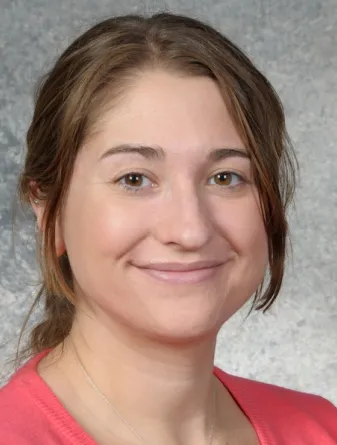
Danielle Condry
Dr. Condry leads the department’s discipline-based education research (DBER) program. Her research uses concept inventories to identify student misconceptions and guide curriculum improvement, evaluates community engaged learning in science courses, and investigates equitable grading strategies and the influence of science experiences on public trust in scientific information. She directs NDSU’s dual Ph.D. program in Microbiology and DBER, one of the only programs of its kind nationally, and contributes to national undergraduate immunology education reform through the ImmunoReach initiative.

Luis del Rio Mendoza
Dr. del Rio Mendoza leads the only full-time canola pathology program in the United States. His group integrates field and greenhouse research, pathogen population genetics, and quantitative disease modeling to inform practical, timely disease management recommendations for growers across the North Central region. He collaborates closely with commodity groups and breeding programs to identify, characterize, and deploy resistance to key pathogens, including Sclerotinia sclerotiorum and blackleg.
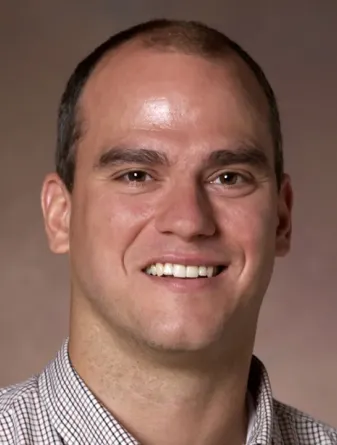
Glenn Dorsam
Dr. Dorsam’s research centers on neuroimmune regulation of gut homeostasis, with a focus on how the vasoactive intestinal peptide (VIP) pathway controls gut microbiota composition, intestinal barrier integrity, and immune tolerance to commensal bacteria. Using genetic mouse models of VIP deficiency, 16S rRNA community profiling, predictive metagenomics, and barrier and inflammation assays, his lab connects disruptions in VIP signaling to microbiota shifts implicated in inflammatory and autoimmune conditions.
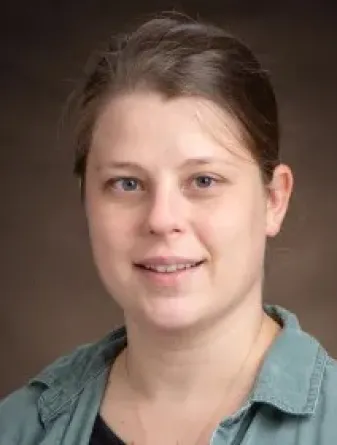
Malaika Ebert
Dr. Ebert’s research program focuses on diseases of dry edible beans and pulse crops, integrating applied field surveys and molecular plant-microbe biology to deliver practical management tools. Her current work includes characterizing the Fusarium root rot complex in chickpea and pea through whole-genome sequencing and assembly of a regional pathogen library, evaluating biocontrol candidates that suppress Fusarium sporulation, and translating genomic insights into resistance breeding pipelines. Her research expertise spans effector biology, pathogen genomics, and long-read sequencing workflows.
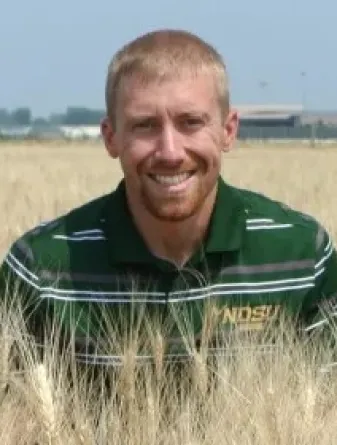
Andrew Friskop
Dr. Friskop’s Extension program delivers research-based disease management solutions for small grains (wheat, durum, barley, oat) and corn across North Dakota and the region. He coordinates multi-location Fusarium head blight integrated management trials, evaluates fungicide timing and application technology, and develops grower-facing decision support and risk tools in collaboration with the US Wheat & Barley Scab Initiative (USWBSI). He is a key contributor to in-season disease risk communication through producer meetings, field days, and Extension media.
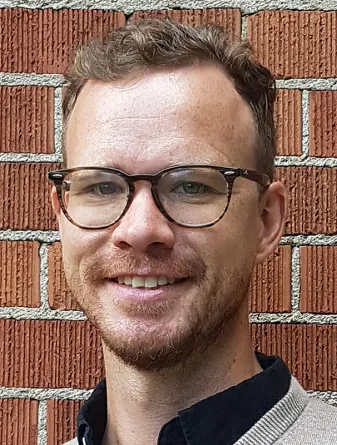
Barney Geddes
Dr. Geddes’ laboratory pursues three connected aims: overcoming the ‘rhizobium competition problem’ to pair legumes with elite nitrogen-fixing partners at field scale; developing synthetic-genomics approaches to engineer new nitrogen-fixing symbioses in cereals; and understanding how crops assemble beneficial root microbiomes for disease and stress protection. Identification of elite rhizobia strains in his lab has led to a provisional patent and the founding of Lilac Agriculture, a spinout company launching improved pea inoculants commercially in 2026.

Upinder Gill
Dr. Gill’s research focuses on rust diseases of wheat and pulse crops, integrating genetics, genomics, and molecular plant pathology to develop durable host resistance. His program pursues resistance gene discovery and deployment, functional genomics of rust pathogen effectors, and development of high-resolution molecular markers (HRM markers) for leaf and stem rust resistance to accelerate breeding against evolving rust races.

Janet Knodel
Dr. Knodel provides statewide leadership for Extension entomology and directs the North Dakota IPM Program. Her program develops research-based insect management strategies for sunflower, canola, corn, pulse crops, dry beans, soybean, barley, and spring wheat, with emphasis on resistance stewardship, surveillance, and timely risk communication. She co-edits the NDSU Crop & Pest Report, the primary channel for in-season pest advisories to producers and crop advisors across the Upper Great Plains.

Zhaohui Liu
Dr. Liu’s research focuses on the molecular basis of wheat foliar diseases, including tan spot (Pyrenophora tritici-repentis), Stagonospora nodorum blotch (SNB), and bacterial leaf streak (Xanthomonas translucens). His program uses effector biology, QTL mapping, genome-wide association studies (GWAS), and molecular marker development to identify resistance loci and understand host-necrotrophic pathogen interactions in wheat, durum, and emmer germplasm, with findings translated directly into breeding pipelines through close collaboration with USDA-ARS and regional breeders.

Egla Lopez Echartea
Dr. Lopez Echartea’s research develops microbial strategies to restore soil health after environmental disturbances, with emphasis on post-wildfire recovery and remediation of hydrocarbon- and brine-impacted soils. Her program builds disturbance-adapted culture collections and designs microbiome-guided synthetic communities (SynComs) to accelerate contaminant degradation, plant establishment, and functional soil recovery. Methods include 16S/ITS community profiling, digital PCR for functional genes, culturomics, and field testing of SynComs in North Dakota’s oil and gas production landscapes.
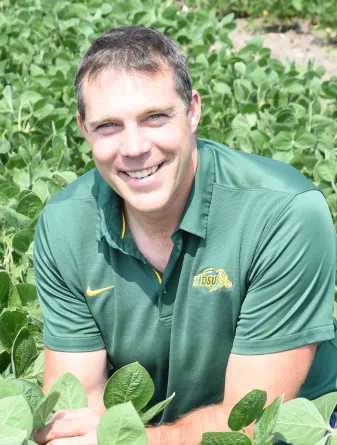
Sam Markell
Dr. Markell’s Extension and research program covers diseases of soybean, sunflower, canola, flax, dry bean, and pulse crops across North Dakota and the region. He played a founding role in the nationally recognized SCN Coalition, a public-private partnership credited with transforming producer awareness of soybean cyst nematode management. He partners extensively with commodity organizations, producer groups, and industry to translate research into practical recommendations. He received the AGSCO Excellence in Extension Award at NDSU in 2024.

Febina Mathew
Dr. Mathew’s research addresses diseases of soybean and sunflower, with particular emphasis on the Diaporthe/Phomopsis complex. Her program integrates pathogen biology, effector-driven host-pathogen interactions, and applied disease management, including fungicide trials and host resistance evaluation, to deliver practical solutions for producers in the Northern Great Plains. She leads regional disease diagnostics and surveillance in collaboration with NDSU breeders, USDA-ARS, and Extension partners, and received the APS International Plant Pathology Research Achievement Award in 2023.

Julie Pasche
Dr. Pasche is the Neil C Gudmestad Endowed Chair of Potato Pathology. Her group addresses seed health, virus and vector-borne diseases (Potato virus Y, Potato mop-top virus), soil-borne and tuber diseases (Rhizoctonia, powdery scab, Fusarium dry rot), and foliar pathogens. Her program integrates molecular diagnostics, DNA-based detection, fungicide resistance monitoring, and close collaboration with potato breeding programs and seed certification, delivering science-based guidance for one of the region’s most high-value specialty crops.
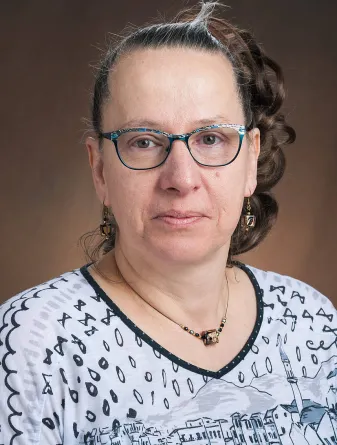
Birgit Pruess
Dr. Pruess’ research program develops probiotic-prebiotic combinations, pairing the plant-growth-promoting bacterium Azospirillum brasilense with prebiotic seedling exudate compounds, to enhance plant growth and suppress foliar and soilborne diseases. Her work has demonstrated symptom reductions up to ~83% against Fusarium oxysporum in tomato and is advancing toward seed coating delivery systems for peas and cucumbers. Her broader program encompasses bacterial motility, biofilm biology, and the mechanisms by which flagellar systems influence host-microbe interactions across agricultural and food safety contexts.

Kalidas Shetty
Dr. Shetty’s laboratory develops functional food ingredients through sprouting and acetic acid bacterial (AAB) fermentation of North Dakota crops, primarily corn and soybean, enriched with high-phenolic prairie spearmint. This bioconversion pipeline generates phenolic-rich matrices with documented antidiabetic, antihypertensive, antimicrobial, and anti-cancer bioactivity, tested in validated 2D and 3D models. The program translates fundamental plant stress biology and microbial fermentation science into higher-value nutraceutical products, creating new pathways for North Dakota’s staple crop economy.
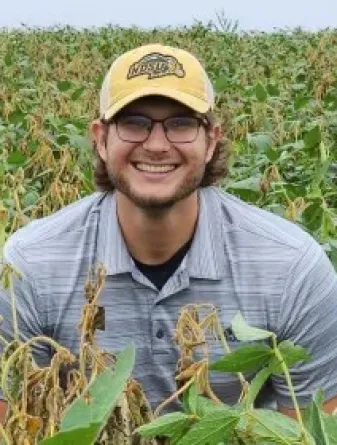
Wade Webster
Dr. Webster’s Extension and research program addresses the most important diseases of soybean in the Northern Plains — SCN, white mold, Phytophthora root and stem rot, frogeye leaf spot, sudden death syndrome, and Cercospora leaf blight — through disease surveillance, on-farm and research-station field trials, diagnostics, and stakeholder education. He works closely with commodity organizations, USDA partners, and industry to deliver practical, data-driven management recommendations and conducts research on genetic resistance to Sclerotinia sclerotiorum.
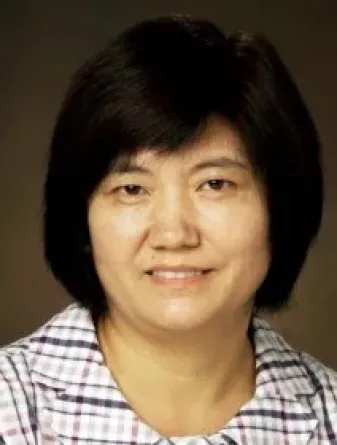
Guiping Yan
Dr. Yan leads the department’s nematology program, with research focused on detection, biology, and management of plant-parasitic nematodes in field crops across the Northern Great Plains. Her group integrates qPCR-based diagnostics, statewide surveys, host-resistance screening, and on-farm and experiment-station trials to develop management strategies for soybean cyst nematode (SCN), root-lesion nematodes, pin nematodes, and emerging species in soybean, corn, sugarbeet, dry bean, field pea, potato, and wheat.