Developing breakthroughs in medicine and human health
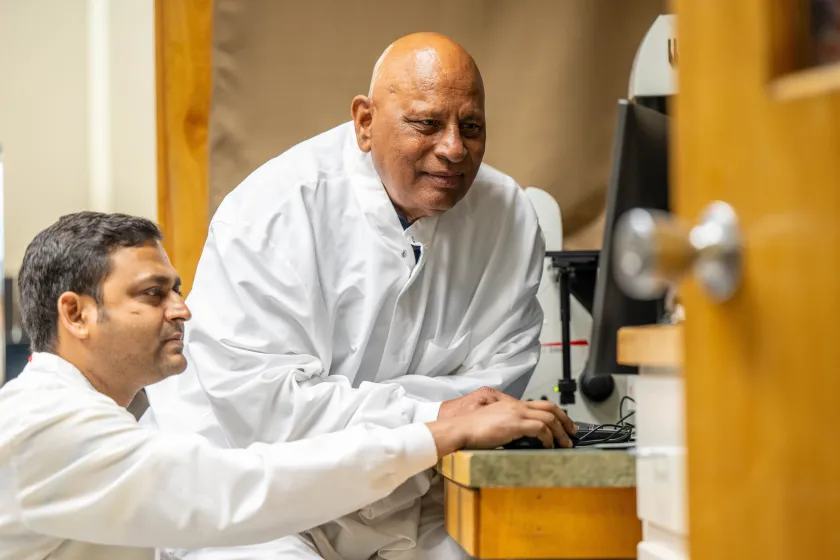
Some of the world’s most complex health challenges begin in places that are hard to see. For Jagdish Singh, a University Distinguished Professor in pharmaceutical sciences, the key to transforming treatment for brain disorders, neurogenic hypertension and type 2 diabetes mellitus lies in developing innovative delivery systems capable of transporting life-changing therapies precisely where they’re needed.
Through pioneering research that advances the delivery of drugs and nucleic acids, Singh is opening new pathways to prevent disease and improve treatment outcomes.
“Research is the systematic process of gathering, analyzing and interpreting information to answer questions, solve problems and expand human knowledge,” Singh said. “It is the driving force behind societal advancement and critical decision-making. Research drives innovation, improves healthcare and boosts critical thinking.”
One of Singh’s ongoing research projects is designing an efficient, non-invasive delivery system for genes to the intranasal route to brain cells for the prevention and treatment of aging-related cognitive decline, including Alzheimer’s Disease. This research is vital in addressing the growing Alzheimer’s health crisis in North Dakota and globally.
“In 2025, there weren’t many newly approved dementia medications, but existing ones have serious side effects, leading to amyloid-related imaging abnormalities that can lead to serious and even life-threatening complications. My research will create nanomedicine to treat and prevent Alzheimer’s Disease in North Dakota and the world,” he said.
Singh is also investigating new approaches to treating neurogenic hypertension, a condition in which elevated blood pressure is initiated and maintained by the brain. NH accounts for nearly half of all hypertension cases, making this project important in addressing the needed medicine and therapies in treating this disease. His research aims to develop nanomedicine that targets the brain’s cardiovascular regulatory systems through the Angiotensin II type 1 receptor to lower blood pressure.
Another area Singh is studying is related to type 2 diabetes mellitus, focusing on developing a nanomedicine for the treatment of insulin resistance in T2DM.
With a broad range of ongoing research, Singh has a team of researchers working in his lab, consisting of postdocs, graduate students and undergraduate students. Each person has a valuable role in Singh’s lab, contributing to his research in many rewarding ways.
“Students are vital to research laboratories, operating in a tiered mentorship system,” Singh said. “Undergraduates typically learn foundational skills and assist with ongoing experiments, while graduate students manage independent projects, troubleshoot methodologies and directly mentor younger researchers under my supervision.”
Beyond mentoring NDSU students, Singh has had the chance to oversee high schoolers in the North Dakota Governor’s School, hosted by NDSU every other summer. Singh said he always looks forward to hosting the state’s top high schoolers into his laboratory and introducing them to research.
“I am excited about the opportunity I get to mentor high school students. They are among the best of the best, and they excel,” he said.
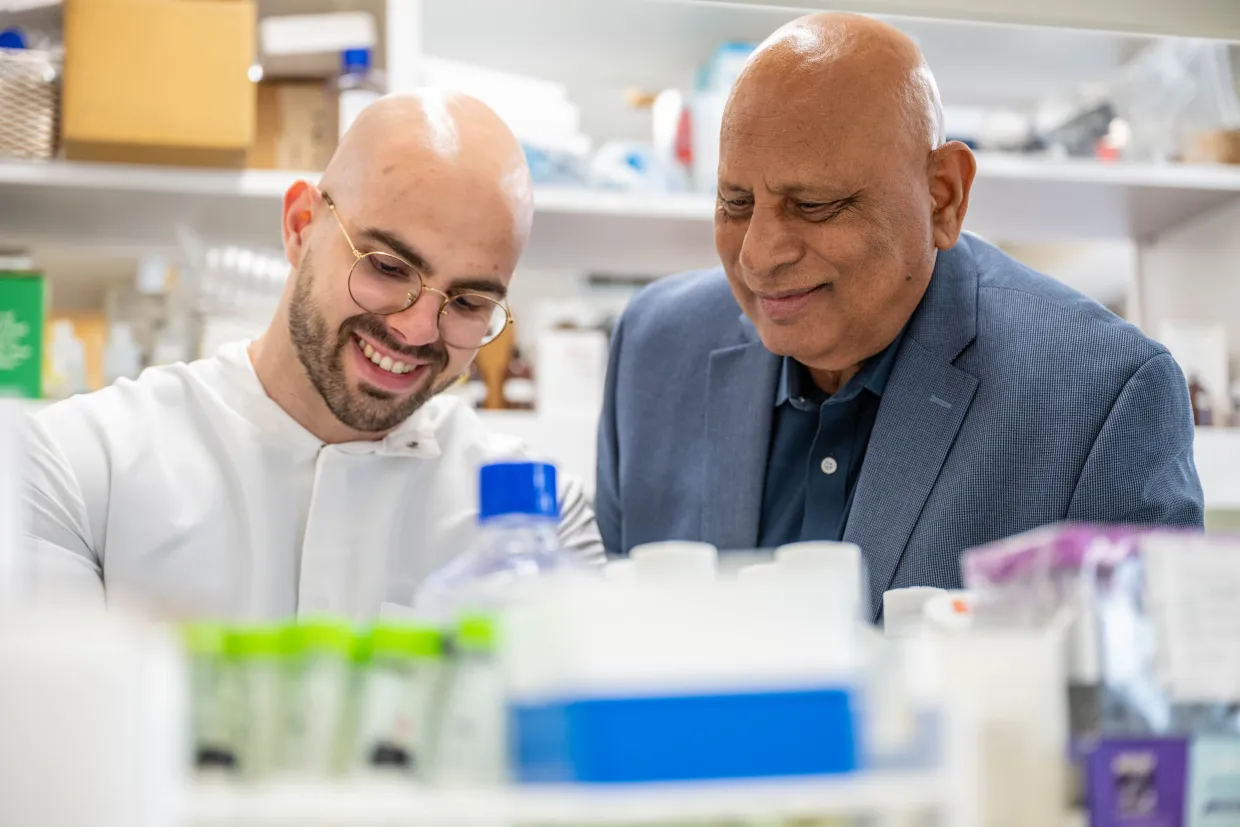
Each summer, Singh also mentor’s students from Walailak University-Thailand, who travel to NDSU as part of a partnership between the Department of Medical Technology at Walailak University-Thailand and the Department of Pharmaceutical Sciences at NDSU. The undergraduate students participate in laboratory-based research experiences and gain hands-on exposure to advanced research techniques.
For Singh, one of the most rewarding aspects of mentoring is watching former students pursue careers in medicine, research and the pharmaceutical industry.
“I hope that students who have worked with me learn about being innovative, about persevering and learn to be nice to people,” he said.
Collaboration has also been a defining part of Singh’s nearly 32-year career at NDSU. As chair of the Department of Pharmaceutical Sciences, he has worked closely with colleagues within his department, across campus and with the Mayo Clinic to advance research and discovery.
“Collaboration in research drives innovation by merging diverse perspectives, pooling specialized resources and bridging the gap between theoretical discovery and commercial application,” he said. “When researchers from different disciplines, institutions or sectors unite, they break down isolated silos to solve complex problems that individual entities cannot tackle alone.”
Throughout his 24 years of leadership as the department chair, Singh has contributed to growing the department, resulting in a significant growth in research grants, publications, interdisciplinary graduate education and interdisciplinary research.
Singh’s impact at NDSU is reflected in numerous honors and awards. In addition to receiving funding from the National Institutes of Health, the Department of Defense and the National Science Foundation, just to name a few. Singh has been awarded the NDSU Fred Waldron Research Award and was named the College Researcher of the Year award three times. Singh is also a highly cited scientist at NDSU with h-index of 100 (Research Gate).
Last fall, Singh was one of six faculty members named University Distinguished Professors, the highest academic honor awarded at NDSU, outlining his commitment to teaching, research and service.
Looking ahead, Singh said he is eager to continue creating new medicines to treat neurodegenerative diseases and is happy to conduct that research at NDSU with the various resources provided across campus, including the Research and Technology Park.
“NDSU is special because it acts as a premier R1 research institution rooted in a community-driven, land-grant mission,” he said. “It directly transforms local industries while providing accessible, hands-on education and statewide outreach.