Microbiology Graduate Faculty
The faculty listed below are eligible to advise graduate students in the Microbiology graduate program. Prospective students are highly encouraged to contact faculty whose research interests align with their own prior to applying. Connecting with a potential faculty advisor before submitting an application provides an opportunity to discuss research interests, current opportunities, and the availability of graduate assistantship support.
Questions about the Microbiology graduate program or application process can be directed to Dr. Danielle Condry, Graduate Director.

Samiran Banerjee
Assistant Professor
Email: samiran.banerjee@ndsu.edu
Phone: 701-231-6387
Office: 132A Van Es Hall
Dr. Banerjee’s Agricultural Microbiome Lab studies how agricultural management practices shape the assembly, structure, and function of soil and plant microbiomes. Research themes include microbiome assembly from soil to rhizosphere, identification of keystone taxa that regulate community stability, and quantifying the effects of land-use intensification on microbiome function and resilience to drought and salinity. The lab uses next-generation sequencing, community and network analyses, and quantitative ecology, drawing on one of the world’s largest crop microbiome datasets, with sampling across more than 200 farmlands in 50 of North Dakota’s 53 counties.

Danielle Condry
Graduate Director for Microbiology, Associate Professor of Practice
Email: danielle.condry@ndsu.edu
Office: 125 Van Es Hall
Dr. Condry leads the department’s discipline-based education research (DBER) program. Her research uses concept inventories to identify student misconceptions and guide curriculum improvement, evaluates community engaged learning in science courses, and investigates equitable grading strategies and the influence of science experiences on public trust in scientific information. She directs NDSU’s dual Ph.D. program in Microbiology and DBER, one of the only programs of its kind nationally, and contributes to national undergraduate immunology education reform through the ImmunoReach initiative.

Glenn Dorsam
Professor
Email: Glenn.Dorsam@ndsu.edu
Phone: 701-388-7492
Office: 114A Van Es Hall
Dr. Dorsam’s research centers on neuroimmune regulation of gut homeostasis, with a focus on how the vasoactive intestinal peptide (VIP) pathway controls gut microbiota composition, intestinal barrier integrity, and immune tolerance to commensal bacteria. Using genetic mouse models of VIP deficiency, 16S rRNA community profiling, predictive metagenomics, and barrier and inflammation assays, his lab connects disruptions in VIP signaling to microbiota shifts implicated in inflammatory and autoimmune conditions.
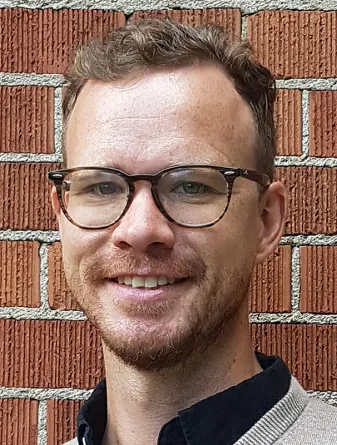
Barney Geddes
Assistant Professor; Richard and Linda Offerdahl Faculty Fellow
Email: Barney.geddes@ndsu.edu
Phone: 701-231-7692
Office: 130A Van Es
Dr. Geddes’ laboratory pursues three connected aims: overcoming the ‘rhizobium competition problem’ to pair legumes with elite nitrogen-fixing partners at field scale; developing synthetic-genomics approaches to engineer new nitrogen-fixing symbioses in cereals; and understanding how crops assemble beneficial root microbiomes for disease and stress protection. Identification of elite rhizobia strains in his lab has led to a provisional patent and the founding of Lilac Agriculture, a spinout company launching improved pea inoculants commercially in 2026.

Egla Lopez Echartea
Assistant Professor
Email: e.lopezechartea@ndsu.edu
Phone: 701-231-4332
Office: 195 Van Es Hall
Dr. Lopez Echartea’s research develops microbial strategies to restore soil health after environmental disturbances, with emphasis on post-wildfire recovery and remediation of hydrocarbon- and brine-impacted soils. Her program builds disturbance-adapted culture collections and designs microbiome-guided synthetic communities (SynComs) to accelerate contaminant degradation, plant establishment, and functional soil recovery. Methods include 16S/ITS community profiling, digital PCR for functional genes, culturomics, and field testing of SynComs in North Dakota’s oil and gas production landscapes.
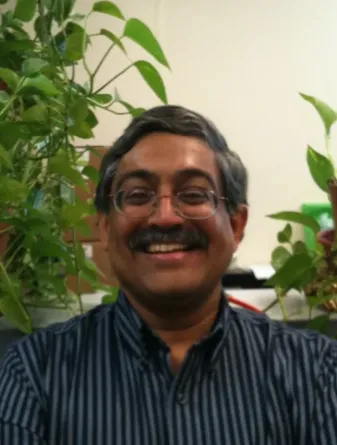
Kalidas Shetty
Director of Global Institute of Food Science
Email: kalidas.shetty@ndsu.edu
Phone: 701-231-7512
Office: 169 Van Es Hall
Dr. Shetty’s laboratory develops functional food ingredients through sprouting and acetic acid bacterial (AAB) fermentation of North Dakota crops, primarily corn and soybean, enriched with high-phenolic prairie spearmint. This bioconversion pipeline generates phenolic-rich matrices with documented antidiabetic, antihypertensive, antimicrobial, and anti-cancer bioactivity, tested in validated 2D and 3D models. The program translates fundamental plant stress biology and microbial fermentation science into higher-value nutraceutical products, creating new pathways for North Dakota’s staple crop economy.