30 Days of Sociology
What is
30 Days of Sociology?
For 30 days, we’re exploring key ideas, questions and real-world applications of sociology. Each day highlights a concept, issue or research area that helps us better understand society, and our place within it.
Whether you're a current student, prospective major or simply curious about how the world works, this series is for you.
Day 30
We Made It—Day 30 of our 30 Days of Sociology Series
Whether you’ve been following along from the beginning or just joined us, we hope you’re starting to see what makes sociology so powerful. It gives us tools to think critically, ask better questions, and understand the world—and our place in it—in a deeper way.
Today, we’re ending with something important: a defense of sociology.
In an opinion piece, a student from Hillsdale College reflects on C. Wright Mills’ idea of the sociological imagination (check out Day 5 if you want a refresher) and why it matters:
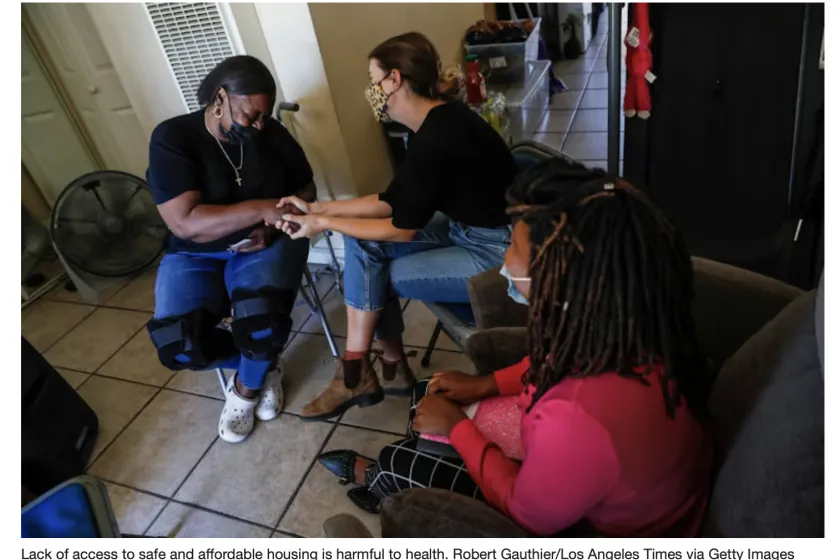
“Once you recognize the link between personal experience and social structures, however, you can’t ignore it. The struggle to find affordable housing, the pressure of a competitive job market, and the challenge of adjusting to a campus culture very different from home… take on meaning beyond the purely personal.
“That shift in perspective is not ideological. It is analytical.” —Widley Montrevil
That’s really the heart of sociology: connecting personal struggles to larger social forces.
Sociologist Megan Thiele Strong builds on this idea, encouraging students to stay curious and use data thoughtfully: “I encourage students to get curious and to use data to understand how we can learn from ourselves… to build a better society for all people.”
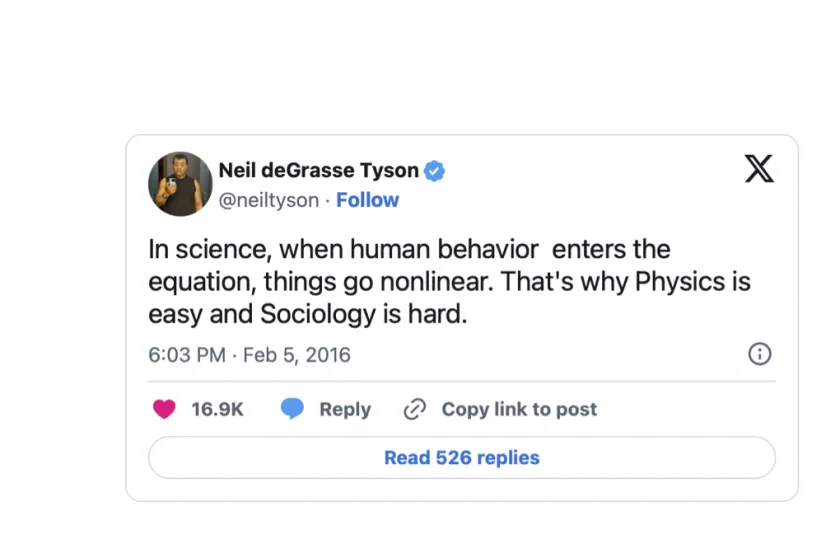
But sociology isn’t easy. Remember Day 21, when we highlighted Neil deGrasse Tyson's X post? In it he wrote, “In science, when human behavior enters the equation, things go nonlinear… That’s why physics is easy and sociology is hard.”
It's hard because even with data, we don’t get simple answers. Sociologist Jeffrey Guhin reminds us: “Science may give us data, but that doesn’t mean that data points to truth—it just means that’s what we currently understand as truth. So how we act on that data requires nuance and judgment.”
Studying human behavior and social systems is complicated—and that’s exactly the point. Sociology doesn’t offer easy answers. It asks us to sit with complexity, question assumptions, and think carefully about how we interpret the world.
Because if understanding society is challenging, trying to improve it is even more so. And that work requires more than just data—it requires insight, perspective, and a willingness to see beyond our own experiences.
That’s the power—and the purpose—of sociology.