Copyright, Creative Commons and Fair Use Guidelines
Copyright
Copyright is the sole right to reproduce, publish, or sell “original works of authorship.” This authorship includes literary, dramatic, musical, artistic, and certain other intellectual works including books, journals, photographs, art, music, sound recordings, computer programs, websites, and many other materials. This protection is for both published and unpublished works, even if no copyright symbol is on the material. The author is the owner, unless the work is a “work for hire,” as is the case for NDSU Extension employees where NDSU is the owner when Extension employees publish or distribute works using Extension resources (NDSU Policy 190-5-c). Copyright gives the owner the right to reproduce the work in copies or recordings; to create subsequent works based upon the owner’s original work; to distribute copies or recordings of the work to the public by sale or other transfer of ownership, or by rental, lease, or lending; and, in the case of literary, musical, dramatic, and choreographic works, pantomimes, and motion pictures and other audio-visual works, to perform and display the work publicly, which includes the use of a digital audio transmission.
To use material developed by someone else (either published or unpublished), the safest course of action is to get specific written permission from the owner. You must get written permission to use work beyond fair use guidelines (see below), and this permission must be granted by the organization that owns the material, which may not be the author.
Creative Commons
Creative Commons is a type of copyright license. Many organizations use Creative Commons as a simple, standardized way to grant copyright permissions. NDSU Extension’s Creative Commons license states that any person may copy, distribute, transmit, and adapt this work as long as full attribution to NDSU Extension and the author is given; the work is not used for commercial purposes; and the person shares their resulting work similarly. In other words, the NDSU Extension Service owns the copyright on materials produced by faculty and staff for their jobs, but NDSU Extension lets others use the information under those conditions without asking for specific permission.
Fair Use
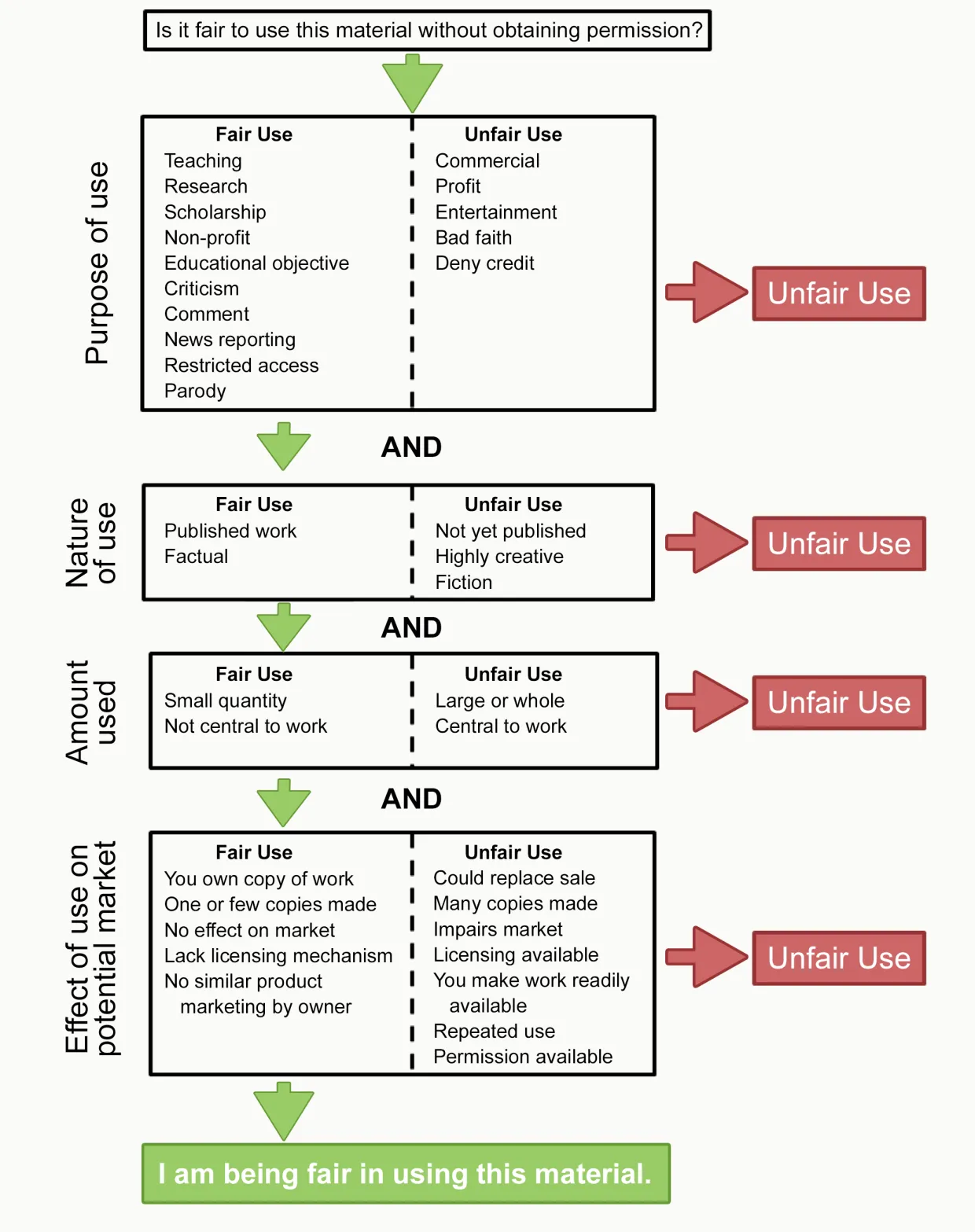
Fair use is what you can use without asking permission. Fair use is determined on a case-by-case basis through the application of the following four factors. All four factors typically need to be met to be considered fair use. Again, always cite the source!
- The purpose and character of the use is for nonprofit educational purposes; and
- The nature of the copyrighted work is primarily non-fiction; and
- The amount and substantiality of the portion used in relation to the copyrighted work as a whole is a small amount and does not constitute the “heart” of the work; and
- The effect of the use does not diminish the market for or value of the copyrighted work.
Fair Use Decision Tree