
Soil Conservation Districts (SCDs)
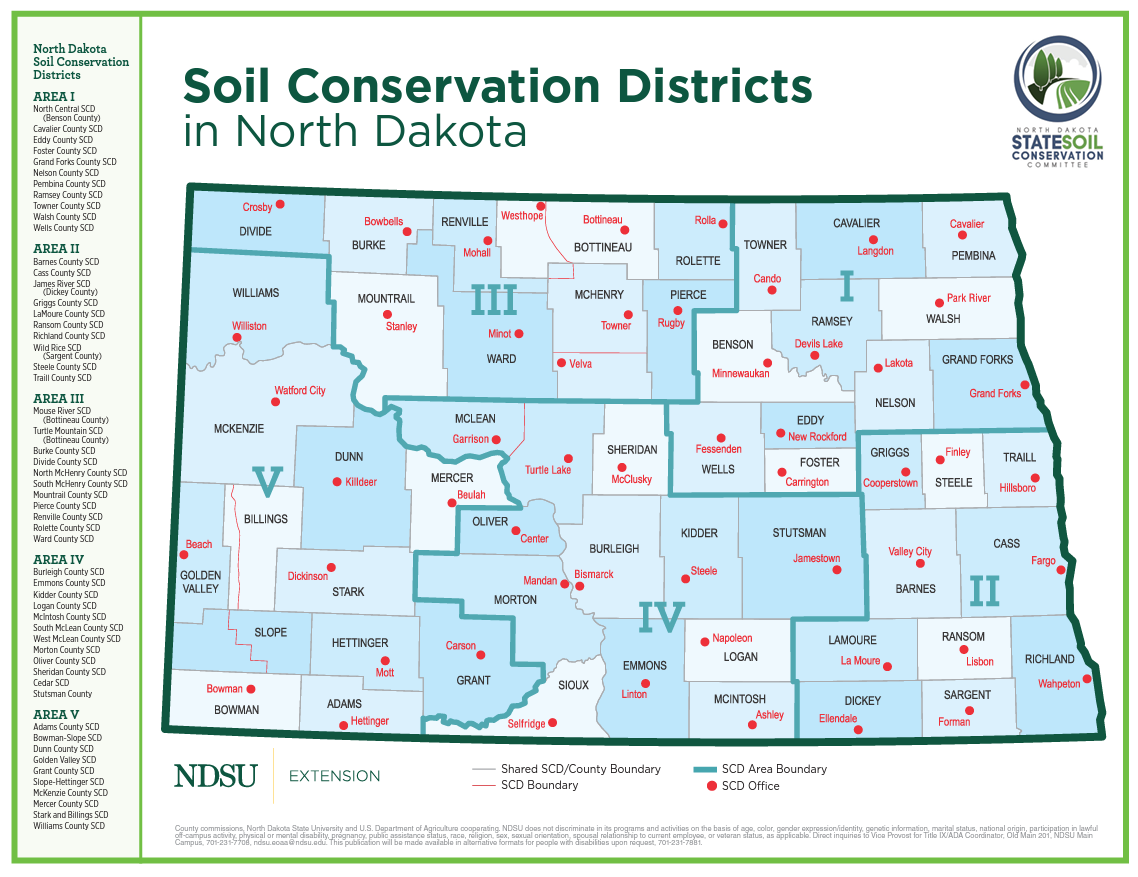
SCDs are crucial members of a three-way partnership of federal, state, and local agencies working toward soil and water conservation. In North Dakota, there are 54 districts, with at least one in each county, organized into five areas:
- Area I – Benson, Cavalier, Eddy, Foster, Grand Forks, Nelson, Pembina, Ramsey, Towner, Walsh, and Wells counties.
- Area II – Barnes, Cass, Dickey, Griggs, LaMoure, Ransom, Richland, Sargent, Steele, and Traill counties.
- Area III – Bottineau, Burke, Divide, McHenry, Mountrail, Pierce, Renville, Rolette, and Ward counties.
- Area IV – Burleigh, Emmons, Kidder, Logan, McIntosh, McLean, Morton, Oliver, Sheridan, Sioux, and Stutsman counties.
- Area V – Adams, Billings, Bowman, Dunn, Golden Valley, Grant, Hettinger, McKenzie, Mercer, Stark, Slope, and Williams counties.
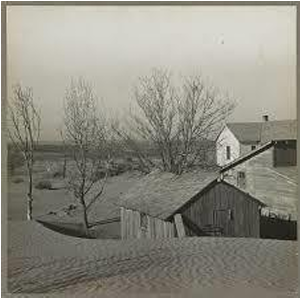
While SCDs had their baptism by fire following the devastation of the 1930s Dust Bowl, the movement got its beginning decades earlier. It was championed by Hugh Hammond Bennett, a young college graduate who went to work as a soil surveyor for the USDA in 1905.
Now recognized as the “father of soil conservation,” Bennett spent 20 years trying to bring attention to the nation’s eroded soils and the need for conservation. Lawmakers finally started to listen in the late 1920s, and the Dust Bowl—a drought that led to massive dust storms and topsoil losses across a swath of land reaching from Texas to Canada—fueled the movement.
The groundwork for the Dust Bowl was laid in the early 1900s when high demand for wheat, generous federal farm policies and a series of wet years caused a land boom in the Great Plains. New machinery made for easier and faster farming, and vast tracts of native grasslands in the Plains—more than 100 million acres—were plowed to plant crops, according to the USDA.
But the stock market crashed in 1929, and the Great Depression followed. Wheat prices plummeted, and farmers in the Plains plowed up even more land to try to recoup their losses. Prices dropped further, and drought conditions set in, causing widespread crop failure. Many farmers abandoned their fields to find work elsewhere, leaving behind a landscape that had changed from protective grassland to exposed soil.
The result was large dust storms that blew exposed soil as far as the East Coast. Bennett seized the opportunity to explain the cause of the dust storms to Congress and push for a permanent soil conservation agency. The Soil Conservation Service was created in 1935, and Bennett served as its first chief. Its predecessor, the temporary Soil Erosion Service—also led by Bennett—had established demonstration projects to show landowners the benefits of conservation. In 1994, Congress gave the Soil Conservation Service a new name: the Natural Resources Conservation Service.
As early as 1935, USDA managers began to search for ways to extend conservation assistance to more farmers, believing the solution was to establish democratically organized SCDs to lead the conservation effort at the local level.
To that end, the USDA drafted the Standard State Soil Conservation District Law, which President Franklin Delano Roosevelt sent to the governors of all states in 1937. The first conservation district was organized in the Brown Creek watershed of North Carolina that same year.
Across the United States, nearly 3,000 conservation districts—almost one in every county—work directly with landowners to conserve and promote healthy soils, water, forests, and wildlife. The National Association of Conservation Districts (NACD) represents these districts and the more than 17,000 citizens who serve on conservation district governing boards.
Conservation districts may go by different names—“soil and water conservation districts,” “resource conservation districts,” “natural resource districts,” and “land conservation committees”—but they all share a single mission: to coordinate assistance from all available sources—public and private, local, state, and federal—to develop locally driven solutions to natural resources concerns.
In addition to serving as coordinators for conservation in the field, districts:
- Implement farm, ranch, and forestland conservation practices to protect soil productivity, water quality and quantity, air quality, and wildlife habitat;
- Conserve and restore wetlands, which purify water and provide habitat for birds, fish, and other animals;
- Protect groundwater resources;
- Assist communities and homeowners in planting trees and other land cover to hold soil in place, clean the air, provide cover for wildlife, and beautify neighborhoods;
- Help developers control soil erosion and protect water and air quality during construction; and
- Reach out to communities and schools to teach the value of natural resources and encourage conservation efforts.
For more information, view YouTube – Hugh Hammond Bennett: The Story of America’s Private Lands Conservation Movement.
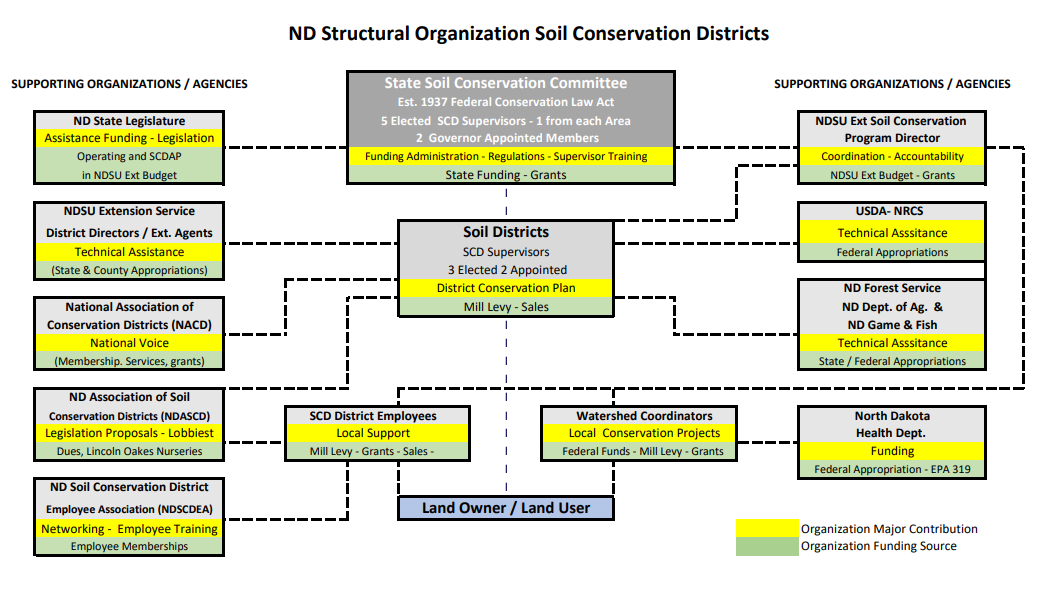
The SCD is a crucial member of a three-way partnership of federal, state, and local agencies. The continuation of this working relationship is vital to the work of soil and water conservation. The partnering agencies in the above chart are integral working parts of a multi-agency team effort to protect and preserve natural resources.
Districts are generally organized in a similar manner. The board of supervisors provides overall supervision and sets policy assuring that the district performs tasks required by law and memorandums of understanding.
The everyday business of running a district is handled by the district staff. The district manager is responsible for handling administrative details and office operations on the board’s behalf. Managers may also assume technical responsibilities. The district technician is responsible for providing technical support, plan reviews, etc. Each district employee reports to the board of supervisors and provides the board with information it needs to make policy and planning decisions.
As stated in North Dakota Century Code (N.D.C.C.) 4.1-20-01, the purpose for the existence of the SCD is:
“It is the policy of this state and within the scope of this chapter to provide for the conservation of the soil and soil resources of this state and for the control and prevention of soil erosion, and to preserve the state's natural resources, control floods, prevent impairment of dams and reservoirs, assist in maintaining the navigability of rivers, preserve wildlife, protect the tax base, protect public lands, and protect and promote the health, safety, and general welfare of the people of this state.”
The district planning process is critical and should be completed utilizing the best data available. It should include the physical facts of the district such as climatic and soil conditions, land use, size and type of agricultural practices, and resource problems. It shall also include suggestions for a program that will help correct the resource problems that exist. The N.D.C.C. Chapter 4.1-20-24.1(h) specifies what a plan must do:
“…plans must specify in such detail as may be possible the acts, procedures, performances, and avoidances that are necessary or desirable for the effectuation of those plans, including the specification of engineering operations, methods of cultivation, the growing of vegetation, cropping programs, tillage practices, and changes in use of land...”
It is essential that district officials be thoroughly acquainted with resource problems, be able to evaluate their importance, and be willing to take appropriate steps to solve these problems.
The planning process is an excellent opportunity for the board to bring in other agencies, groups, or individuals with interest and responsibilities in conservation to work together in planning and activating a dynamic conservation program that will benefit all. Districts may utilize trained facilitators to receive public input to assist in identifying and prioritizing conservation needs.
Districts may also want to partner with their local NRCS Agency to assess the natural resource concerns in their area by leading a local work group (LWG). This locally led process helps identify resource concerns, priorities, and tools to address those needs. Representation includes individuals from state and federal agencies, agricultural and environmental organizations, Cooperative Extension, and local community members.
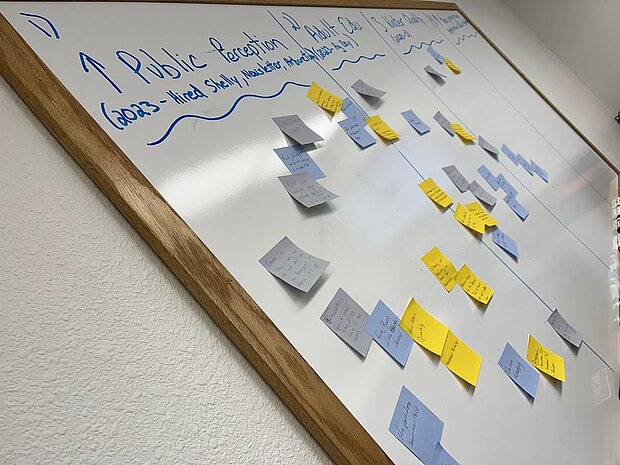
District Planning Process
After gathering data and public input, a plan shall be developed. This plan should include the items that will receive emphasis in the operation and education of the district. A broad-based goal shall be created for the district based on the resource needs and public input. To achieve the goal, the district shall complete a list of objectives that address the most pressing soil and water conservation problems. The final step in completing the planning process is creating specific tasks that detail the activities that will be carried out and ideas that will be promoted. Utilizing the S.M.A.R.T planning model each objective shall include:
✓ Specific What is the objective the district wants to achieve?
✓ Measurable How will the district measure achievement of the objective?
✓ Attainable What steps/tasks will be taken to achieve the objective?
✓ Realistic Does the district have the resources to achieve the task?
✓ Timely How long will it take to achieve the task?
As part of the implementation process, N.D.C.C. 4.1-20-24.1(h) requires districts to “… publish such plans and information and bring them to the attention of occupiers of lands within the district.”
The conservation plan/plan of work should be reviewed monthly and revised as new resource concerns appear, new best management practices are developed, or as new information, such as more accurate soils surveys become available. The review of the plan should be made the first order of new business at every regular meeting.
Forming partnerships is critical to the success of a district’s plan. The district may consider entering into a memorandum of understanding (MOU) with partners to detail expectations and activities that will lead to the accomplishment of tasks and objectives detailed in the plan.
Potential partners include, but are not limited to:
- County Water Resource Board
- Municipalities
- North Dakota Game & Fish Department
- North Dakota Forest Service
- North Dakota Department of Environmental Quality
- USDA Natural Resources Conservation Service
A template for the annual plan of work can be found in our Soil Conservation Google Drive.
The ND Legislature may appropriate state funds each session to help defray costs of the local soil conservation districts for conservation activities. These funds are used to cover salaries of SCD employees who plan and design local soil conservation projects. The SSCC allocates the funds to the districts based on the data each district inputs on the ranking report in DART. NDSU Extension notifies each district of their funding allocation and reimburses them for salary expenditures each quarter after receiving their quarterly DART report.
District Activity Reporting Tool (DART)
The District Activity Reporting Tool (DART) has been developed with the input and support of the North Dakota Conservation District Employee Association (NDCDEA) to have a uniform statewide reporting tool. DART includes a set of assigned tasks that, when completed, will facilitate the collection of financial data for the purpose of ranking, planning, and quarterly reporting that will standardize in total how the Soil Conservation District Assistance Program funds were used statewide.
District Audit and Financial Report
The district should arrange for the annual audit of the account of receipts and disbursements of their district as required by the Soil Conservation Districts Law (N.D.C.C. 4-1-20-22).
During the 55th Legislative Assembly, SCDs were added to the list of political subdivisions to be audited by the State Auditor. The law requires the State Auditor, a certified public accountant, or a licensed public accountant to audit the districts every two years (N.D.C.C. 54-10-14).
The State Auditor may, in lieu of conducting an audit every two years, require an annual financial report from districts with less than $2 million in annual receipts. Districts are required to complete the Annual Financial Report for the year by December 31. In addition, the State Auditor may:
- Make any additional examination or audit deemed necessary in addition to the annual report.
- Charge the political subdivision an amount equal to the fair value of the additional examination or audit and any other services rendered.
- Charge a political subdivision a set fee for the costs of reviewing the annual report.
SCD Mill Levy Authority
Note: The following is a summary of state laws relating to SCDs and should not be considered legal advice. Contact your local state’s attorney for any legal services your SCD requires.
The Legislative Assembly granted the supervisors of North Dakota SCDs the authority to levy a tax, not exceeding 2.5 mills, for the payment of the expenses of the district, including mileage and other expenses of the supervisors, and technical, administrative, clerical, and other operating expenses. This authority is provided in the North Dakota Soil Conservation Districts Law, N.D.C.C. 4.1-20-24.
Upon filing a certified copy of the levy, the county auditor of each county in the district will extend the levy upon the tax list of the county for the current year against each description of real property lying both within the county and the district in the same manner and with the same effect as other taxes are extended. The county treasurer collects all taxes and turns the funds over to the SCD on a monthly basis. According to a February 21, 1992 Attorney General opinion, “Soil conservation districts are taxing districts because they are authorized to levy taxes under North Dakota Century Code - N.D.C.C. Section 4.1-20-24.”
N.D.C.C. 57-02-01 says, “‘Municipality’ or ‘taxing district’ means a county, city, township, school district, water conservation or flood control district, Garrison Diversion Conservancy District, county park district, joint county park district, irrigation district, park district, rural fire protection district, or any other subdivision of the state empowered to levy taxes.”
Therefore, SCDs are also subject to Title 57 because they are subdivisions of the state and have the authority to levy taxes.
N.D.C.C. 57-15-31 provides the formula for determination of a levy. This determination is made by considering the estimated expenditures for the current fiscal year and the required reserve fund. The municipality may only levy for what is actually needed for the fiscal year. This process eliminates municipalities from creating a big “nest egg.”
N.D.C.C. 57-15-27 provides that a municipality authorized to levy taxes may include in its budget an interim fund. The interim fund is to be carried over to meet any requirements of the next fiscal year that may become due prior to the receipt of taxes in that fiscal year. The interim fund cannot be in excess of what may be reasonably required to finance the municipality for the first nine months of the next fiscal year. The interim fund cannot exceed three-fourths of the current appropriation for all purposes other than debt retirement and appropriations from bond sources.
N.D.C.C. 57-15 is titled “Tax Levies and Limitations.” N.D.C.C. 57-15-02 provides for the determination of rate:
“Determination of rate. The tax rate of all taxes, except taxes the rate of which is fixed by law, must be calculated and fixed by the county auditor within the limitations prescribed by statute. If any municipality levies a greater amount than the prescribed maximum legal rate of levy will produce, the county auditor shall extend only such amount of tax as the prescribed maximum legal rate of levy will produce. The rate must be based and computed on the taxable valuation of taxable property in the municipality or district levying the tax. The rate of all taxes must be calculated by the county auditor in mills, tenths, and hundredths of mills.”
The county auditor can limit the SCD mill levy request and will only extend the amount of levy as allowed pursuant to Title 57. The county auditor will not extend any levy in excess of the allowable levy, which is the difference between the sum of the estimated expenditures and interim fund needs and debt retirement and the sum of the projected revenues and cash balances. Allowance may be made for a permanent delinquency or loss in tax collection not to exceed 5% of the levy. N.D.C.C. 57-15-31.
Additional Mills – The ability of an SCD to levy additional taxes, beyond 2.5 mills, with the approval of a majority vote of district residents is allowed under N.D.C.C. 57-15-01.1(4), (5). However, the ability of an SCD to levy additional taxes with the approval of a majority vote of district residents after taxable year 2024 is currently unclear under N.D.C.C. 4.1-20-24.1(q)(5). Districts wishing to levy additional taxes should work with their local State’s Attorney.
Preliminary Budgets – In 2017, the North Dakota Legislature made some important changes to budget deadlines and the notice process, which counties and other local governments need to comply with every year. All local governments need to file a preliminary budget with the County Auditor’s Office. County Auditors will provide information on submitting budgets and mill levy requests. Filing dates are typically in early August.
Whether you are a county, city, park district, school district, township, fire district, or SCD, you will need to file a preliminary budget with the County Auditor. If you fail to file the preliminary budget by August 10, you will be limited to levying the same dollars as levied in the previous year. You also must file a final budget to actually levy taxes for your budget.
When you provide the preliminary information to the County Auditor, you also need to provide the date, time, and place of your budget hearing if you levy over $100,000 in taxes. The hearing date cannot be any earlier than September 7 nor later than October 7. The reason for the deadline is to allow the county time to prepare an Estimated Tax Statement that needs to be mailed by the end of August. (N.D.C.C. 40-40-06(1))
If you levy over $100,000 in taxes, the County Auditor will put the hearing notice on the Estimated Tax Statement. If you levy less than $100,000, you will need to publish the notice of the budget hearing in your official newspaper six days prior to the meeting. (N.D.C.C. 40-40-06(2))
Once you have held your final budget hearing and your board has approved the current year budget, you will need to file your final budget with the County Auditor. Remember, the amount requested for the final budget cannot be greater than the amount of your preliminary budget. (N.D.C.C. 40-40-10)
NOTE: Check with your County Auditor each year for budget hearing dates, the deadline for the last day the board can make any changes, and the date for approval of the budget.
The soil conservation district (SCD) is considered a political subdivision, organized under the North Dakota Soil Conservation Districts Law enacted in 1937, as later amended. They are organized by vote of the people within the district and are managed by a board of supervisors, also elected by the people.
SCDs are responsible for carrying out a program of soil and water conservation with all cooperating residents within the district boundaries, both rural and urban.
District Supervisors Shall Have the Power to (N.D.C.C. 4.1-20):
- Appoint two additional supervisors (4.1-20-18).
- Employ temporary and permanent employees (4.1-20-20).
- Seek legal services from the County’s State’s Attorney or Attorney General (4.1-20-20).
- Conduct surveys, investigations, and research (4.1-20-24).
- Conduct demonstration projects (4.1-20-24).
- Carry out preventive and control measures within the district (4.1-20-24).
- Cooperate or enter into agreements (4.1-20-24).
- Obtain options upon or acquire real or personal property (4.1-20-24).
- Make available machinery, equipment, seeds, and seedlings (4.1-20-24).
- Construct, improve, and maintain structures (4.1-20-24).
- Develop comprehensive plans for the conservation of soil resources (4.1-20-24).
- Administer and act as agent for the United States in any soil erosion, erosion control, or erosion prevention project; accept donations, gifts, and contributions in money, services, and materials (4.1-20-24).
- Sue and be sued in the name of the district (4.1-20-24).
- Have a seal (4.1-20-24).
- Have perpetual succession (4.1-20-24).
- Make and execute contracts (4.1-20-24).
- Make, amend, and repeal rules and regulations (4.1-20-24).
- Require contributions from beneficial operations performed by a district on lands not controlled by this state (4.1-20-24).
- Expend moneys for education, promotion, and recognition activities (4.1-20-24).
- Levy taxes (4.1-20-24).
- Formulate land use regulations (4.1-20-25 through 4.1-20-37).
- Be compensated for their service to the district (4.1-20-18).
- Furnish to the State Soil Conservation Committee (SSCC), upon request, copies of any ordinances, rules, regulations, orders, contracts, or other documents they shall adopt or employ and such other information concerning their activities as the SSCC may require.
- Provide for the execution of surety bonds for all employees and officers (4.1-20-22).
- Provide for keeping of a full and accurate record of all proceedings, resolutions, regulations, and orders issued or adopted by them (4.1-20-22).
- Maintain complete and accurate records of receipts and disbursements of the district and provide for an annual audit, as required (4.1-20-22 and 54-10-14).
- Prepare an annual financial statement at the close of the business year and forward a copy to the SSCC.
- Attend and participate in regular monthly meetings and attend district functions.
- Keep the long-range planning current to meet total resource development needs of your district. The long-range plan should be reviewed annually.
- Develop a district planning process that provides for carrying out action projects of highest priority that seek to accomplish the goals and objectives of the long-range plan. Refer regularly to the district plan to see that activities are carried out.
- Be informed on the North Dakota Soil Conservation Districts Law, the administrative functions of the SSCC, your State Association, the National Association of Conservation Districts (NACD), and the North Dakota Conservation District Employees Association (NDCDEA). Keep abreast of changes in the law, operational policies and program concepts of importance to the district.
- Develop district conservation needs and set district priorities in providing technical assistance to landowners and operators for a complete coordinated soil conservation program for all residents, both urban and rural.
- Invite agencies assisting in carrying out the district program to meet with the District Board to consider mutual problems. Keep these organizations and the general public informed of progress, objectives, and district needs.
- Develop a realistic annual budget and manage the funds of the district by anticipating project activities and board expenditures for the coming year.
- Approve bills to be paid by the district.
- Carry out a dynamic information and education program to include the general public, students, producers, and others focusing on resource conservation, programs and services, district activities, and other pertinent information. This can be accomplished in part by printing and distributing annual reports, district newsletters, and by utilizing other social and news media outlets.
- Conduct conservation tours, demonstrations, and support educational meetings.
- Cooperate with fellow board members in establishing district policies.
- Know the functions of other agricultural agencies that operate in your district.
A large portion of the board’s responsibility lies with their employees. The board is responsible for not only hiring district staff, but also supporting them and ensuring they have the means, equipment and knowledge to perform their jobs. Providing guidance, support, and reviewing performance is a key component of the board/employee relationship. District staff at the customer-facing link between the board and their constituents; ensuring they are properly trained and have the resources available to perform their duties, including ongoing professional development, is vital.
Dealing with employees is not an easy task and one where a lot of consideration must be given to the well-being of the employee, which is part of the well-being of the district as a whole. Board members have to decide on the wages, benefits and requirements of their employees. This is an area where state and federal laws must be taken into consideration.
The board does rely on their managers and employees to keep them informed on the current events affecting the district, but this by no means releases them from their obligation of being involved and informed by other sources. Communication between the board members, the employees and the landowners is critical in all areas.
Remember, the conservation district supervisor’s obligations are as a public official. Any supervisor who finds it impossible to fulfill these obligations because of poor health, lack of time, or any other reason should resign from office and make way for an individual who can perform effectively.
“Upon a majority vote of the supervisors, while performing duties as a member, the soil conservation district board shall provide to each member:
- Compensation of at least seventy-five dollars per day but not more than the rate set for a member of the legislative assembly under section 54-03-20;
- An allowance for meals and lodging at the rate set in section 44-08-04; and
- Mileage and travel expenses at the rate set in section 54-06-09.
All compensation and expenses under this subsection must be paid from district funds.” (N.D.C.C. § 4.1-20-18)
The success or failure of an SCD depends largely upon its Board of Supervisors. Recognizing this, the ND SSCC and the NDSU Extension developed yearly training requirements to clarify the purposes and functions of an SCD and the duties of a supervisor.
N.D.C.C. Statute 4.1-20-19
“As soon as practicable after an individual is elected or appointed to the position of a soil conservation district supervisor, the individual shall attend a training session delivered by the state soil conservation committee, and the individual shall attend or participate in annual training as determined by the state soil conservation committee.”
Yearly Training Requirements:
- A new supervisor (elected or appointed) must attend an initial training session (for example, Leadership Academy Training) and participate in an annual training event determined by the SSCC.
- A current/returning elected supervisor is required to participate in at least one annual training event determined by the SSCC.
- A current/returning appointed supervisor is required to participate in at least one annual training event determined by the SSCC.
The District Manager shall keep track of all supervisor training and provide it to the SSCC no later than January 31 each year. Please use the District Activity Reporting Tool (DART) Supervisor Training Report to submit your information.
Current Training Options:
Online:
- Micro Lessons
- SCD Coffee Talks
- SCD Short Takes
- More Than Dirt Podcast episodes
- SCD Webinars
- Conservation-related books
In Person:
- Leadership Academy Training
- Area (I, II, III, IV, or V) Soil Conservation District Annual Meeting
- NDASCD Convention
- Soil Conservation District Educational Event
- Professional Certification (Pesticide, WildlandFire, QuickBooks, etc.)
- Leadership Academy Field Day Trainings
- SBARE Meeting
- NRCS or other partner educational event
- SCD Approved Training
Access the full SCD Supervisor Training Requirements overview document here.
Your conservation district board is charged by state law with specific responsibilities that no other agency is charged with and gives your district the necessary authority to carry them out.
Various training resources (including links to videos, podcast episodes, etc.) can be found under SCD Training Resources here.
Any land occupier physically living in the SCD and who is a qualified elector is eligible to run for the office of an SCD supervisor. A “land occupier,” as defined in the Soil Conservation Districts Law, includes any person that holds title to or is in possession of any lands lying within a district whether living or located in a rural or urban area within the district.
“Qualified elector” means an individual who is at least 18 years old, a citizen of the United States, and has resided in the precinct 30 days preceding any election, whether or not the individual is living in a rural or urban area.
Any person can become a candidate upon filing a petition and statement of interests with the county auditor of the county or counties in which their district lies. The final filing date for petitions and statement of interests is no later than 60 days before the day of the election and not later than 4:00 p.m. of such day. The candidates’ petition must contain signatures of not less than 25, nor more than 300 qualified electors of the district (N.D.C.C. Chapter 4.1-20-15 & 16).
In the event an SCD lies in two counties, an original petition and statement of interest with original signatures must be filed with both county auditors concerned. Any land occupier living in the district who has failed to file a nominating petition and statement of interests may furnish stickers to be attached to the ballot. The ballot shall have blank spaces below the names of candidates nominated by petition for writing in other names.
The regular election of SCD supervisors shall be held at the same time, and at the same place, as the general election is held. Supervisors are elected for a term of six years. Candidates shall be elected on a nonpartisan ballot.
Nominating petitions and statement of interest forms are available through the local County Auditor Office. Contact your County Auditor to confirm that the General Election ballot includes the SCD supervisor.
Newly elected SCD supervisors officially take office on the first day of January and upon completing and filing an Oath of Office.
Oath of Office forms are official documents and must be executed prior to the time elected and appointed officers are designated to officially take office. Only those elected and appointed SCD supervisors who have completed and filed an Oath of Office shall qualify for their elected and appointed positions.
All newly elected and appointed or reappointed SCD supervisors must complete and file an Oath of Office, which will cover the duration of their term of office to which they have been elected/appointed. The Oath must be signed in the presence of a Notary Public. The original Oath of Office forms must be completed and returned to the Secretary of State’s office with a copy provided to the SSCC prior to the first day of January.
In accordance with the opinion secured from the Attorney General’s office, any SCD, upon resolution of the three elected supervisors, may appoint two additional supervisors who shall serve for a term of one year from and after the date of their appointment. (N.D.C.C. Chapter 4.1-20-18)
Such supervisors shall be appointed by a majority of the three elected supervisors and shall have all the powers, voting privileges, duties, and responsibilities of elected supervisors. As far as possible, the appointed supervisors shall represent interests within the district that are not represented by the elected supervisors. Try to have equal representation from all parts of the district on the board of supervisors. Such appointments must be made at a district meeting and recorded in the district minutes.
Only those appointed SCD supervisors who have completed and filed an Oath of Office would qualify for their appointed position. It is recommended that there be two appointees and not just one.
During the board’s January meeting, the board of supervisors should hold an election for the various district board’s officers: chair, vice-chair, secretary, and treasurer. The secretary and treasurer roles may be combined into one role (secretary/treasurer).
- An active district chair is the key to a successful board of supervisors meeting. It is the responsibility of the chair to accept the leadership roles, involving each member in the discussion of issues and programs of the district, starting meetings promptly, and closing meetings after all business has been completed.
- The SSCC recommends that no one elected or appointed SCD supervisor should serve as Chair of their district board for more than two consecutive years.
- Your district reorganization meeting should be held as soon as possible after the first of the year. Please complete the District Reorganization Form in full and provide it to the SSCC by January 31 each year.
- The SCD board may set a minimum value on equipment that gets logged on the inventory list. The inventory list should be reviewed annually and a walk through done with a supervisor to make sure inventory is accountable. Inventory information should be provided to the SSCC by January 31 each year.
- Each meeting month, the Chair should meet with the District Staff and District Conservationist prior to the scheduled meeting to work out a tentative agenda, which is then sent to each board member and other individuals invited with their notification of the meeting. A notice of meeting needs to also be posted as required by law (N.D.C.C. 44-04-17.1). Meeting minutes should be provided to the SSCC as soon as they have been approved.
- The North Dakota Attorney General’s website has guidelines on open meetings and open records.
After notice is given and a hearing is held in accordance with N.D.C.C Chapter 28-32, a supervisor of an SCD may be removed from office by the SSCC (4.1-20-18). Supervisors may also be removed by a vote of district residents, in the same manner as other locally elected officials.
Elected Supervisor Vacancies
In case the office of any elected supervisor shall, for any reason, become vacant, the remaining members of the board of supervisors shall, with the advice and consent of the SSCC, fill the vacancy by appointment. In the event that vacancies shall occur in the office of two elected supervisors, the remaining supervisor and the SSCC shall fill the vacancy; if the offices of all elected supervisors of a district shall become vacant, the SSCC shall fill the vacancies by appointment. A supervisor appointed to fill a vacancy shall hold office until the next general election. A supervisor elected to fill a vacancy shall serve the balance of the unexpired term in which the vacancy occurred (N.D.C.C. Chapter 4.1-20-18).
To fill a vacant elected supervisor position, submit the name of the district’s chosen appointee to the Soil and Water Conservation Program Coordinator. The Coordinator will notify the appropriate SSCC board member of the appointment, and, upon approval, the Coordinator will contact the district. If approved, proceed with getting a signed Oath of Office for the appointee and submit the original Oath to the Secretary of State. Provide a copy of the Oath to the SSCC.
Advisors
If the SCD board needs broader coverage than can be obtained with the elected and appointed supervisors, advisors can be appointed. These advisors:
- Can offer advice and counsel.
- Cannot vote or take official action at board meetings.
- Cannot hold an office on the board of supervisors.
- Cannot receive supervisor compensation.
- Can be reimbursed for their expenses.
