
Cropland prices facing headwinds in the second half of 2026
Bryon Parman, NDSU Extension Agricultural Finance Specialist and Associate Professor | September 2026
In July, the USDA released its annual agricultural land values summary for 2026. The report indicated that national cropland value growth had slowed from previous years to 3.3%. The USDA further reported that North Dakota cropland values had increased to the national average, also growing by 3.3% from 2025 to 2026. This is a bit higher than the NDSU report showing cropland values in North Dakota growing at just below 1% for the same period, where, in recent years, cropland in North Dakota had seen growth exceeding 10% for the year.
However, in real dollars, which are dollars adjusted for the inflation rate, cropland values from 2025 to 2026 are flat or have declined slightly. The year-over-year inflation rate from July 2025 to July 2026 is 3.4%. An additional report by Ag Country Farm Credit Services titled “Benchmark Farmland Report” from July 2026 indicated that North Dakota cropland values over the last year had fallen by 1.8% (https://www.agcountry.com/resources/learning-center/latest-land-values). Additionally, the Ag Country report stated that sales across North Dakota had declined 11% from what would be considered typical and are much lower in states such as Nebraska, where total dryland cropland transactions are down 50%, and South Dakota, where they have seen 45% fewer sales.
A significant decline in the number of land transactions compared to average is often an early sign of weakness in the market. Often, what creates this situation is potential sellers seeing the prices that land was bringing before and not wanting to sell for a lower price, while potential buyers are experiencing tight margins and may be capital constrained, making them unable to afford to buy it at those higher prices. Thus, if sellers are not in a financial position to sell, they may choose to hold off until farm incomes improve to the point where they can sell for a higher price. However, should incomes and margins remain too low for too long, land transactions will occur at lower prices, setting a new benchmark for what potential sellers may receive.
Another thing impacting the situation is interest rates, which are much higher than during the previous agricultural economic slowdown. The average 30-year fixed mortgage rate from 2014 to 2020 was 3.9%, a period of below-average net farm incomes compared to the last 20 years. However, over the last three years, the 20-year fixed-rate mortgage has averaged 6.4%-7%. Thus, not only has a significant quantity of working capital been used up that could have been used to buy additional land, but land that is financed will be financed at a much higher interest rate than would have been paid just a few years ago.
The Kansas City Federal Reserve’s most recent Aug. 26, 2026, report also indicates that collateral requirements in all the agricultural districts have tightened. The tightening of lending requirements was reported to be the highest in the St. Louis Federal Reserve district (which primarily includes the Mississippi Delta states) with about 30% of lenders requiring more collateral, while all other districts had about 20% of lenders requiring more (https://www.kansascityfed.org/center-for-agriculture-and-the-economy/agricultural-finance/farm-finance-deterioration-eases-slightly/).
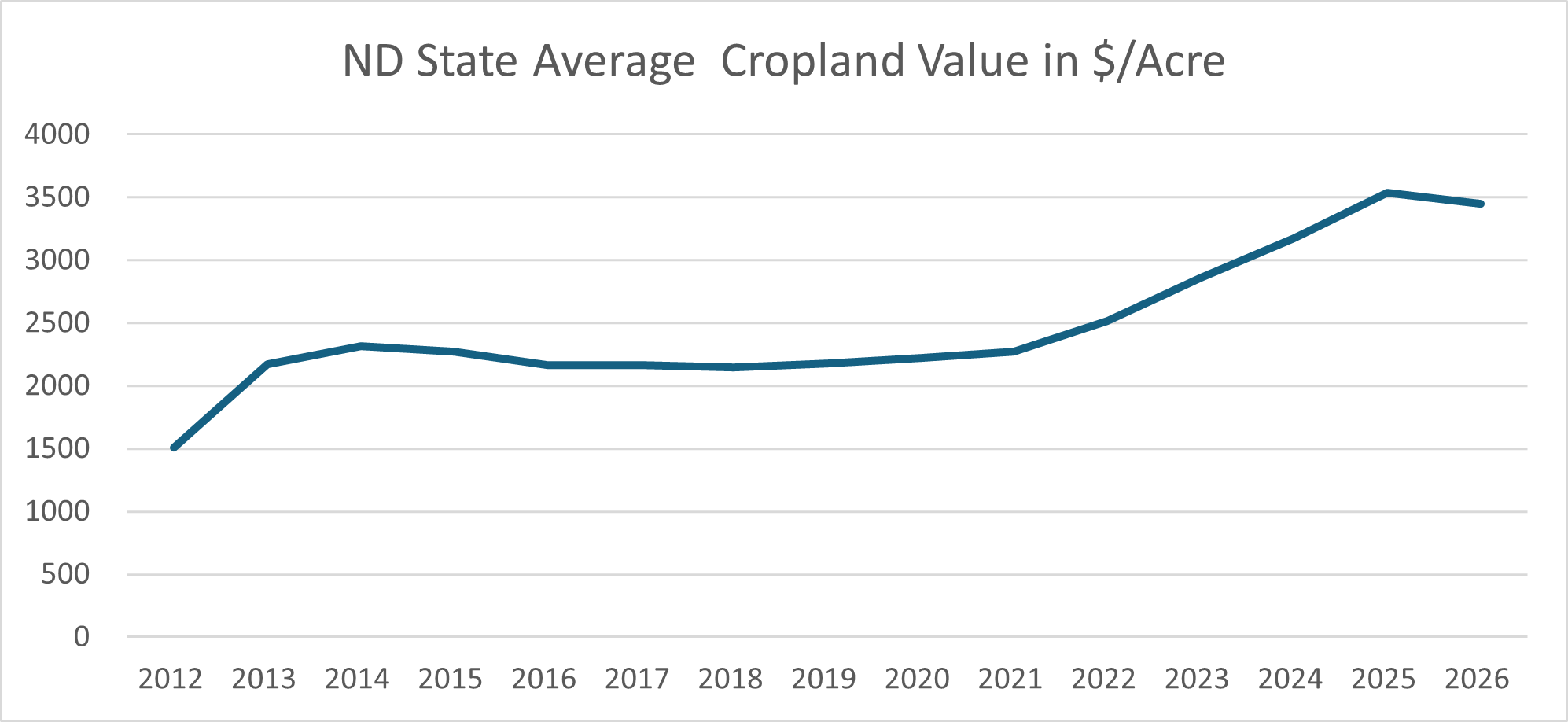
Moving forward, farm incomes will likely have a large impact on cropland prices. Should incomes and interest rates remain where they are over the next several years, it is likely we will see a period similar to 2015-2020, in which land prices stay flat or edge up slightly in nominal dollars, but when adjusted for inflation, decline slightly year over year. This would bring land prices more in line with current production costs and with cash rents relative to land prices. However, a sharp decline at this point appears unlikely, as equity positions among landowners remain strong, and forced land sales, as in the 1980s, would be rare.
