
Forage nitrate levels can spike following rain
Allow at least a week for plants to reduce nitrate accumulation before grazing or haying.
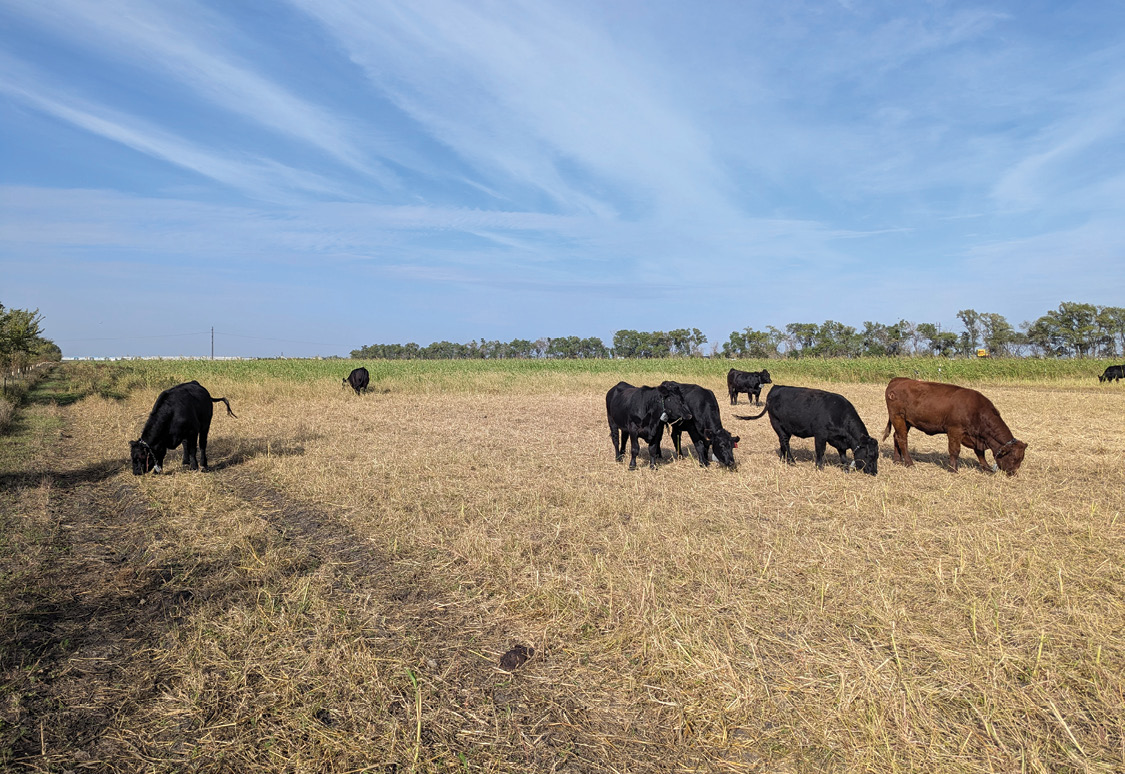
Dry summer weather can increase concerns about nitrate accumulation in forage plants, and North Dakota State University specialists warn about the effects
of rain on drought-stressed forages.
When soil moisture conditions are favorable, and plants are actively growing, they absorb nitrate from the soil and convert it into amino acids and proteins. When plants become stressed by dry weather, growth slows, but the plant may continue to take up nitrates.
Because plant growth has slowed, the nitrates taken up by the plant are not being converted into amino acids and proteins at the same rate.
Instead, nitrates accumulate in the plant, increasing the risk of nitrate poisoning. Nitrate concentrations are generally lowest in the top of the plant and highest in the base.
What happens when it rains and the plant begins actively growing again? Do nitrate levels suddenly drop? The answer is no.
Following a rain event, nitrate levels may actually spike two to three days after the rain. It can actually take several days for the plant to convert accumulated nitrates into proteins and amino acids.
Before grazing, allow seven to 12 days of good growing conditions to give plants an opportunity to reduce nitrate accumulations
The same advice applies to harvesting hay. Give plants an opportunity to recover and actively grow before harvesting for hay.
Even after allowing a seven- to 12-day recovery period following a rain event, do not assume that nitrate concentrations in forage have dropped to a safe level.
Forages should still be tested for nitrates following a rain event. Contact your NDSU Extension county agent for advice and assistance with forage nitrate testing.
The form of nitrate measured varies by laboratory and may be reported as nitrate-nitrogen (NO₃-N), nitrate (NO₃) or potassium nitrate (KNO₃). Concentrations may be reported in parts per million (ppm) or as a percentage, with most laboratories reporting nitrate as nitrate-nitrogen.
Livestock drinking water can also contribute to nitrate toxicity and should be considered when determining the overall risk.
When blending hays, it is important to know the nitrate levels of all hays included in a ration. Blending hay with a known nitrate concentration with hay of unknown nitrate concentration can lead to unintended results. The resulting nitrate concentration of the blend could be higher than the nitrate concentration of the hay with the known level.
For more information about nitrate poisoning, read the NDSU Extension publication “Nitrate Poisoning of Livestock.”
