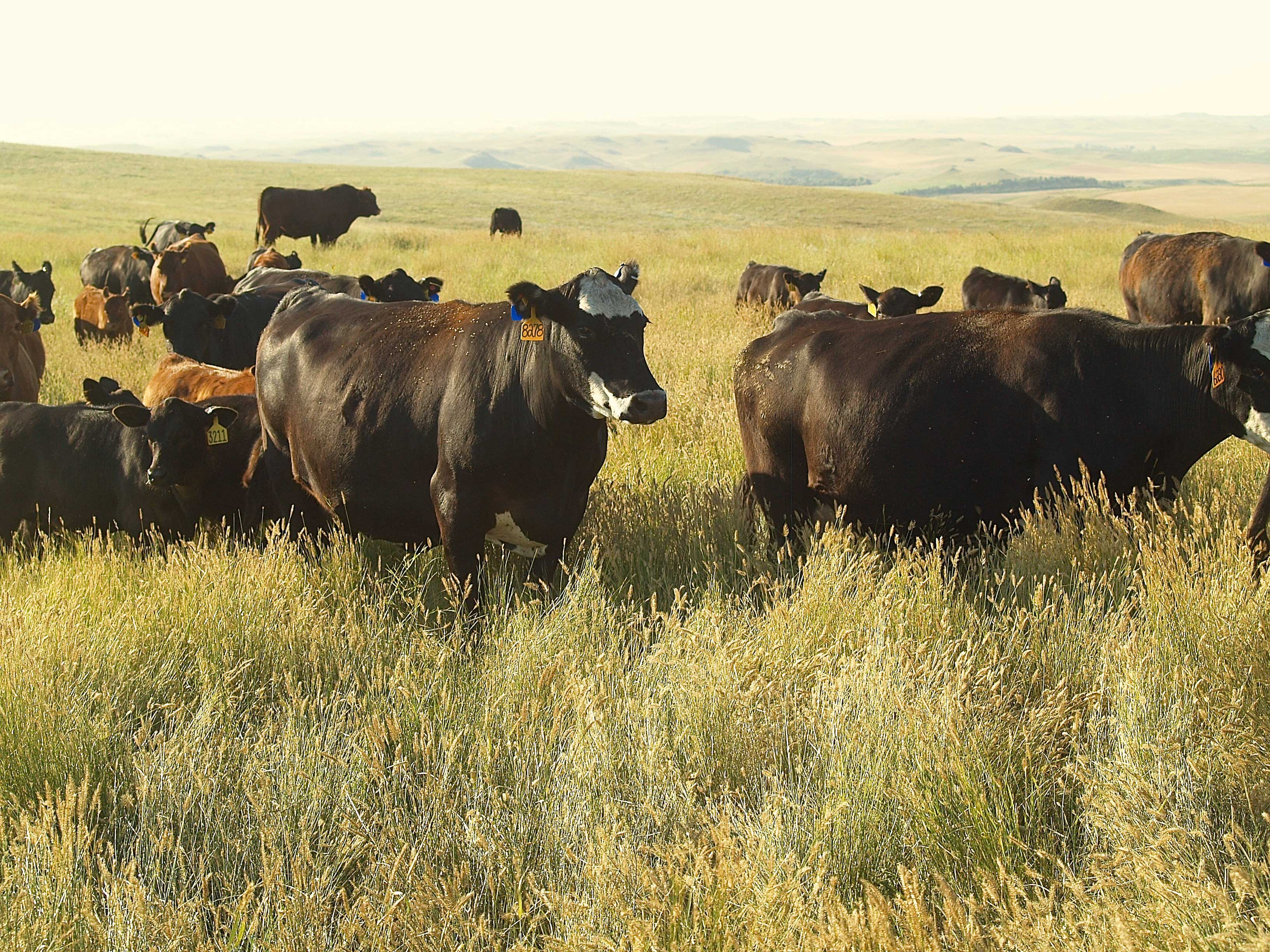
Plants utilized in the feeding of livestock have long been a fundamental link in the food chain. Native grasses supported grazing animals well before man began to domesticate livestock.
New knowledge in forage quality and animal feeding, and significant advances in improving the genetic potential of animals used to produce milk, meat and wool, improve efficiency and lower costs.
This publication is guide to help determine forage production of range, pasture, and other grazing resources. Once forage production for a grazing resource has been determined, carrying capacity and stocking rate can be calculated.
Blister beetles (Coleoptera: Meloidae) get their name from the cantharidin toxin in their body fluids, which can cause blisters on people’s skin if handled and life-threatening inflammations in horses and livestock.
CONTENTSSplit In-Season Nitrogen and Sulfur Applications Increase Spring Wheat Yield andQuality in Conventional and No-Till Systems ....................................................................................... 5Finishing Calves…
This publication summarizes the results from the barley, oat and rye variety trials conducted throughout North Dakota in 2021. It also describes the agronomic traits of the varieties tested.
New knowledge in forage quality and animal feeding, and significant advances in improving the genetic potential of animals used to produce milk, meat and wool, improve efficiency and lower costs. However, to do this, today’s producer must…